Cá Kho Tộ (Vietnamese Caramelized Braised Fish in Clay Pot)
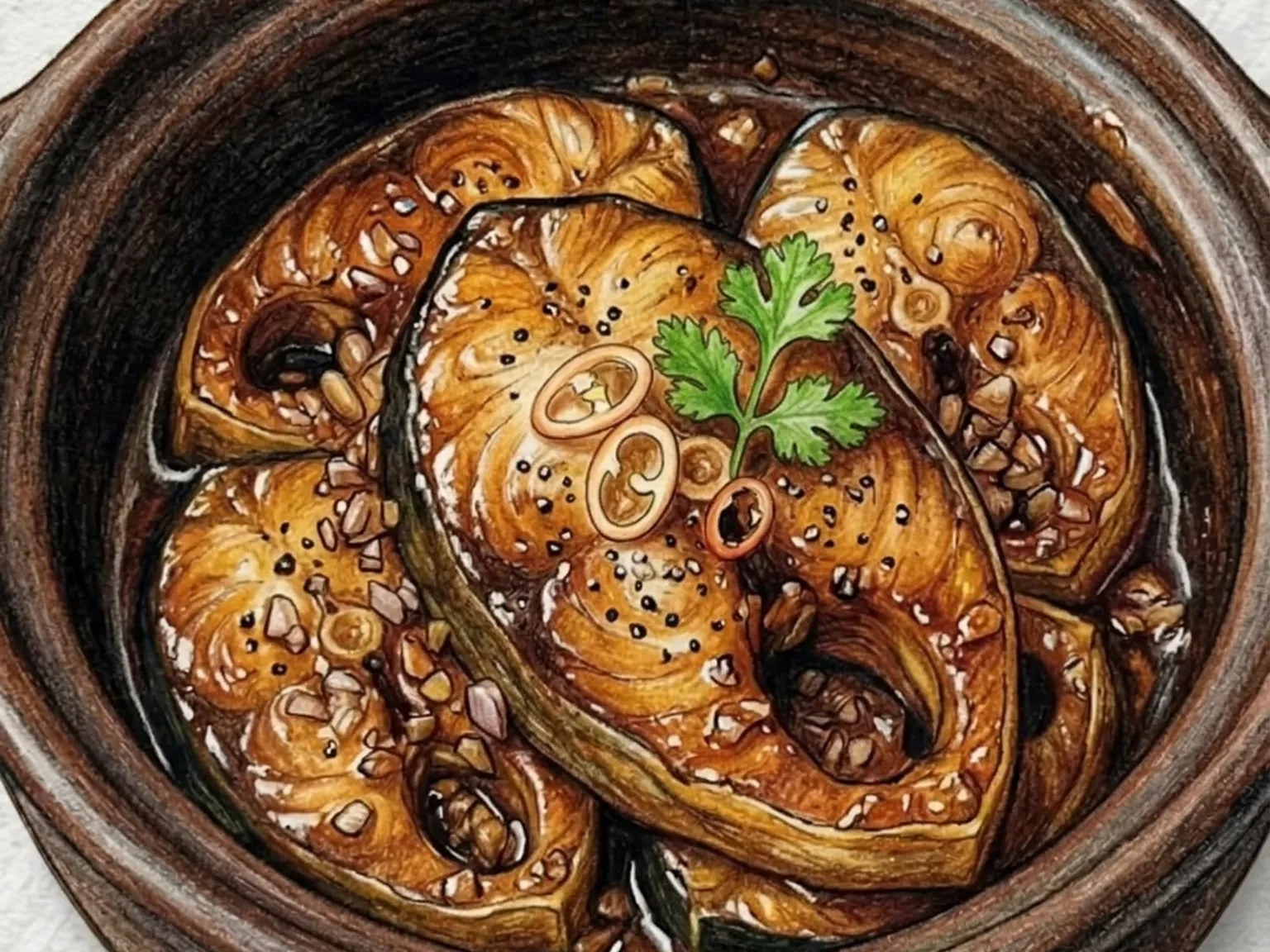
Catfish or white fish is braised in a caramelized sauce of fish sauce, sugar, and coconut water in this Vietnamese home-style dish known as ca kho to. The sugar caramelizes to give the fish a deep amber glaze with a sweet-savory complexity. Shallots and garlic form the aromatic base, while black pepper adds a warm bite. Coconut water lightens the braising liquid with tropical sweetness, creating a dish characteristic of southern Vietnamese cooking.
Adjust Servings
Instructions
- 1
Cut fish into chunks and season with part of fish sauce and pepper.
- 2
Heat sugar and oil over low heat to make caramel.
- 3
Saute shallot and garlic, then add the fish.
- 4
Add remaining fish sauce and coconut water, then braise for 25 minutes.
- 5
Finish when the sauce turns glossy and reduced.
As an Amazon Associate, we may earn from qualifying purchases.
Tips
Nutrition (per serving)
More Recipes

Vietnamese Braised Pork and Eggs
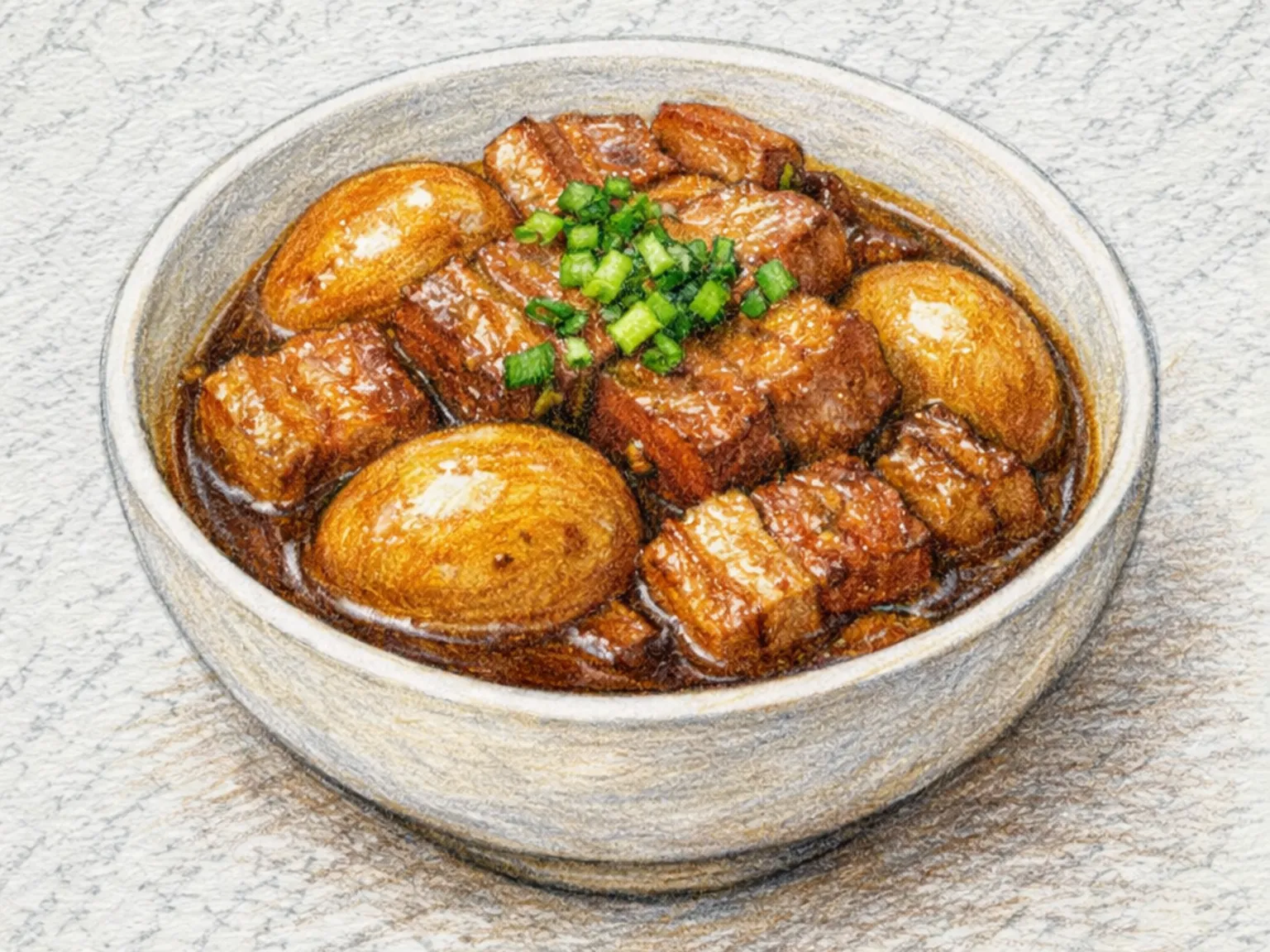
Thit kho trung is a Vietnamese home-style braise of pork shoulder and hard-boiled eggs simmered in coconut water, fish sauce, and a caramel base. Sugar is caramelized in the pot first, then the pork is seared in the darkened sugar to build a deep amber glaze on the surface. Coconut water contributes a gentle, tropical sweetness while keeping the meat moist through the long cook. The eggs absorb the braising liquid over nearly an hour, turning brown all the way through and taking on the full spectrum of salty-sweet seasoning. Spooned over steamed rice, the sauce delivers the distinctive Vietnamese balance of caramel bitterness, fermented fish depth, and coconut softness.

Cha Ca La Vong (Hanoi Turmeric Fish with Dill on Tabletop Grill)
Cha ca La Vong is so iconic that an entire street in Hanoi's Old Quarter - Cha Ca Street - is named after the single dish served at the restaurant that popularized it over a century ago. Firm white fish fillets, typically snakehead or catfish, are marinated in turmeric, galangal, shrimp paste, and rice flour, then pan-seared in oil until the turmeric stains the surface a vivid yellow and a light crust forms. The fish arrives at the table in a sizzling pan set over a tabletop burner, where diners add enormous handfuls of fresh dill and scallion that wilt on contact. The combination of turmeric-stained fish and bright green dill is visually striking and aromatically intense - dill's anise-like fragrance is amplified by the heat. The fish is eaten over rice vermicelli with roasted peanuts, fresh herbs, and a dip of mam tom - fermented shrimp paste thinned with lime juice - whose pungent funk transforms every bite. The dish is uniquely Hanoian, almost never found in southern Vietnam, and the original La Vong restaurant on Cha Ca Street has been serving it since the late 19th century.

Korean Braised Mackerel (Fatty Mackerel with Radish in Spicy Soy Sauce)
Godeungeo-jjim is a Korean braised mackerel dish simmered with Korean radish, onion, and a generous amount of gochugaru and soy sauce. The mackerel's naturally fatty flesh stands up well to the bold, spicy seasoning, and the radish mellows the fish's aroma while absorbing the flavorful broth. Fresh ginger keeps the overall taste clean despite the richness of the ingredients. This is a staple comfort food in Korean households, always served with plenty of steamed rice to soak up the remaining sauce.

Bo Kho (Vietnamese Lemongrass Beef Shank Stew)
Bo kho is Vietnam's answer to beef stew, born in the southern kitchens of Saigon where French colonial influence introduced slow-braised preparations and Vietnamese cooks adapted them with local aromatics. Beef shank and tendon are cut into large chunks and braised with lemongrass, star anise, cinnamon, and annatto oil - the annatto tinting the broth a vivid orange-red that distinguishes bo kho from darker Western stews. Tomato paste and a spoonful of curry powder go in early, building a base that is simultaneously sweet, earthy, and warm. The stew simmers for two hours or more until the beef is fork-tender and the tendon has turned gelatinous, releasing its collagen into the broth and giving it a lip-coating richness. Carrots and daikon radish soften in the liquid during the final thirty minutes. Bo kho is eaten two ways - ladled over rice, or with a crusty baguette for dipping into the aromatic broth. Street vendors in Ho Chi Minh City serve it from dawn, when the morning air carries the scent of star anise from their simmering pots.

Vietnamese Chicken Salad
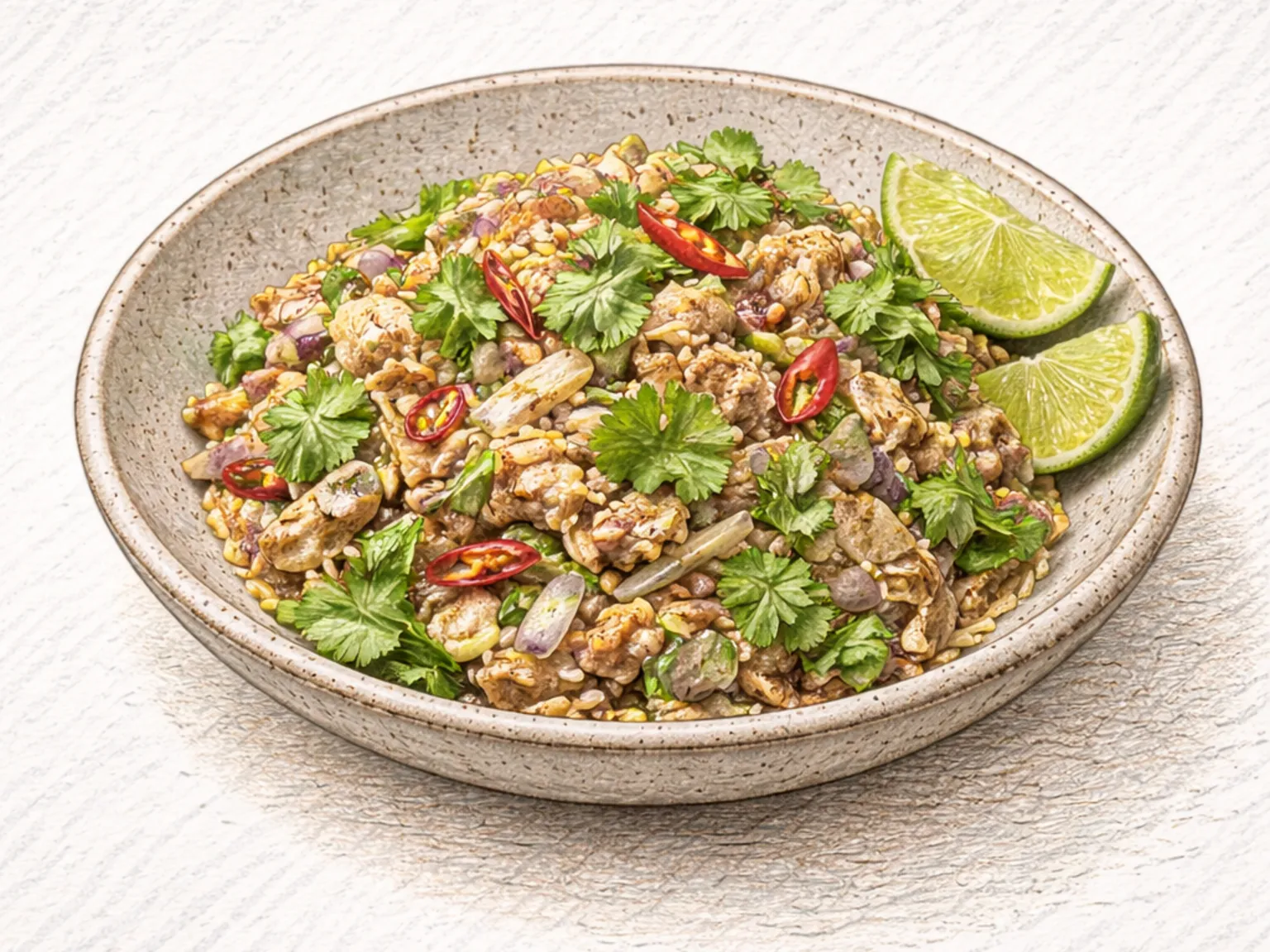
Goi ga - Vietnamese chicken salad - is eaten across Vietnam as a beer snack and appetizer, one of the cuisine's most effective dishes for hot weather when something cool, sharp, and light is needed. A whole chicken is poached and cooled, then shredded by hand along the grain - hand-shredding creates irregular surfaces that trap the dressing and produces a fibrous chew distinct from knife-cut meat. Shredded cabbage, onion, and carrot combine with Vietnamese coriander (rau ram), cilantro, and mint, all tossed in a dressing of fish sauce, lime juice, sugar, chili, and garlic. The dressing's acidity lifts the chicken's mildness, while the fish sauce's depth meets the vegetables' watery crunch to create a balance that is light yet not bland. Fried shallots and crushed roasted peanuts scattered on top add a crunchy dimension that elevates the salad from simple to layered. At bia hoi - Vietnam's fresh-beer street bars - goi ga is among the first dishes ordered, arriving minutes before the first cold glass.

Chao Ga (Vietnamese Chicken Rice Porridge with Ginger)
Chao ga is Vietnam's answer to chicken soup - a gentle, restorative rice porridge eaten for breakfast or when recovering from illness, occupying the same cultural space as samgyetang does in Korea. A whole chicken simmers until the broth is deeply flavored, then rice cooks in that liquid until the grains dissolve into a thick, creamy consistency. Generous slices of ginger warm the stomach and temper any gaminess, while fish sauce adds an underlying umami depth that plain salt cannot achieve. The porridge is ladled into bowls and topped with hand-shredded chicken, fresh cilantro, cracked black pepper, fried shallots, and strips of you tiao - Chinese fried dough - whose crunch against the soft porridge creates a textural contrast essential to the dish. In Hanoi's early-morning alleys, chao ga vendors work from a single pot, serving hundreds of bowls before noon.