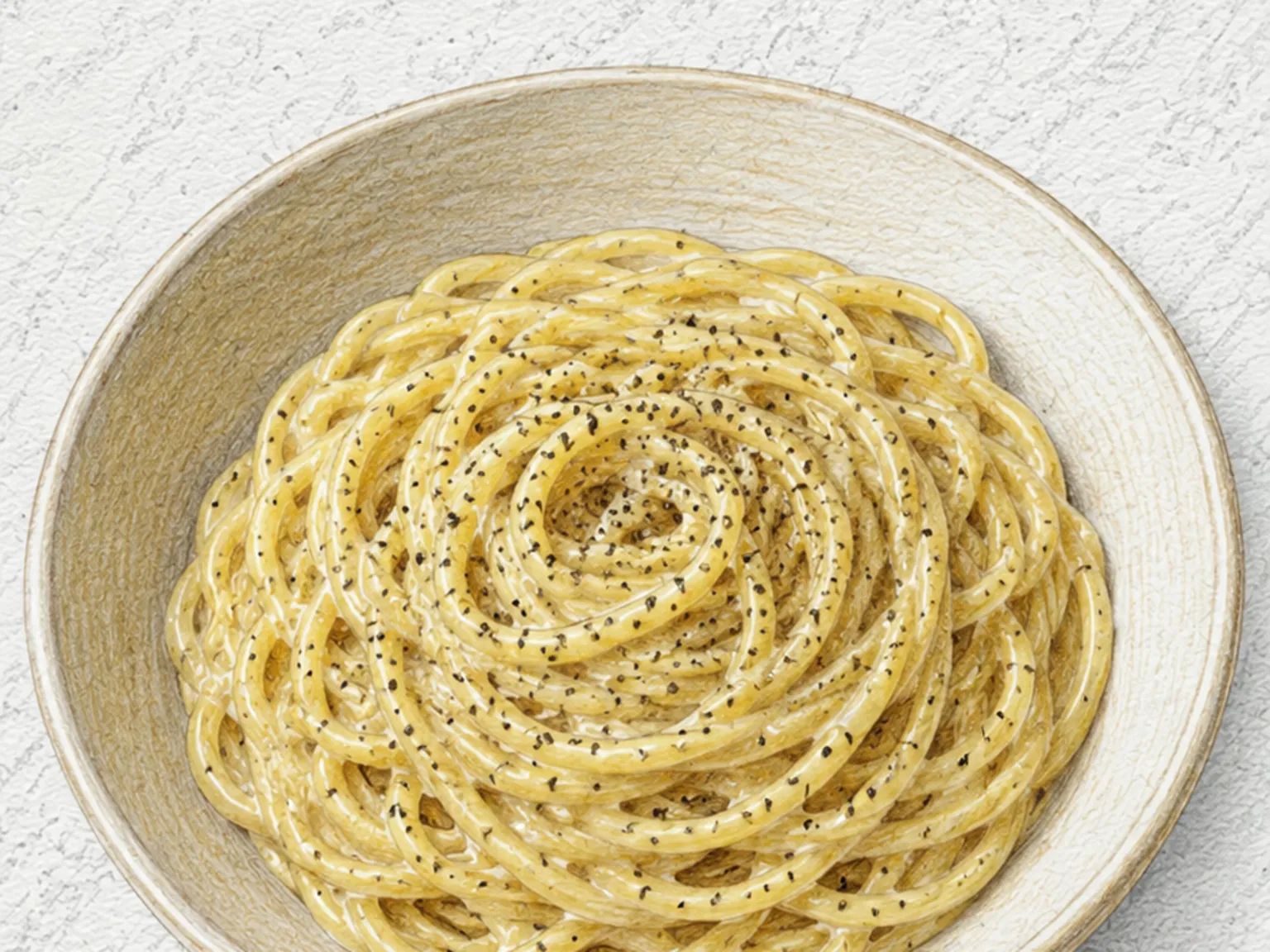
Cacio e Pepe (Pecorino Cheese and Black Pepper Pasta)
This Roman classic achieves remarkable depth from just two starring ingredients: Pecorino Romano cheese and black pepper. The technique is everything. Finely grated cheese must be emulsified with starchy pasta water off the heat to form a glossy, clump-free sauce that coats every strand. Toasting whole peppercorns in a dry pan before crushing them coarsely releases volatile oils that give the dish its distinctive sharp, floral bite. The cheese contributes a salty, tangy intensity that needs no additional seasoning. Tonnarelli or spaghetti, with their round cross-sections, grip the sauce most effectively, ensuring that each twirl of the fork delivers a full measure of peppery, cheesy richness. Timing is critical: even a few seconds of excess heat can turn the smooth sauce into grainy clumps.
Adjust Servings
Instructions
- 1
Toast black pepper in a dry pan, then grind coarsely.
- 2
Cook spaghetti in salted water, slightly underdone.
- 3
Finely grate both cheeses; reserve 100~150ml pasta water.
- 4
In the pan, combine pepper and pasta water, bring to a boil, then add pasta.
- 5
Off heat, gradually add cheese while tossing, using pasta water to achieve a creamy consistency.
As an Amazon Associate, we may earn from qualifying purchases.
Tips
Nutrition (per serving)
More Recipes

Spaghetti Carbonara
Carbonara is a Roman pasta built on four core ingredients: guanciale, egg yolks, Pecorino Romano, and black pepper. The guanciale is rendered until crisp, and its fat becomes the base of the sauce. Off the heat, a mixture of yolks and grated cheese is tossed with the hot pasta and starchy cooking water to form a glossy emulsion - no cream involved. The dish takes under 25 minutes from start to finish, though temperature control at the sauce stage is critical to avoid scrambling the eggs.

Rigatoni all'Amatriciana (Roman Guanciale Tomato Spicy Pasta)
Rigatoni all'Amatriciana is a Roman pasta where crisp-rendered guanciale fat forms the base of a tomato sauce enriched with peperoncino heat. White wine deglazes the pan before crushed whole tomatoes are added and simmered for fifteen minutes to thicken. The ridged surface of rigatoni traps the sauce, ensuring each bite carries the full flavor of cured pork and tomato. A generous grating of Pecorino Romano finishes the dish with sharp, salty contrast.

Pasta Puttanesca (Neapolitan Anchovy Olive Caper Tomato Sauce)
Pasta puttanesca is a Neapolitan pasta sauce built from anchovies melted into olive oil, crushed whole tomatoes, black olives, capers, and peperoncino. The anchovies dissolve completely during cooking, leaving behind a deep umami foundation rather than a fishy taste. Olives and capers provide enough salt that additional seasoning is rarely needed. The entire sauce comes together in under twenty minutes using shelf-stable pantry ingredients.

Pasta alla Gricia (Roman Guanciale Pecorino Black Pepper Pasta)
Pasta alla Gricia is one of Rome's four classic pastas, made with only guanciale, Pecorino Romano, and black pepper. The cured pork jowl is rendered slowly until crisp, and its fat becomes the foundation of the sauce. Cooked pasta and a splash of starchy pasta water are tossed with finely grated Pecorino to form a creamy emulsion without any cream. It is considered the ancestor of both carbonara and amatriciana, predating the introduction of tomato and egg to those dishes.

Gochujang Eggplant Ricotta Lasagna Rolls
Gochujang eggplant ricotta lasagna rolls roast diced eggplant at 200 degrees Celsius with olive oil and salt until the flesh turns creamy, then spread the roasted eggplant with ricotta onto boiled lasagna sheets, roll them up, and bake under a spicy gochujang-tomato sauce. Roasting the eggplant for fifteen minutes collapses its cellular structure, driving out water and concentrating its mild sweetness. The tomato sauce is built by sauteing onion and garlic, then simmering tomato puree with gochujang and dried oregano for ten minutes until the heat from the chili paste integrates with the tomato's acidity. Mozzarella melted over the assembled rolls forms a browned, crisp cap during the final bake, while the filling inside stays moist and soft. The contrast between the crunchy cheese top and the tender eggplant-ricotta interior defines the texture of each slice.

Chicken Marsala
Chicken Marsala pounds chicken breast thin, dredges it in flour, and pan-sears it until golden, then builds a sauce from Marsala wine, sliced mushrooms, chicken stock, and a finish of heavy cream. Deglazing the pan with Marsala lifts the browned fond from the surface, concentrating the wine's sweetness and acidity into a deeply flavored base. The mushrooms are sauteed until their moisture evaporates, which intensifies their earthy taste rather than diluting the sauce. Adding cream at the end gives the sauce a velvety body without making it heavy. Dry Marsala is essential - sweet Marsala produces an overly sugary sauce and masks the wine's characteristic walnut and caramel nuances.