Caldo Verde (Portuguese Potato Soup with Kale and Sausage)
Quick answer
Caldo verde is Portugal's most emblematic soup, originating in the Minho region of the north and eaten across the country at festivals, family tables, and everyday meals.
What makes this special
- Portuguese Caldo Verde uses pureed potatoes to create a velvet body for kale and garlic sausage.
- Fully pureed potato starch creates velvet body without cream or roux
- Kale sliced paper-thin and added last 8 minutes keeps the vivid green and bite
Key ingredients
Core cooking flow
- 1 Peel 500 g potatoes and cut them into 3 cm chunks so they cook evenly.
- 2 Heat 1 tablespoon olive oil in a soup pot over medium heat until it shimmers.
- 3 Add the potatoes, 1200 ml water, and 1 teaspoon salt, then bring the pot to a boil over high heat.
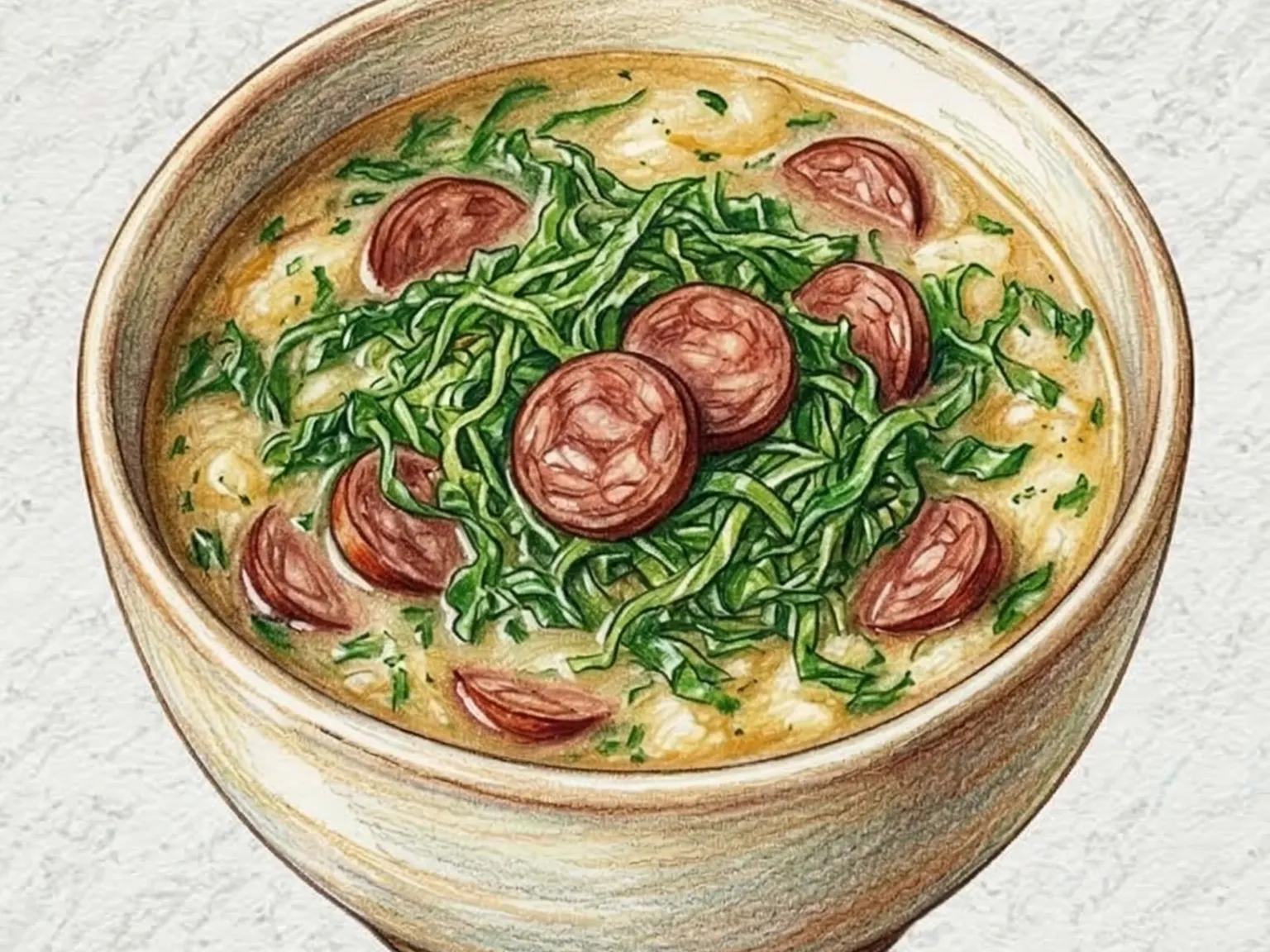
Caldo verde is Portugal's most emblematic soup, originating in the Minho region of the north and eaten across the country at festivals, family tables, and everyday meals. A base of potatoes and onion is simmered in water until the potatoes fall completely apart, then blended smooth so the natural starch thickens the soup without any added cream, flour, or roux. The result is a velvety texture built entirely from vegetables and water. Sliced smoked chourico or linguica is added next, and as the sausage heats through its rendered fat and smoky salt diffuse through the broth, adding depth and richness that a plain potato soup cannot offer. Collard greens or kale are cut into the thinnest possible ribbons and cooked for only the final eight minutes, which keeps the color vivid green and the texture slightly resistant to the bite. Overcooking dulls the color to olive and turns the leaves soft and stringy. A drizzle of olive oil over each bowl and thick slices of broa, a dense Portuguese cornbread, alongside the soup allow the broth to soak into the crumb and complete what is otherwise a simple but deeply satisfying meal.
Instructions
Read the steps as a cooking flow: prep, heat, seasoning, doneness control, and finish.
- 1Heat
Peel 500 g potatoes and cut them into 3 cm chunks so they cook evenly.
Roughly dice 120 g onion, mince 2 garlic cloves, and keep the aromatics ready because they will go into the pot in quick sequence.
- 2Control
Heat 1 tablespoon olive oil in a soup pot over medium heat until it shimmers.
Add the onion and cook for about 4 minutes until translucent, then add the garlic for only 1 minute so it smells fragrant without browning.
- 3Control
Add the potatoes, 1200 ml water, and 1 teaspoon salt, then bring the pot to a boil over high heat.
Lower to a gentle simmer and cook 20 to 25 minutes, until a potato piece collapses easily under a fork.
- 4Control
Reduce the heat briefly and blend the soup in the pot with an immersion blender.
Keep the blade fully under the liquid to prevent splashing, blend until velvety, and simmer uncovered 3 to 5 minutes if it looks too thin.
- 5Control
Remove the stems from 150 g kale and slice the leaves into very thin ribbons.
Cut 180 g smoked sausage into 0.5 cm rounds, add both to the soup, and simmer gently for only 8 minutes.
- 6Finish
Turn off the heat while the kale is still vivid green and slightly firm to the bite.
Taste after the sausage has released its saltiness, adjust with a little salt if needed, and serve the soup thick enough to coat bread.
After the steps
Pick a recipe that fits this dish.
Continue with shared ingredients, meal pairings, or a similar method.
Recipes That Go Well With This
More Western →Based on shared ingredients and meal pairing
Zuppa Toscana (Hearty creamy soup with sausage)
Zuppa Toscana is a warm Italian style soup featuring seasoned sausage, potatoes, and kale in a creamy broth. The cooking starts by browning the Italian sausage to render its flavorful fat, which is then used to sauté the minced garlic and chopped onion. Slicing the potatoes to a thickness of at least 0.5 centimeters prevents them from disintegrating during the twelve minutes of simmering in chicken stock. Once the potatoes soften, the cooked sausage and kale are incorporated, allowing the greens to wilt without releasing any bitterness. The dish is finished by stirring in heavy cream and black pepper over low heat. Keeping the heat low prevents the cream from splitting, resulting in a cohesive, smooth broth that pairs well with the textured ingredients.
Bacalhau com Natas (Portuguese Salt Cod Cream Gratin)
Bacalhau com natas - salt cod with cream - is a Portuguese casserole-style gratin that layers desalted cod, potatoes, and softened onion beneath a thick blanket of cream-enriched bechamel, then bakes until the surface blisters and turns golden brown. The cod requires prolonged soaking, typically forty-eight hours or more with several water changes, to draw out enough salt while preserving the firm, flaky texture of the fish. It is then briefly poached and separated into large pieces that retain structure in the baking dish rather than dissolving into the sauce. Thinly sliced potatoes, parboiled until just softened, alternate with the fish in even layers, and sweet, slowly cooked onion fills the gaps between them. A bechamel made with heavy cream - natas in Portuguese - is poured over everything, seeping into the crevices before baking begins. As the dish heats, the cream sauce tightens, potato edges that protrude through the surface curl and crisp, and the top develops scattered patches of deep gold where the milk proteins have caramelized. The result is simultaneously rich and precise: the cod residual mineral salinity cuts through the cream smoothness and prevents the dish from becoming cloying. Bacalhau com natas is a fixture of the Portuguese Christmas Eve meal known as consoada, appearing alongside other salt cod preparations at a table where bacalhau takes on a near-ritual significance.
Roasted Mushroom Perilla Potato Salad
Potatoes are boiled skin-on and roughly mashed with a fork to keep a mix of fluffy interior and chunky structure rather than a smooth puree. King oyster mushrooms are torn lengthwise into thick strips and pan-roasted in olive oil until chewy and deeply savory, developing color on the cut surfaces. Perilla seed powder and Greek yogurt create a nutty, creamy binder that unifies the two main components without masking their individual flavors. Shredded perilla leaves release their bold, anise-like fragrance across the entire plate, while lemon juice and minced garlic cut through the richness and sharpen the overall aroma. Two distinctly Korean aromatics, perilla seed and perilla leaf, give the familiar potato salad format a flavor profile that diverges significantly from its Western counterpart. The salad is best at room temperature, where the potato texture stays fluffy and the mushrooms hold their chew; if refrigerated, pulling it out 30 minutes before serving restores the right consistency.
Keullaem Chaudeo (Clam Chowder)
Clam chowder is a thick American soup that combines clams, diced potatoes, onion, and celery in a milk-based broth thickened with a butter-and-flour roux. Sauteing the onion and celery in butter for three minutes draws out their natural sweetness before the flour goes in. Adding milk gradually while whisking prevents lumps and builds a smooth, creamy consistency. The potatoes simmer for twelve minutes until tender, and the clams are added only in the final three minutes to keep them from turning rubbery. Each spoonful delivers a balance of briny, oceanic depth from the clams and mild richness from the milk base.
Serve with this
Yuja Burrata Cherry Tomato Spaghetti
Yuja burrata cherry tomato spaghetti builds its base by slowly infusing olive oil with sliced garlic over low heat, then cooking cherry tomatoes on medium until they burst and release their juices into a loose, bright sauce. Yuja marmalade and yuja juice are stirred in for only 30 seconds to preserve the citrus volatiles before they are driven off by heat. The marmalade's considerable sweetness is balanced against the tomato's acidity and added gradually to taste. Tossing al dente spaghetti with a splash of reserved pasta water binds the starch into the sauce for a smooth, even coat on each strand. Burrata is torn open and placed on top just before serving so its creamy, milky interior melts across the hot pasta, producing a clear contrast between the sharp citrus and the rich dairy fat. The distinctive fragrance of yuja combined with the bright tomato sauce gives this Italian-format pasta a recognizably Korean sensibility.
Korean Five-Grain Sweet Rice Punch
Ogok-sikhye is a traditional Korean grain punch made by saccharifying a mix of cooked sweet rice, barley, millet, and foxtail millet in barley malt extract at 60 to 65 degrees Celsius for one hour. The malt powder is soaked in lukewarm water for 20 minutes, kneaded by hand, and strained through a cloth to yield a clear, enzyme-rich liquid -- this is the working ingredient that converts the grain starches into natural sugars during the slow saccharification. Temperature control is central to the process: below 60 degrees the enzymes slow down, and above 70 degrees they denature and die, so maintaining the right range throughout the hour-long rest determines whether the conversion succeeds. As saccharification progresses, the rice grains hollow out and float to the surface; these are skimmed off, rinsed separately, and later floated back into the finished punch to add a soft, chewable element to each cup. After sweetening with sugar and chilling completely in the refrigerator, the drink is served cold with pine nuts floating on top. The combination of multiple grains produces a more layered, complex sweetness than single-grain sikhye, and the overnight rest in the refrigerator smooths the flavor into something more cohesive.
Candied Sweet Potato
Goguma mattang is a Korean candied sweet potato snack made by cutting peeled sweet potatoes into large chunks and deep-frying them at 170 degrees Celsius until the interior turns floury and soft. A syrup of sugar, corn syrup, water, and a measured splash of soy sauce is cooked separately until large, foamy bubbles form - the visual cue for adding the fried sweet potatoes. Everything must be coated within thirty seconds to lock in a thin, glass-like caramel shell that crisps and turns translucent as it cools. The soy sauce shifts the flavor from purely sweet to a rounded, slightly savory depth. Pre-draining surface moisture from the cut sweet potatoes reduces oil splatter during frying and helps the syrup grip the pieces evenly. Black sesame seeds are scattered over the finished pieces for a toasted, nutty note, and each piece is spread individually on parchment paper while still warm so they cool without sticking together.
Similar recipes
Potato Leek Soup
Potato leek soup is a French home-style cream soup made by sweating leeks and onion in butter over low heat, simmering with diced potatoes in chicken stock, and blending until velvety smooth. Cooking the leeks slowly is essential - it dissolves their raw sharpness into a sweet, mellow base that carries the entire soup. The potato starch provides natural body without any added thickener, and an immersion blender produces a seamless, silky texture. Heavy cream stirred in at the end adds a layer of richness and rounds out the flavor. The soup can be served hot for a comforting meal or chilled as vichyssoise for a refined summer starter.
Portuguese Egg Tart (Flaky Pastry with Caramelized Custard)
Flaky puff pastry shells are pressed into muffin tins and filled with a rich egg yolk custard, then baked at very high heat until the tops blister with dark caramelized spots. Those charred patches are not a mistake but the defining feature of the tart, contributing a bittersweet complexity that balances the sweet, creamy filling below. The custard sets to a trembling consistency that is firm enough to hold when the tart is lifted but soft enough to melt on the tongue. Vanilla extract added to the custard rounds out the egg richness with a floral note. Straining the custard through a fine sieve before filling ensures a perfectly smooth texture. The extreme oven temperature is what separates these from ordinary custard tarts, as it caramelizes the surface in minutes while keeping the interior silky.
Gamjaguk (Potato Doenjang Anchovy Soup)
Gamjaguk is a clear, mild Korean soup built on a foundation of anchovy stock with potatoes as the main ingredient, seasoned with either doenjang or plain salt. As the potatoes cook through, they release starch gradually into the broth, giving it a subtle body that makes each spoonful feel substantial without turning the liquid cloudy. When doenjang is used, the fermented paste contributes a layered, earthy savoriness that wraps around the gentle sweetness of the potato. Seasoning with salt alone lets the potato's natural, unadorned flavor stand at the center without competition. Garlic and green onion are added as the aromatic base, providing a mild, savory fragrance that keeps the broth from tasting flat. A handful of zucchini slices added midway through cooking introduces a soft, yielding texture and a touch of pale green color. The potatoes need to be pulled from heat at the point when a chopstick slides through without resistance, because overcooking breaks them apart and muddies the broth. With only a few ingredients required, this soup comes together quickly even when the refrigerator is nearly empty, which is part of why it appears on Korean tables more consistently than almost any other soup.