Charim

2686 Korean & World Recipes

2686+ Korean recipes, clean and organized. Ingredients to instructions, all at a glance.

Cantonese Steamed Fish
Asian Easy

Cantonese Steamed Fish

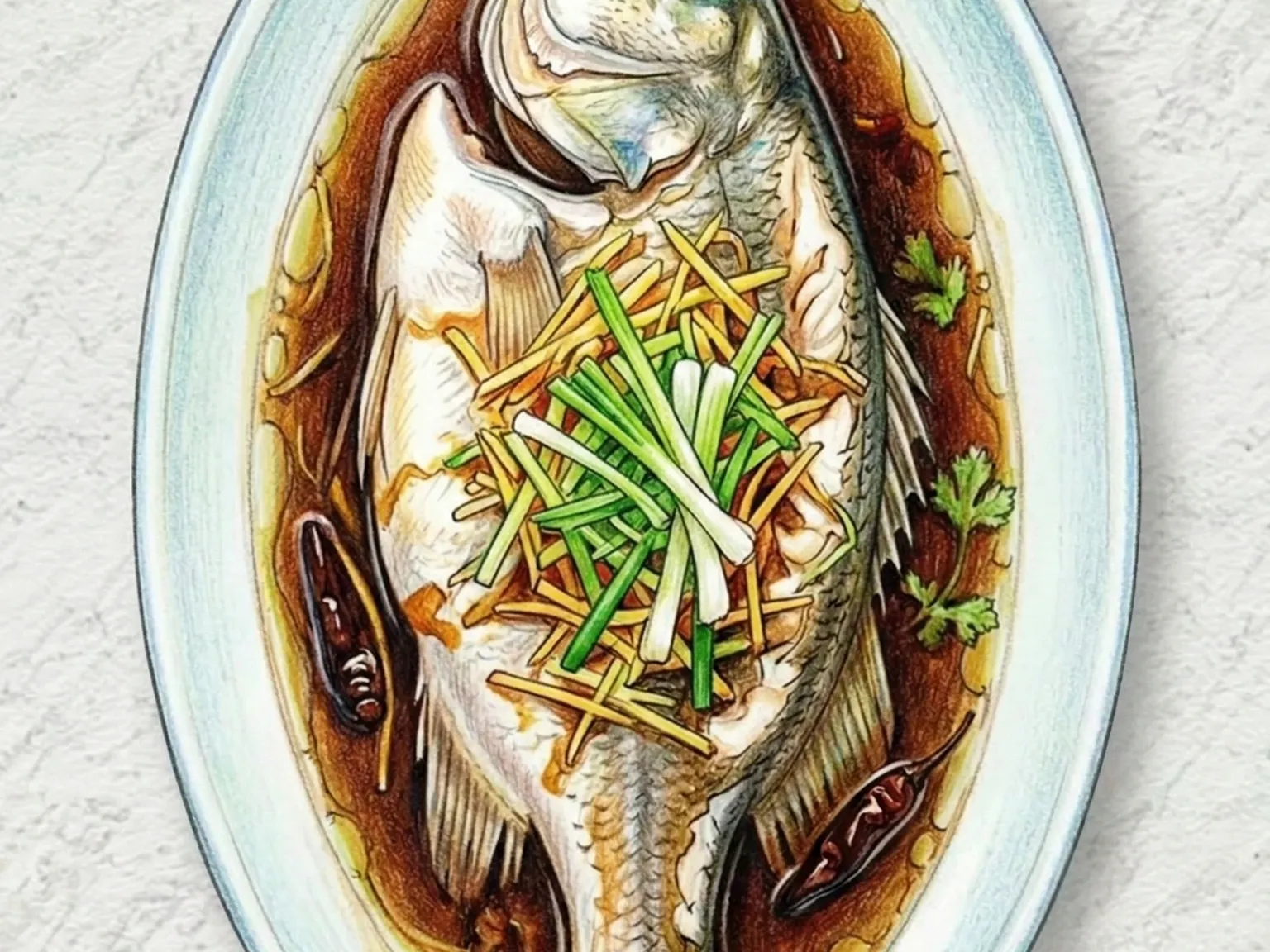
Cantonese steamed fish - ching jing yu - embodies the Cantonese culinary philosophy of letting premium ingredients speak for themselves with minimal intervention. The technique demands the freshest possible whole fish - sea bass, grouper, or pomfret - because steaming hides nothing; any hint of staleness is immediately exposed. The fish is scored, placed on a plate with ginger slices tucked underneath and inside the cavity, then steamed over roiling water for exactly eight to ten minutes depending on thickness. Overcooking by even a minute turns the flesh from silky and translucent to dry and chalky. The moment the fish leaves the steamer, any accumulated liquid is drained - it carries a fishy taste that would spoil the dish. Julienned scallion and ginger are piled on top, then a ladle of smoking-hot oil is poured directly over them, sizzling the aromatics and releasing their fragrance into the fish. A final drizzle of seasoned soy sauce and a few drops of sesame oil complete the dish. In Cantonese banquet culture, the steamed fish course is often the most expensive item on the table, chosen live from a restaurant tank.

Prep 15min Cook 12min 2 servings

Adjust Servings

2servings
servings

Instructions

  1. 1

    Top fish with some julienned ginger and steam for 8-10 minutes.

  2. 2

    Mix soy sauce, sugar, and sesame oil for the seasoning sauce.

  3. 3

    Drain excess liquid from fish and top with remaining ginger and scallion.

  4. 4

    Pour the soy seasoning evenly over the fish.

  5. 5

    Heat oil until very hot and pour over the aromatics to release fragrance.

🛒Shop Ingredients on Amazon

As an Amazon Associate, we may earn from qualifying purchases.

Tips

Increase steaming time by 2-3 minutes for thicker fillets.
Start with 1.5 tbsp soy if using a very salty brand.

Nutrition (per serving)

Calories
290
kcal
Protein
33
g
Carbs
4
g
Fat
15
g

More Recipes

Cantonese Steamed Seabass
SteamedMedium

Cantonese Steamed Seabass

Qingzheng seabass is a Cantonese steamed fish dish where a scored seabass is rubbed with julienned ginger and rice wine, then steamed on high heat for ten to twelve minutes. A light sauce of soy and sugar is poured over the cooked fish, shredded scallions are piled on top, and sizzling hot oil is drizzled over everything to release an intense burst of allium fragrance. The fish flesh stays moist with its flaky grain intact, and the soy dressing is deliberately restrained so the seabass's own mild, clean taste remains the focus. The simplicity of the preparation and the dramatic finish of hot oil over scallions represent the Cantonese philosophy of letting quality ingredients speak for themselves.

🎉 Special Occasion
Prep 20minCook 15min2 servings
Douhua (Silky Tofu Pudding Dessert)
AsianMedium

Douhua (Silky Tofu Pudding Dessert)

Douhua - tofu pudding - has been a beloved street dessert across China, Taiwan, and Southeast Asian Chinese communities for centuries, occupying the same foundational role in Asian sweets that custard holds in European traditions. Freshly pressed soy milk is set with a coagulant such as gypsum or glucono delta-lactone, then left undisturbed until it solidifies into a texture softer than pudding yet more substantial than liquid - a trembling, barely-set curd that quivers on the spoon. In Taiwan, it is served cold with brown sugar syrup, tapioca pearls, red beans, or peanuts; in Hong Kong, a hot ginger sugar syrup is ladled over the warm curd. The tofu itself carries only the faintest nuttiness of soybean, letting the toppings define each bowl's character. Sold at Taiwanese night markets for pocket change, douhua appears simple but demands precise temperature control during coagulation - too fast and the curd turns grainy, too slow and it never sets.

🧒 Kid-Friendly
Prep 10minCook 15min2 servings
Cantonese Har Gow Dumplings
AsianHard

Cantonese Har Gow Dumplings

Har gow is the benchmark dumpling of Cantonese dim sum, wrapped in a translucent skin made from wheat starch and tapioca starch mixed with boiling water. The boiling water instantly gelatinizes the starch, producing a pliable, slightly chewy dough unlike anything wheat flour alone can achieve. A small amount of oil kneaded into the dough ensures a smooth, workable surface. The shrimp filling is intentionally chopped coarsely rather than minced fine, so each bite yields a springy, snappy texture. Finely diced bamboo shoots add a subtle crunch that contrasts with the soft shrimp. Seasoning stays minimal, just sesame oil, salt, and white pepper, to foreground the natural sweetness of the shrimp. The dough stiffens quickly as it cools, requiring small-batch work, and the dumplings steam for only six to seven minutes until the wrappers turn glassy and the pink shrimp shows through.

🎉 Special Occasion
Prep 35minCook 12min4 servings
Cong You Ban Mian (Scallion Oil Noodles)
AsianEasy

Cong You Ban Mian (Scallion Oil Noodles)

Cong you ban mian - Shanghai scallion oil noodles - is a dish that achieves remarkable depth from almost nothing: noodles, scallions, soy sauce, and oil. The secret lies in the scallion oil itself - scallions fried slowly in neutral oil over low heat for nearly thirty minutes until their moisture evaporates entirely and they turn a deep, dark brown, at which point the raw bite of the scallion has transformed into a sweet, caramelized fragrance. The technique demands patience; too much heat and the scallions burn bitter, too little and the oil never develops complexity. Freshly boiled noodles are tossed with soy sauce and a generous spoonful of the amber scallion oil, then topped with the crisp, shriveled scallion bits that crunch against the springy noodles. In Shanghai's lane-house noodle shops, a bowl costs three yuan and is eaten standing at the counter - a reminder that great food need not be complicated or expensive, only made with care.

🏠 Everyday🌙 Late Night
Prep 10minCook 15min2 servings
Cantonese Honey Char Siu (Glazed BBQ Pork with Five-Spice Honey)
AsianMedium

Cantonese Honey Char Siu (Glazed BBQ Pork with Five-Spice Honey)

Char siu is the quintessential Cantonese roast meat, recognizable by its glossy, lacquered appearance hanging in the windows of siu laap shops across Hong Kong and Guangzhou. Pork neck or shoulder marinates overnight in soy sauce, hoisin, five-spice powder, Shaoxing wine, and honey, then roasts at high heat while being basted repeatedly with a honey glaze that builds into a caramelized, slightly charred crust. The traditional method suspends the meat on hooks inside a charcoal oven, allowing even heat distribution and natural fat drainage. The edges, where honey carbonizes against the direct flame, develop a faintly bitter char that counterpoints the sweetness - this blackened fringe is the most prized part. Char siu is eaten sliced over rice as a one-plate meal, draped over wonton noodles, or served cold with hot mustard as an appetizer. The balance between sweet glaze, smoky exterior, and the naturally fatty pork interior defines great char siu.

🎉 Special Occasion🍱 Lunchbox
Prep 20minCook 45min4 servings
Chinese Red-Braised Fish (Hong Shao Yu)
SteamedMedium

Chinese Red-Braised Fish (Hong Shao Yu)

Golden pan-seared white fish glazed in a glossy, caramelized soy-sugar sauce with ginger and green onion -- a Chinese home-cooking classic ready in under 30 minutes. Searing creates a firm exterior that holds the fish together throughout braising, while ginger and green onion infuse the sauce with fragrance and neutralize any fishiness. The sauce reduces into a glossy, dark glaze that coats each piece of fish. With a cooking time under 30 minutes, this is a practical weeknight dish that delivers the deep, caramelized soy flavors of long-braised Chinese cooking in a fraction of the time.

🎉 Special Occasion
Prep 20minCook 25min4 servings
More Asian →