Caramel Flan
Baking Medium

Caramel Flan

Quick answer

Caramel flan is a Spanish and Latin American custard dessert built entirely on the contrast between two preparations of sugar.

What makes this special

  • Deep amber caramel provides a bitter counterpoint to the smooth Spanish custard.
  • Caramel cooked to deep amber adds bitter counterpoint to custard
  • Low 150C water bath over 40 minutes sets bubble-free silky texture
Total time
60 min
Level
Medium
Servings
4 servings
Ingredients
6
Calories
270 kcal
Protein
8 g

Key ingredients

sugarwatereggsegg yolksmilk

Core cooking flow

  1. 1 Combine 90g sugar and 50ml water in a saucepan and heat over medium heat without stirring.
  2. 2 Warm 400ml milk and remaining 50g sugar over medium heat until the sugar fully dissolves.
  3. 3 Lightly whisk 3 whole eggs and 2 egg yolks in a bowl without creating foam.

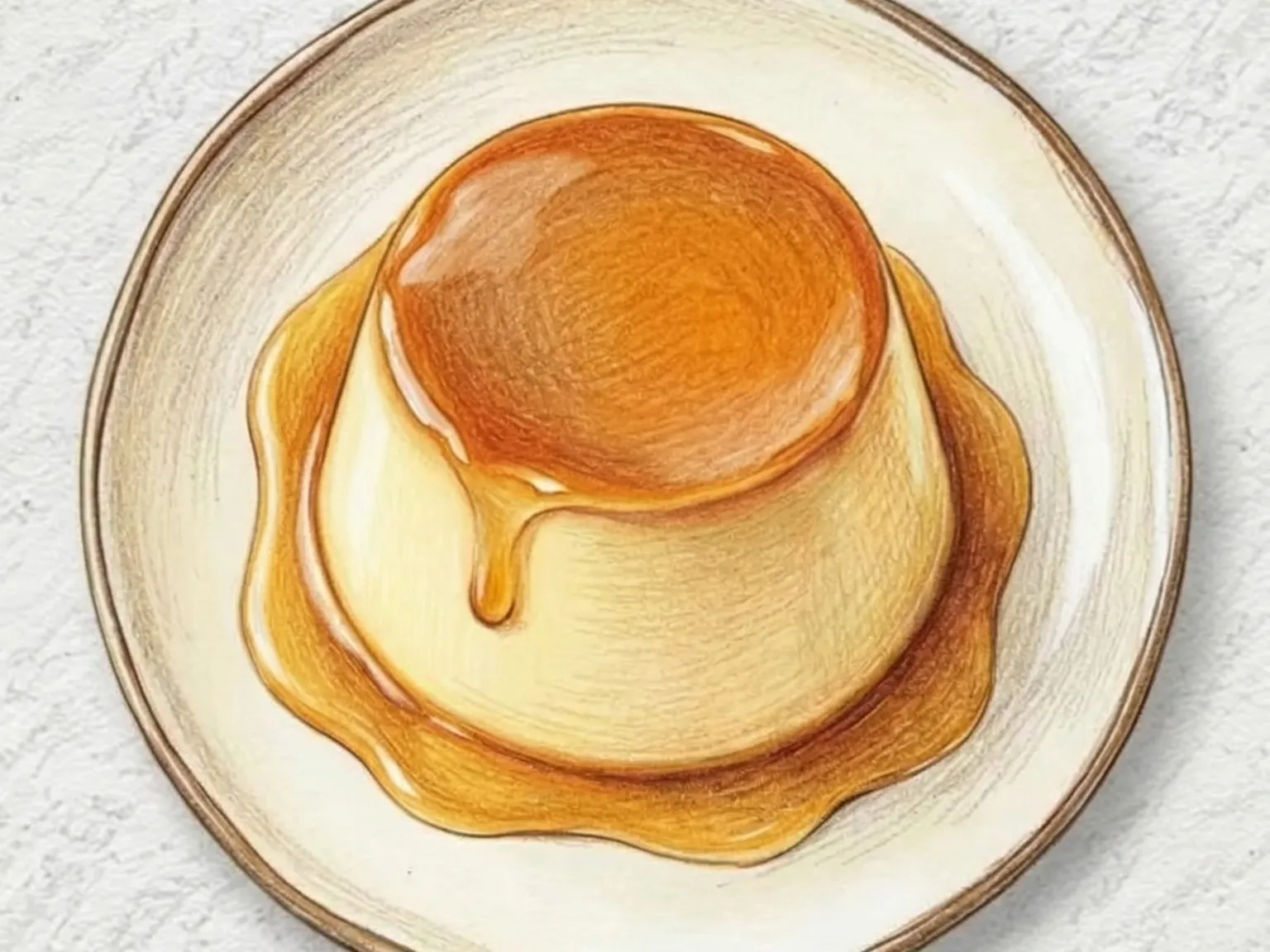
Caramel flan is a Spanish and Latin American custard dessert built entirely on the contrast between two preparations of sugar. The first is a dry caramel cooked in a pan until it reaches a deep amber color, at which point it is poured into the bottom of a mold and left to harden into a glossy layer. The second is a liquid custard of eggs, milk, sugar, and vanilla that is poured on top of the caramel and baked in a water bath. The water bath is critical: it moderates the oven temperature around the mold and prevents the proteins in the egg from contracting too quickly, which would produce a grainy or bubbly texture rather than the smooth, even set that characterizes a well-made flan. Once the custard is baked and fully chilled, the mold is inverted onto a serving plate -- the hardened caramel layer, having been in contact with the custard throughout the baking and cooling time, has liquefied back into a flowing sauce that spills over the pale custard in amber streaks. The flavor follows the visual contrast: the custard is mild, milky, and gently sweet, while the caramel adds a roasted, slightly bitter depth that prevents the dessert from being simply sweet. It is always served cold, and the smooth trembling surface of a properly set flan is considered a mark of careful technique.

Prep 15min Cook 45min 4 servings
Recipes by ingredient → egg milk

Instructions

Read the steps as a cooking flow: prep, heat, seasoning, doneness control, and finish.

6 steps
  1. 1
    Control

    Combine 90g sugar and 50ml water in a saucepan and heat over medium heat without stirring.

    When the caramel turns from golden to deep amber, immediately pour it into the base of the mold. Caramel sets quickly so work fast.

  2. 2
    Control

    Warm 400ml milk and remaining 50g sugar over medium heat until the sugar fully dissolves.

    Do not bring to a boil; aim for around 60°C.

  3. 3
    Step

    Lightly whisk 3 whole eggs and 2 egg yolks in a bowl without creating foam.

    Ladle the warm milk into the eggs one scoop at a time to temper gradually, preventing the eggs from curdling.

  4. 4
    Step

    Add 1 teaspoon vanilla extract, strain through a fine mesh sieve to remove any lumps, then slowly pour into the caramel-lined mold.

  5. 5
    Heat

    Place the mold in a deep roasting pan and add enough boiling water to reach halfway up the sides.

    Bake in a 150°C oven in the water bath for 40 to 45 minutes until the center jiggles gently when shaken.

  6. 6
    Finish

    Cool at room temperature then refrigerate for at least 4 hours.

    To unmold, run a knife around the edge of the mold, place a serving plate on top, and invert in one motion. The caramel will cascade down over the flan.

After the steps

Pick a recipe that fits this dish.

Continue with shared ingredients, meal pairings, or a similar method.

Recipes That Go Well With This

More Baking →

Based on shared ingredients and meal pairing

Flan Parisien (Parisian Vanilla Custard Tart)
Shared ingredient: egg Baking

Flan Parisien (Parisian Vanilla Custard Tart)

Flan Parisien is a Parisian bakery staple found in nearly every boulangerie in the city. A buttery shortcrust pastry shell holds a thick, firm vanilla custard that bakes slowly until the top develops caramelized brown spots. The custard is made from milk, eggs, sugar, and cornstarch, which gives it a denser, sliceable consistency that distinguishes it from softer baked custards like creme brulee. When properly cooled, the filling holds its shape when cut yet melts smoothly on the tongue with a clean vanilla flavor. Vanilla bean seeds speckled throughout the custard signal that the real ingredient was used rather than extract. The pastry shell must be blind-baked first to prevent sogginess, then filled and baked again until set. It is served cold, and the contrast between the crisp, buttery shell and the cool, trembling custard makes each bite satisfying. Allowing the flan to cool fully at room temperature before refrigerating prevents the custard from cracking or collapsing when sliced, which is the most common mistake when cutting too soon after baking.

Bread Pudding
Shared ingredient: egg Baking

Bread Pudding

Bread pudding transforms leftover bread into a warm, custardy dessert by soaking thick slices in a mixture of eggs, whole milk, and heavy cream, then baking until the custard sets. Allowing the bread to soak for at least twenty minutes before baking ensures the liquid penetrates all the way through each slice so the interior bakes into something closer to a soft, yielding pudding, while the top layer exposed to the oven heat crisps into a golden-brown crust. Cinnamon stirred into the custard base distributes a warm spiced fragrance through the entire dish, and vanilla extract rounds out the egg flavor. Served warm with a scoop of vanilla ice cream or a pour of bourbon caramel sauce, the contrast between the hot pudding and the cold topping adds another dimension. Originally a practical solution to stale bread, this dish has been a fixture of English and American Southern home cooking for generations.

Beef Empanadas
Serve together Western

Beef Empanadas

Beef empanadas wrap a cumin-and-paprika-seasoned filling of ground beef, onion, olives, and boiled egg inside flour dough, folded into a half-moon shape and baked until the crust turns golden and flaky. The oven heat crisps the outer shell while the meat filling steams inside, staying moist against the dry exterior. Cumin gives the beef a deep, earthy warmth that distinguishes these from other stuffed pastries; olives add pockets of briny saltiness, and sliced boiled egg introduces a softer texture throughout the interior. Pressing the edges firmly with a fork before baking is essential to keep the juices sealed inside. Compact enough to eat with one hand, each empanada delivers a burst of concentrated, layered flavor the moment the crust breaks, earning its place as both a convenient snack and a genuinely satisfying one.

Churros
Similar recipe Baking

Churros

Churros are fried dough sticks made from a simple paste of water, flour, salt, and sometimes a touch of sugar. The dough is piped through a star-shaped tip, which creates ridges along the length. These ridges increase the surface area exposed to hot oil, producing maximum crunch across every inch while the interior stays soft and pillowy. Straight from the fryer, they are rolled in cinnamon sugar, which clings to the warm, oily surface and creates a sweet, spiced crust. The traditional pairing is thick Spanish hot chocolate -- closer to a warm ganache than a drink -- into which the churros are dipped. The bitterness of the chocolate and the sweetness of the cinnamon sugar play off each other, and the contrast between the crisp dough and the dense liquid makes each dip satisfying. Churros wait for no one: they are at their best within ten minutes of frying, after which the crispness fades as residual oil migrates inward.

Serve with this

Spanish Orange Cod Salad (Spanish Salt Cod Salad)
Salads Medium

Spanish Orange Cod Salad (Spanish Salt Cod Salad)

Remojon is a traditional spring festival salad from Andalusia in southern Spain, built around salt cod that has been soaked in cold water for at least twenty-four hours to draw out the preserved brine before the fish is shredded along the grain into chewy, light flakes. Thick-cut orange segments provide a burst of sweet, juicy acidity that stands in direct contrast to the residual saltiness of the fish, creating the tension at the center of the dish. Thinly sliced red onion and whole black olives add layers of pungent sharpness and deep brininess that widen the overall flavor profile without competing with each other. Good-quality extra virgin olive oil draws every element together into a cohesive whole, coating each piece with a smooth, fruity richness. A measured splash of white wine vinegar tightens the entire salad and gives it a clean definition, while flat-leaf parsley scattered over the top provides a final note of fresh, green fragrance. The salad is well suited to being served tapas-style alongside wine or dry sherry, and because all the components can be prepared in advance, it assembles quickly at the table and makes a composed, elegant starter for guests.

🥗 Light & Healthy 🏠 Everyday
Prep 20min Cook 8min 2 servings
Yuja Cheesecake Bars (Citron Cheesecake)
Desserts Medium

Yuja Cheesecake Bars (Citron Cheesecake)

Yuja cheesecake bars are a baked dessert that begins with a pressed crust of cracker crumbs and melted butter, pre-baked for eight minutes to set a firm base before the filling goes in. The filling combines softened cream cheese, eggs, sugar, and yuja citron marmalade, poured over the crust and baked at 170 degrees Celsius until just set. Pre-baking the crust is essential for keeping the layers distinct, and room-temperature cream cheese is non-negotiable for a batter free of lumps. Seventy grams of yuja marmalade introduces the fruit's sharp, floral citrus fragrance alongside clean acidity that cuts through the dense richness of the cheese layer, preventing the aftertaste from feeling heavy or cloying. Chilling for two full hours in the refrigerator before slicing produces straight, clean edges on each bar, and the texture sits between dense and silky, dissolving slowly once it hits the palate.

🧒 Kid-Friendly 🎉 Special Occasion
Prep 20min Cook 32min 4 servings
Korean Bokbunja Wine (Black Raspberry Soju-Infused Fruit Wine)
Drinks Hard

Korean Bokbunja Wine (Black Raspberry Soju-Infused Fruit Wine)

Bokbunja-ju is a deep ruby Korean fruit wine made by layering fresh black raspberries and sugar in a sterilized jar, then covering them with soju along with a strip of lemon peel and a cinnamon stick. At 1.2 kg of fresh fruit per batch, the berry flavor comes through with real concentration. The jar rests in a cool place for at least thirty days and is shaken gently once a week to dissolve the sugar evenly throughout the liquid. After straining through fine cloth, additional bottle aging softens the acidity and rounds out the berry aroma, producing a wine where the warm spice undertones from the cinnamon balance the tartness of the raspberries.

🍺 Bar Snacks 🎉 Special Occasion
Prep 20min Cook 10min 10 servings

Similar recipes

Classic Apple Pie
Baking Medium

Classic Apple Pie

Apple pie has been baked in America since the colonial era, though its origins lie in 14th-century English and Dutch recipes where apples were enclosed in pastry as a way to cook fruit without a proper oven. The filling is built from tart baking apples - Granny Smith or Braeburn - tossed with sugar, cinnamon, nutmeg, a squeeze of lemon, and a spoonful of flour or cornstarch to thicken the juices as they cook. The double crust is made from cold butter cut into flour until the dough resembles wet sand, producing flaky, shattering layers when baked. As the pie bakes, the apples soften and release their juice, which the starch captures into a syrupy glaze that holds the filling together when sliced. The top crust turns deep golden and pulls away slightly from the filling, creating a hollow where steam escapes. Served warm with a scoop of vanilla ice cream - a la mode - or a slice of sharp cheddar in the New England tradition, apple pie is as much a cultural symbol as it is a dessert.

🎉 Special Occasion 🧒 Kid-Friendly
Prep 45min Cook 55min 8 servings
Tortilla Espanola (Spanish Potato and Onion Omelette)
Western Medium

Tortilla Espanola (Spanish Potato and Onion Omelette)

Tortilla Espanola cooks thinly sliced potatoes and onions slowly in generous olive oil over low heat until completely tender, then combines them with beaten eggs seasoned with salt and pepper, and pan-fries the mixture into a thick, golden omelette. The low-and-slow approach to cooking the potatoes is essential - high heat browns the outside while leaving the center hard, but gentle heat lets the potato slices absorb oil and turn creamy throughout. Once the potato-egg mixture goes back into the pan, low heat again ensures the bottom sets gradually without burning, while the interior stays moist. Flipping the tortilla using a plate placed over the pan is the most critical moment - confidence and a quick wrist motion prevent the half-set omelette from breaking apart. Letting it rest at room temperature for a few minutes before cutting firms the egg just enough to produce clean slices.

🍺 Bar Snacks 🏠 Everyday
Prep 15min Cook 25min 4 servings
Churros with Chocolate Sauce
Western Medium

Churros with Chocolate Sauce

Churros are made from a choux-style dough of boiled water, butter, and flour, enriched with eggs and piped through a star tip directly into hot oil. Frying at 175 to 180 degrees Celsius produces a crisp, ridged exterior where the star-shaped edges brown and split cleanly, while the interior stays chewy with a slightly hollow core that forms as the steam escapes during cooking. The contrast between the crackling outer crust and the soft, doughy center is the defining textural quality of a well-made churro. Adding the eggs gradually and stopping when the batter falls in a slow, thick ribbon prevents the ridges from blurring during piping. Rolling the hot churros in cinnamon sugar immediately after frying coats them while the oil helps the mixture adhere. The accompanying dipping sauce melts dark chocolate into warm milk over gentle heat, producing a thick, bittersweet liquid that contrasts the sweetened dough. Across Spain and parts of Europe, churros dipped in hot chocolate are a standard morning meal, not a dessert.

🧒 Kid-Friendly
Prep 20min Cook 20min 4 servings

Tips

Strain custard to remove bubbles for a silky texture.
Chilling overnight helps cleaner unmolding.

Nutrition (per serving)

Calories
270
kcal
Protein
8
g
Carbs
36
g
Fat
10
g