Spaghetti Carbonara
Western Medium

Spaghetti Carbonara

Quick answer

Carbonara is a Roman pasta whose sauce is built from egg yolks, Pecorino Romano or Parmesan, and coarsely ground black pepper emulsified with hot pasta water -- no cream...

What makes this special

  • Spaghetti Carbonara creates a glossy sauce using only egg yolks, pecorino cheese, and pasta water.
  • Creaminess comes entirely from egg yolk, cheese, and pasta water starch with no cream added
  • Sauce must be mixed off heat to keep the eggs from scrambling and the texture velvety
Total time
30 min
Level
Medium
Servings
2 servings
Ingredients
6
Calories
760 kcal
Protein
29 g

Key ingredients

SpaghettiBaconEgg yolkParmesan cheeseBlack pepper

Core cooking flow

  1. 1 Bring 2.5 liters of water with 1 tablespoon salt to a rolling boil.
  2. 2 Whisk 3 egg yolks and 1 whole egg in a bowl, add 50g grated Parmesan and 1 t...
  3. 3 Add 150g bacon to a pan over medium-low heat and render slowly for 8-10 minu...

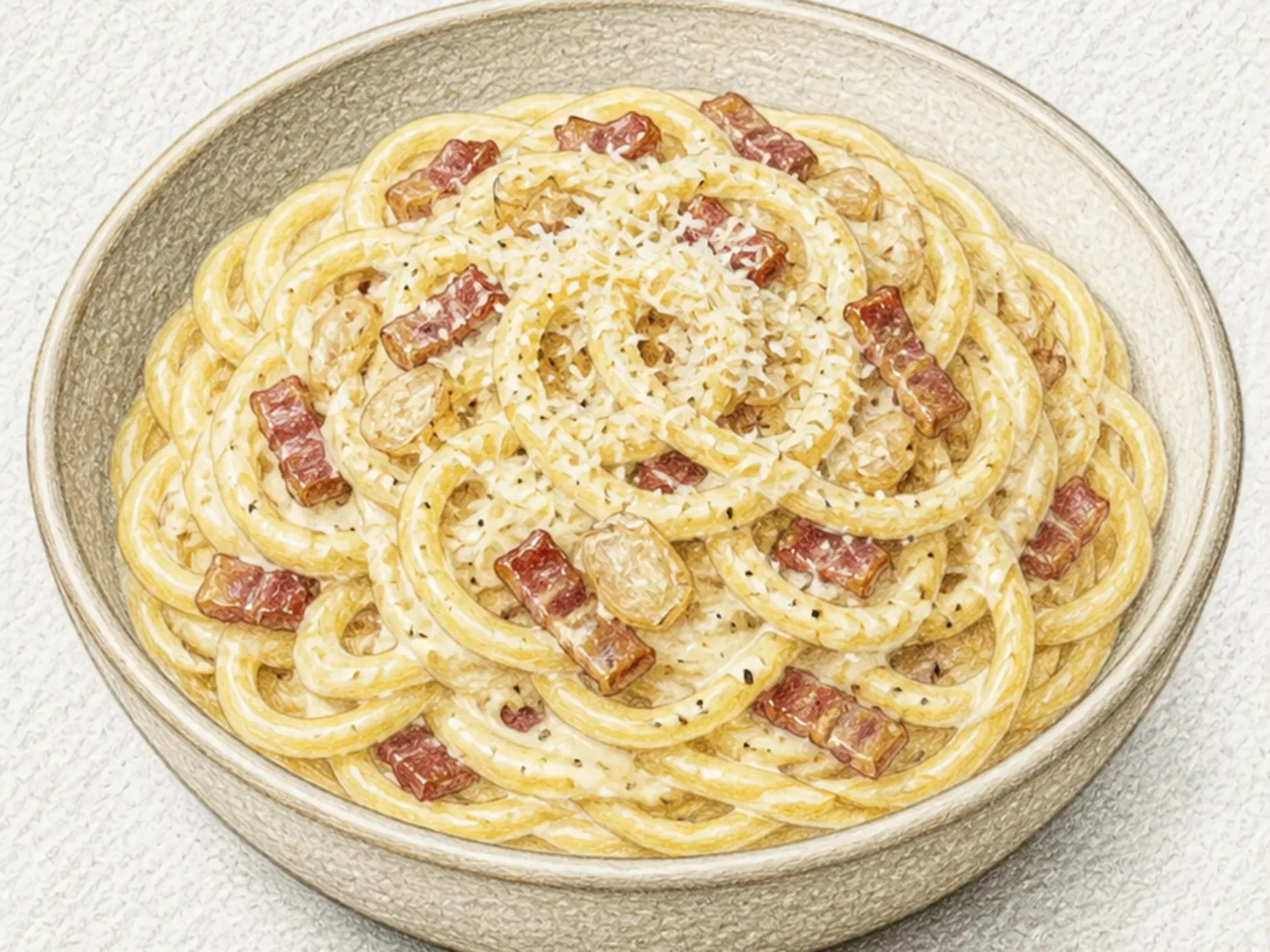
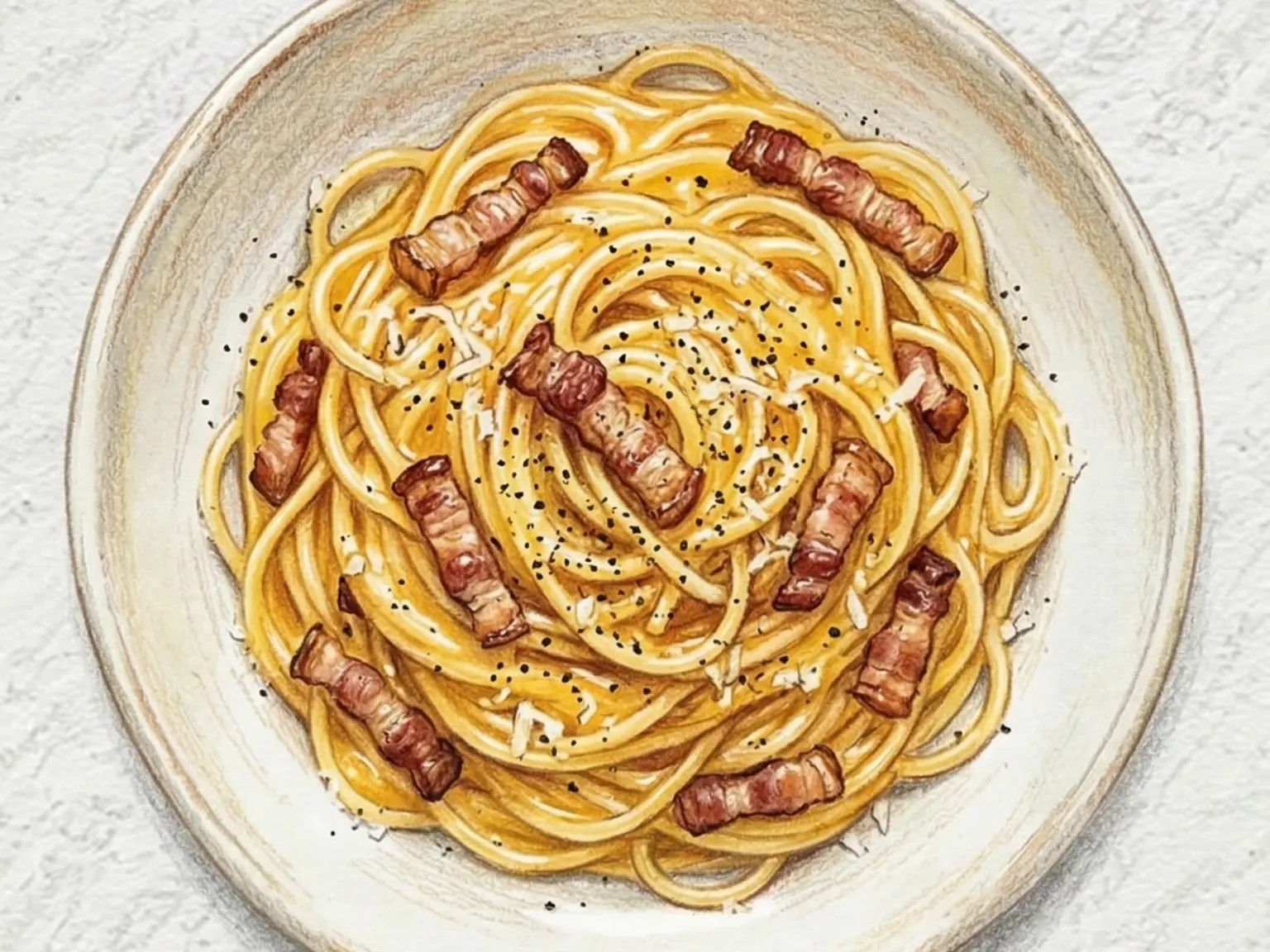
Carbonara is a Roman pasta whose sauce is built from egg yolks, Pecorino Romano or Parmesan, and coarsely ground black pepper emulsified with hot pasta water -- no cream is used at any stage. Guanciale or bacon is rendered slowly over low heat until its fat runs clear, and that rendered fat coats the drained spaghetti before anything else goes into the pan. With the heat fully off, the egg-cheese mixture is tossed in quickly; residual warmth from the pasta and the pan finishes cooking the eggs just enough to form a glossy, clinging sauce without scrambling. The starch dissolved in reserved pasta water acts as the emulsifier that binds the cheese protein and egg fat into a cohesive, velvety texture. Temperature control throughout is the defining technical challenge: too hot and the eggs seize, too cool and the emulsion breaks. Coarsely ground black pepper adds a sharp, aromatic counterpoint to the richness of the cheese and cured pork. Because the sauce continues to tighten as it cools, carbonara must be served immediately after plating. A properly made carbonara is one of the most technically demanding two-ingredient sauces in Italian cooking, rewarding precision with an extraordinarily silky result.

Prep 10min Cook 20min 2 servings

Instructions

Read the steps as a cooking flow: prep, heat, seasoning, doneness control, and finish.

7 steps
  1. 1
    Finish

    Bring 2.5 liters of water with 1 tablespoon salt to a rolling boil.

    Cook 200g spaghetti for 1 minute less than the package time, scoop 240ml pasta water into a cup to reserve, then drain.

  2. 2
    Season

    Whisk 3 egg yolks and 1 whole egg in a bowl, add 50g grated Parmesan and 1 teaspoon coarsely ground pepper, and mix until fully smooth. This sauce will cook gently from the residual heat of the pasta, so thorough mixing is essential.

  3. 3
    Control

    Add 150g bacon to a pan over medium-low heat and render slowly for 8-10 minutes until the fat is fully released and the bacon turns crispy golden. Do not rush this step. Turn off the heat.

  4. 4
    Step

    Add the hot drained spaghetti directly to the pan with the heat off.

    Toss quickly with tongs so every strand is coated in the rendered fat. Work within 30 seconds before the pan cools completely.

  5. 5
    Prep

    Once the pan has cooled to below 85-90C, pour in the egg-cheese mixture all at once.

    Toss continuously with tongs for at least 30 seconds without stopping. If the pan is too hot, the eggs will scramble.

  6. 6
    Finish

    Add the reserved pasta water one tablespoon at a time, tossing after each addition, until the sauce has the right consistency to cling to every strand in a glossy coating. If too thin, toss 30 seconds more; if too thick, add a bit more pasta water.

  7. 7
    Finish

    Plate immediately and top with extra grated Parmesan and a generous amount of coarsely ground black pepper.

    Carbonara must be eaten right away as the sauce sets quickly and loses its creamy texture.

After the steps

Pick a recipe that fits this dish.

Continue with shared ingredients, meal pairings, or a similar method.

Recipes That Go Well With This

More Western →

Based on shared ingredients and meal pairing

Cream Pasta
Shared ingredient: bacon Western

Cream Pasta

Cream pasta begins with bacon rendered crisp in butter, building a fat base that carries the flavor of everything that follows. Diced onion and minced garlic cook in the rendered fat until soft and fragrant before the heavy cream and milk go in, which is the combination that gives the sauce body without making it too dense. Heavy cream alone would weigh the pasta down, so the milk lightens the mixture to a consistency that clings to each strand without pooling at the bottom of the bowl. The cooked pasta is transferred directly into the sauce pan while still hot, and two to three tablespoons of starchy pasta water are stirred in to help the sauce emulsify and adhere evenly to the noodles. Freshly grated Parmesan is added off the heat so it melts smoothly rather than clumping, contributing a salty edge and a fermented depth that rounds out the simple cream base. The finished dish layers the smoky, cured saltiness of bacon against the mild richness of cream and the aged sharpness of Parmesan for a well-balanced, satisfying bowl.

Chicken Alfredo
Shared ingredient: parmesan Western

Chicken Alfredo

Chicken alfredo is an Italian-American pasta dish of seared chicken breast and fettuccine brought together in a sauce of butter, heavy cream, and Parmesan cheese. The sauce begins with garlic sauteed in butter until fragrant, after which heavy cream is poured in and reduced slightly before grated Parmesan is stirred through. The cheese protein emulsifies with the fat in the cream, thickening the sauce into a coating that grips each strand of pasta rather than pooling at the bottom of the bowl. The chicken breast is seasoned with salt and pepper and seared in a hot pan until the exterior reaches a deep golden brown -- this Maillard-reaction crust develops a savory, roasted quality that the cream sauce alone cannot provide, and the browned bits left in the pan can be deglazed back into the sauce to carry that flavor through the whole dish. Transferring the pasta directly from the boiling water into the sauce, before the surface starch dries, helps the sauce adhere more completely. A small amount of pasta cooking water, added gradually, keeps the sauce from seizing into a thick mass and maintains a smooth, silky consistency. A generous amount of freshly cracked black pepper is essential: without it, the richness of the cream can read as cloying, but with it, the dish achieves a balance between indulgence and subtle heat.

Bam Tiramisu (Chestnut Tiramisu)
Serve together Desserts

Bam Tiramisu (Chestnut Tiramisu)

Chestnut tiramisu is a variation of the traditional Italian dessert that incorporates chestnut puree into the mascarpone cheese filling. This modification transforms a standard cafe dessert into a preparation specifically associated with the autumn season in Korea. The fundamental elements of the recipe remain consistent with the classic version. It utilizes ladyfinger biscuits that have been soaked in espresso, a filling made of whipped mascarpone and cream, and a final layer of cocoa powder. However, the introduction of chestnut puree alters the profile of the cream. Instead of a simple dairy richness, the mixture takes on an earthy quality. Using a puree made from chestnuts boiled at home, rather than a store-bought paste, helps maintain the natural grain of the nut. This provides the cream with a specific texture that is noticeable in every spoonful. When preparing the ladyfingers, the espresso soak requires a high level of precision. Each biscuit should be dipped for approximately one to two seconds. If the ladyfingers are submerged for a longer duration, they absorb an excessive amount of liquid. This leads to a waterlogged consistency which can cause the structural layers of the dessert to collapse while it sits in the refrigerator. The assembly process follows a predictable sequence. A layer of soaked ladyfingers is placed at the bottom, followed by a layer of the chestnut cream. This pattern is repeated once more before the entire dish is placed in the refrigerator to rest for at least four hours. This period of refrigeration is essential to the final outcome. During these hours, the ladyfingers absorb moisture from both the espresso and the cream layer above them. This process changes the biscuits from a crunchy state to a soft texture similar to cake, which allows for clean slices. Just before the dessert is served, a thin layer of cocoa powder is applied to the top. This adds a bitter element that balances the sweetness of the chestnuts. Preparing the tiramisu in individual glass containers or cups ensures that the portions are easy to manage and allows the different layers of the dessert to be clearly visible from the side.

Spaghetti Carbonara
Similar recipe Noodles

Spaghetti Carbonara

Carbonara is a Roman pasta built on four core ingredients: guanciale, egg yolks, Pecorino Romano, and black pepper. The guanciale is rendered until crisp, and its fat becomes the base of the sauce. Off the heat, a mixture of yolks and grated cheese is tossed with the hot pasta and starchy cooking water to form a glossy emulsion - no cream involved. The dish takes under 25 minutes from start to finish, though temperature control at the sauce stage is critical to avoid scrambling the eggs. The main ingredients are Spaghetti, Guanciale (or pancetta), Egg yolks, and Whole egg, and the recipe depends on careful handling of noodle cooking time and sauce thickness.

Serve with this

Heukimja Cream Bacon Rigatoni (Black Sesame Cream Pasta)
Pasta Easy

Heukimja Cream Bacon Rigatoni (Black Sesame Cream Pasta)

Black sesame cream bacon rigatoni is a fusion pasta that earns its crossover status through ingredient logic rather than novelty. Roasted black sesame ground to a fine powder and blended into heavy cream and milk produces a sauce with a deep, slightly bitter nuttiness - closer to a nut butter than a standard cream - with a grey-toned color that signals immediately this is not a conventional cream pasta. Bacon fried until crisp adds salt, smoke, and crunch at regular intervals throughout the dish, which is important because the sauce, however rich, stays uniform in texture without it. Rigatoni is the right format here: the tube shape traps sauce both inside each piece and on the outer ridges, so every forkful delivers the full flavor load. Finishing with grated Parmigiano or Pecorino deepens the salt and umami content, and a final dusting of black sesame powder over the plated dish reinforces the Korean ingredient that anchors the whole concept. The combination works because black sesame and cream are both fat-forward and round - they do not fight each other.

🎉 Special Occasion ⚡ Quick
Prep 12min Cook 18min 2 servings
Grilled Peach Burrata Basil Salad
Salads Easy

Grilled Peach Burrata Basil Salad

The peaches are sliced into wedges and brushed with a thin layer of olive oil before they are placed into a grill pan. Each side requires between one and two minutes of contact with the heat to develop a charred surface. This method draws out a caramelized sweetness and a subtle smoky quality that is not present in raw fruit. The application of direct heat to the cut surfaces of the peaches concentrates their natural sugars, which results in a deeper flavor profile and a savory quality that supports the other ingredients. Preparation of the burrata involves removing it from the refrigerator ten minutes prior to assembly. This pause allows the cheese to lose its chill so that the creamy interior can soften. When the cheese is eventually torn apart and placed over the peaches, the center should be loose enough to flow freely, which ensures the full milky richness is distributed throughout the salad. The assembly includes a base of warm grilled peaches topped with the torn burrata, fresh arugula, and basil leaves. Arugula is chosen for its peppery bitterness, which provides a functional balance to the sweet peaches and the heavy cream of the cheese, preventing the dish from becoming one-dimensional. Lightly toasted walnuts are added to provide a specific textural contrast and a roasted nuttiness that complements the softer components. Finally, a thick balsamic glaze with a sweet and tart profile is drizzled over the top to bring the different elements together into a single cohesive dish. This salad is best prepared during the summer when peaches are at their peak ripeness and sweetness.

🥗 Light & Healthy ⚡ Quick
Prep 12min Cook 6min 2 servings
Tomato Basil Juice
Drinks Easy

Tomato Basil Juice

Tomato basil juice is a cold savory drink made by blending ripe tomatoes with fresh basil leaves and straining the result through a fine sieve to remove seeds and skins. The ripeness of the tomato determines much of the flavor: fully ripe tomatoes carry free glutamates that produce a natural umami depth, whereas underripe fruit tastes predominantly sour without the sweetness and savory body that makes the juice satisfying. Basil should be added to the blender immediately before blending rather than sitting cut or torn, because the volatile oils that produce its aroma begin oxidizing quickly once the leaves are damaged. After blending to a smooth consistency, passing the juice through a fine-mesh strainer or cheesecloth removes the solids and produces a texture smooth enough to drink without resistance. Salt and black pepper season the juice, and fresh lemon juice raises the acidity in a way that brightens the overall flavor rather than making it sour. A small addition of olive oil emulsifies into the juice and activates fat-soluble aromatic compounds in both the tomato and the basil, producing a fuller, rounder flavor than the unstrained version. The juice must be thoroughly chilled before serving, as warmth mutes the herbal freshness. It works well as a brunch drink, a light non-alcoholic aperitif, or a base for savory cocktails.

🍺 Bar Snacks ⚡ Quick
Prep 10min 2 servings

Similar recipes

Panna Cotta
Western Easy

Panna Cotta

Panna cotta is a cold dessert from the Piedmont region of Italy, made by gently warming heavy cream with vanilla and sugar, then setting it with gelatin. The gelatin ratio is critical - too much produces a rubbery texture like firm pudding, while too little leaves it unable to hold its shape. A properly made panna cotta trembles when nudged with a spoon yet scoops cleanly. The cream must be heated only until small bubbles appear at the edges, never brought to a full boil, which would cause the fat to separate and ruin the silky consistency. Strawberry coulis or caramel sauce provides contrast - fruit acidity or bittersweet caramel against the rich cream. Using a whole vanilla bean rather than extract yields a more complex fragrance, and the dark seeds suspended in the white cream create visual appeal.

🎉 Special Occasion 🧒 Kid-Friendly
Prep 15min Cook 10min 4 servings
Truffle Cream Pasta
Western Easy

Truffle Cream Pasta

Truffle cream pasta cooks fettuccine al dente, reserves pasta water, then tosses the noodles in a sauce built by sweating garlic in butter, simmering heavy cream, and melting in Parmesan cheese before finishing with truffle oil off the heat. Adding truffle oil only after the burner is off preserves its volatile earthy and mushroom-like aroma - even brief exposure to direct heat dulls the fragrance significantly. The cream needs just two minutes of simmering to thicken to the right consistency; reducing it further makes the sauce too heavy to coat the pasta evenly. Stirring in Parmesan creates body, and splashes of starchy pasta water emulsify the fat and cheese into a smooth, clinging sauce. The dish should be plated and eaten immediately - truffle aroma fades quickly once it leaves the pan, and the sauce continues to tighten as it cools.

🎉 Special Occasion ⚡ Quick
Prep 10min Cook 15min 2 servings
Squid Ink Seafood Linguine
Pasta Medium

Squid Ink Seafood Linguine

Squid ink seafood linguine dissolves squid ink in reserved pasta water before adding it to the pan, ensuring even distribution without clumping. Shrimp and squid rings are seared quickly over high heat to set their surfaces, then finished during the final emulsification step so they stay springy rather than rubbery. Sliced garlic infused slowly in olive oil forms the aromatic base, and white wine with halved cherry tomatoes introduces a gentle acidity once the alcohol cooks off. The ink coats linguine in a glossy black sauce that carries concentrated brininess, and chopped parsley scattered on top provides a fresh herbal contrast. A small squeeze of lemon juice added at the end brightens the deep, saline richness of the squid ink and makes the oceanic flavors more vivid with each bite.

🎉 Special Occasion 🍺 Bar Snacks
Prep 15min Cook 20min 2 servings

Tips

Turn off heat before adding eggs to avoid scrambling.
You can achieve creaminess without cream by emulsifying cheese with pasta water.

Nutrition (per serving)

Calories
760
kcal
Protein
29
g
Carbs
70
g
Fat
40
g

Variations

Guanciale Carbonara

Guanciale fat melts into the pasta, giving this carbonara deep traditional flavor. Salty pork richness and black pepper linger in each bite.