Cassoulet (French White Bean and Pork Stew)
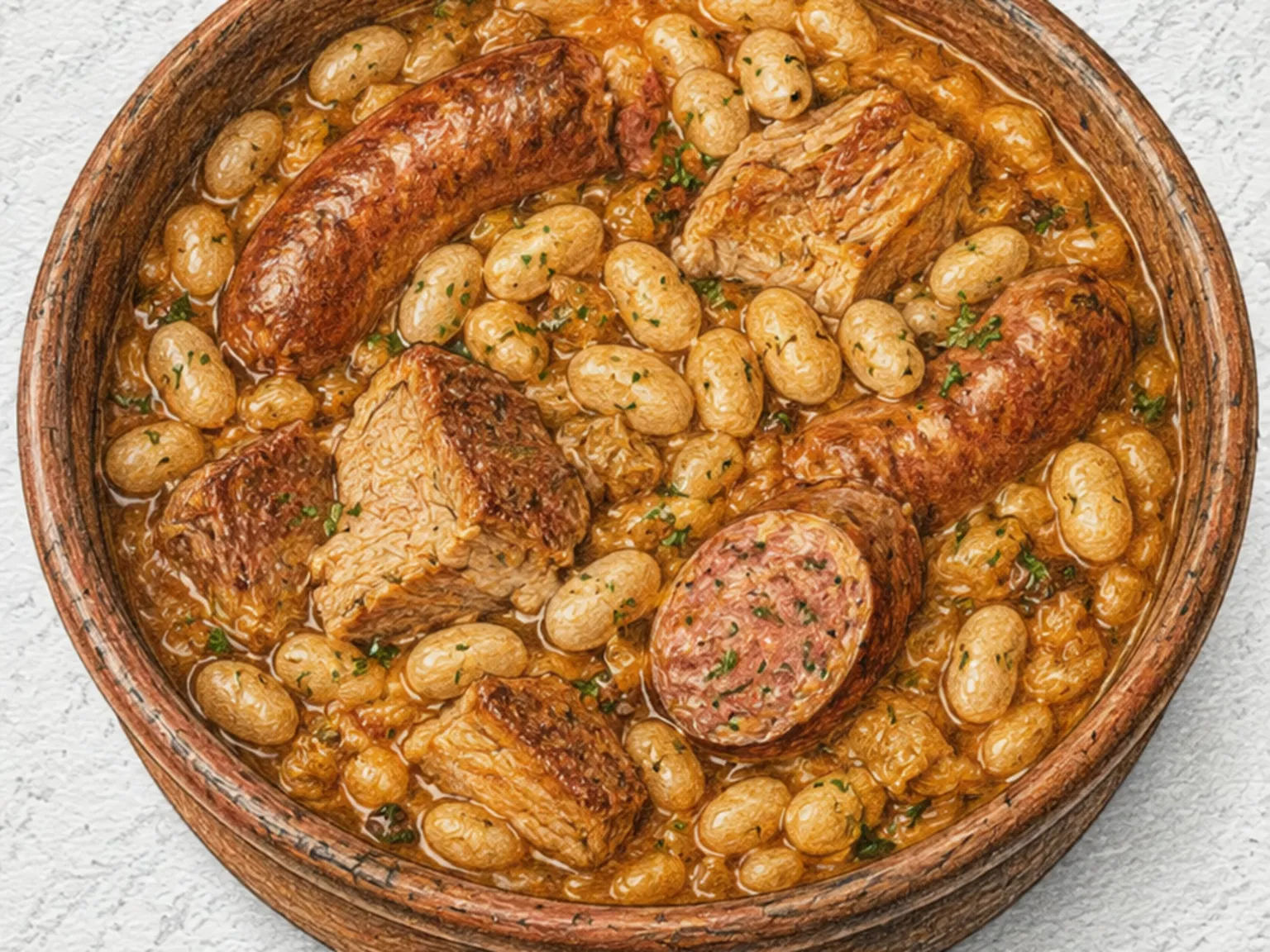
Cassoulet is a slow-cooked stew from the Languedoc region of southwestern France, combining white beans, pork shoulder, and sausage in chicken stock for at least two hours. During the long simmer, the beans absorb the broth and release their starch, naturally thickening the sauce without any added roux or flour. Collagen from the pork and fat from the sausages melt into the liquid, building a deep, heavy savoriness that defines this dish. Thyme and tomato paste temper the richness of the meats and add an aromatic backbone. Preparing it a day ahead allows the flavors to exchange fully between beans and meat, producing a noticeably deeper result when reheated.
Adjust Servings
Instructions
- 1
Soak white beans in advance.
- 2
Brown pork shoulder and sausages to build flavor.
- 3
Add onion, carrot, and garlic, then cook with tomato paste.
- 4
Add soaked beans, stock, and thyme; bring to a boil and reduce heat.
- 5
Cover and simmer for over 2 hours until beans are tender.
- 6
Adjust seasoning and finish when stew is rich and thick.
As an Amazon Associate, we may earn from qualifying purchases.
Tips
Nutrition (per serving)
More Recipes

French Beef Stew
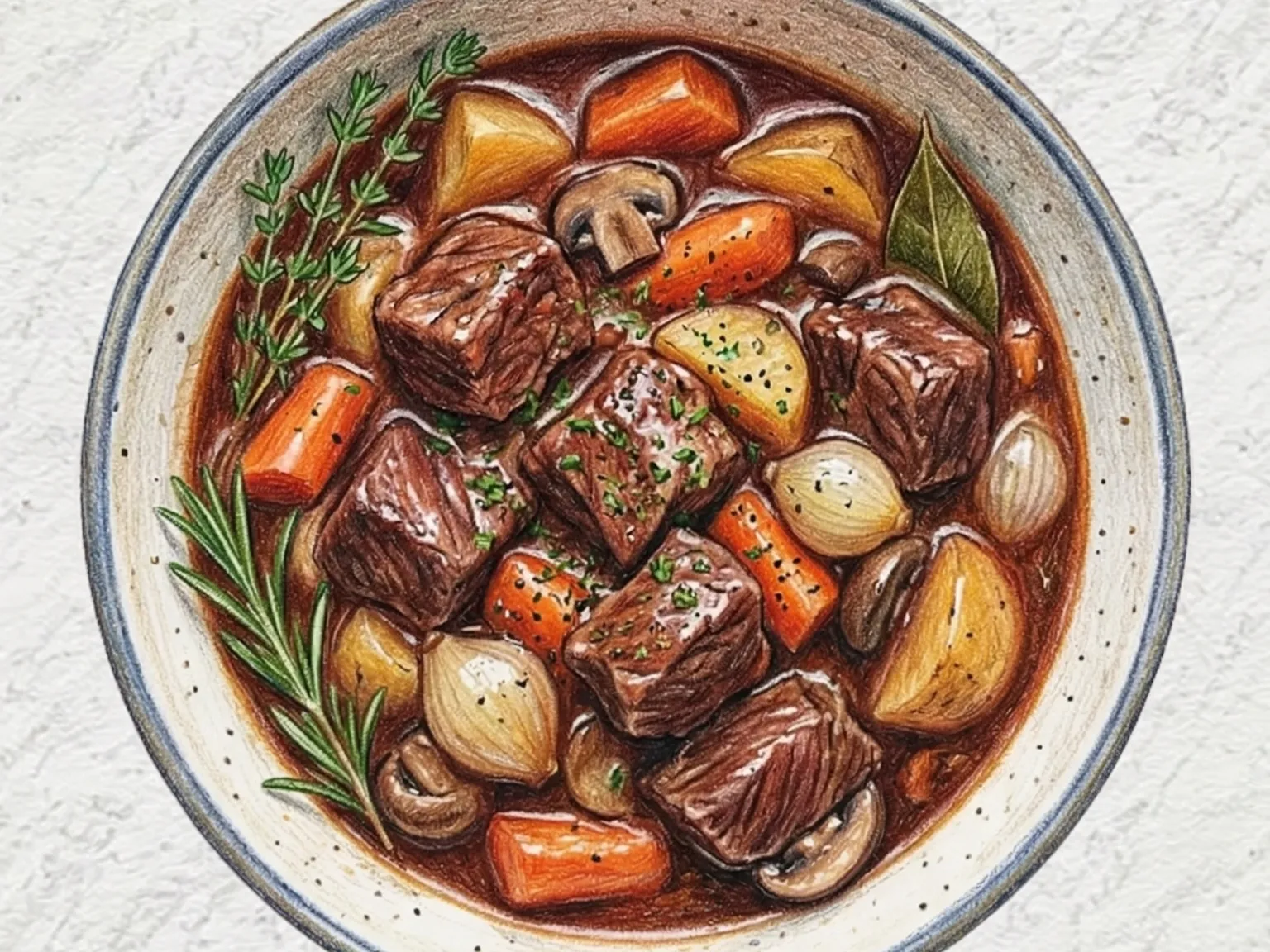
French beef stew takes tough, inexpensive cuts of beef and transforms them through patience and slow heat into a deeply flavored, fork-tender dish. Chuck or brisket is cut into large chunks, dusted with flour, and seared until a dark brown crust forms - this initial browning builds the foundation of flavor for the entire pot. Red wine and beef stock are poured in, and the pot goes into a low oven or onto a gentle burner for at least two hours. Root vegetables - carrots, potatoes, celery, and onions - braise alongside the meat, contributing natural sweetness and body to the liquid. As the wine reduces, its acidity dissipates while its fruit depth and tannic structure remain, giving the sauce a robust backbone. Thyme sprigs and bay leaves infuse the broth with herbal warmth. The stew tastes even better the next day, after the flavors have had time to marry overnight in the refrigerator.

Beef Bourguignon
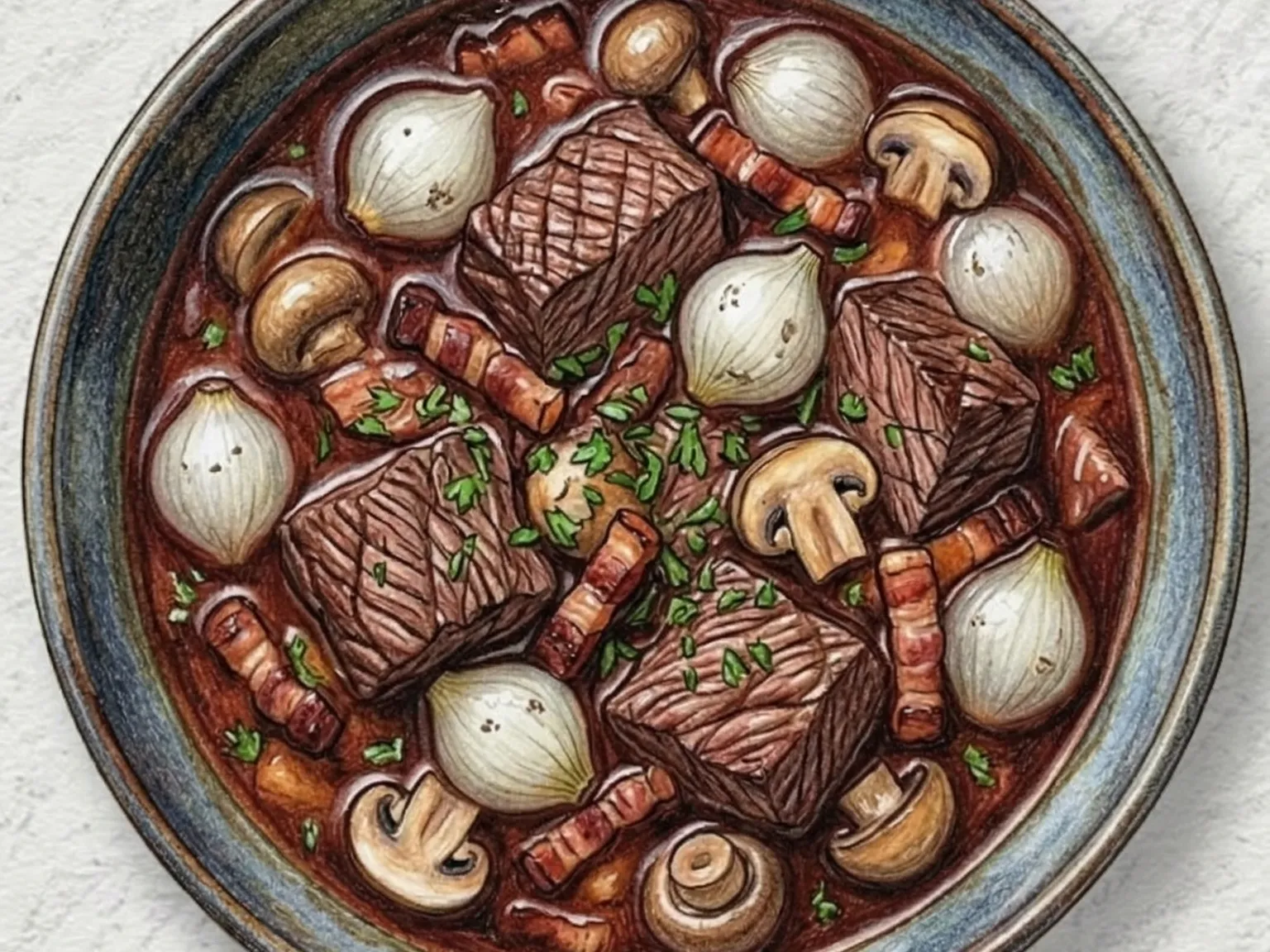
Beef bourguignon is a Burgundian stew built on the slow braise of beef chuck in red wine, a process that takes about two hours to break down the tough connective tissue into silky, fork-yielding meat. Bacon is rendered first for its fat, which sears the beef cubes into a deep crust before the wine goes in, layering smoky and caramelized notes into the foundation. As the wine reduces around the meat, it transforms from a thin liquid into a concentrated, glossy sauce that coats everything in the pot. Mushrooms and pearl onions absorb this sauce and add their own textures - the mushrooms spongy and meaty, the onions sweet and yielding. Tomato paste and beef stock anchor the wine's acidity so the final dish reads as deeply savory rather than sharp.

Tartiflette (French Potato Bacon Reblochon Gratin)
Tartiflette layers parboiled potato slices with sautéed smoked bacon and onion, pours heavy cream over the top, and finishes with halved reblochon cheese placed cut-side down before baking at 190 degrees Celsius until golden and bubbling. Parboiling the potatoes only halfway is deliberate - fully cooked potatoes fall apart in the oven, while half-cooked ones absorb cream and finish with a firm yet tender bite. The smoky bacon and caramelized onion create a savory foundation, and the cream seeps between the potato layers to bind everything together. Placing the cheese cut-side down is the traditional technique - as it melts, the creamy interior flows over the potatoes while the rind holds its shape on top. If reblochon is hard to find, brie makes a reasonable substitute with a similar creamy melt and mild, mushroomy flavor.

Chicken Fricassee (French White Wine Cream Braised Chicken)
Chicken fricassee is a French white braise where chicken thighs are lightly seared - just enough to firm the surface without deep browning - then set aside while mushrooms, onion, and garlic are sauteed in butter and dusted with flour to form a roux. Chicken stock is whisked in to dissolve the roux into a smooth base, the chicken returns for a twenty-five-minute covered simmer, and heavy cream is added for a final ten minutes of gentle reduction. The deliberately light sear is what distinguishes fricassee from darker braises; heavy browning would muddy the pale, delicate sauce. The roux provides body without heaviness, and the cream transforms the broth into a silky coating that clings to the meat. Mushroom earthiness and onion sweetness emerge quietly within the cream. Bread or boiled potatoes are the traditional side, used to soak up the sauce completely.

Steamed Mussels Mariniere
Moules mariniere is a French steamed mussel dish cooked quickly over high heat with white wine, butter, garlic, and shallot. As the mussels open, they release their briny liquor into the wine-butter base, creating a deeply flavored broth in under five minutes. The short cooking time keeps the mussel meat plump and firm rather than rubbery. Fresh parsley is scattered over the top just before serving, and the real draw is the aromatic broth at the bottom of the pot, traditionally soaked up with torn pieces of crusty baguette.

French Crepes
French crepes are thin pancakes made from a pourable batter of flour, eggs, milk, and melted butter, cooked on a hot surface until golden and lacy. The batter must rest for at least an hour so the gluten relaxes and the flour hydrates, producing a supple rather than rubbery crepe. A small amount of batter is swirled onto a hot pan, covering the surface in a thin, even layer that cooks in under a minute per side. The flavor is neutral and buttery, making crepes versatile for both sweet and savory fillings. In Parisian street stalls, crepes are made to order on large griddles, filled, folded, and handed over in paper for eating while walking.