Charim

2686 Korean & World Recipes

2686+ Korean recipes, clean and organized. Ingredients to instructions, all at a glance.

Korean Chicken Breast and Celery Stir-fry

Korean Chicken Breast and Celery Stir-fry

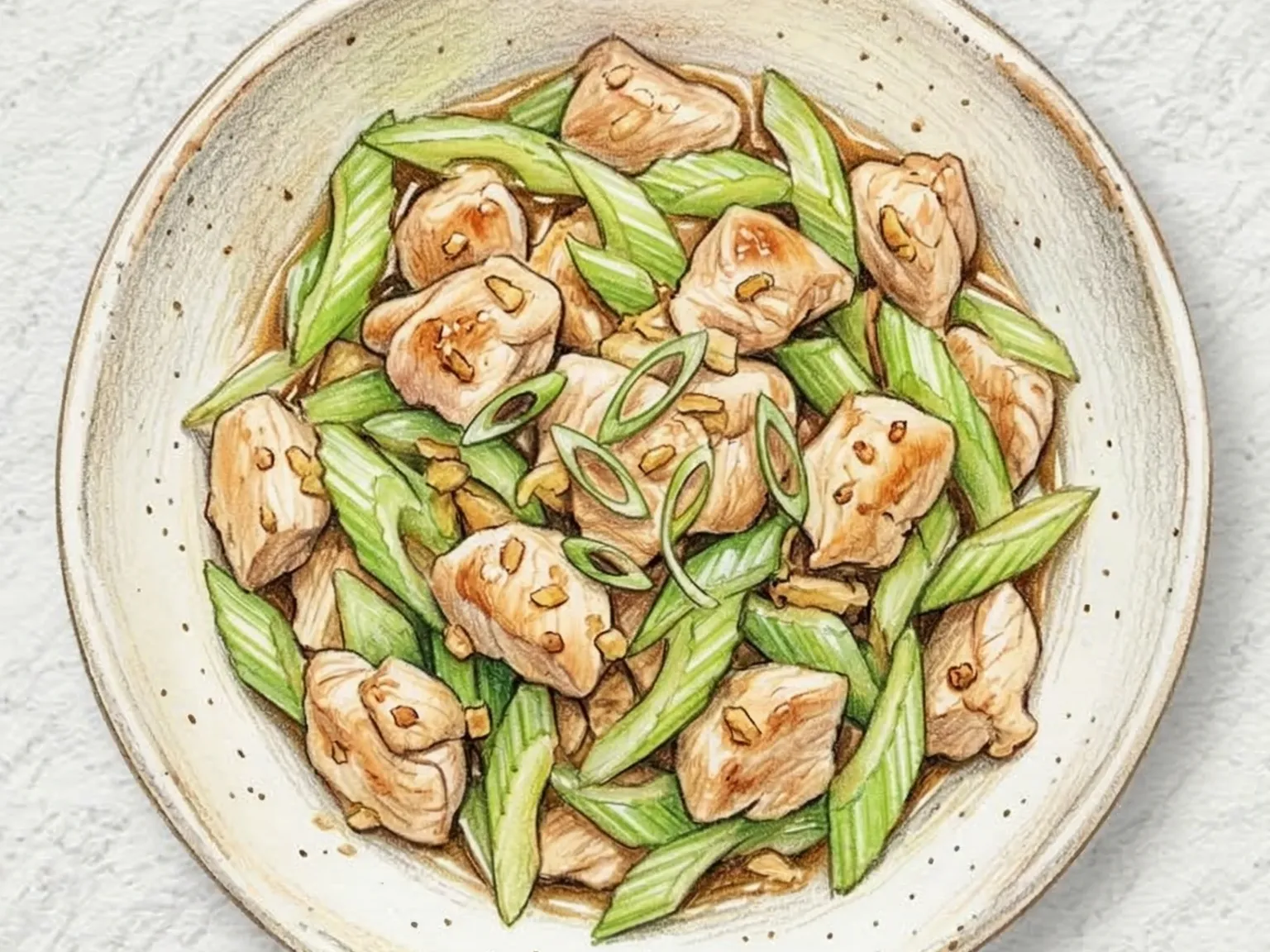
Bite-sized chicken breast pieces are marinated in soy sauce and minced ginger for ten minutes, then stir-fried over high heat with diagonally cut celery and thinly sliced onion. The ginger penetrates the meat during the brief rest, suppressing any bland poultry odor while leaving a bright, peppery note in the background. Soy sauce hitting the hot pan triggers a Maillard reaction on the chicken surface, building a thin crust of caramelized flavor that keeps the interior moist. Celery goes in only during the last two minutes so its stalks retain their crunch; including the leaves intensifies the herbal finish considerably. A teaspoon of oligosaccharide syrup gives the sauce just enough body to coat each piece evenly rather than sliding off, and sliced red chili scattered in at the end adds visual energy more than actual heat. At 295 calories and 36 grams of protein per serving, this dish slots naturally into a post-workout meal or a calorie-conscious lunchbox without feeling like a compromise.

Prep 14min Cook 9min 2 servings

Adjust Servings

2servings
servings

Instructions

  1. 1

    Cut chicken breast into bite-size pieces and marinate with 1 tbsp soy sauce and ginger for 10 minutes.

  2. 2

    Slice celery diagonally and onion thinly.

  3. 3

    Heat oil and sauté garlic for 20 seconds until fragrant.

  4. 4

    Add chicken and stir-fry until the outside turns white.

  5. 5

    Add celery, onion, and red chili; stir-fry over high heat for 2 minutes.

  6. 6

    Add remaining soy sauce and syrup, then cook 1 more minute to finish.

🛒Shop Ingredients on Amazon

As an Amazon Associate, we may earn from qualifying purchases.

Tips

Add celery leaves too for deeper aroma.
Avoid overcooking chicken breast to keep it tender.

Nutrition (per serving)

Calories
295
kcal
Protein
36
g
Carbs
10
g
Fat
11
g

More Recipes

Korean Pork and Asparagus Stir-fry
Stir-fryEasy

Korean Pork and Asparagus Stir-fry

A Korean weeknight stir-fry that pairs pork shoulder or belly with asparagus and red bell pepper in a soy-garlic sauce. The pork is sliced thin and marinated in soy sauce, minced garlic, and a pinch of sugar to coax out caramelization on the hot pan. Cooking the meat first over high heat renders out its fat, which becomes the medium for stir-frying the vegetables. Asparagus goes in next for barely a minute - just enough to turn its raw starchiness into a clean, grassy snap. Bell pepper adds pops of natural sweetness and color contrast. The sauce is restrained: soy, a touch of oyster sauce, and sesame oil, keeping the focus on the interplay between the pork's umami depth and the vegetables' brightness. The entire cook from cold pan to finished plate takes under twelve minutes, making it one of the fastest protein-and-vegetable banchan in the Korean home repertoire.

🏠 Everyday🍱 Lunchbox
Prep 12minCook 10min2 servings
Korean Lotus Root Chicken Breast Stir-fry
Stir-fryMedium

Korean Lotus Root Chicken Breast Stir-fry

Yeongeun-dakgaseumsal-bokkeum stir-fries soy-and-wine-marinated chicken breast with lotus root, bell pepper, and onion. The lotus root is sliced 3mm thick and soaked in vinegar water to prevent browning and keep its crunch, while the chicken is cooked quickly over medium-high heat to avoid drying out. Oligosaccharide syrup mixed with soy sauce creates a glossy glaze that coats the ingredients, and bell pepper adds color and sweetness. The crisp, starchy bite of the lotus root paired with the lean chicken makes this a protein-rich banchan that stays grease-free and packs well for lunches.

🏠 Everyday🍱 Lunchbox
Prep 20minCook 12min4 servings
Korean Garlic Scape Chicken Breast Stir-fry
Stir-fryMedium

Korean Garlic Scape Chicken Breast Stir-fry

Maneuljjong dakgaseumsal bokkeum is a stir-fry of soy-marinated chicken breast cooked with ginger and garlic, then combined with garlic scapes cut to 5 cm and julienned carrot, finished in a glaze of oyster sauce and soy sauce. Chicken breast is naturally lean, and the oyster sauce compensates for its low fat by adding concentrated umami. The garlic scapes' crisp texture and the carrot's mild sweetness break up the chicken's plainness, while ginger neutralizes any poultry odor. The high-protein, low-fat profile makes this a practical option for meal prep and calorie-conscious eating.

🥗 Light & Healthy🏠 Everyday
Prep 15minCook 11min2 servings
Korean Chicken Breast & Mugwort Stir-fry
Stir-fryMedium

Korean Chicken Breast & Mugwort Stir-fry

Dakgaseumsal-mugwort-bokkeum is a Korean stir-fry that pairs thinly sliced chicken breast with young spring mugwort. The lean chicken provides a clean protein base, while the mugwort contributes a distinctive herbal fragrance with gentle bitterness. Light soy sauce and minced garlic season the dish without masking the natural flavors. It is a low-fat, aromatic dish popular during early spring when fresh mugwort is in season.

🥗 Light & Healthy🏠 Everyday
Prep 14minCook 9min2 servings
Korean Stir-fried Potato and Shrimp
Side dishesMedium

Korean Stir-fried Potato and Shrimp

Gamja-saeu-bokkeum pairs julienned potatoes with shell-on medium shrimp in a clean, garlic-forward stir-fry. The potatoes are soaked in cold water first to remove surface starch - skipping this step leads to clumping in the pan. Garlic sizzles in oil to build an aromatic base before the shrimp go in, cooking until half-done so their natural sweetness transfers to the potato strips when combined. Seasoned with nothing more than salt, pepper, and a finish of sesame oil, this banchan lets the contrast between the potato's floury bite and the shrimp's springy snap carry the dish.

🏠 Everyday🍱 Lunchbox
Prep 15minCook 10min4 servings
Korean Spicy Gochujang Dried Squid Stir-Fry
Side dishesEasy

Korean Spicy Gochujang Dried Squid Stir-Fry

Jinmichae - shredded dried squid - is a Korean pantry staple prized for its chewy texture and umami that intensifies the longer you chew. This preparation coats the strands in a gochujang glaze, making it one of the most widely kept banchan in Korean refrigerators. Briefly soaking the dried squid in water before squeezing softens the tough fibers and opens them to absorb the sauce. The sauce - gochujang, gochugaru, rice syrup, soy sauce, and garlic - is stir-fried first over low heat to mellow the raw chili edge, then the squid is tossed through quickly. Sesame oil and seeds finish the dish off heat, producing a sweet-spicy coated snack that keeps well for days.

🏠 Everyday🍱 Lunchbox
Prep 8minCook 7min4 servings
More Stir-fry →