Century Egg and Pork Congee
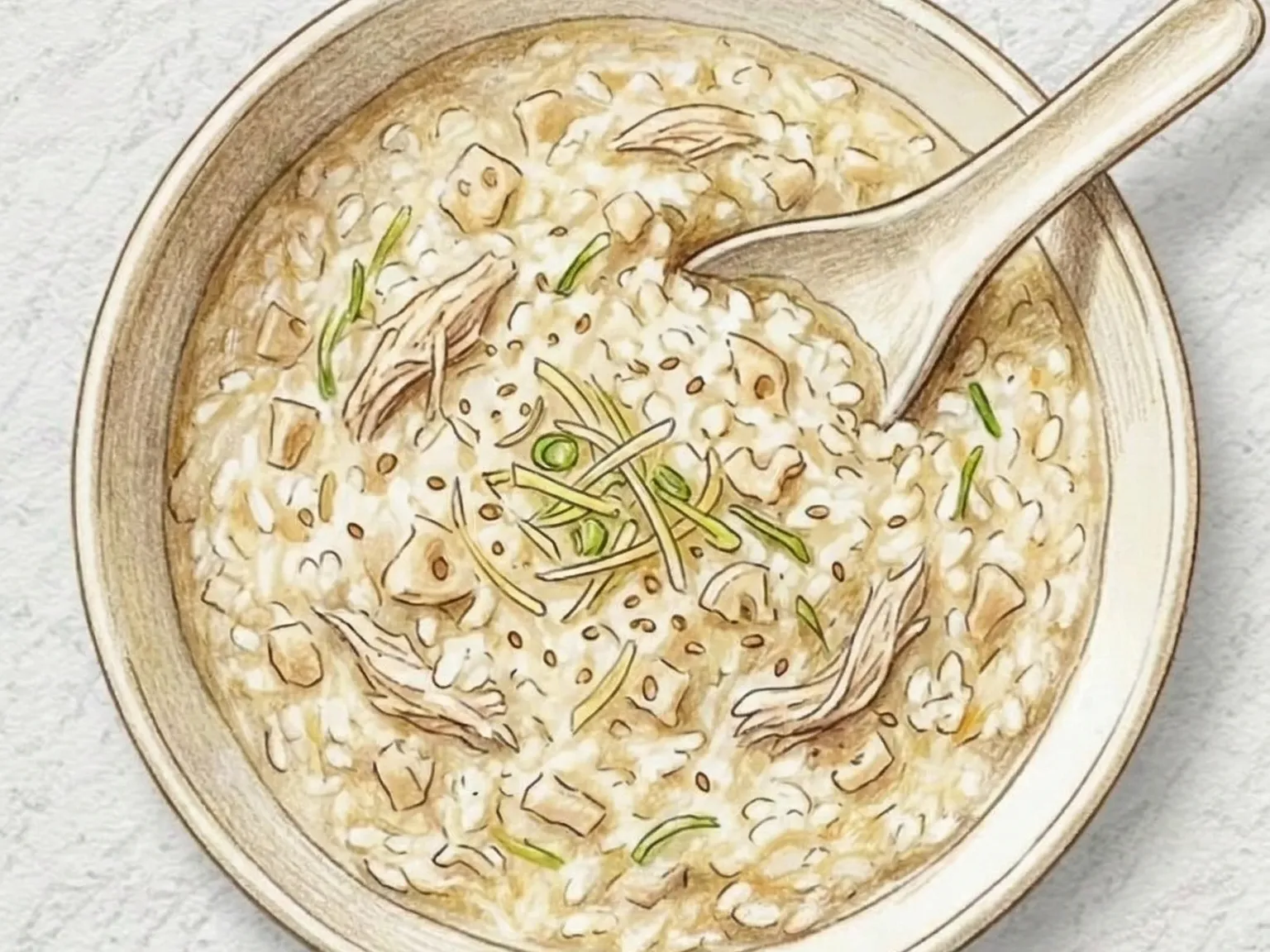
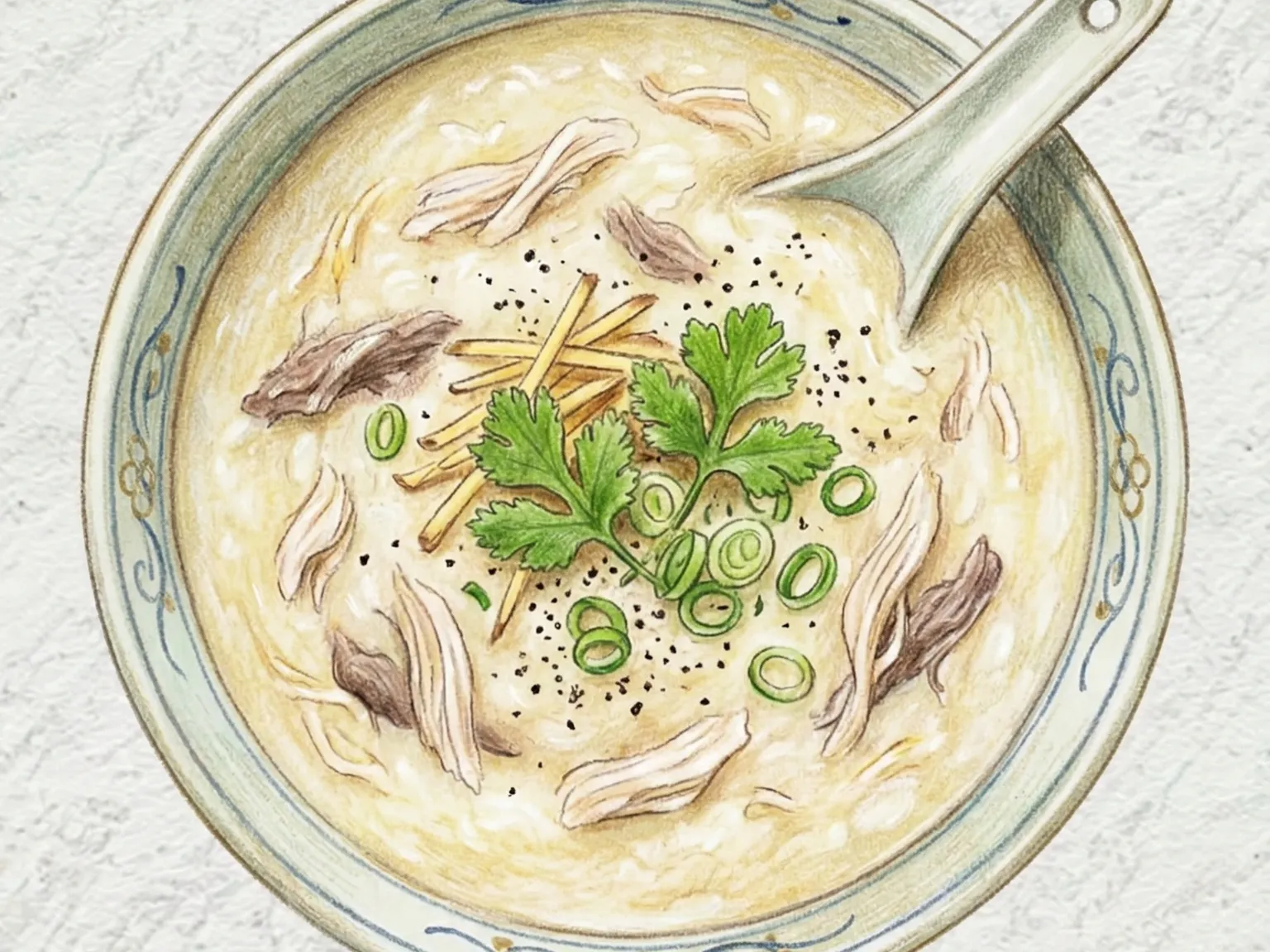
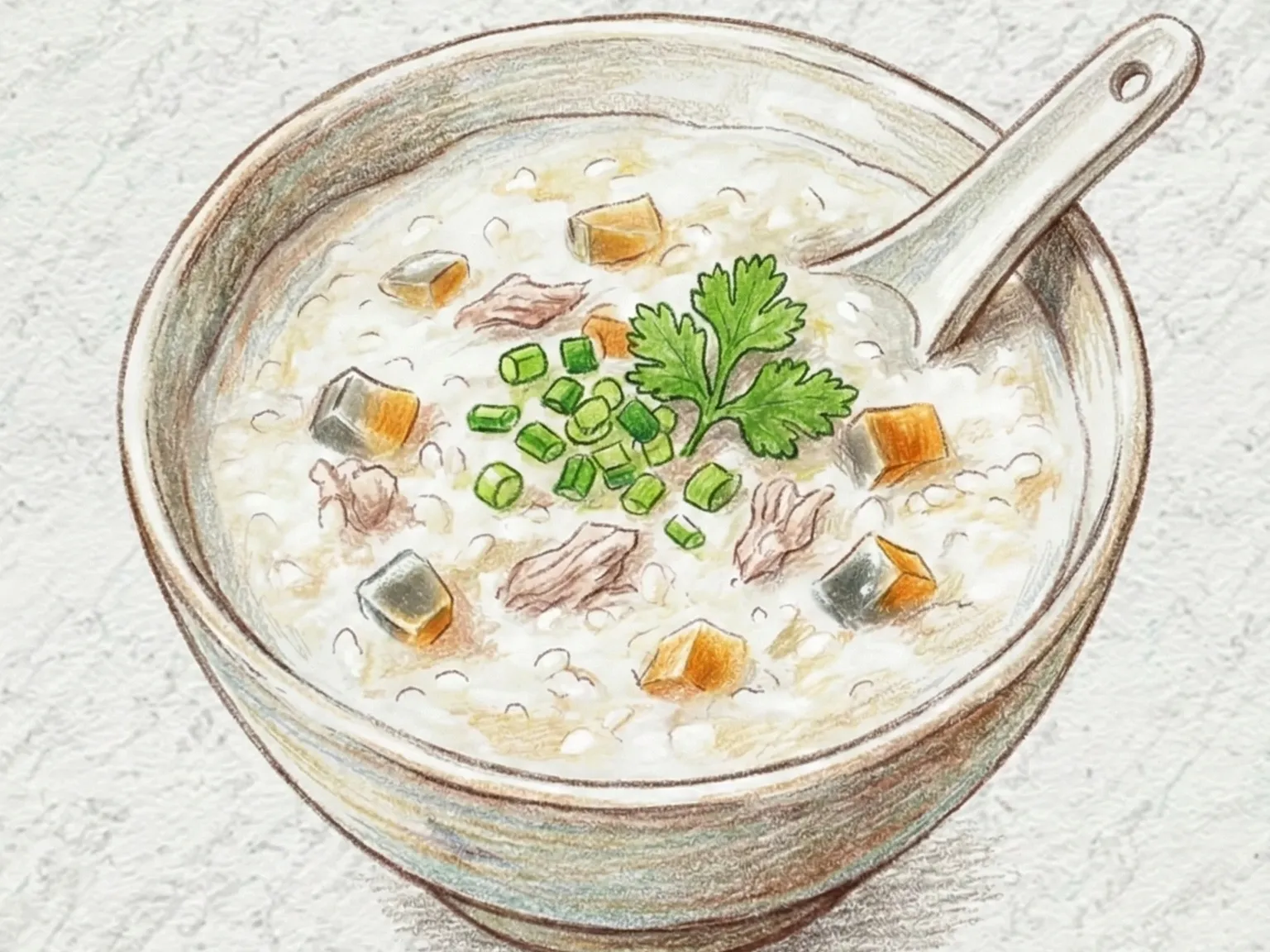
Century egg and pork congee - pi dan shou rou zhou - is the quintessential Cantonese breakfast, served from dawn at congee shops across Hong Kong, Guangzhou, and the broader Pearl River Delta. The congee base requires a full hour of slow simmering, during which rice grains disintegrate entirely into a silky, porridge-like suspension - the Cantonese call this texture 'sang shui,' meaning the rice and water have become indistinguishable. Lean pork is sliced thin and dropped into the pot during the final minutes, cooking instantly in the hot porridge. Century egg - duck egg preserved in clay, ash, and salt for weeks until the white turns translucent amber and the yolk becomes a creamy dark-green gel - is cubed and stirred through. The egg's alkaline, sulfurous depth meets the clean blandness of the rice porridge, while the pork provides a savory anchor. White pepper, sesame oil, and sliced scallion finish the bowl. The congee must be eaten immediately - it thickens rapidly as it cools, and the textural window between perfectly flowing and pasty is narrow.
Adjust Servings
Instructions
- 1
Rinse and soak rice for 20 minutes, then boil with water.
- 2
Lower heat and simmer, stirring occasionally until rice breaks down.
- 3
Slice pork thin and marinate with soy sauce and part of the ginger.
- 4
When porridge thickens, add pork and diced century egg; simmer 8 more minutes.
- 5
Finish with sesame oil and spring onion, adjusting seasoning.
As an Amazon Associate, we may earn from qualifying purchases.
Tips
Nutrition (per serving)
More Recipes

Bao Zai Fan (Cantonese Claypot Rice with Chinese Sausage)
Bao zai fan - claypot rice - is a Cantonese winter dish that has been served in Hong Kong's dai pai dong stalls and Guangzhou's old-quarter restaurants for over a century. Raw rice cooks directly in a heated clay vessel with Chinese sausage, cured meats, or marinated chicken layered on top, so their rendered fats drip down and season the grains as they absorb the liquid. The clay holds heat long after leaving the flame, continuing to toast the bottom layer of rice into a golden, crackling crust called fan jiu - the most coveted part of the dish. A sauce of dark soy, light soy, sugar, and sesame oil is poured over at the table and stirred through, staining the white rice amber and releasing a rush of caramelized soy fragrance. The textural range within a single pot - sticky-soft grains on top, chewy middle layer, and shattering crust at the bottom - is what keeps this dish central to Cantonese comfort food despite the time it demands.

Cantonese Honey Char Siu (Glazed BBQ Pork with Five-Spice Honey)
Char siu is the quintessential Cantonese roast meat, recognizable by its glossy, lacquered appearance hanging in the windows of siu laap shops across Hong Kong and Guangzhou. Pork neck or shoulder marinates overnight in soy sauce, hoisin, five-spice powder, Shaoxing wine, and honey, then roasts at high heat while being basted repeatedly with a honey glaze that builds into a caramelized, slightly charred crust. The traditional method suspends the meat on hooks inside a charcoal oven, allowing even heat distribution and natural fat drainage. The edges, where honey carbonizes against the direct flame, develop a faintly bitter char that counterpoints the sweetness - this blackened fringe is the most prized part. Char siu is eaten sliced over rice as a one-plate meal, draped over wonton noodles, or served cold with hot mustard as an appetizer. The balance between sweet glaze, smoky exterior, and the naturally fatty pork interior defines great char siu.

Tomato Egg Rice Bowl (Stir-fried Tomatoes with Soft Scrambled Eggs)
Ripe tomatoes are cut into wedges and stir-fried over high heat until they release their juices and form a natural, tangy sauce. Beaten eggs are poured in and gently folded so they stay soft and barely set, mingling with the tomato pulp. A small amount of sugar and soy sauce brings the sweet-tart balance into focus. Spooned over hot rice, the sauce soaks into the grains and the whole bowl comes together in under ten minutes, drawing on the simplicity of Chinese home cooking.

Sesame Spicy Tantanmen (Chinese Creamy Sesame Chili Oil Noodle Soup)
Tantanmen is a Chinese-origin noodle soup that combines a creamy sesame-based broth with the heat of chili oil to produce a bowl that is simultaneously nutty, spicy, and deeply savory. The broth begins with chicken stock into which sesame paste is whisked until fully dissolved, creating a thick, tan-colored liquid with a pronounced roasted-nut fragrance. Ground pork is fried separately with garlic, ginger, and doubanjiang-a fermented chili bean paste-until the meat is browned and crumbly, then spooned over the noodles as a rich, salty topping. Blanched bok choy adds a crisp, vegetal note that breaks up the heaviness of the broth, and a final drizzle of chili oil pools on the surface, releasing its fragrance with every sip. The noodles should be cooked just short of fully done so they maintain their chew in the hot liquid. Each component-sesame, chili, fermented bean, and pork-contributes a distinct layer of flavor, and the bowl rewards slow eating as they gradually merge.

Cantonese Steamed Fish
Cantonese steamed fish - ching jing yu - embodies the Cantonese culinary philosophy of letting premium ingredients speak for themselves with minimal intervention. The technique demands the freshest possible whole fish - sea bass, grouper, or pomfret - because steaming hides nothing; any hint of staleness is immediately exposed. The fish is scored, placed on a plate with ginger slices tucked underneath and inside the cavity, then steamed over roiling water for exactly eight to ten minutes depending on thickness. Overcooking by even a minute turns the flesh from silky and translucent to dry and chalky. The moment the fish leaves the steamer, any accumulated liquid is drained - it carries a fishy taste that would spoil the dish. Julienned scallion and ginger are piled on top, then a ladle of smoking-hot oil is poured directly over them, sizzling the aromatics and releasing their fragrance into the fish. A final drizzle of seasoned soy sauce and a few drops of sesame oil complete the dish. In Cantonese banquet culture, the steamed fish course is often the most expensive item on the table, chosen live from a restaurant tank.

Tomato Egg Lamian (Chinese Home-Style Tomato Scrambled Egg Noodle Soup)
Tomato egg lamian is a Chinese home-style noodle soup where ripe tomatoes are sauteed until they break down into a tangy, slightly sweet broth. Soft-scrambled eggs are folded in, adding mild richness. Fresh wheat noodles go directly into the pot, picking up the broth's flavor as they cook. No heavy spices are involved - the dish relies on the natural taste of its few ingredients. It takes about 27 minutes total and is widely eaten across China as an everyday meal.