Cha Ca La Vong (Hanoi Turmeric Fish with Dill on Tabletop Grill)
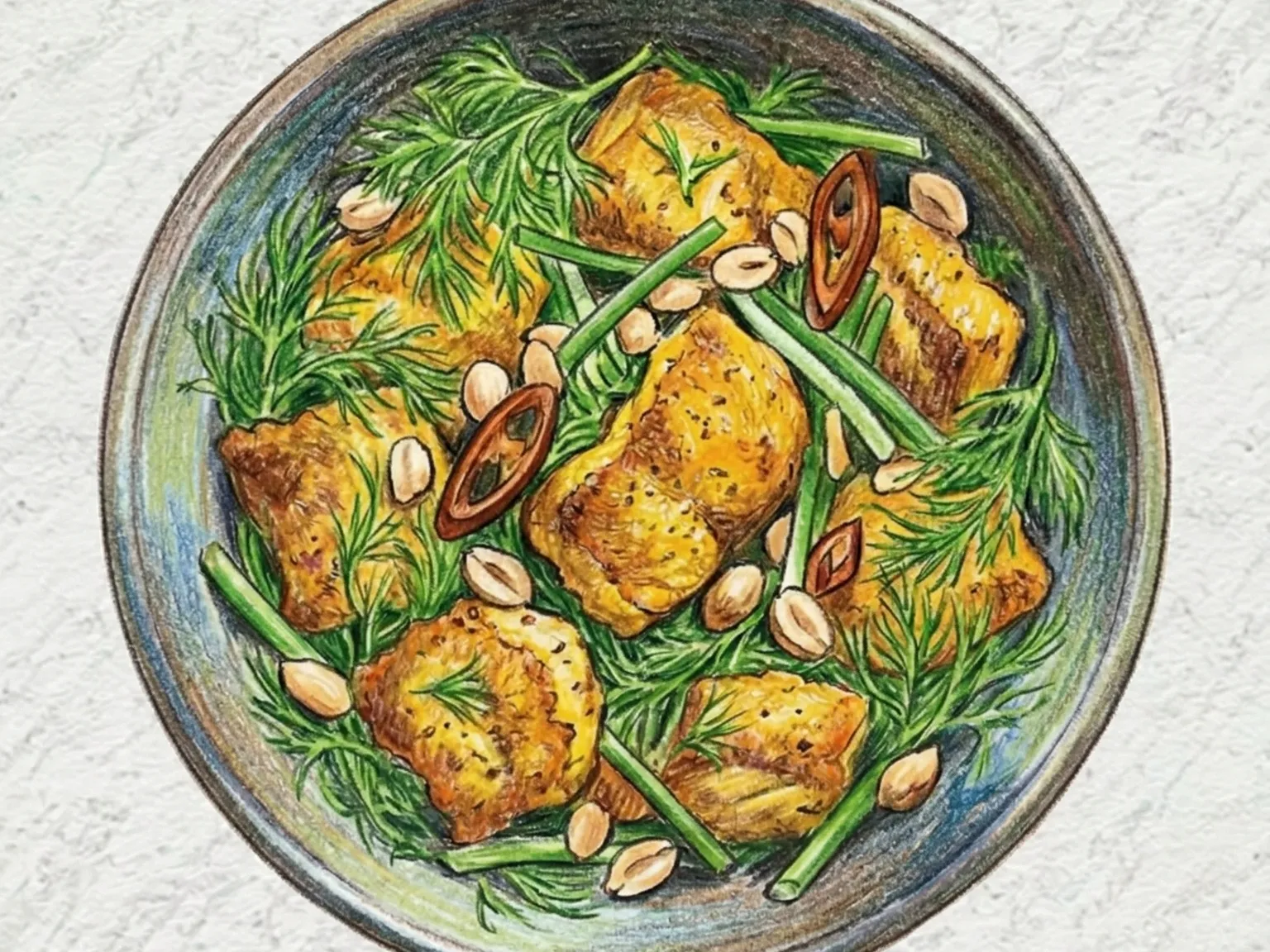
Cha ca La Vong is so iconic that an entire street in Hanoi's Old Quarter - Cha Ca Street - is named after the single dish served at the restaurant that popularized it over a century ago. Firm white fish fillets, typically snakehead or catfish, are marinated in turmeric, galangal, shrimp paste, and rice flour, then pan-seared in oil until the turmeric stains the surface a vivid yellow and a light crust forms. The fish arrives at the table in a sizzling pan set over a tabletop burner, where diners add enormous handfuls of fresh dill and scallion that wilt on contact. The combination of turmeric-stained fish and bright green dill is visually striking and aromatically intense - dill's anise-like fragrance is amplified by the heat. The fish is eaten over rice vermicelli with roasted peanuts, fresh herbs, and a dip of mam tom - fermented shrimp paste thinned with lime juice - whose pungent funk transforms every bite. The dish is uniquely Hanoian, almost never found in southern Vietnam, and the original La Vong restaurant on Cha Ca Street has been serving it since the late 19th century.
Adjust Servings
Instructions
- 1
Cut fish into large chunks and marinate with turmeric, fish sauce, and garlic for 15 minutes.
- 2
Cut dill into long pieces and scallions into 4 cm lengths.
- 3
Heat oil and sear fish over medium-high heat until golden.
- 4
When fish is nearly done, add dill and scallions, then toss for 1 minute.
- 5
Finish with roasted peanuts for extra aroma and texture.
As an Amazon Associate, we may earn from qualifying purchases.
Tips
Nutrition (per serving)
More Recipes

Hanoi Bun Cha (Charcoal Grilled Pork Patties with Rice Noodles)
Bun cha is Hanoi's lunchtime identity - the dish that defines the city's midday eating rhythm, when charcoal grills line the sidewalks of the Old Quarter and the smell of caramelizing pork fills narrow alleyways. Two forms of pork are grilled: fatty sliced pork belly and hand-shaped patties of seasoned ground pork, both charred over coconut-shell charcoal until the edges blacken and the fat renders into smoky drippings. The grilled meat drops directly into a bowl of warm dipping broth - a sweetened fish sauce with vinegar, garlic, and chili that is closer to a light soup than a condiment. Rice vermicelli is served on a separate plate alongside a mountain of fresh herbs: perilla, mint, lettuce, and dill. The eating ritual is essential: dip noodles into the broth, catch a piece of pork, wrap with herbs, and eat in one bite. When Barack Obama and Anthony Bourdain ate bun cha at a Hanoi street stall in 2016, the restaurant preserved the table behind glass - a measure of how deeply this dish is woven into the city's identity.

Hanoi-Style Pho Bo (Vietnamese Northern Clear Beef Noodle Soup)
Hanoi-style pho bo is the original northern Vietnamese beef noodle soup, distinguished from its southern counterpart by a leaner, clearer broth and restrained garnishing. Beef bones and brisket simmer for hours with a modest hand of spices - star anise, cinnamon bark, and a few cloves - so the beef flavor leads rather than the aromatics. The broth is repeatedly skimmed until it runs nearly transparent, with no trace of grease on the surface. Paper-thin slices of raw beef placed in the bowl cook to a pale pink the moment the scalding broth is ladled over them. In Hanoi, the bowl arrives with only chopped scallion and cilantro; bean sprouts, hoisin sauce, and sriracha - common in southern and overseas versions - are absent by tradition.

Hanoi-Style Chicken Pho (Pho Ga)
Hanoi-style pho ga is a chicken noodle soup that trades the beefy richness of pho bo for a lighter, cleaner bowl. Chicken bones and thighs simmer together until the broth turns golden and fragrant, then the meat is pulled into long shreds and piled over flat rice noodles. The spice profile is gentle - a knob of charred ginger and a single star anise - keeping the chicken flavor at the forefront. The broth has a silky quality from the natural gelatin in the bones, giving each spoonful a body that belies its clarity. Scallion, cilantro, and a squeeze of lime are the standard accompaniments. Some vendors add a torn fried dough stick for crunch. Pho ga is widely considered the everyday breakfast pho in Hanoi, less ceremonial than its beef counterpart but no less satisfying.

Banh Xeo (Vietnamese Sizzling Turmeric Rice Crepe with Shrimp)
Banh xeo - named for the sizzling sound ('xeo') the batter makes hitting a hot pan - is a Vietnamese crepe found across the country in regional variations. The batter is a simple mix of rice flour, coconut milk, and turmeric, poured thin into a wide, oiled pan where it crackles into a lacy, shatteringly crisp shell. Shrimp, sliced pork, and bean sprouts fill one half before the crepe is folded over. In southern Vietnam, banh xeo are plate-sized and served with a mountain of lettuce, herbs, and pickled carrots for wrapping. The eating ritual matters as much as the cooking: tear a piece of crepe, wrap it in lettuce with mint and perilla, dip in nuoc cham, and eat in one bite. The interplay between the hot, oily crunch and cool, herbal freshness defines the experience.

Cá Kho Tộ (Vietnamese Caramelized Braised Fish in Clay Pot)
Catfish or white fish is braised in a caramelized sauce of fish sauce, sugar, and coconut water in this Vietnamese home-style dish known as ca kho to. The sugar caramelizes to give the fish a deep amber glaze with a sweet-savory complexity. Shallots and garlic form the aromatic base, while black pepper adds a warm bite. Coconut water lightens the braising liquid with tropical sweetness, creating a dish characteristic of southern Vietnamese cooking.

Vietnamese Mi Quang (Turmeric Noodles with Pork and Shrimp)
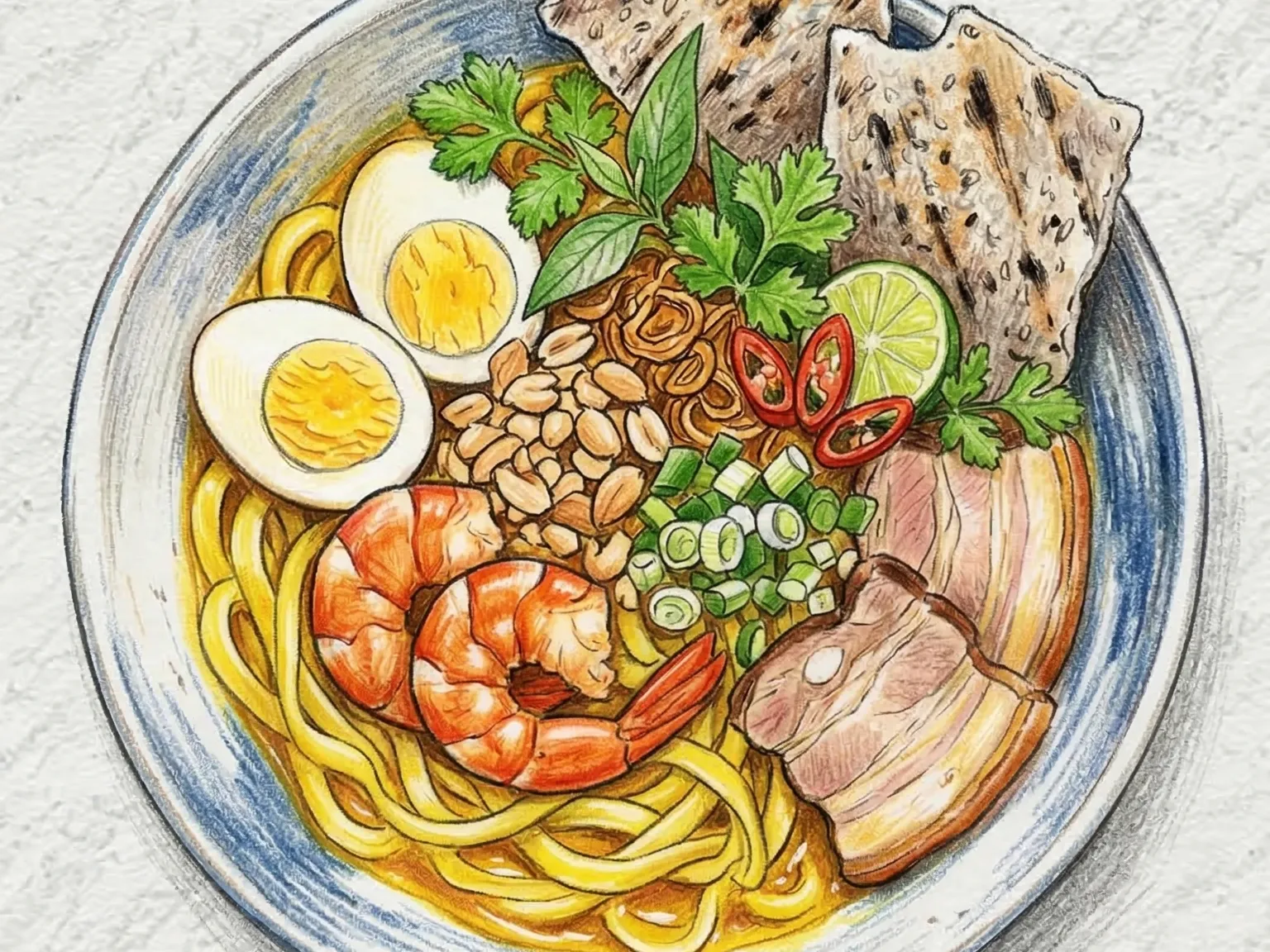
Mi quang is a central Vietnamese noodle dish built on turmeric-tinted rice noodles topped with pork, shrimp, and a small amount of concentrated broth - closer to a dressed noodle than a soup. The pork is marinated with fish sauce and turmeric, which simultaneously colors the meat yellow and infuses it with fermented depth. A brief five-minute simmer with chicken stock produces a small quantity of broth with intensely concentrated flavor. The noodles are cooked separately, rinsed, and served in bowls with just enough broth to moisten rather than submerge them, which is the hallmark of authentic mi quang. Bean sprouts and crushed roasted peanuts are added on top, contributing crunch and nuttiness that contrast with the soft noodles and rich broth.