Korean Beef Brisket Jjolmyeon

Korean Beef Brisket Jjolmyeon

Quick answer

Cha-dol jjolmyeon puts seared thin-sliced beef brisket on top of chewy jjolmyeon noodles dressed in gochujang sauce.

What makes this special

  • Briefly seared beef brisket adds buttery fat to these rubbery-chewy spicy mixed jjolmyeon noodles.
  • Brisket seared briefly on a dry pan preserves the marbling's buttery richness
  • Jjolmyeon's rubbery elasticity holds seasoning to the last strand
Total time
27 min
Level
Easy
Servings
2 servings
Ingredients
9
Calories
680 kcal
Protein
24 g

Key ingredients

jjolmyeon noodlesbeef brisket slicescabbagecucumbergochujang

Core cooking flow

  1. 1 Mix 2 tablespoons gochujang, 1 tablespoon gochugaru, 1.5 tablespoons vinegar...
  2. 2 Slice 120 g cabbage and 80 g cucumber into thin matchsticks, then soak them in cold water for 5 minutes.
  3. 3 Heat a dry pan until it is very hot, then spread 180 g beef brisket slices in a single layer.

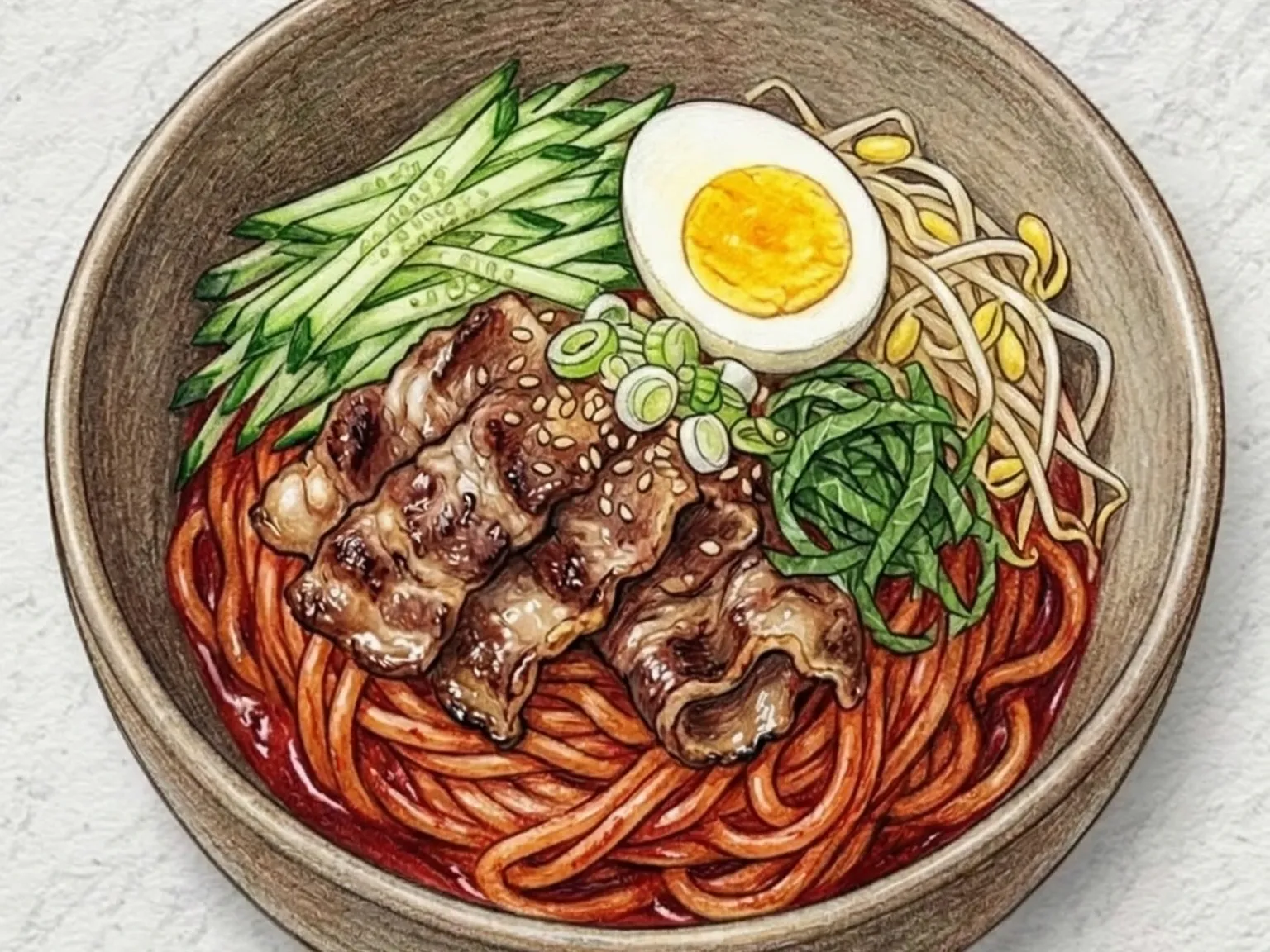
Cha-dol jjolmyeon puts seared thin-sliced beef brisket on top of chewy jjolmyeon noodles dressed in gochujang sauce. The brisket is spread flat on a hot dry pan and cooked on high heat for no more than a minute per side so the exterior browns while the intramuscular fat stays in place. Cooking too long renders the fat out entirely, leaving the slices dry and tough, which defeats the purpose of using brisket over leaner cuts. Jjolmyeon noodles are made with a higher proportion of starch than ordinary wheat noodles, giving them a rubber-band elasticity that lets sauce cling to the surface from the first bite to the last. The standard accompaniments are julienned cucumber and a halved boiled egg, both of which temper the spiciness with their mild, cool flavors. Bean sprouts add a crunchy contrast in texture, while perilla leaves sharpen the overall aroma. The dish is eaten cold in summer and is also a common late-night order, often finished with a splash of vinegar stirred into the remaining sauce at the bottom of the bowl.

Prep 15min Cook 12min 2 servings

Instructions

Read the steps as a cooking flow: prep, heat, seasoning, doneness control, and finish.

6 steps
  1. 1
    Season

    Mix 2 tablespoons gochujang, 1 tablespoon gochugaru, 1.5 tablespoons vinegar, 1 tablespoon sugar, and 1 teaspoon sesame oil until smooth. Let the sauce rest for 10 minutes so the heat, sweetness, and acidity settle evenly.

  2. 2
    Season

    Slice 120 g cabbage and 80 g cucumber into thin matchsticks, then soak them in cold water for 5 minutes.

    Drain well in a sieve and shake off excess water so the vegetables stay crisp instead of watering down the sauce.

  3. 3
    Control

    Heat a dry pan until it is very hot, then spread 180 g beef brisket slices in a single layer.

    Cook over high heat for about 30 seconds per side, just until browned at the edges, so the fat does not render out completely.

  4. 4
    Heat

    Separate 320 g jjolmyeon noodles before adding them to boiling water, then cook for 4 minutes.

    When the center is no longer hard but the noodles still spring back, rinse and rub them under cold water to remove surface starch.

  5. 5
    Season

    Drain the noodles thoroughly, then add half of the sauce first.

    Toss with chopsticks or a gloved hand until every strand is coated red, adding a spoonful more only if pale spots remain, to avoid over-saucing early.

  6. 6
    Finish

    Top the seasoned noodles with cabbage, cucumber, and the hot brisket before it cools and toughens.

    Add the remaining sauce little by little after tasting, toss lightly so the vegetables keep their crunch, and serve immediately.

After the steps

Pick a recipe that fits this dish.

Continue with shared ingredients, meal pairings, or a similar method.

Recipes That Go Well With This

More Noodles →

Based on shared ingredients and meal pairing

Korean Spicy Chewy Noodles
Shared ingredient: cabbage Noodles

Korean Spicy Chewy Noodles

Jjolmyeon is a Korean cold noodle dish built around unusually thick, springy wheat noodles that were accidentally invented at an Incheon noodle factory in the 1970s. The noodles are boiled, rinsed in ice water to firm up their chewy texture, then dressed in a sweet-sour-spicy sauce made from gochujang, vinegar, sugar, soy sauce, and sesame oil. Shredded cabbage and julienned cucumber are chilled separately and piled on top, giving each bite a crisp contrast to the bold sauce. A halved boiled egg adds a creamy counterpoint to the heat. The dish is served cold and eaten after thorough mixing, making it a go-to summer meal and late-night snack across Korea.

Korean Spicy Bellflower Root Chewy Noodles
Shared ingredient: cabbage Noodles

Korean Spicy Bellflower Root Chewy Noodles

Deodeok gochujang jjolmyeon is a spicy noodle dish that pairs the aromatic bitterness of bellflower root with gochujang-dressed chewy jjolmyeon noodles. Lightly pounding the peeled deodeok against a cutting board loosens its fibrous texture, releasing its distinctive herbal scent and making each piece more receptive to seasoning. A brief salt cure draws out moisture and dials down the bitterness, allowing the sauce to penetrate more effectively into the root. The sauce blends gochujang with vinegar and oligosaccharide syrup, balancing heat with a clean tangy edge and gentle sweetness that complements the root's inherent character without masking it. Julienned cabbage, carrot, and cucumber supply a crisp, refreshing layer between the dense noodles and the fibrous deodeok. All ingredients should be combined just before eating to preserve the crunch of the vegetables.

Korean Seasoned Shishito Pepper Banchan
Serve together Side dishes

Korean Seasoned Shishito Pepper Banchan

Kkwarigochu-muchim is a Korean banchan made by briefly blanching shishito peppers and dressing them in a doenjang-based seasoning. It is a distinct dish from kkwarigochu-jjim, the braised version of the same pepper, even though the ingredients overlap significantly. The braised version simmers the peppers until they soften and absorb the sauce, while muchim relies on a very short blanch, no longer than forty seconds, to preserve the pepper's snap. Shocking the peppers in cold water the moment they come out of the boiling water locks in the vivid green color, and squeezing out excess moisture prevents the doenjang dressing from thinning into something flat and watery. The irregular wrinkled surface of shishito peppers acts as a natural trap for the doenjang, soy sauce, and sesame oil dressing, which means a modest amount of seasoning spreads evenly across every piece. Tossing rather than kneading keeps the skins intact and the texture consistent. Tearing one end slightly before dressing allows the seasoning to reach the hollow interior. Among regular eaters, part of the appeal is the mild unpredictability: most shishito peppers are gentle, but one in every handful delivers unexpected heat. Because the dish releases very little liquid after seasoning, it travels well in packed lunches and is a regular fixture on summer dinner tables in Korean households.

Korean Bulgogi Jjolmyeon (Marinated Beef on Chewy Spicy Noodles)
Similar recipe Noodles

Korean Bulgogi Jjolmyeon (Marinated Beef on Chewy Spicy Noodles)

Thinly sliced beef marinated in soy sauce, sugar, and sesame oil sits atop a bed of noodles characterized by a dense, chewy structure. Jjolmyeon provides a firm texture that resists the teeth, offering a different physical experience compared to standard noodles. The accompanying sauce, created with gochujang, soy sauce, and vinegar, introduces spicy and acidic elements that balance the sweetness of the meat. To maintain tenderness, the beef requires rapid cooking over high heat, which prevents the thin slices from drying out or becoming tough. Shredded cabbage and carrots provide layers of crispness, while a soft-boiled egg helps temper the heat from the chili paste. Serving the ingredients in separate sections keeps the textures distinct and allows for mixing just before consumption. Rinsing the cooked noodles in cold water increases their characteristic firmness, creating a clear contrast with the texture of the stir-fried beef. Adding extra sesame seeds enhances the nutty scent, and incorporating spicy peppers increases the heat level.

Serve with this

Korean Eggplant & Pork Pancake
Pancakes Medium

Korean Eggplant & Pork Pancake

Thick eggplant slices are topped with seasoned ground pork, coated in Korean pancake batter, dipped in beaten egg, and pan-fried until golden on both sides. As the eggplant absorbs oil over heat, it cooks through to a silky, yielding texture, and the pork filling stays juicy inside the batter crust. Minced garlic and onion season the pork mixture and mask any gaminess, while the egg coating forms a thin, evenly browned exterior. A soy-based dipping sauce sharpens the mild eggplant and savory pork into a balanced bite.

🍺 Bar Snacks 🏠 Everyday
Prep 20min Cook 15min 4 servings
Korean Salted Anchovy Jeotgal
Kimchi Medium

Korean Salted Anchovy Jeotgal

Myeolchi jeotgal is a traditional Korean fermented anchovy preserve made by layering cleaned small anchovies with coarse sea salt in a sterilized container, pressing firmly to eliminate air pockets, then refrigerating for extended aging. As salt draws moisture from the fish, it begins breaking down proteins into concentrated umami compounds, stripping away the raw fishiness and building the deep, complex flavor that defines this preserve. On the fifth day of fermentation, minced garlic, grated ginger, chili flakes, and rice wine are folded in to add aromatic layers on top of the developing fermented base. The salt ratio must stay at or above twenty percent of the anchovy weight throughout the process, as dropping below this threshold allows harmful bacteria to take hold and risks spoilage. The finished jeotgal has two primary uses in Korean cooking: stirred in small amounts into kimchi seasoning paste as an umami backbone, or spooned directly over hot rice as a pungent, savory side dish. It can also substitute for fish sauce in doenjang jjigae or seasoned vegetables, adding a more pronounced fermented character.

🍱 Lunchbox ⚡ Quick
Prep 20min 4 servings
Bomdong Strawberry Doenjang Salad
Salads Easy

Bomdong Strawberry Doenjang Salad

Bomdong strawberry doenjang salad combines the crisp leaves of early spring bomdong cabbage with the fruity sweetness of strawberries and the fermented depth of Korean soybean paste. The dressing, built by whisking doenjang with olive oil and vinegar, adds savory richness to the mild bomdong leaves, while the natural acidity of the strawberries neutralizes the saltiness of the paste and brings brightness to every bite. Walnuts introduce crunch and nuttiness, creating textural contrast among the softer components, and cucumber adds moisture that keeps the salad refreshing throughout. Dressing the salad too early draws water from the strawberries, so adding the dressing immediately before serving is essential for maintaining the right texture. Tearing the bomdong by hand rather than cutting it preserves its natural shape without bruising the leaves. The saltiness of doenjang varies between brands, so adding the dressing gradually and tasting as you go prevents overseasoning. Swapping strawberries for blueberries or mandarin segments adapts the salad to other seasons while keeping the doenjang dressing intact. Toasted almond slices or sunflower seeds make a good substitute for walnuts when a lighter crunch is preferred.

🥗 Light & Healthy ⚡ Quick
Prep 15min 2 servings

Similar recipes

Korean Spicy Beef Soup Noodles
Noodles Medium

Korean Spicy Beef Soup Noodles

Yukgaejang guksu starts with a deep broth made by simmering beef brisket until the liquid turns rich and full-bodied. The meat is shredded along the grain and returned to the pot alongside fernbrake, bean sprouts, and green onion that have been seasoned with gochugaru, sesame oil, and garlic before a brief stir-fry. This pre-seasoning step lets the chili heat dissolve into the oil, producing a rounded spiciness rather than raw powder burn. Korean soup soy sauce adjusts the salt level without clouding the broth's color. Thin wheat somyeon noodles are boiled separately and added at the end so they absorb the broth without turning mushy. Swapping in glass noodles changes the texture to a chewier, more slippery bite that holds onto the soup longer.

🏠 Everyday 🌙 Late Night
Prep 15min Cook 20min 2 servings
Korean Gochujang Bibim Udon Cup (Spicy Mixed Udon Cup)
Street food Easy

Korean Gochujang Bibim Udon Cup (Spicy Mixed Udon Cup)

Gochujang bibim udon cup is a cold-tossed udon noodle dish served in a cup, dressed with a sauce built from gochujang, soy sauce, oligosaccharide syrup, vinegar, and sesame oil. The fermented heat of gochujang meets the acidity of vinegar to create a bright, tangy-spicy flavor profile that avoids sharpness, and the viscous syrup gives the sauce enough body to cling evenly to the thick udon strands. Raw julienned cabbage and carrot are folded in without cooking, adding a snappy crunch that contrasts the soft noodles. Cooling the noodles completely before tossing is a key step that prevents the sauce from clumping and ensures even distribution throughout the cup. The handheld cup format suits street food settings, and additional toppings such as a soft-boiled egg or seasoned seaweed can elevate it into a fuller meal.

🌙 Late Night ⚡ Quick
Prep 12min Cook 8min 2 servings
Korean Beef Brisket & Water Parsley Chili Stew
Stews Medium

Korean Beef Brisket & Water Parsley Chili Stew

This spicy stew simmers marbled beef brisket and water parsley in a gochujang-based broth built from beef stock, chili paste, and gochugaru. The brisket's fat renders into the broth as it cooks, adding body and a rich savoriness that rounds out the chili heat. Water parsley loses its fragrance quickly over high heat, so it should be added in the final thirty seconds or placed directly in the bowl before serving to preserve its herbal brightness. Potato chunks and firm tofu soak up the red broth and make the stew substantial, while generous minced garlic gives the spicy finish a clean, defined edge.

🍺 Bar Snacks 🏠 Everyday
Prep 18min Cook 25min 4 servings

Tips

Let the sauce rest for 10 minutes to deepen flavor.
Cook brisket briefly over high heat to avoid toughness.

Nutrition (per serving)

Calories
680
kcal
Protein
24
g
Carbs
76
g
Fat
30
g