Korean Beef Brisket Soybean Paste Noodles
Noodles Medium

Korean Beef Brisket Soybean Paste Noodles

Quick answer

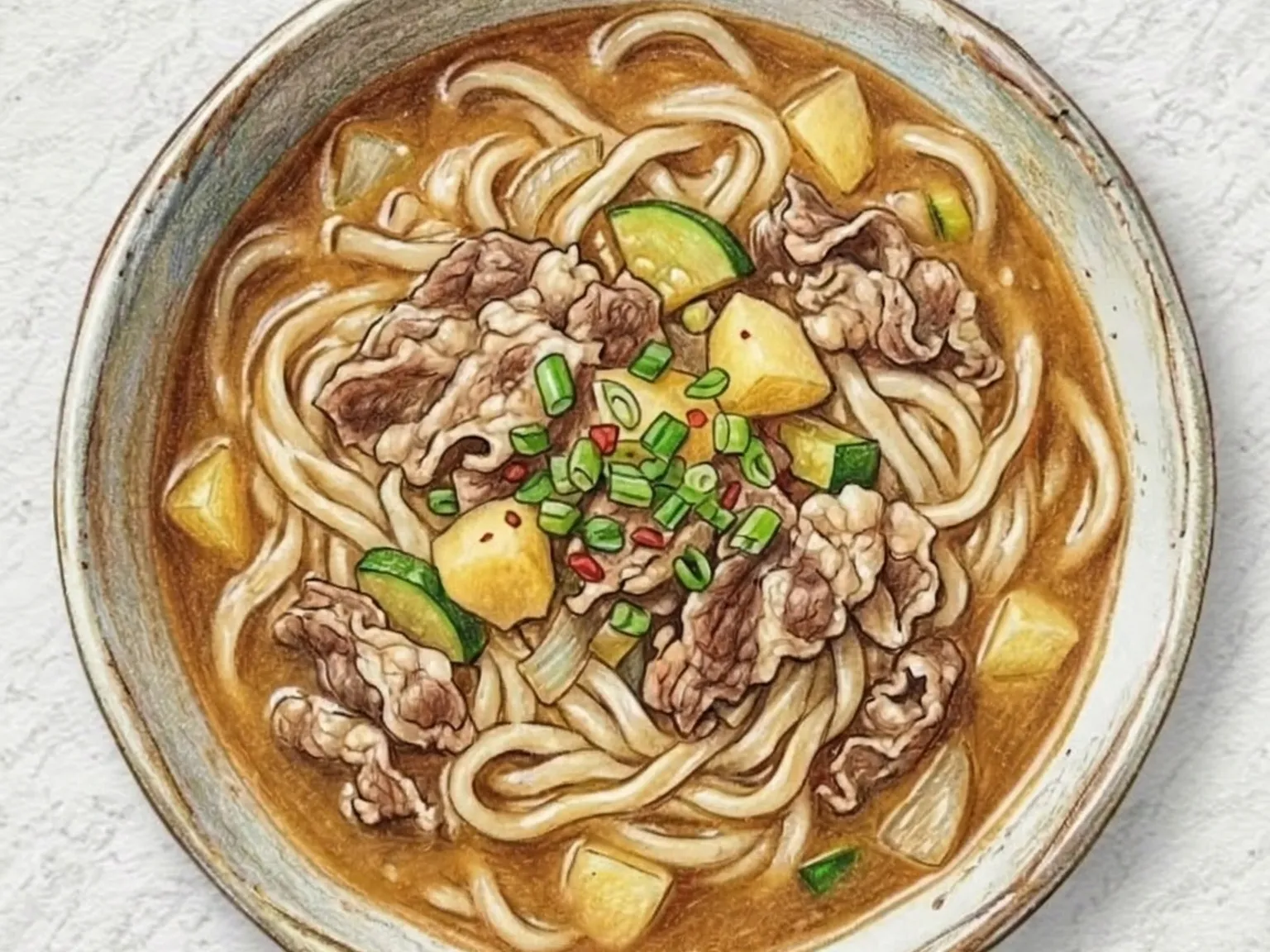
Chadol doenjang kalguksu is a Korean noodle soup made by simmering thin slices of beef brisket in a soybean paste broth and adding hand-cut wheat noodles to finish the bowl.

What makes this special

  • Fermented doenjang and beef brisket fat create a thick, earthy broth for these hand-cut noodles.
  • Doenjang umami and brisket fat melt into a brooding, earthy broth
  • Irregular hand-cut thickness means thin and thick bites coexist in one bowl
Total time
35 min
Level
Medium
Servings
2 servings
Ingredients
9
Calories
640 kcal
Protein
29 g

Key ingredients

Fresh kalguksu noodlesBeef brisket slicesDoenjang (soybean paste)ZucchiniOnion

Core cooking flow

  1. 1 Slice 80 g onion, cut 80 g zucchini into half-moons, and tear 100 g oyster mushrooms along their fibers.
  2. 2 Pour 900 ml water into a pot and press 2 tbsp doenjang through a fine strainer into it.
  3. 3 Add the onion, zucchini, and oyster mushrooms to the doenjang broth.

Chadol doenjang kalguksu is a Korean noodle soup made by simmering thin slices of beef brisket in a soybean paste broth and adding hand-cut wheat noodles to finish the bowl. The doenjang gives the broth a fermented, earthy depth, and the marbled fat from the brisket slowly renders into the simmering liquid, adding body and a gentle richness that rounds out each spoonful. Kalguksu noodles are rolled thin by hand and cut with a knife, so they are naturally uneven in thickness. Thicker sections retain a satisfying chew while thinner edges go silky and absorb the broth more readily, which means a single bowl contains multiple textures without any deliberate effort. Zucchini, potato, and onion are added early and cook down into the broth, contributing natural sweetness that tempers the saltiness of the doenjang. Minced garlic and sliced scallion stirred in near the end lift the aroma and add a fresh, sharp note at the finish. Because doenjang concentrates as the broth reduces, starting with more water than seems necessary is a practical safeguard against the soup becoming too salty before the noodles are cooked through. Serving the noodles immediately after cooking prevents them from absorbing too much liquid and going soft.

Prep 15min Cook 20min 2 servings

Instructions

Read the steps as a cooking flow: prep, heat, seasoning, doneness control, and finish.

6 steps
  1. 1
    Heat

    Slice 80 g onion, cut 80 g zucchini into half-moons, and tear 100 g oyster mushrooms along their fibers.

    Separate any stuck beef brisket slices so they cook quickly and do not clump in the broth.

  2. 2
    Control

    Pour 900 ml water into a pot and press 2 tbsp doenjang through a fine strainer into it.

    Heat over medium-high heat until the paste is fully dissolved and small bubbles form around the edge.

  3. 3
    Control

    Add the onion, zucchini, and oyster mushrooms to the doenjang broth.

    Lower to medium heat and simmer for about 6 minutes, until the onion softens slightly and the vegetables begin seasoning the broth.

  4. 4
    Heat

    Spread 180 g beef brisket slices into the pot and raise the heat to high.

    Boil for 2 to 3 minutes, skimming only the foam on top while leaving the rendered fat in the broth.

  5. 5
    Control

    Add 300 g fresh kalguksu noodles and loosen them immediately with chopsticks.

    Cook over medium-high heat for 5 to 6 minutes, stirring occasionally, until the thicker noodle centers are tender.

  6. 6
    Finish

    Stir in 1 tbsp minced garlic and adjust the final seasoning with soup soy sauce.

    If the broth looks too cloudy or tastes salty, add 100 ml water, bring it back to a boil, then serve hot.

After the steps

Pick a recipe that fits this dish.

Continue with shared ingredients, meal pairings, or a similar method.

Recipes That Go Well With This

More Noodles →

Based on shared ingredients and meal pairing

Korean Shepherd's Purse Soybean Paste Noodles
Shared ingredient: kalguksu noodles Noodles

Korean Shepherd's Purse Soybean Paste Noodles

Naengi doenjang kalguksu is a Korean knife-cut noodle soup simmered in anchovy-kelp stock with doenjang and fresh shepherd's purse, a springtime herb prized for its earthy, peppery fragrance. Dissolving the doenjang through a fine strainer keeps the broth smooth and clear rather than cloudy. Soup soy sauce and minced garlic fine-tune the seasoning so the fermented soybean flavor stays rich without becoming overly salty. The noodles cook for four minutes before zucchini and onion are added for two more, allowing their gentle sweetness to dissolve into the broth. Shepherd's purse must go in only during the final minute with reduced heat, because its volatile aromatic compounds dissipate quickly at a rolling boil and the distinctive spring fragrance would be lost. Adjusting salt with soup soy sauce at the end compensates for the varying saltiness across different doenjang brands. The herb's aroma is most concentrated from mid-March to early April, making that narrow window the best time to prepare this soup for the fullest seasonal flavor.

Korean Brisket Soybean Paste Stew
Shared ingredient: thin beef brisket Stews

Korean Brisket Soybean Paste Stew

Thinly sliced brisket is added to the classic soybean paste stew base of rice-rinsing water and doenjang, cooked together with potato, zucchini, tofu, and cheongyang chili. The marbled fat in the brisket renders into the broth as it cooks, building a richer and more savory base than the standard vegetable-only version. The cheongyang chili delivers a sharp heat that makes this stew especially good with a bowl of rice. Adding the brisket slices after the vegetables have softened partially prevents the meat from overcooking and turning tough during the remaining simmer time.

Korean Shepherd's Purse & Napa Pancake
Serve together Pancakes

Korean Shepherd's Purse & Napa Pancake

Naengi Baechu Jeon is a seasonal Korean pancake that features wild shepherd's purse and sweet napa cabbage. To prepare this dish, the roots of the shepherd's purse are thoroughly scrubbed to remove soil and chopped into short lengths, while the cabbage is sliced, lightly salted to draw out moisture, and squeezed. The batter consists of Korean pancake mix, rice flour, an egg, cold water, and soup soy sauce, which provides a clean base that allows the flavors of the vegetables to stand out. Mixing rice flour into the batter ensures that the edges of the pancake turn crispy and remain tender even after cooling. The prepared greens are gently folded into the mixture, then pan-fried in oil over medium heat until both sides are golden brown. It is sliced on a board and served warm.

Korean Fermented Soybean Paste Noodle Soup
Similar recipe Noodles

Korean Fermented Soybean Paste Noodle Soup

Doenjang kalguksu is a Korean noodle soup of knife-cut wheat noodles in an anchovy broth enriched with fermented soybean paste. Straining the doenjang through a fine-mesh sieve before adding it to the broth serves a specific purpose: it prevents uneven lumps and ensures the paste dissolves uniformly, which keeps any bitter notes from concentrating in spots. The fermentation depth of the doenjang and the glutamate-rich anchovy stock reinforce each other without needing added seasoning. Zucchini cut into half-moons and sliced shiitake mushrooms contribute sweetness and aroma as the broth simmers; cubed tofu adds a soft, yielding contrast to the chewy noodles. Timing dictates quality here: the final salt adjustment goes in right before the noodles, because doenjang pushed through extended boiling develops a pronounced bitterness that is difficult to correct. Once the noodles go in, the soup should be finished within two minutes to preserve their elasticity.

Serve with this

Korean Seasoned Garlic Chives
Side dishes Easy

Korean Seasoned Garlic Chives

Buchu muchim differs from buchu kimchi in that it uses soy sauce and vinegar instead of fish sauce, which produces a sharper, more acidic result with none of the fermented depth. Raw chives are cut to five centimeters and tossed by hand for no longer than twenty seconds -- exceeding that time bruises the chives and draws out liquid, turning the texture limp. Gochugaru adds color and a moderate level of heat, while the ratio of vinegar to sugar creates a clean sweet-sour dressing that plays against the chive pungency. Sesame oil and whole sesame seeds go in last to preserve their aroma. Eat the same day it is made; once refrigerated overnight the chives wilt and lose their characteristic snap. Served alongside grilled pork belly or ribs, the acidity cuts through the fat and refreshes the palate between bites.

🏠 Everyday 🍱 Lunchbox
Prep 12min Cook 3min 2 servings
Korean Scallion Kimchi (Whole Stalk Anchovy Shrimp Paste)
Kimchi Medium

Korean Scallion Kimchi (Whole Stalk Anchovy Shrimp Paste)

Jjokpa kimchi is a traditional Korean scallion kimchi made by briefly brining whole scallions in coarse salt, then coating them from root to tip with a seasoning paste of anchovy fish sauce, fermented shrimp, gochugaru, and sweet rice flour paste. Using both anchovy fish sauce and salted shrimp together is intentional: the two condiments each carry a different profile of seafood umami, and combining them produces a more complex, layered depth than either alone could achieve. The sweet rice flour paste acts as a binder, adhering the seasoning evenly to the surface of each scallion and keeping it in place as moisture releases during fermentation. Without this paste, the pickling liquid would dilute the coating and the flavor would fade over time. The white bulb sections of the scallion hold their crunch through the brining and fermentation process while absorbing the spice of the gochugaru, and the green tops wilt to a silky texture that releases the scallion's characteristic sweet, pungent aroma. After six hours at room temperature followed by a day of refrigeration, the seasoning has fully penetrated the scallion and the kimchi is ready to eat alongside grilled pork belly or bossam. After three or more days of fermentation, a gentle lactic acidity develops that makes the kimchi equally useful as an ingredient in stews or stir-fries.

🏠 Everyday 🍱 Lunchbox
Prep 25min 4 servings
Ssamjang Tofu Kale Crunch Salad
Salads Easy

Ssamjang Tofu Kale Crunch Salad

Ssamjang tofu kale crunch salad sears firm tofu in olive oil for six to seven minutes until golden and crisp on the outside while staying tender within, then combines it with kale massaged with salt, shredded red cabbage, cucumber, and sliced almonds, all dressed in a ssamjang-based vinaigrette. The dressing blends ssamjang's fermented depth, a mixture of doenjang and gochujang, with lemon juice, honey, and olive oil, layering umami with citrus acidity and a restrained sweetness that tempers kale's natural bitterness. Massaging the kale with salt before adding the dressing breaks down its tough cell walls, making the leaves pliable and far more absorbent. Pressing moisture from the tofu thoroughly before pan-frying is what produces the crisp, golden crust; tofu that still holds water will steam rather than sear and come out pale and soft. Sliced almonds add a light, nutty crunch with every bite, giving the salad a clear contrast in texture throughout.

🥗 Light & Healthy ⚡ Quick
Prep 15min Cook 10min 2 servings

Similar recipes

Korean Doenjang Thin Noodle Soup
Noodles Easy

Korean Doenjang Thin Noodle Soup

Doenjang somyeon is a Korean noodle soup of thin wheat noodles in a fermented soybean paste broth built on anchovy stock. Potato, zucchini, and onion - or whatever vegetables are available - go into the broth first, simmering until they release their moisture and natural sugars into the liquid, which rounds out the earthy doenjang base. The somyeon noodles take only three to four minutes to cook, so they go in last to stay firm. Sliced green onion scattered on top adds a clean, bright note against the fermented broth. The ingredient list is short and adaptable, but the doenjang delivers enough layered depth to make this a satisfying weeknight dinner without any complex technique.

🏠 Everyday ⚡ Quick
Prep 10min Cook 15min 2 servings
Korean Spring Aralia Soybean Noodle Soup
Noodles Easy

Korean Spring Aralia Soybean Noodle Soup

Durup doenjang kalguksu is a seasonal Korean noodle soup that layers blanched aralia shoots over a rich doenjang broth built with potato and zucchini. The potato breaks down partially during simmering, thickening the broth naturally and adding a mild, floury sweetness that works alongside the deep fermented character of the soybean paste. Zucchini softens into the liquid as it cooks, contributing its own gentle sweetness, and garlic reinforces the savory base. Knife-cut noodles hold up well in the dense broth, their chewy bite providing texture against the soft vegetables. The aralia shoots must be blanched separately and placed on top just before serving, because cooking them directly in the boiling broth drives off the bitter-herbal spring fragrance that makes them worth using in the first place. This dish comes together only during the brief aralia season in early spring, when the combination of fermented depth and fresh mountain herb aroma in a single bowl is at its most vivid.

🏠 Everyday 🌙 Late Night
Prep 15min Cook 20min 2 servings
Korean Gangwon-Style Soybean Paste Stew
Stews Easy

Korean Gangwon-Style Soybean Paste Stew

Gangwon-style doenjang jjigae is a regional variation of the fermented soybean paste stew defined by an unusually generous quantity of potatoes - 300 grams - which break down during cooking and release starch into the broth, giving it a thick, substantial body rarely found in other regional versions. Three tablespoons of doenjang dissolved in 1.1 liters of anchovy stock form a solid base. As the diced potatoes cook through, their starch gradually thickens the surrounding liquid and softens into pieces with a texture somewhere between firm and yielding. Oyster mushrooms contribute a distinctly chewy quality that holds up through extended simmering while also enriching the savory depth of the broth. Zucchini, onion, and firm tofu round out the pot, making it substantial enough to serve as a complete meal without anything else on the table. Gangwon Province, with its mountainous terrain, cooler summers, and long winters, developed a style of home cooking that favors generous quantities and long cooking times over refinement. The stew should be simmered until the potatoes are completely soft before serving so the broth reaches its intended consistency.

🏠 Everyday
Prep 15min Cook 25min 4 servings

Tips

If starch clouds the broth too much, add 100 ml water and re-simmer.
Saltiness varies by doenjang brand, so adjust final seasoning with soup soy sauce.

Nutrition (per serving)

Calories
640
kcal
Protein
29
g
Carbs
66
g
Fat
28
g