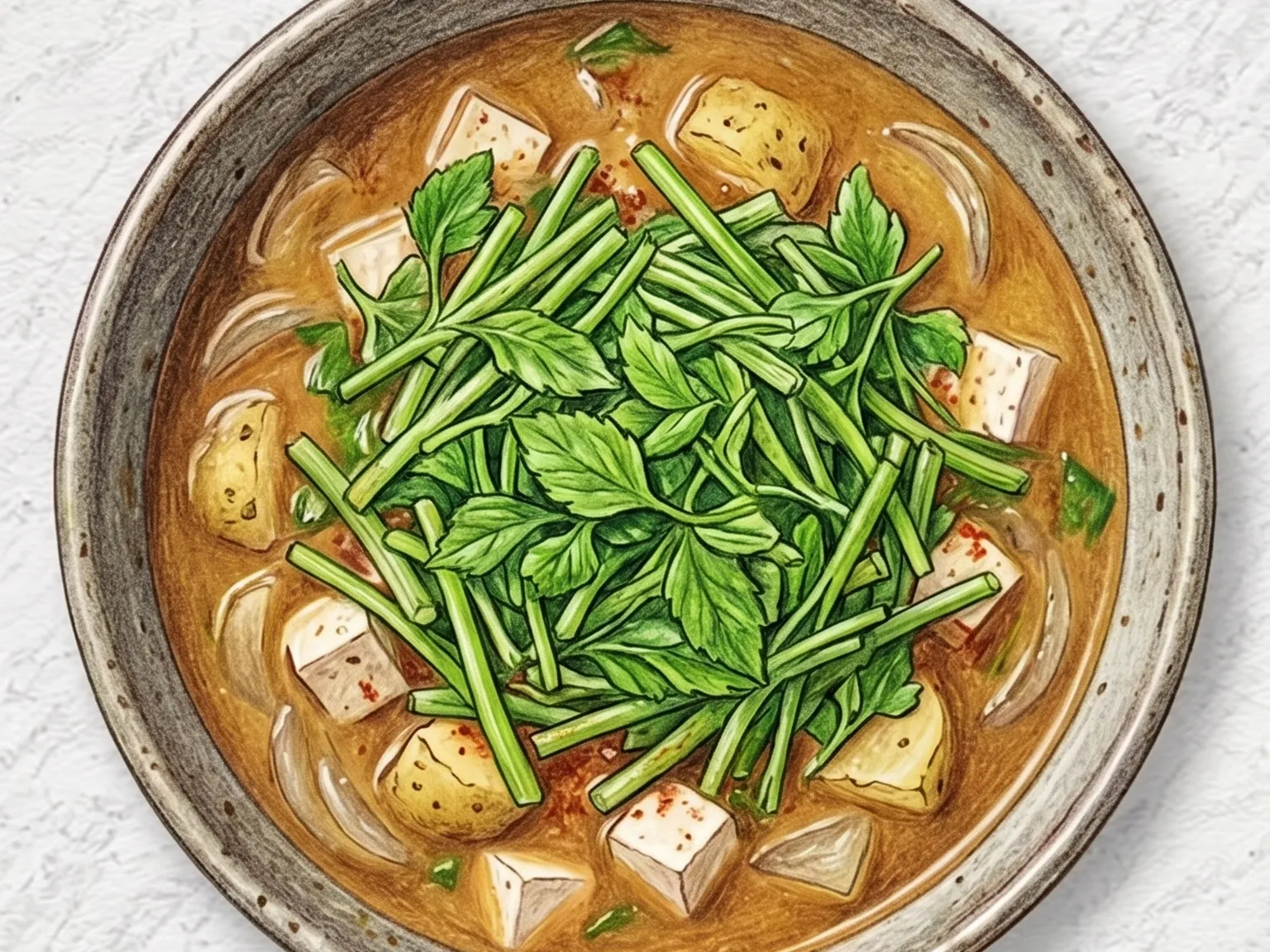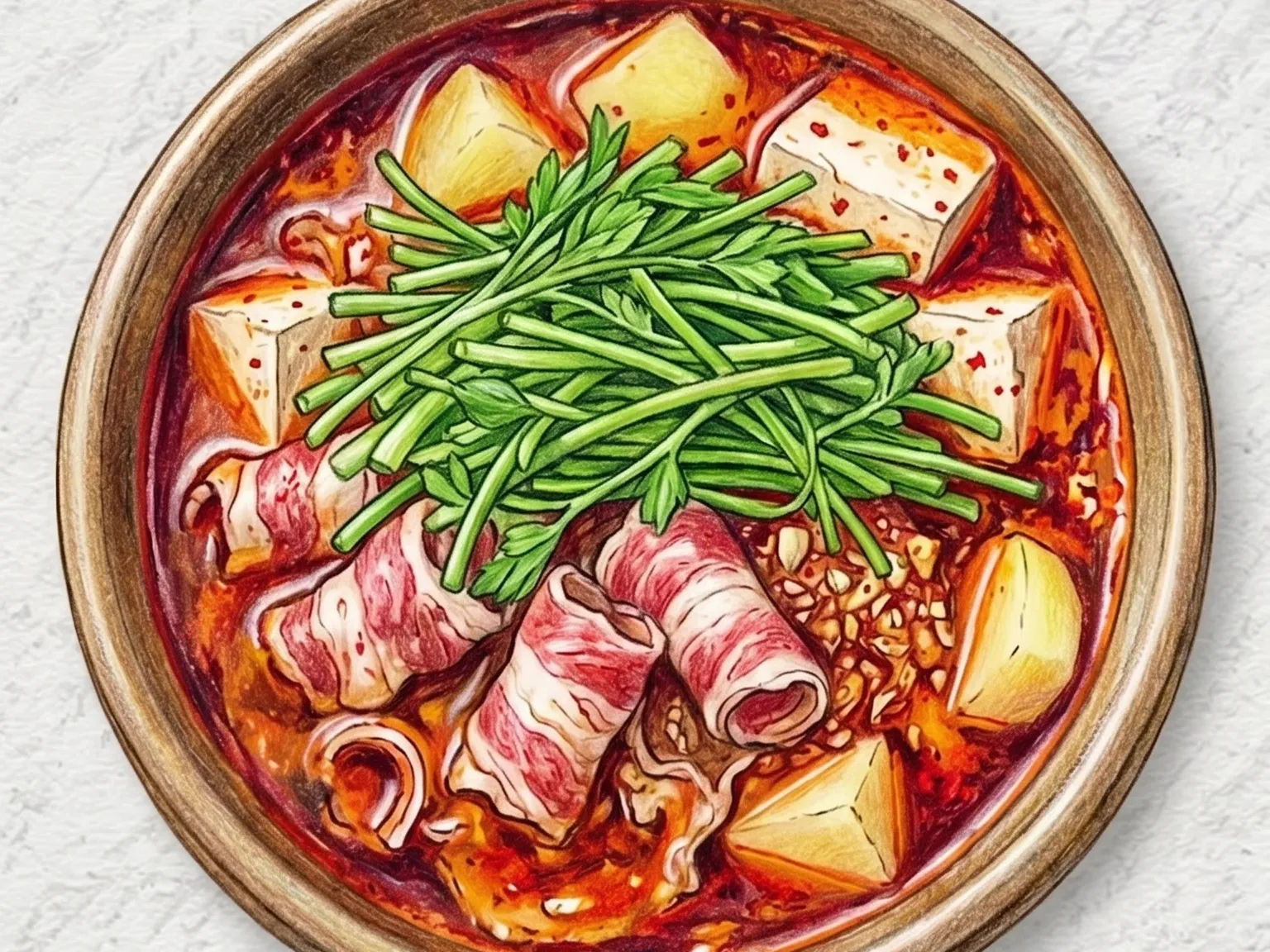
Korean Beef Brisket & Water Parsley Chili Stew
Rich, marbled beef brisket melts into a fiery gochujang broth while fresh water parsley cuts through the heat with its herbal brightness. The brisket's marbling melts into the broth, tempering the heat with a fatty richness, while the water parsley adds an herbal freshness that cuts through the spice. Chunks of potato and firm tofu absorb the red-tinged broth, making the stew both filling and flavorful.
Adjust Servings
Instructions
- 1
Cut potato and onion thick; cut minari into 5 cm lengths.
- 2
Briefly stir-fry brisket for 1 minute to render flavor.
- 3
Add gochujang, chili flakes, and garlic; sauté 30 seconds.
- 4
Pour in stock, add potato and onion, and boil for 12 minutes.
- 5
Add tofu and simmer 5 more minutes, adjusting seasoning.
- 6
Add minari for 1 final minute, then remove from heat and serve.
As an Amazon Associate, we may earn from qualifying purchases.
Tips
Nutrition (per serving)
More Recipes

Korean Beef Brisket & Bean Sprout Chili Stew
Thin-sliced beef brisket and mung bean sprouts are simmered with Cheongyang chilies in this spicy stew. The marbled brisket releases its fat into the anchovy-based broth, creating a rich, beefy foundation. Crunchy bean sprouts provide textural contrast, while two Cheongyang chilies deliver a sharp, direct heat. Tofu, onion, and green onion round out the stew, seasoned with Korean chili flakes and soup soy sauce for a layered, fiery bowl.

Korean Wild Chive Clam Chili Stew
Fresh clams and wild chives come together in a gochujang-spiked anchovy broth for this seasonal stew. The clams open during simmering, releasing their briny liquor into the spicy stock, while the wild chives - added near the end - contribute a sharp, garlic-like bite that lifts the whole dish. Potato and tofu give the stew substance, and the interplay of sea-briny clam flavor with pungent spring chives makes it a distinctly early-spring recipe.

Korean Pork Gochujang Jjigae
This pork-focused gochujang stew blends chili paste with a half-tablespoon of doenjang, balancing the heat with fermented soybean depth. A full tablespoon of gochugaru intensifies the color and spice level. The 180 grams of pork shoulder render their juices into 700ml of broth, while potato, zucchini, onion, and tofu ensure variety in every bite. The combination of two fermented pastes gives this version a more complex flavor than a pure gochujang stew.

Korean Spicy Fish Stew (Mackerel in Chili-Radish Broth)
Saengseon jjigae is a spicy Korean fish stew made with mackerel or beltfish cut into chunks, simmered alongside daikon radish and zucchini. Gochujang, gochugaru, soy sauce, and garlic build a bold, peppery broth in an anchovy stock base. The radish neutralizes any fishiness while adding natural sweetness to the soup. Picking the flaky fish off the bone and eating it with spoonfuls of the fiery broth over rice is the traditional way to enjoy it.

Korean Beef Brisket Jjolmyeon
Seared beef brisket crowns a bowl of chewy jjolmyeon noodles dressed in a spicy gochujang sauce. The brisket is cooked fast over high heat so the outside crisps while the marbled fat inside renders just enough to leave each slice rich and fragrant. That beefy aroma mingles with the sweet-spicy dressing, elevating what is already a bold noodle dish. Jjolmyeon's signature rubbery chew traps sauce in every crevice, ensuring consistent flavor from the first bite to the last. Julienned cucumber and a halved boiled egg are the standard accompaniments, adding cool crunch and mild richness. Bean sprouts or perilla leaves can be tossed in for extra texture. The dish works equally well as a refreshing summer meal or a satisfying late-night bowl.

Korean Beef Brisket Rice Bowl
Chadol deopbap is a Korean rice bowl featuring paper-thin beef brisket slices seared in a hot pan until the edges turn crisp, then drizzled with a soy-based sauce and served over steamed rice. The marbled fat in the brisket renders out during cooking, creating a rich, buttery flavor that pairs naturally with the salty-sweet soy glaze. Garlic and sesame oil add aromatic depth without overcomplicating the dish. A raw or soft-cooked egg yolk on top is a common addition, breaking into a golden sauce that coats the rice when mixed. Despite its simplicity - just a handful of pantry staples and a few minutes at the stove - it delivers a deeply satisfying meal that works well for both lunch and dinner.