Beef Brisket Perilla Cream Fettuccine
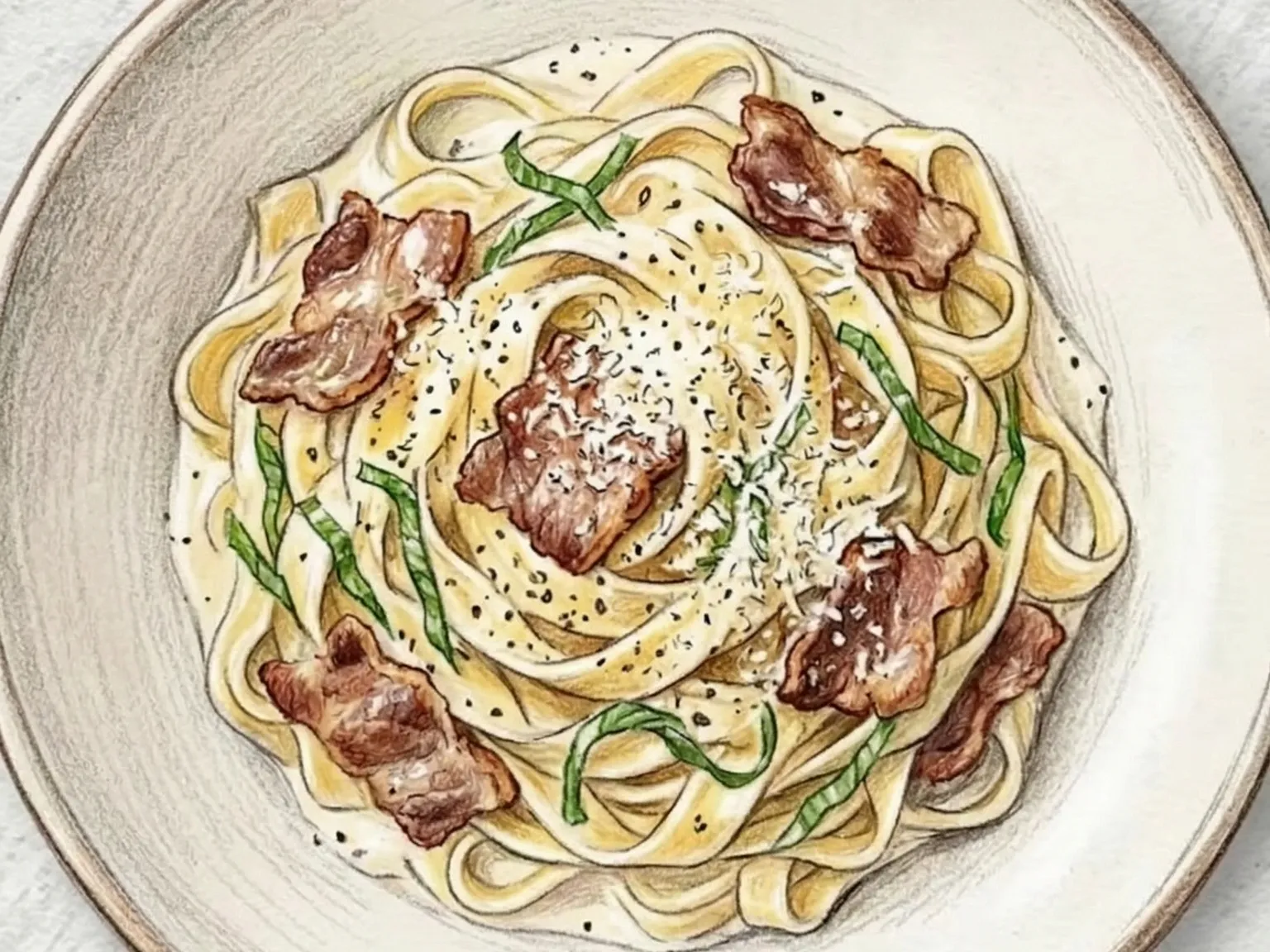
This fusion pasta brings together Italian cream sauce, Korean beef brisket, and the distinctive fragrance of perilla leaves. The brisket is seared until its edges crisp and its rendered fat is drained, then folded back into a sauce of heavy cream and milk so that its savory depth permeates every drop. Perilla leaves, when briefly heated, release a mellow herbal aroma that lifts the heaviness of the cream and introduces a flavor note absent from any European herb. Fettuccine's broad, flat surface catches the sauce generously, ensuring each bite is fully coated. A shower of grated Parmigiano adds salt and sharpness, while a crack of black pepper provides a spicy punctuation. The result is a cross-cultural plate where Korean aromatics and Italian technique meet without competing.
Adjust Servings
Instructions
- 1
Roll and chiffonade perilla leaves; thinly slice onion and garlic.
- 2
Cook fettuccine al dente in salted water and reserve 1/2 cup pasta water.
- 3
Sear brisket over high heat for 1.5 minutes, then add onion and garlic.
- 4
Add cream and milk, simmer 2-3 minutes, and season with salt and pepper.
- 5
Add pasta and reserved water, emulsify for 1 minute, then mix in Parmesan.
- 6
Turn off heat, fold in perilla, and serve immediately.
As an Amazon Associate, we may earn from qualifying purchases.
Tips
Nutrition (per serving)
More Recipes

Mentaiko Cream Pasta
Mentaiko cream pasta is a Japanese-style cream pasta where salted pollock roe melts into a butter, heavy cream, and milk sauce, creating a silky coating with tiny pops of roe texture throughout. Garlic is gently sauteed in butter before the cream and milk go in, and the mixture is heated just below boiling to prevent separation. Two-thirds of the roe is stirred in with the spaghetti while adjusting consistency with reserved pasta water, allowing the roe to cook gently through residual heat rather than direct flame, which can turn it fishy. Parmesan cheese and a squeeze of lemon juice cut through the richness with a bright, clean finish. The remaining raw roe and roasted seaweed flakes are placed on top for visual contrast and an extra layer of briny, nutty aroma.

Gochujang Vongole Linguine
Gochujang vongole linguine pairs briny Manila clams with the fermented kick of Korean red chili paste in a single pan sauce. White wine steams the clams open and creates a seafood liquor that becomes the foundation of the sauce, while gochujang dissolves into it, adding a layer of spicy complexity absent from traditional vongole. A knob of butter stirred in at the end gives the sauce a glossy sheen, and parsley plus black pepper sharpen the finish. Slicing garlic thin and toasting it slowly in olive oil is key to building the aromatic backbone.

Gochujang Cream Pasta (Spicy Fermented Chili Cream Sauce)
Gochujang cream pasta merges Italian cream sauce with the fermented heat of Korean red chili paste. Heavy cream and parmesan form a velvety base, while gochujang layers in umami depth and a slow-building spice that lingers without overwhelming. Bacon renders its salt and fat into the sauce, and sauteed onion and garlic supply an aromatic sweetness underneath. Adjusting consistency with starchy pasta water brings the sauce to a glossy, clinging texture that coats each strand evenly.

Korean Kimchi Bulgogi Udon
Kimchi bulgogi udon is a Korean stir-fried noodle dish that combines fermented kimchi's sharp tang with thinly sliced beef marinated in a sweet soy-based bulgogi seasoning. The beef is seared quickly over high heat, then onion and kimchi join the pan and cook until their moisture evaporates, concentrating flavor. A sauce of soy sauce, gochujang, and sugar goes in next, followed by briefly blanched udon noodles that get tossed on high heat for one to two minutes until every strand is coated. The thick, round udon holds the bold sauce well, and a final burst of heat gives the dish a hint of smoky wok char. If the kimchi runs very sour, an extra half-teaspoon of sugar brings the flavor back into balance.

Myeongran Lemon Cream Fettuccine
Myeongran lemon cream fettuccine coats wide pasta ribbons in a sauce built from salted pollock roe (myeongran), heavy cream, butter, and lemon zest. The roe is mixed into the sauce off the heat so its small eggs stay intact and pop with briny flavor when bitten. Garlic bloomed in butter provides the aromatic base, and cream with milk tempers the roe's saltiness into a balanced, smooth coating. Lemon zest - not juice - adds citrus fragrance without thinning the sauce or adding acidity. Parmigiano-Reggiano deepens the savory layer, and the broad fettuccine surface holds the thick cream effectively. The dish takes about 20 minutes, with the critical step being the off-heat incorporation of roe to prevent it from hardening.

Cheongyang Chili Carbonara Spaghetti
Cheongyang chili carbonara spaghetti adds the sharp heat of Korean cheongyang peppers to a traditional carbonara built on egg yolks, Parmigiano-Reggiano, and Pecorino Romano. Pancetta is rendered slowly over medium-low heat until crisp, and the chili and garlic are tossed in the rendered fat for just thirty seconds - enough to infuse the oil with heat without burning the garlic. The cheese-egg base must be stirred into the drained pasta off the heat, using reserved pasta water to emulsify the mixture into a smooth, clinging sauce rather than scrambled curds. The cheongyang pepper's capsaicin cuts through the dense richness of cheese and egg fat, giving the finish a clean, assertive bite that the classic Roman version lacks.