2741 Korean & World Recipes

2741+ Korean recipes, clean and organized. Ingredients to instructions, all at a glance.

Korean Grilled Beef Brisket

Korean Grilled Beef Brisket

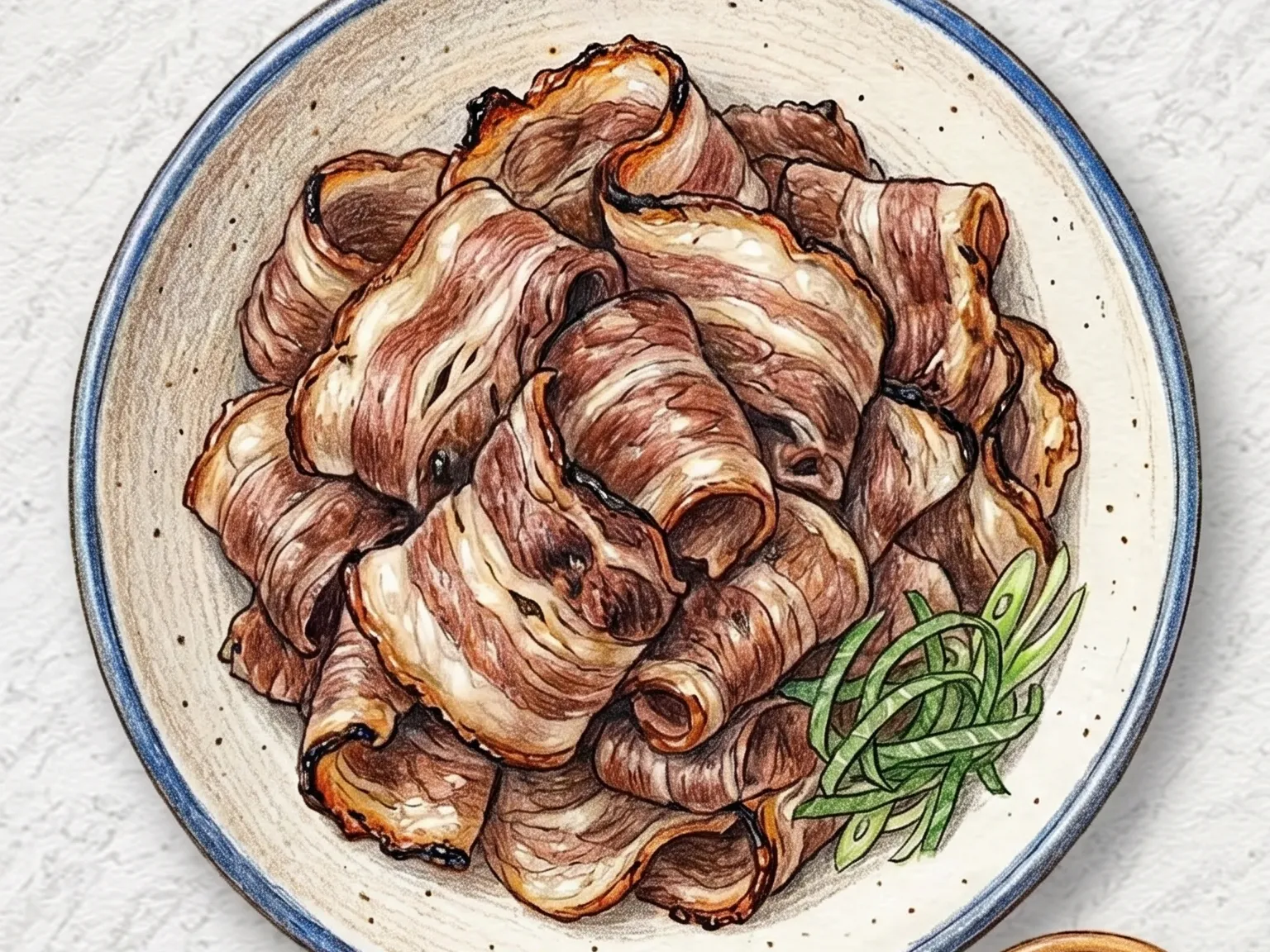
Chadolbaegi-gui is Korean grilled brisket cut paper-thin across the grain and seared over maximum heat for thirty seconds to a minute per side.

  • Paper-thin brisket slices sear to a crispy edge in under one minute for this Korean Grilled Beef Brisket.
  • Alternating fat and lean layers sear to crispy edges in under a minute per side
Total time
10 min
Level
Easy
Servings
2 servings
Ingredients
5
Calories
380 kcal
Protein
28 g

Key ingredients

Thinly sliced beef brisketSaltSesame oil and salt dipping sauceLettuceDoenjang ssamjang

Core cooking flow

  1. 1 Heat a grill or pan over the highest possible flame for 2 to 3 minutes until...
  2. 2 Lay 300g brisket slices one at a time without overlapping and sear each side for 30 seconds to 1 minute.
  3. 3 Use kitchen scissors or a knife to cut the cooked brisket into bite-size pie...

Chadolbaegi-gui is Korean grilled brisket cut paper-thin across the grain and seared over maximum heat for thirty seconds to a minute per side. The defining characteristic of the cut is its alternating bands of fat and lean meat: when the fat hits the grill, it renders almost instantly, producing a savory richness and charred, slightly crispy edges at the same time. No marinade is used. The grilled slices go straight into a dipping sauce of sesame oil and coarse salt, or onto a lettuce leaf spread with doenjang ssamjang and folded into a wrap. The window between perfectly cooked and burnt is extremely narrow with this cut, so the meat requires constant attention-keeping the tongs moving and distributing heat evenly across the grate is the most reliable way to cook each slice without scorching.

What Makes This Special

  • Paper-thin brisket slices sear to a crispy edge in under one minute for this Korean Grilled Beef Brisket.
  • Alternating fat and lean layers sear to crispy edges in under a minute per side
  • 30-60 seconds per side is the hard limit; paper-thin slices burn instantly beyond that
  • No marinade; the minimal approach uses sesame oil-salt dip or ssamjang
Prep 5min Cook 5min 2 servings

Instructions

  1. 1

    Heat a grill or pan over the highest possible flame for 2 to 3 minutes until the surface reaches maximum temperature. Hold your hand 10cm above; intense heat radiating upward means it is ready.

  2. 2

    Lay 300g brisket slices one at a time without overlapping and sear each side for 30 seconds to 1 minute. The cue to flip is when the fat layer sizzles audibly and the edges turn brown and slightly charred.

  3. 3

    Use kitchen scissors or a knife to cut the cooked brisket into bite-size pieces about 3 to 4cm for easy eating.

  4. 4

    Dip in the sesame oil and salt mixture, or wrap in a perilla or lettuce leaf spread with doenjang ssamjang and eat immediately. The fat solidifies as it cools, so eating while hot is essential.

Tips

Chadolbaegi cooks in seconds - do not walk away from the grill.

Nutrition (per serving)

Calories
380
kcal
Protein
28
g
Carbs
2
g
Fat
30
g

Recipes to Cook Together

More Grilled →

Serve with this

Korean Spicy Stir-Fried Anchovies
Side dishes Easy

Korean Spicy Stir-Fried Anchovies

Spicy stir-fried anchovies (maeun myeolchi-bokkeum) toss medium-sized dried anchovies in a gochujang-gochugaru glaze, occupying the opposite end of the flavor spectrum from the sweet jiri-myeolchi version and targeting adult palates. Medium anchovies are larger and thicker than the tiny variety, requiring individual head-and-gut removal to eliminate bitterness - a tedious prep step that nonetheless determines the dish's clean finish. After dry-toasting to drive off moisture, the anchovies simmer in a sauce of gochujang, gochugaru, soy sauce, oligosaccharide, and minced garlic until each piece is coated in a rust-colored glaze. The gochujang's fermented heat combines with gochugaru's vivid red to create both flavor depth and visual appeal. The larger anchovy size delivers a satisfying crunch that lingers alongside a lasting savory umami. Heat intensity is adjustable via gochugaru quantity - adding chopped cheongyang chili ratchets it up another notch. This banchan doubles as a soju drinking snack, appearing as frequently on bar tables as on dinner tables.

🍺 Bar Snacks 🏠 Everyday
Prep 5min Cook 10min 4 servings
Korean Namhae-Style Clam Broth
Soups Medium

Korean Namhae-Style Clam Broth

Namhae-jogae-tang is a southern coastal Korean clam soup that relies on an abundance of clams and minimal interference to produce a broth of startling clarity and depth. The clams are purged in salted water, then cooked in water spiked with rice wine, which tempers any raw ocean smell. As the shells pop open, they release their natural liquor - briny, faintly sweet, and concentrated - which becomes the soup's defining flavor. Sliced green and red chilies add gentle heat and color without overwhelming the shellfish, while garlic and green onion contribute a quiet aromatic layer. Salt is added cautiously, since the clams themselves bring significant salinity. The result is a transparent, intensely flavored bowl that tastes like the sea distilled into its purest form, and it is traditionally enjoyed as both a drinking companion and a light meal.

🍺 Bar Snacks 🏠 Everyday
Prep 35min Cook 18min 2 servings
Korean Beef Fried Rice (Soy-Marinated Ground Beef Stir-fried Rice)
Rice Easy

Korean Beef Fried Rice (Soy-Marinated Ground Beef Stir-fried Rice)

Sogogi bokkeumbap stir-fries soy-marinated ground beef with diced vegetables and day-old rice over high heat for a deeply savory fried rice. The beef goes in first, rendering its fat and leaving behind a flavorful fond that coats the pan. Onion, carrot, and zucchini follow, cooking just until their edges soften and their natural sugars begin to caramelize. Cold rice is added and tossed vigorously to break up clumps, picking up the soy seasoning and meat juices as it fries. A final drizzle of sesame oil right before plating adds a fragrant, nutty finish. The beef infuses the rice with a meaty depth while the vegetables keep the dish from feeling heavy, making it a quick, satisfying meal from everyday pantry ingredients.

🏠 Everyday 🍱 Lunchbox
Prep 10min Cook 10min 2 servings
Korean Salted Anchovy Jeotgal
Kimchi Medium

Korean Salted Anchovy Jeotgal

Myeolchi jeotgal is a traditional Korean fermented anchovy preserve made by layering cleaned small anchovies with coarse sea salt in a sterilized container, pressing firmly to eliminate air pockets, then refrigerating for extended aging. As salt draws moisture from the fish, it begins breaking down proteins into concentrated umami compounds, stripping away the raw fishiness and building the deep, complex flavor that defines this preserve. On the fifth day of fermentation, minced garlic, grated ginger, chili flakes, and rice wine are folded in to add aromatic layers on top of the developing fermented base. The salt ratio must stay at or above twenty percent of the anchovy weight throughout the process, as dropping below this threshold allows harmful bacteria to take hold and risks spoilage. The finished jeotgal has two primary uses in Korean cooking: stirred in small amounts into kimchi seasoning paste as an umami backbone, or spooned directly over hot rice as a pungent, savory side dish. It can also substitute for fish sauce in doenjang jjigae or seasoned vegetables, adding a more pronounced fermented character.

🍱 Lunchbox ⚡ Quick
Prep 20min 4 servings

Similar recipes

Korean Garlic-Grilled Skirt Steak
Grilled Medium

Korean Garlic-Grilled Skirt Steak

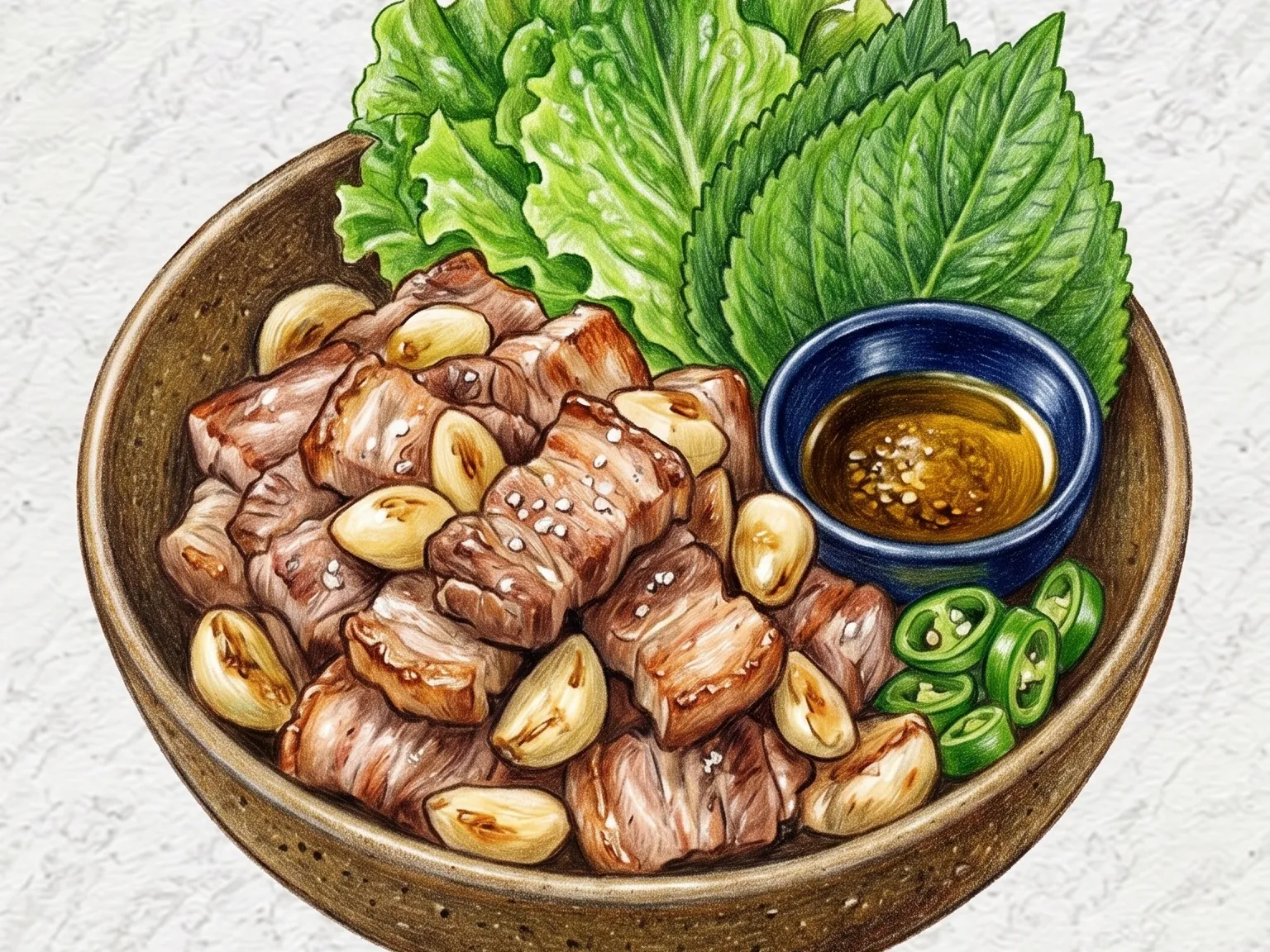
Anchangsal is the inner skirt cut from the diaphragm muscle, yielding roughly a kilogram per animal, which explains why Korean grill restaurants price it as a premium item. The grain runs coarse, marbling is tight within the thick muscle fibers, and the beefy flavor is intense - more so than well-known cuts like galbi or samgyeopsal. Marinating for too long or with aggressive seasoning buries those qualities. A short soak in soy sauce, sesame oil, minced garlic, and black pepper is enough. On a charcoal grill, thin slices cook in under a minute per side. The right doneness shows as caramelized edges with a slight char while the center stays pink - at that point the fat has rendered into the grain and the full flavor of the cut is present. Whole garlic cloves grilled alongside undergo a different transformation: about ten minutes of high heat takes away the sharpness and turns them sweet and soft. The standard way to eat it is wrapped in lettuce with ssamjang and a roasted garlic clove folded in together.

🍺 Bar Snacks
Prep 25min Cook 10min 2 servings
Korean Beef Brisket Kimchi Stir-Fry
Stir-fry Easy

Korean Beef Brisket Kimchi Stir-Fry

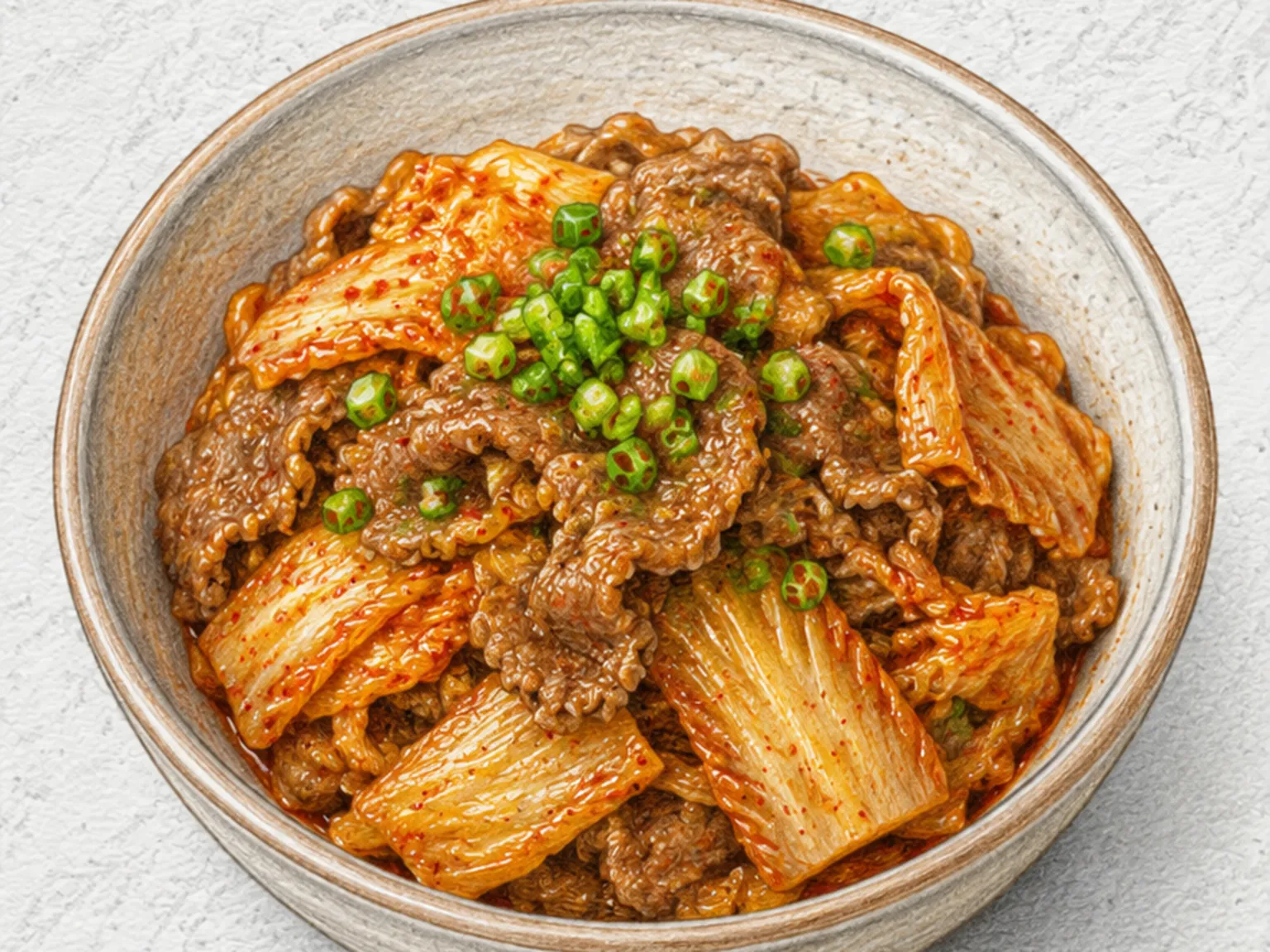
Paper-thin slices of brisket are laid in a cold, dry pan and the heat is brought up gradually so the marbled fat renders out completely before the meat browns. That rendered beef tallow becomes the only cooking fat in the dish -- no oil is added at any point -- and the beefy fragrance it deposits on the kimchi is something vegetable oil simply cannot replicate. Aged kimchi contributes a pronounced sourness from weeks or months of deep fermentation, and half a teaspoon of sugar does the precise job of rounding off that acidity without tipping the flavor toward sweet. The balance lands in the narrow space between tart, salty, and subtly sweet, which is where the dish wants to live. Cooking on high heat for a short time keeps the kimchi from going soft; drop the temperature or extend the cook and the whole pan collapses into a mushy mass where textures disappear. A pinch of gochugaru added partway through brings a dry heat that sharpens the overall profile. Sesame oil, half a tablespoon swirled in after the flame is off, lifts the aroma from savory toward something more complex. Finely sliced green onion scattered over the top at the end adds a clean, fresh note against the heavy richness underneath. Five ingredients, fifteen minutes of cooking, and the result reliably clears an entire bowl of rice.

🏠 Everyday 🌙 Late Night
Prep 5min Cook 10min 2 servings
Korean Grilled Mixed Mushrooms
Grilled Easy

Korean Grilled Mixed Mushrooms

Mushroom-gui is a Korean grilled mixed mushroom dish combining king oyster, shiitake, and oyster mushrooms, seasoned simply with butter, minced garlic, salt, and black pepper. Each mushroom variety contributes a different texture: king oyster offers a dense, meaty chew from its thick stem, shiitake delivers concentrated umami from its cap, and oyster mushrooms add a delicate, silky shred. The key technique is to resist stirring the mushrooms after placing them in the pan-their high water content must evaporate first before the surfaces can brown and develop flavor. Adding butter partway through rather than at the start prevents it from burning while still infusing the mushrooms with its richness.

🍺 Bar Snacks ⚡ Quick
Prep 10min Cook 10min 2 servings
Korean Grilled Beef Short Ribs with Scallions
Grilled Easy

Korean Grilled Beef Short Ribs with Scallions

Galbisal-pachae-gui is a Korean grilled beef dish featuring short rib finger meat marinated in dark soy sauce, sugar, sesame oil, and garlic for at least one hour, then seared over high heat and served under a pile of cold-dressed shredded green onion. Rib finger meat sits between the rib bones and carries a well-balanced ratio of fat to lean, which allows the soy marinade to penetrate the fat layers and produce a deep, lingering savory flavor when exposed to direct heat. High heat causes the edges of the marinated meat to char quickly, creating a brief overlap of caramelized sweetness and smoke that defines the overall aroma of the dish. The shredded green onion is soaked in cold water until the sharp raw pungency fades and the cell walls firm up, then lightly tossed with sesame oil and toasted sesame to complement rather than compete with the heavy soy note of the beef. When a piece of hot seared meat and a tangle of cold scallion are eaten together, the contrast between the temperature, the rich beef fat, and the clean, sharp allium flavor creates a layered experience that cannot be replicated by eating either component alone. This dish is often made for home gatherings centered on table grilling, and the visual contrast of dark caramelized beef against the white-green scallion mound makes it striking as a shared centerpiece.

🍺 Bar Snacks
Prep 20min Cook 12min 2 servings
Korean Grilled Spicy Chicken Ribs
Grilled Medium

Korean Grilled Spicy Chicken Ribs

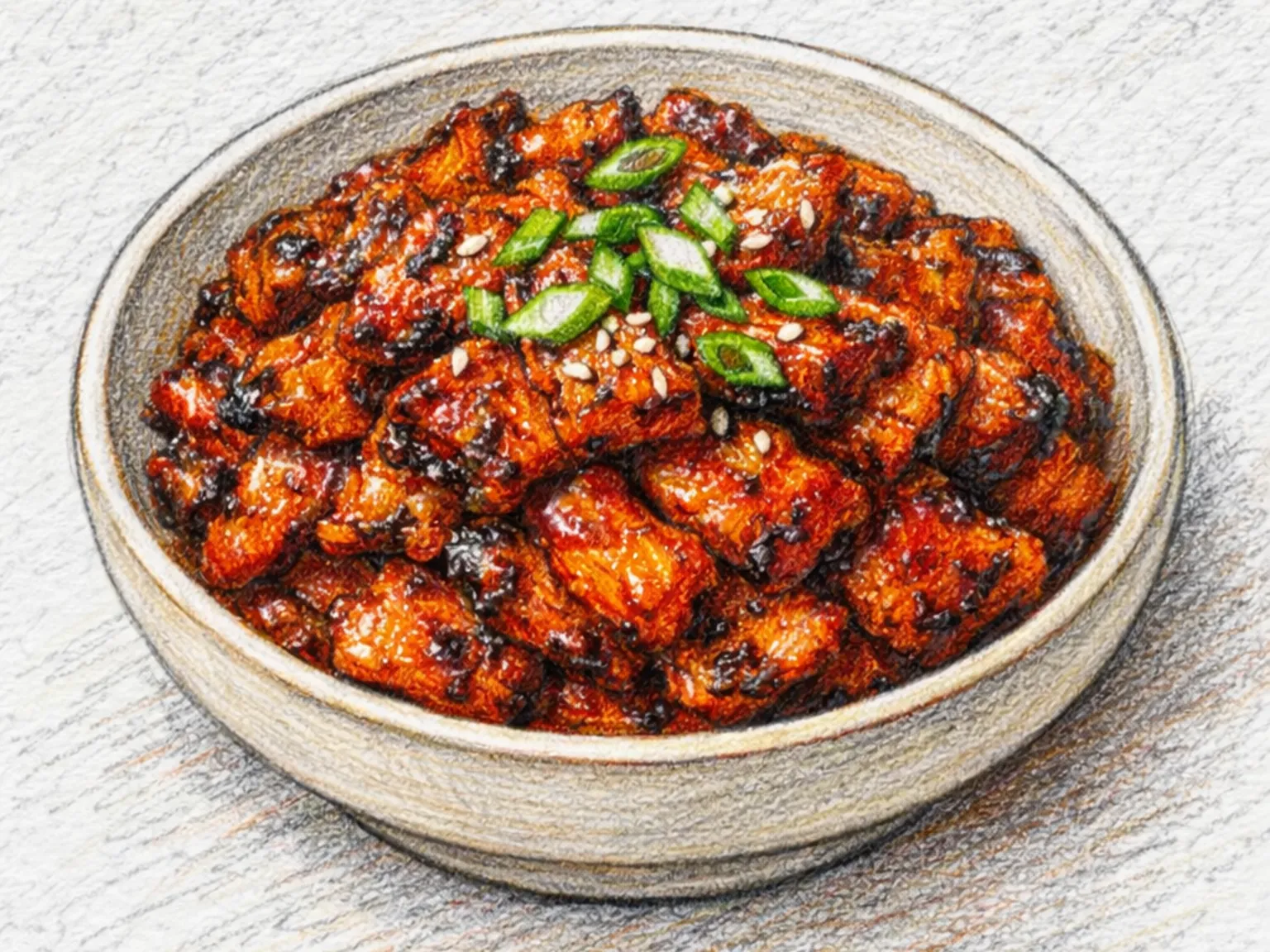
Dakgalbi-gui is the original Chuncheon-style grilled chicken dish, where bone-in thigh and leg pieces marinate in a crimson paste of gochujang, soy sauce, sugar, garlic, sesame oil, and ginger before cooking directly over an open flame or on a very hot pan. Unlike the more widely known iron-plate dakgalbi stir-fried with vegetables, this grilled version focuses solely on the meat to maximize char and smoky flavor on the surface. Deboned thigh meat spread flat exposes more surface area to both the marinade and the heat, concentrating flavor throughout, and a minimum two-hour rest in the marinade ensures the spice penetrates deep into the flesh. The gochujang caramelizes at high temperatures, forming edges that are simultaneously spicy, sweet, and faintly bitter from the char.

🍺 Bar Snacks
Prep 60min Cook 20min 2 servings
Korean Beef Brisket Rice Bowl
Rice Easy

Korean Beef Brisket Rice Bowl

Chadol deopbap is a Korean rice bowl built on paper-thin beef brisket slices seared in a hot dry pan until the edges turn crisp and caramelized, then finished with a soy-based glaze and placed over steamed rice. The marbling in the brisket renders quickly under high heat, coating the pan in fat that then carries the flavors of soy sauce, sugar, garlic, and sesame oil into a concentrated glaze. A soft-cooked or raw egg yolk placed on top is a standard addition; stirring it in spreads a golden richness across the rice that thickens the sauce and rounds out the saltiness of the soy. Sliced scallions and toasted sesame seeds scattered over the finished bowl add textural contrast and a clean finish. The recipe relies on pantry staples, requires no marinating, and comes together in under ten minutes from start to plate, making it one of the most practical formats for a single-serve weeknight meal without sacrificing depth of flavor.

🏠 Everyday ⚡ Quick
Prep 10min Cook 10min 2 servings