Challah Bread (Jewish Braided Egg Enriched Bread)
Baking Medium

Challah Bread (Jewish Braided Egg Enriched Bread)

Quick answer

Challah is a traditional Jewish enriched bread made with eggs and oil, which give it a golden crumb, a tender, slightly chewy texture, and a faint sweetness that stops we...

What makes this special

  • Jewish Challah Bread uses three eggs and oil to achieve a golden, chewy interior.
  • Three eggs and 60ml oil turn the crumb golden, soft, and chewy
  • Braided structure holds shape during proof and distributes heat evenly
Total time
155 min
Level
Medium
Servings
8 servings
Ingredients
6
Calories
220 kcal
Protein
7 g

Key ingredients

Bread flourEggsSugarVegetable oilYeast

Core cooking flow

  1. 1 Mix 500g bread flour, 7g yeast, 50g sugar, and 1 tsp salt until evenly combined.
  2. 2 Knead the dough for at least 10 minutes until it becomes smooth, stretchy, and lightly tacky.
  3. 3 Shape the dough into a ball, place it in a bowl, and cover it with plastic wrap.

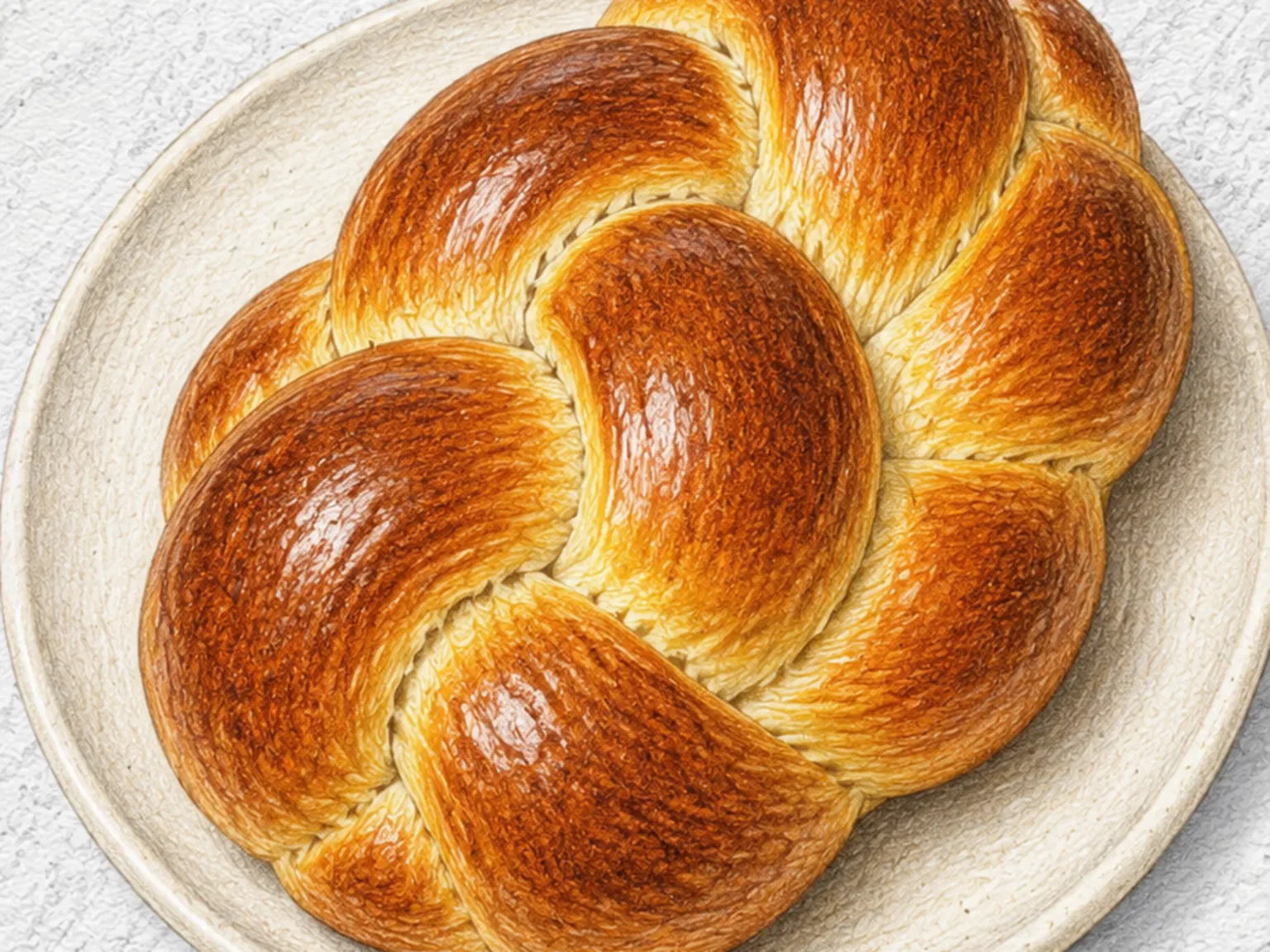
Challah is a traditional Jewish enriched bread made with eggs and oil, which give it a golden crumb, a tender, slightly chewy texture, and a faint sweetness that stops well short of being dessert-like. The dough is built from bread flour, yeast, sugar, eggs, and oil, divided into long strands, braided together, and then proofed before going into the oven. Brushing the loaf with egg wash before baking produces a deeply bronzed, glossy crust that contrasts visually and texturally with the pillowy interior. The braiding is not purely decorative; the interlocked strands provide structural support during proofing and help heat distribute evenly through the loaf while baking. Despite the eggs and sugar in the dough, challah eats like bread rather than cake and works equally well as a sandwich loaf, a dinner table bread, or sliced and toasted with butter and jam. It is traditionally prepared for Shabbat and Jewish holidays, but there is no practical reason to limit it to those occasions. Day-old challah absorbs custard deeply and evenly because of its tight, even crumb, making it one of the best breads for French toast.

Prep 120min Cook 35min 8 servings
Recipes by ingredient → egg

Instructions

Read the steps as a cooking flow: prep, heat, seasoning, doneness control, and finish.

6 steps
  1. 1
    Season

    Mix 500g bread flour, 7g yeast, 50g sugar, and 1 tsp salt until evenly combined.

    Add 3 eggs, 60ml vegetable oil, and 180ml warm water, then stir until no dry patches remain.

  2. 2
    Heat

    Knead the dough for at least 10 minutes until it becomes smooth, stretchy, and lightly tacky.

    Avoid adding too much extra flour, because a slightly sticky dough bakes into a softer crumb.

  3. 3
    Control

    Shape the dough into a ball, place it in a bowl, and cover it with plastic wrap.

    Let it rise at 27-30°C for about 1 hour, until it has doubled and looks airy.

  4. 4
    Step

    Press the risen dough gently to release large bubbles without crushing all the gas.

    Divide it into 6 pieces, then roll each piece into an even strand about 50cm long.

  5. 5
    Control

    Pinch 3 strands together at one end and braid them without pulling tightly, making 2 loaves.

    Set them on a parchment-lined baking sheet, cover loosely, and proof for 30 minutes.

  6. 6
    Heat

    Preheat the oven to 190°C and brush the loaves evenly with egg yolk wash.

    Bake for 28-32 minutes, until deeply golden and glossy, then cool before slicing so the soft crumb sets cleanly.

After the steps

Pick a recipe that fits this dish.

Continue with shared ingredients, meal pairings, or a similar method.

Recipes That Go Well With This

More Baking →

Based on shared ingredients and meal pairing

Brioche Loaf
Shared ingredient: bread flour Baking

Brioche Loaf

Brioche loaf is a French enriched bread defined by a high ratio of eggs and butter to flour. Softened butter is added in stages during kneading, small amounts at a time, until the fat is fully absorbed and the gluten has developed enough for the dough to stretch into a thin, nearly translucent sheet without tearing. The extended mixing time and the cold retard during overnight proofing give the final crumb its extraordinarily fine structure. Baked in a loaf pan, brioche comes out with a deep golden crust that is thin and slightly brittle, enclosing an interior that tears into long, cotton-soft strands. The butter flavor runs through every layer, so the bread is rich enough to eat on its own without any spread. Once sliced and lightly toasted, the contrast between the crisp outer face and the soft, moist center becomes more pronounced. Brioche absorbs custard quickly and holds its shape under heat, which makes it a preferred base for French toast and bread pudding.

Cinnamon Rolls
Shared ingredient: bread flour Baking

Cinnamon Rolls

Cinnamon rolls are yeasted enriched dough baked into spirals of butter, cinnamon, and brown sugar, with roots in both Scandinavian and North American baking traditions. The dough, enriched with milk, butter, and eggs, rises into a crumb soft enough to pull apart in layers by hand. A thick layer of softened butter and cinnamon-sugar is spread on the rolled dough before it is coiled tightly and sliced into rounds. During baking, the sugar melts and caramelizes between the coiled layers, and the cinnamon aroma filling the space is one of the most recognizable in all of baking. A cream cheese glaze poured over the hot rolls melts into a tangy coating that balances the sweetness. In Sweden the same concept appears as kanelbulle with less sugar and added cardamom; in the United States the rolls are rolled thicker and buried under a generous glaze.

Sweet Chestnut Confection
Serve together Desserts

Sweet Chestnut Confection

Yulran is a traditional Korean chestnut confection that is prepared by boiling 300 grams of chestnuts in water for a duration of 20 minutes. Once the boiling process is complete, the chestnut flesh is removed from the shells and pressed through a fine sieve. This manual pressing continues until the texture becomes perfectly smooth. The purpose of using a sieve is to eliminate any grainy bits, which results in a chestnut paste with an even and velvety consistency. This puree is then kneaded together with a combination of honey and ground cinnamon. After the ingredients are thoroughly mixed, the paste is shaped into small, bite-sized rounds. The honey used in this recipe serves as both a source of moisture and a necessary adhesive. Its sticky property provides the strength required for the confection to hold its molded shape effectively without crumbling into pieces. Ground cinnamon is included to provide a warm spice note. This flavor is chosen because it complements the starchy and earthy sweetness of the chestnut rather than competing with the natural profile of the nut. Following the shaping process, each piece is rolled in ground pine nuts. This step coats the exterior in a mild nuttiness and introduces a subtle textural contrast against the smooth paste contained within. For a final visual touch, thin slices of jujube are placed on top as a garnish to provide a stroke of red color. The finished rounds are then placed in the refrigerator to chill for 15 minutes. This cooling period firms the surface of the paste just enough so that the confections can be picked up cleanly with the fingers without sticking to the skin. Historically, Yulran was a common fixture on the ceremonial and banquet tables of the Joseon court. It was valued for its clean and understated sweetness, which allows the natural flavor of the chestnut to remain the central focus.

Coffee Cake
Similar recipe Baking

Coffee Cake

Coffee cake is an American snack cake topped with a buttery cinnamon streusel, designed to be eaten alongside coffee rather than containing coffee as an ingredient. Sour cream in the batter produces a noticeably moister, more tender crumb than a standard butter cake, and its mild acidity keeps the overall sweetness from feeling heavy. The streusel is made by rubbing brown sugar, cinnamon, flour, and cold butter together until the mixture forms coarse, irregular clumps; in the oven these bake into a sandy, crunchy topping that provides sharp textural contrast to the soft cake beneath. A widely used technique involves layering streusel into the center of the batter as well as on top, so that each slice reveals two distinct cinnamon-scented veins running through it. The cinnamon aroma is most pronounced when the cake is still warm from the oven, making the timing of serving worth paying attention to.

Serve with this

Kasespatzle (German Alpine Cheese Dumpling Noodles)
Western Medium

Kasespatzle (German Alpine Cheese Dumpling Noodles)

Kasespatzle is an Alpine comfort dish from southern Germany and Austria, made by boiling a thick batter of flour, eggs, and milk into small dumplings, then tossing them with melted Emmental cheese and caramelized onions. The batter must maintain a thick consistency rather than being runny - this is what gives the spaetzle their characteristic chew when boiled and drained. Sliced onion is slowly cooked in butter over low heat until deeply browned, transforming the raw sharpness into a concentrated sweetness. The cooked spaetzle and grated cheese are combined in a hot pan so the cheese melts and coats every dumpling. Topped with the caramelized onions and black pepper, the dish is served immediately while the cheese is still molten and stretchy.

🎉 Special Occasion 🧒 Kid-Friendly
Prep 20min Cook 20min 2 servings
Korean Butter-Grilled Scallops
Drinks Medium

Korean Butter-Grilled Scallops

Garibi butter-gui sears fresh scallops in garlic butter until each side develops a deep golden-brown crust, then finishes with lemon juice and parsley to balance the richness. Removing every trace of surface moisture with paper towels before seasoning is the single most important step -- water on the surface of the scallop causes it to steam rather than sear, and no caramelized crust will form until that moisture has evaporated. Each side cooks for only one to two minutes at the highest heat the pan can sustain, leaving the center just barely opaque and the texture tender rather than rubbery. After flipping, butter and minced garlic are added directly to the hot pan and spooned continuously over the scallops so the aroma infuses the surface. A squeeze of lemon and a scatter of chopped parsley added just before removing from heat layers acidity and freshness over the butter richness. Simple to prepare and fast to cook, this dish appears regularly at home gatherings in Korea as a crowd-pleasing appetizer.

🍺 Bar Snacks 🎉 Special Occasion
Prep 12min Cook 8min 2 servings
Yu Sheng Prosperity Salad
Salads Hard

Yu Sheng Prosperity Salad

Yu sheng prosperity salad arranges thinly sliced sashimi-grade salmon and finely julienned daikon, carrot, and cucumber in a ring on a large platter, dressed with plum sauce, lemon juice, and sesame oil, then tossed vigorously just before eating. The salmon must be sashimi-grade for food safety, and patting it dry before slicing thin allows the sweet-tart plum sauce to cling more effectively to the fish surface. Cutting all vegetables as finely as possible maximizes the surface area in contact with the dressing, ensuring every chopstick-full carries the full spectrum of flavors. Keeping the prepared vegetables chilled maintains the freshness of the raw fish once assembled. Sesame seeds sprinkled on top add a nutty aroma that layers over the fruity plum sauce, completing the festive character of the dish.

🥗 Light & Healthy 🎉 Special Occasion
Prep 30min 4 servings

Similar recipes

Nut Tart
Baking Medium

Nut Tart

A buttery shortcrust shell is filled with a generous tumble of mixed nuts - walnuts, almonds, pecans, hazelnuts - bound together in a caramel of sugar, butter, and cream, then baked until the top turns deep amber. Each nut retains its individual character: the walnut's slight bitterness, the almond's clean sweetness, the pecan's buttery softness, the hazelnut's toasty depth. Pre-toasting the nuts before adding them to the caramel means they roast a second time in the oven, amplifying their oils and fragrance. The caramel must set firm enough to hold the filling in place when sliced but not so hard that it turns into toffee. A pinch of flaky sea salt over the top before baking lifts the sweetness into complexity. Served at room temperature with cold whipped cream, the contrast between the sticky, crunchy filling and the light dairy tempers the intensity.

🎉 Special Occasion 🧒 Kid-Friendly
Prep 30min Cook 25min 8 servings
Rosemary Focaccia
Western Medium

Rosemary Focaccia

Rosemary focaccia is an Italian olive-oil bread made from a high-hydration dough that is proofed twice, dimpled with fingertips, topped with rosemary, minced garlic, and flaky salt, and baked at 220 degrees Celsius. The wetter the dough, the better the signature open crumb and chewy interior develop, so resisting the urge to add extra flour during handling is important. A sixty-minute first proof followed by a thirty-minute second proof gives the yeast enough time to produce the gas that creates a light, airy structure. Generous olive oil pooled in the dimples essentially fries the surface during baking, creating crisp pockets across the top. Cooling for ten minutes after baking lets steam escape and sharpens the contrast between the crunchy crust and the moist, pillowy crumb inside.

🍺 Bar Snacks 🎉 Special Occasion
Prep 20min Cook 25min 4 servings
Cornbread
Western Easy

Cornbread

Cornbread is a Southern American quick bread made from cornmeal, flour, sugar, baking powder, milk, egg, and melted butter, baked until golden. Mixing the wet and dry ingredients separately and combining them with minimal stirring prevents overdeveloping gluten, which keeps the crumb tender and moist rather than tough. Baking at 200 degrees Celsius for twenty-two to twenty-five minutes produces a crisp exterior with a lightly sweet, nutty interior characteristic of cornmeal. The bread pairs well with stews, chili, and soups; its coarse grain absorbs broth and sauce effectively, making every bite more flavorful the longer it sits in the bowl.

🏠 Everyday 🧒 Kid-Friendly
Prep 10min Cook 25min 4 servings

Tips

Proper kneading develops gluten for the characteristic chewy texture.

Nutrition (per serving)

Calories
220
kcal
Protein
7
g
Carbs
36
g
Fat
6
g