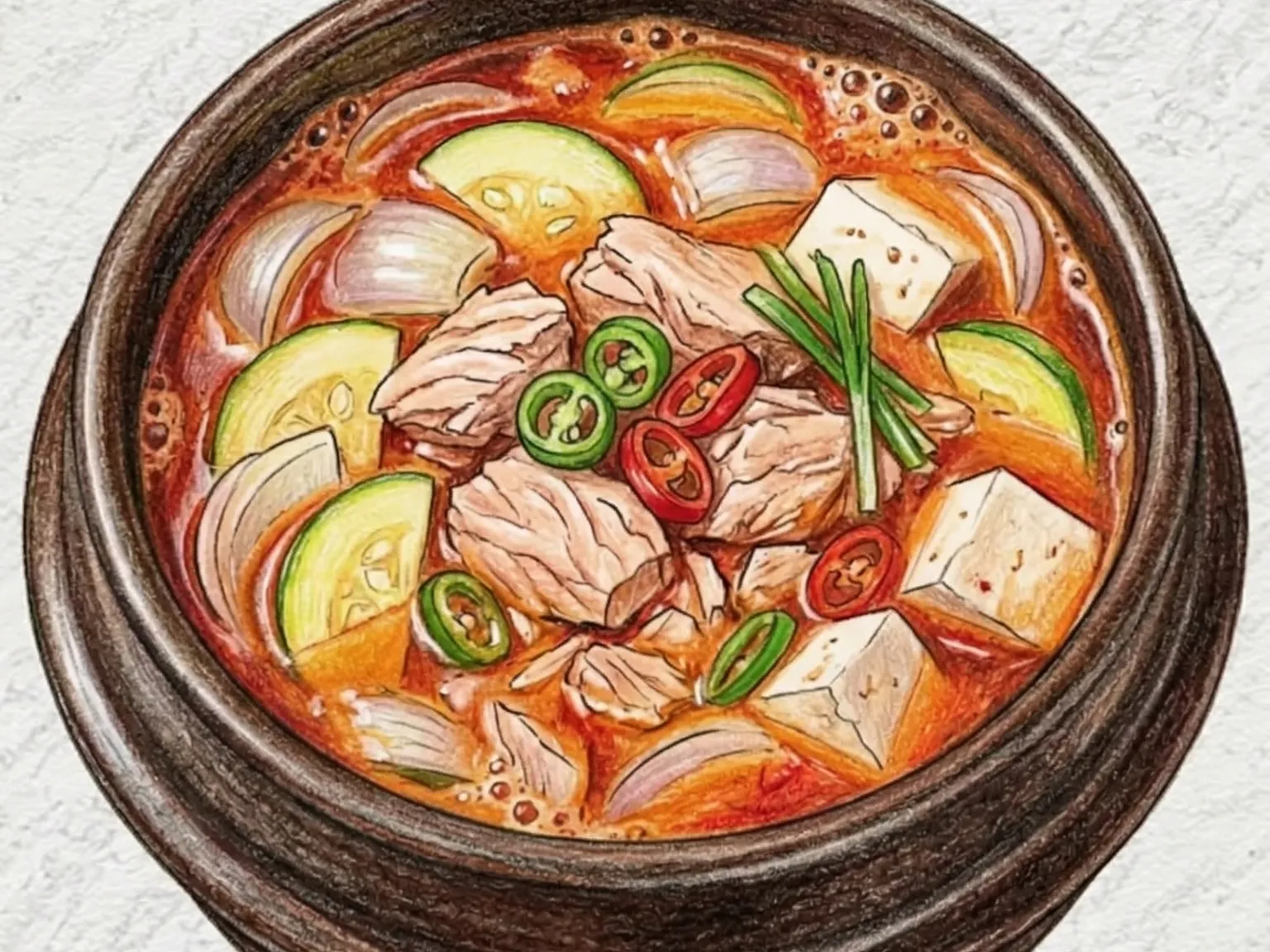
Korean Tuna Stew
Quick answer
- Total time
- 25 min
- Level
- Easy
- Servings
- 2 servings
- Ingredients
- 10
About this dish
The whole can of tuna, oil included, is tipped into the pot with water.
Read more
No stock is made separately, and that oil is what the broth builds on. Some add ramen noodles to stretch it into a full meal.
Ingredients
Instructions
- 1
Cut half a block of tofu and half a zucchini into 1.5 cm bite-sized pieces.
Slice half an onion into thick 0.5 cm strips, then cut the green onion and cheongyang chili on a diagonal.
- 2
Put the entire can of tuna, including the oil, into a pot and pour in 500 ml of water.
Bring it to a strong boil over high heat for about 3 minutes, until the tuna oil spreads through the broth.
- 3
Once it boils, add 1 tablespoon gochugaru, 1 tablespoon soup soy sauce, and 1 teaspoon minced garlic.
Stir for about 1 minute, scraping the bottom, so the seasoning dissolves and the broth turns evenly red.
- 4
Add the sliced onion and lower the heat to medium-high.
Simmer for about 3 minutes, until the onion looks slightly translucent and begins releasing sweetness, which softens the sharp edge of the chili broth.
- 5
Slide in the tofu and zucchini, then simmer over medium heat for 7 minutes.
Stir only in broad, gentle motions so the tofu does not break, and cook until the zucchini edges turn translucent.
- 6
Add the green onion and cheongyang chili, then boil for 2 more minutes.
Taste the broth, reduce it briefly if it feels weak, and serve hot while the green onion still smells fresh.
Use-up ingredient planner
Turn these ingredients into two more meals
The overlap excludes basic seasonings. Open the next recipe and your selected dishes will stay with you.
Country-style Soybean Paste Stew
Tofu, Zucchini

Korean Braised Tofu Rice Bowl
Tofu, Onion
Korean Aehobak Chamchi Bokkeum (Zucchini Tuna Stir-fry)
Canned tuna, Zucchini