Korean Tuna & Perilla Leaf Fritters

Korean Tuna & Perilla Leaf Fritters

Quick answer

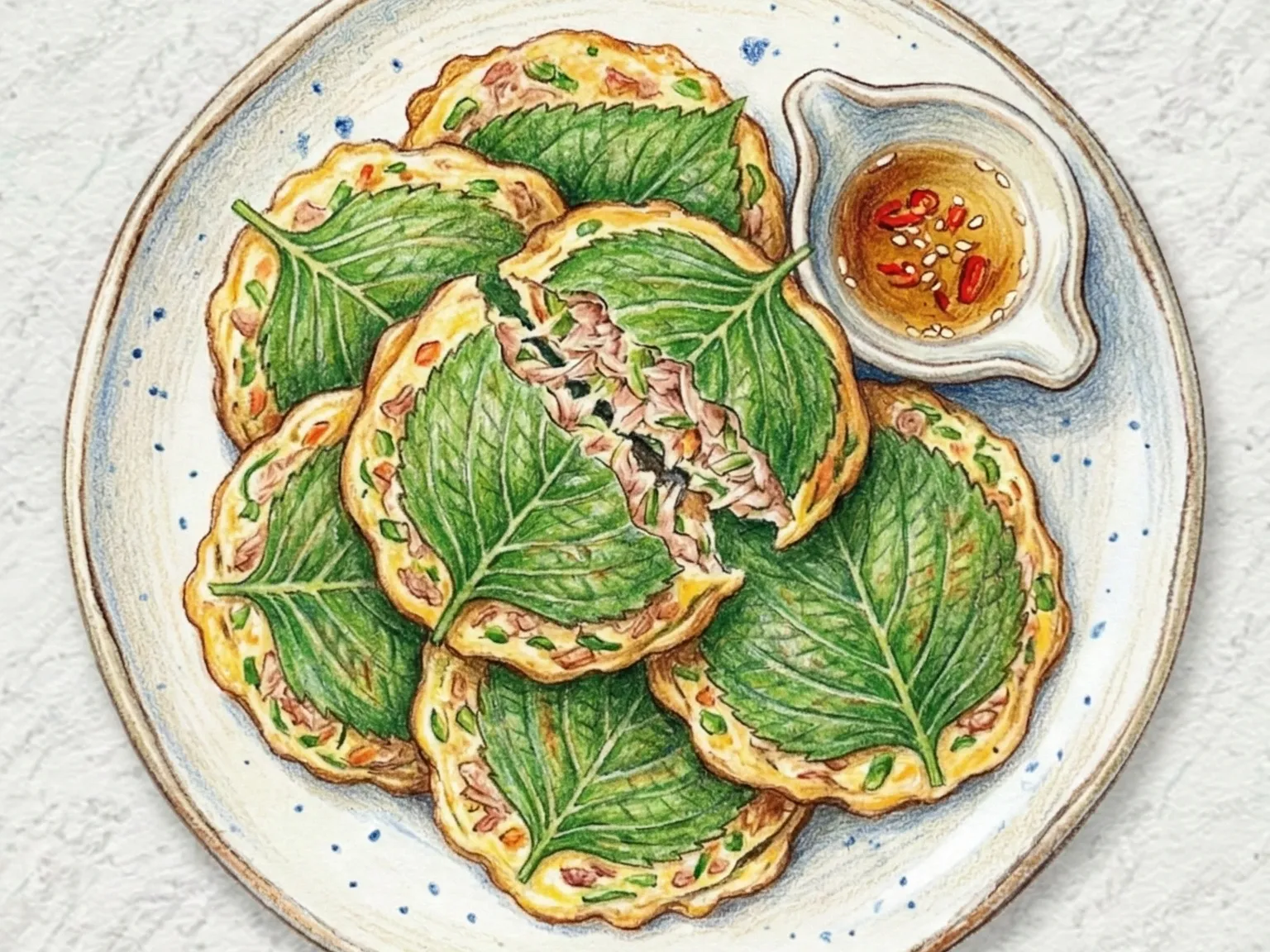
Chamchi-kkaennip-jeon is a Korean pan-fried pancake made with canned tuna and perilla leaves.

What makes this special

  • Savory canned tuna and fragrant perilla leaves create a clean fritter without any greasiness.
  • Oil-drained canned tuna keeps it savory without greasiness
  • Perilla leaves mask fishy notes while adding herbal depth
Total time
22 min
Level
Easy
Servings
2 servings
Ingredients
8
Calories
300 kcal
Protein
19 g

Key ingredients

canned tunaperilla leavesonioncarrotKorean pancake mix

Core cooking flow

  1. 1 Pour canned tuna (150 g) into a strainer and press with a spoon to drain all oil or water.
  2. 2 Finely dice onion (60 g) and carrot (40 g) into pieces under 5 mm.
  3. 3 Mix pancake mix (90 g), egg (1), and cold water (80 ml) in a bowl until smooth.

Chamchi-kkaennip-jeon is a Korean pan-fried pancake made with canned tuna and perilla leaves. The oil is drained from the tuna before mixing, which keeps the batter from becoming greasy. Perilla leaves, chopped into the batter, contribute their distinctive herbal fragrance - sharp and slightly anise-like - which cuts through the brininess of the tuna and gives the pancake its character. The combination lands somewhere between a vegetable pancake and a fish cake: more substantial than the former, lighter than the latter. Egg binds the batter and produces a smooth, even surface when cooked. Onion and carrot are finely diced so the pancake spreads thin and cooks through uniformly, rather than leaving thick raw patches at the center. Adequate oil in the pan and medium heat produce a thin, crisp exterior without burning. The pancake holds its texture reasonably well at room temperature, making it a practical lunchbox side dish. A soy-based dipping sauce brings out the perilla fragrance more clearly when eaten alongside.

Prep 12min Cook 10min 2 servings
Recipes by ingredient → onion carrot egg

Instructions

Read the steps as a cooking flow: prep, heat, seasoning, doneness control, and finish.

6 steps
  1. 1
    Step

    Pour canned tuna (150 g) into a strainer and press with a spoon to drain all oil or water.

    Excess liquid makes the batter too thin and the jeon turns out soft.

  2. 2
    Prep

    Finely dice onion (60 g) and carrot (40 g) into pieces under 5 mm.

    Remove stems from perilla leaves (12 pcs), then cut each leaf in half lengthwise to get 6 cm pieces.

  3. 3
    Prep

    Mix pancake mix (90 g), egg (1), and cold water (80 ml) in a bowl until smooth.

    The batter is intentionally thick since too thin a consistency will not cling to the perilla leaves.

  4. 4
    Prep

    Stir tuna, onion, and carrot into the batter until evenly combined.

    Add perilla leaves and fold gently 2-3 times so they are lightly coated without tearing.

  5. 5
    Finish

    Heat oil (2 tbsp) in a pan over medium heat and lay each piece flat.

    Spread the batter thinly around the leaf outline so the leaf shape is preserved.

  6. 6
    Finish

    Cook one side about 2 minutes until the base is set golden, then flip.

    Cook the other side 2 minutes and arrange neatly on a plate.

After the steps

Pick a recipe that fits this dish.

Continue with shared ingredients, meal pairings, or a similar method.

Recipes That Go Well With This

More Pancakes →

Based on shared ingredients and meal pairing

Korean Kkaennip Chamchi Jeon (Perilla Tuna Pancakes)
Shared ingredient: canned tuna Street food

Korean Kkaennip Chamchi Jeon (Perilla Tuna Pancakes)

Kkaennip tuna jeon is made by mixing drained canned tuna with finely chopped onion, carrot, and perilla leaves, coating the mixture in pancake batter, then spooning it onto individual perilla leaves and pan-frying over medium-low heat. Each leaf wraps around the underside of the patty, acting as a natural mold that keeps the shape intact when flipping. Slow frying over moderate heat creates a crisp, golden exterior while locking enough moisture inside to keep the filling tender. The herbal, faintly minty character of the perilla leaf layers over the tuna's saltiness and cuts through any heaviness, leaving a clean finish. The combination works as a drinking snack or a packed lunch side equally well, and the bite-sized format makes it easy to serve at the table.

Korean Stuffed Perilla Leaf Pancakes
Shared ingredient: perilla leaves Pancakes

Korean Stuffed Perilla Leaf Pancakes

Kkae-ip-jeon are pan-fried perilla leaf parcels stuffed with a filling of ground pork and firm tofu, coated in flour and egg. The tofu must be squeezed dry in a cloth before mixing; excess moisture causes the filling to spread and stick to the pan. Garlic chives and onion add crunch and fragrance to the mix, and the filling seasoned with soy sauce and black pepper pairs cleanly with the perilla's strong herbal character. Dusting with flour first, then dipping in egg, produces an even coating, and frying covered over medium-low heat for two minutes per side ensures the filling is cooked through to the center. The bite-sized pieces work well as a packed lunch side or as bar food.

Korean Stir-fried Balloon Flower Root
Serve together Side dishes

Korean Stir-fried Balloon Flower Root

Doraji -- balloon flower root -- has been cultivated in Korea for centuries, valued in cooking and herbal medicine alike. The raw root carries a pronounced bitterness from saponins, so it must be shredded into thin strips, rubbed vigorously with salt, left for ten minutes, then rinsed twice in cold water. The salt scrub draws out the saponins while preserving the root's firm, snappy bite. A base of green onion goes into the pan first to build a fragrant oil, then the prepared doraji stir-fries for two minutes before gochujang, soy sauce, and oligosaccharide syrup go in for another three minutes. The heat is raised at the end to drive off moisture, so the sauce tightens and clings to each strip rather than pooling in the pan. The result is a glossy, sweet-spicy banchan with a distinctly chewy pull.

Korean Perilla Leaf Kimchi
Similar recipe Kimchi

Korean Perilla Leaf Kimchi

Preparing kkaennip kimchi involves layering a seasoning mixture of soy sauce, Korean red chili flakes, minced garlic, and toasted sesame oil between individual perilla leaves. Unlike traditional cabbage kimchi, this version functions as an instant pickle that requires no fermentation period, making it ready to serve as soon as the assembly is finished. The sharp, herbal aroma of the raw perilla leaf softens when integrated with the toasted richness of sesame oil, while the chili flakes provide a controlled level of heat that complements rather than masks the natural characteristics of the leaves. Soy sauce establishes a savory and salty foundation, which is further elevated by the addition of finely chopped scallions. For a different visual result, using soup soy sauce produces a lighter color that allows the dark green hue of the perilla leaves to remain prominent. Small amounts of anchovy fish sauce can also be added to the marinade to introduce a complex layer of saltiness similar to fermented kimchi. This side dish maintains its quality well in the refrigerator throughout the week. While the seasonings are distinct and bright on the first day, the flavors fully penetrate the leaves after two or three days, resulting in a more integrated profile. The seasoned leaves are commonly draped over warm steamed rice or used as an aromatic alternative to lettuce when wrapping grilled meats. Because it requires few ingredients and minimal preparation time, it is a practical choice for home cooking.

Serve with this

Korean Cream Chicken Rice Bowl
Rice Easy

Korean Cream Chicken Rice Bowl

Cream chicken deopbap is a Korean fusion rice bowl where bite-sized chicken breast pieces are seared in butter to develop color and a light crust, then simmered in heavy cream and garlic until the sauce reduces into a glossy, velvety coating. Searing the chicken in butter first builds a Maillard layer that gives the final dish more depth than if the cream were added at the start. As the garlic cooks down in the cream, it loses its raw sharpness and releases a mild sweetness that permeates the entire sauce. A straightforward seasoning of salt and pepper is all the dish needs to come together. The concept takes the richness of a Western cream pasta sauce and serves it over steamed rice instead of noodles, letting the grains absorb the sauce and carry the flavor all the way through. A sprinkle of flat-leaf parsley or coarsely cracked black pepper over the top sharpens the finish.

🏠 Everyday 🧒 Kid-Friendly
Prep 15min Cook 20min 2 servings
Korean Buckwheat Jelly Cold Broth Bowl
Soups Easy

Korean Buckwheat Jelly Cold Broth Bowl

Memil-muksabal is a chilled Korean dish in which firm blocks of buckwheat jelly sit submerged in cold, seasoned broth. The broth is typically made from anchovy or beef stock, cooled to refrigerator temperature, and sharpened with soy sauce, rice vinegar, and a touch of sugar that balances the acidity. Buckwheat jelly has a neutral, slightly earthy flavor and a slippery, springy texture that absorbs the surrounding seasonings with each bite. Julienned cucumber adds crunch, crushed roasted sesame seeds contribute nuttiness, and shredded dried seaweed brings a gentle oceanic accent. The dish is almost calorie-free compared to noodle soups and digests easily, which is why it appears on Korean tables most frequently during the hottest weeks of summer. Making the jelly from scratch involves boiling buckwheat starch until thick and letting it set, but store-bought blocks simplify the process to little more than slicing and assembling. The cold broth hits the palate first, followed by the yielding texture of the jelly - a sequence that feels instantly cooling.

🥗 Light & Healthy 🏠 Everyday
Prep 20min Cook 10min 2 servings
Korean Jjageuli Pork Stew
Stews Easy

Korean Jjageuli Pork Stew

Jjageuli jjigae is a Korean pork and potato stew characterized by its thick, reduced broth and spicy seasoning. The cooking process starts by searing diced pork over high heat to render its fat, then stir-frying it with gochujang, chili flakes, and soy sauce to build a flavorful base. Thickly diced potatoes and water are added to the pot and simmered. As the potatoes cook and break down, their natural starches dissolve into the liquid, thickening it into a rich sauce. Onions are simmered in the pot to add sweetness, and green onions are stirred in during the final minute of cooking to release their aroma. Unlike typical soupy stews, this dish is intentionally reduced to a concentrated consistency. This makes it ideal for spooning over warm rice and mixing together as a hearty meal.

🍺 Bar Snacks 🏠 Everyday
Prep 15min Cook 25min 2 servings

Similar recipes

Korean Perilla Leaf Chicken Jeon
Pancakes Medium

Korean Perilla Leaf Chicken Jeon

Perilla Leaf Chicken Jeon is a savory Korean pan-fried pancake stuffed with ground chicken and tofu. The filling is made by combining lean ground chicken with pressed, crumbled tofu, green onions, garlic, salt, and pepper, kneaded together until cohesive. This mixture is spread in a thin layer onto the floured side of perilla leaves, which are then folded in half and pressed to seal. To cook, the folded leaves are dusted with flour, dipped in beaten egg, and pan-fried over medium-low heat to ensure the egg coating does not burn while the interior cooks through. The mild flavor and soft texture of the chicken and tofu filling offer a balanced contrast to the herbal, aromatic qualities of the perilla leaves. To preserve the juices, the finished jeon should rest briefly and be cut into bite-sized pieces just before serving.

🍺 Bar Snacks 🍱 Lunchbox
Prep 22min Cook 14min 2 servings
Korean Beoseot Deulkkae Jeon (Mushroom Perilla Pancake)
Pancakes Easy

Korean Beoseot Deulkkae Jeon (Mushroom Perilla Pancake)

Mushroom and perilla seed jeon brings together oyster mushrooms and shiitake, sliced thin and folded into a batter built on perilla seed powder and a splash of soy sauce. Perilla seeds carry a heavier, slightly bitter nuttiness compared to sesame, and that quality anchors the earthy depth of the mushrooms rather than competing with it. Seasoning the batter directly with soy sauce means the pancake holds its own without a dipping sauce, though one on the side does not go amiss. Frying with enough oil gives the exterior a thin, crisp shell while the mushroom filling stays moist inside. Oyster mushrooms torn along their grain develop a pleasantly chewy bite as they cook; shiitake sliced fine distribute evenly so the whole pancake cooks at the same rate. It works as a makgeolli pairing or a straightforward side, and holds up well at room temperature - the perilla aroma actually deepens as it cools.

🍺 Bar Snacks 🏠 Everyday
Prep 18min Cook 14min 2 servings
Korean Radish & Shrimp Pancake
Pancakes Easy

Korean Radish & Shrimp Pancake

Julienned Korean radish and small peeled shrimp are combined in a pancake batter fortified with a measured amount of potato starch for added crispiness. Egg is mixed into the batter to improve binding and keep the pancake intact when flipped. Scallions are distributed throughout for a mild, grassy fragrance. Radish releases notable moisture as it cooks, so frying over high heat is essential to drive off that liquid quickly and achieve a crisp outer surface. The sharp, slightly bitter edge of raw radish disappears with heat and gives way to a gentle natural sweetness that pairs cleanly with the mild, delicate flavor of the shrimp. Pressing the center of the pancake down with a spatula while frying encourages even browning all the way through.

🍺 Bar Snacks ⚡ Quick
Prep 15min Cook 12min 2 servings

Tips

Well-drained tuna is key to crisp texture.
Avoid high heat so perilla aroma stays fresh.

Nutrition (per serving)

Calories
300
kcal
Protein
19
g
Carbs
20
g
Fat
15
g