Korean Eggplant & Pork Pancake
Quick answer
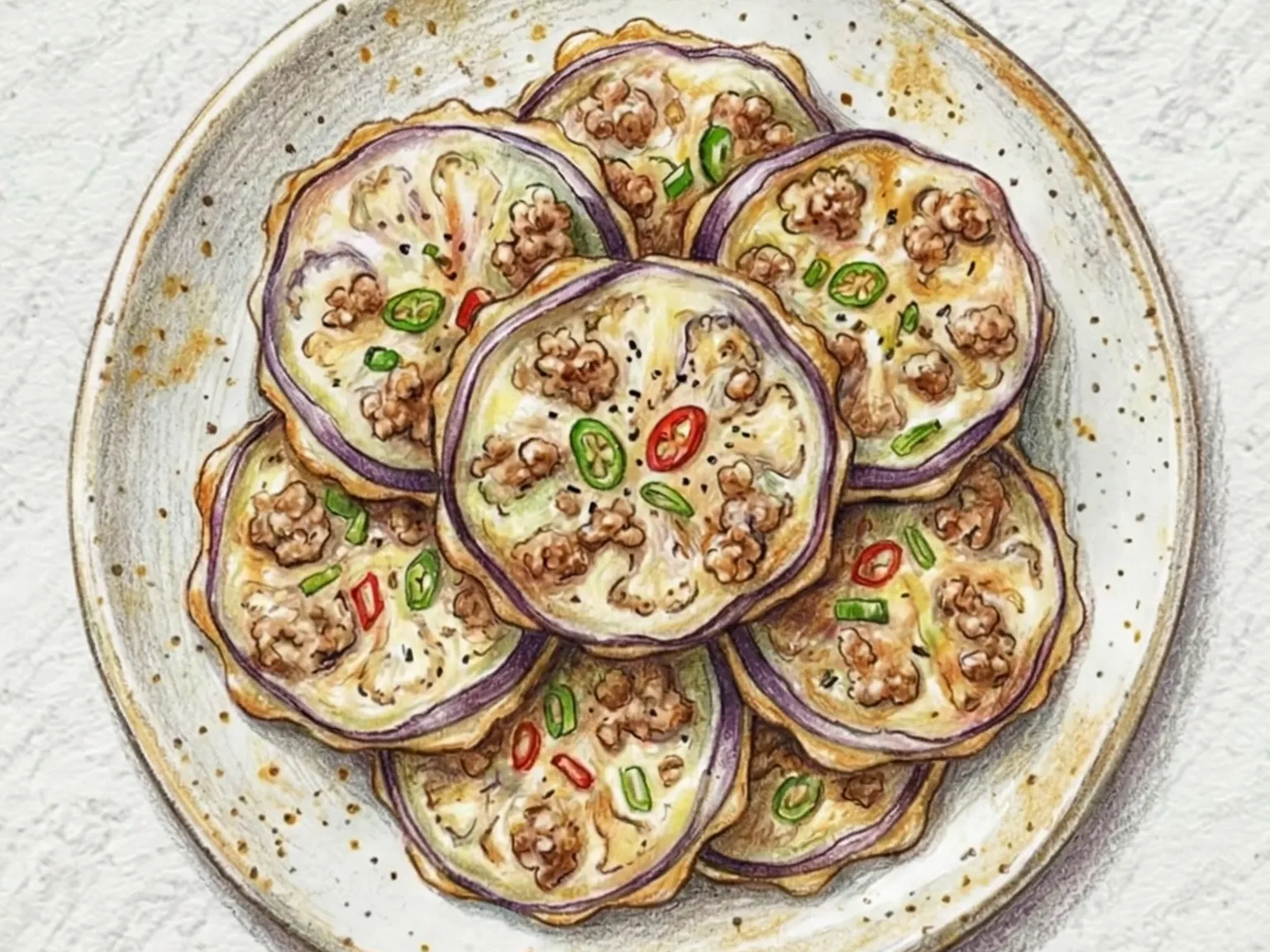
Thick eggplant slices are topped with seasoned ground pork, coated in Korean pancake batter, dipped in beaten egg, and pan-fried until golden on both sides.
What makes this special
- Thick eggplant slices topped with seasoned pork cook into a silky, savory pan-fried pancake.
- Thick eggplant absorbs oil while cooking evenly to the center
- Pork juices seep into the eggplant cross-section
Key ingredients
Core cooking flow
- 1 Slice eggplant (2 ea) into 0.5 cm half-moons and spread on a plate.
- 2 Add ground pork (220 g), chopped onion (80 g), and garlic (1 tsp) to a pan over medium heat.
- 3 Mix pancake mix (140 g), eggs (2), cold water (140 ml), and a pinch of salt into a thick batter.
Thick eggplant slices are topped with seasoned ground pork, coated in Korean pancake batter, dipped in beaten egg, and pan-fried until golden on both sides. As the eggplant absorbs oil over heat, it cooks through to a silky, yielding texture, and the pork filling stays juicy inside the batter crust. Minced garlic and onion season the pork mixture and mask any gaminess, while the egg coating forms a thin, evenly browned exterior. A soy-based dipping sauce sharpens the mild eggplant and savory pork into a balanced bite.
Instructions
Read the steps as a cooking flow: prep, heat, seasoning, doneness control, and finish.
- 1Finish
Slice eggplant (2 ea) into 0.5 cm half-moons and spread on a plate.
Sprinkle with salt (0.25 tsp) and rest 10 minutes. Once moisture beads on the surface, blot gently with paper towel.
- 2Control
Add ground pork (220 g), chopped onion (80 g), and garlic (1 tsp) to a pan over medium heat.
Stir-fry about 5 minutes until all moisture evaporates. Season with salt (0.25 tsp) and spread to cool.
- 3Season
Mix pancake mix (140 g), eggs (2), cold water (140 ml), and a pinch of salt into a thick batter.
The right consistency is when batter dropped from a spoon falls slowly in a thick ribbon.
- 4Prep
Add the cooled pork mixture and eggplant to the batter.
Fold with a rubber spatula using a lift-and-turn motion to keep eggplant pieces intact.
- 5Control
Heat oil (3 tbsp) in a pan over medium heat.
Drop heaped spoonfuls of batter and flatten each to a 6-7 cm round about 8 mm thick.
- 6Finish
Cook 3 minutes per side over medium heat until browned.
Because the jeon contains pork, after flipping cover the pan for 30 seconds then uncover to finish. Rest on paper towel for 1 minute to drain excess oil.
After the steps
Pick a recipe that fits this dish.
Continue with shared ingredients, meal pairings, or a similar method.
Recipes That Go Well With This
More Pancakes →Based on shared ingredients and meal pairing
Korean Eggplant Pancakes (Egg-Battered Pan-Fried Eggplant)
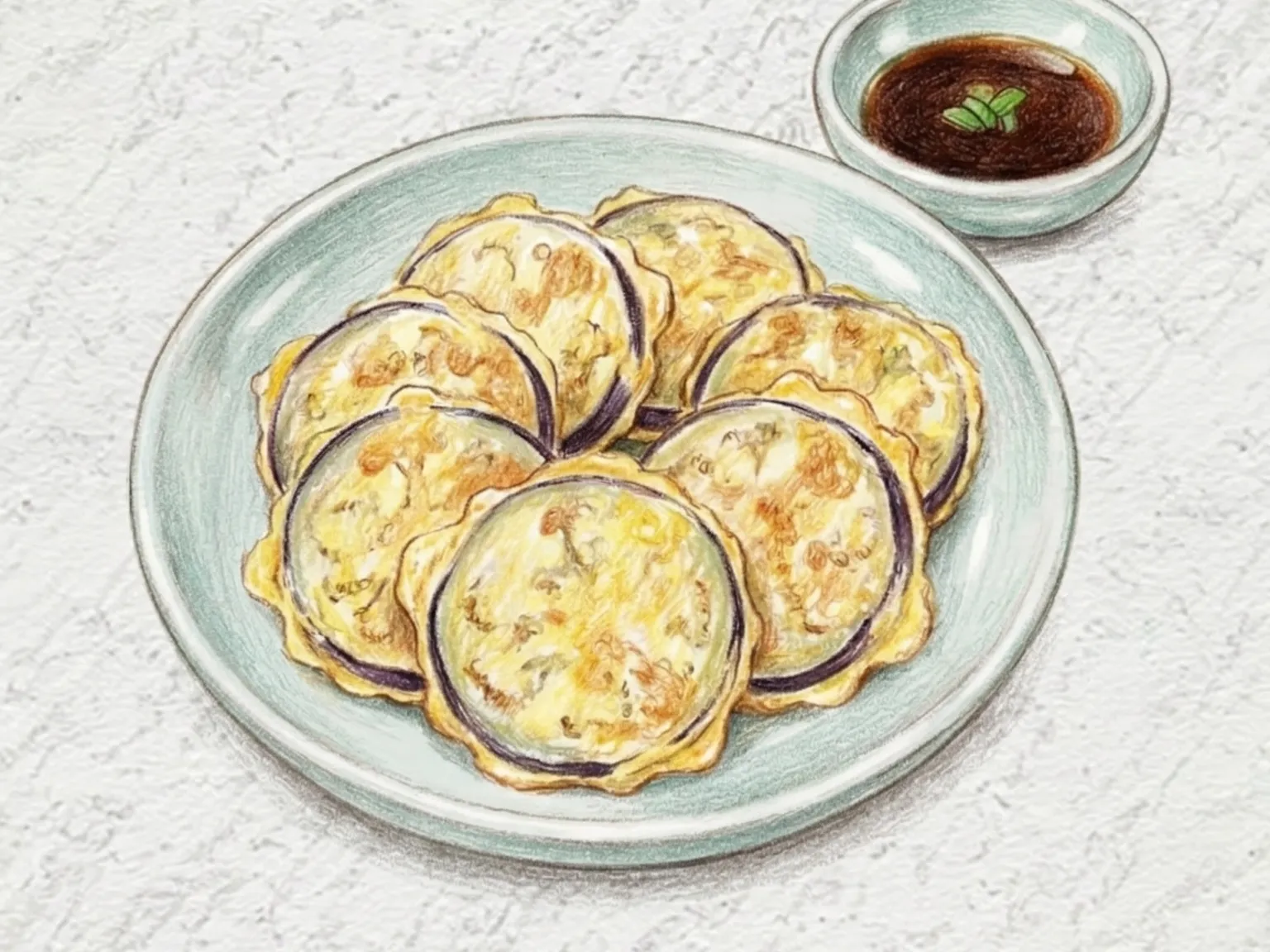
Gaji-jeon belongs to the Korean jeon tradition of vegetables dipped in egg wash and pan-fried in oil, a technique integral to ancestral rites and holiday tables. Eggplant is cut into rounds about 7mm thick, thin enough to cook all the way through but thick enough to keep a soft, yielding center. A light dusting of flour before the egg wash is necessary for the batter to adhere and stay intact in the pan. As the egg coating sets into a golden, lacy crust over the heat, the eggplant inside steams in its own moisture until it collapses into a custardy, almost dissolving texture. The appeal of this jeon lies entirely in the contrast between the crisp, faintly eggy exterior and the creamy interior that gives way with almost no resistance. Dipping each piece in a simple soy and vinegar sauce cuts through the richness of the egg crust and highlights the eggplant's subtle sweetness. Korean families commonly fry gaji-jeon alongside hobak-jeon and other vegetable jeon for Chuseok. It can be fried the day before and held at room temperature without the flavor deteriorating significantly.
Korean Kimchi Pork Jeon (Fermented Kimchi and Pork Crispy Pancake)
Well-fermented kimchi and pork shoulder are the backbone of this hearty Korean pancake. Kimchi brine is mixed directly into the batter, intensifying both the crimson color and the tangy, fermented depth of flavor. A small amount of sugar balances the acidity, while green onion and onion distribute contrasting texture throughout each bite. Pressing the pancake flat in a generously oiled pan over high heat produces deeply caramelized, crispy edges. The kimchi should not be squeezed too dry before mixing in, since residual moisture keeps the interior soft and prevents the finished pancake from becoming dense. Pork shoulder should be cut into small pieces so it cooks through before the exterior over-browns. The kimchi's seasoning is assertive enough that no dipping sauce is required, making this a complete side dish on its own.
Manduguk (Korean Dumpling Clear Broth Soup)
Manduguk is a Korean dumpling soup in which hand-folded dumplings stuffed with ground pork, tofu, scallion, and garlic are dropped into a clear, simmering broth, typically anchovy-kelp stock or beef broth, and cooked until they float. As the dumplings cook, their thin wheat-flour wrappers release a subtle starch that gives the broth a barely perceptible body, while the filling leaks savory juices that enrich the liquid gradually. A thin drizzle of beaten egg stirred in near the finish creates silken wisps on the surface of the broth and gives the bowl a more finished appearance. Shredded egg strips and crumbled dried seaweed scattered on top add a pleasant contrast in color and a faint oceanic note to the flavor. Many Korean households serve manduguk on Lunar New Year as an alternative to tteokguk, and some combine the two by adding sliced rice cakes alongside the dumplings. Dumplings can be made in large batches and frozen raw, which means this soup can be pulled together quickly on weeknights without sacrificing any of the flavor that comes from homemade filling. A small dish of soy-vinegar dipping sauce served alongside lets each person adjust the seasoning at the table, and the light acidity of the sauce cuts through the mild broth in a way that makes the contrast between the two worth trying.
Korean Shredded Sweet Potato Fritter
Sweet potato is cut into thin strips and pan-fried with julienned carrot and onion in a tempura-style batter. The overlapping sweet potato strands crisp up at the edges during frying, while the centers stay soft and carry the vegetable's natural sweetness. Using cold water to mix the batter keeps it light and loose, preserving the crunch of each strand after cooking. Black sesame seeds scattered over the top add a nutty note and visual contrast. The jeon is best eaten immediately off the pan, when the edges are at peak crispness. A soy-vinegar dipping sauce alongside balances the natural sweetness of the vegetables with a clean, sharp note.
Serve with this
Korean Stir-Fried Sweet Potato Stems
Goguma julgi - sweet potato stems - are the above-ground vines of the sweet potato plant, a byproduct that Korean cooks transform into a summer namul rather than discarding. The most labor-intensive step is peeling each stem by hand, pinching the outer skin with a fingernail and pulling it away to reveal the tender core beneath. After blanching for two minutes and rinsing in cold water, the stems are stir-fried in perilla oil with garlic and seasoned with soup soy sauce. Perilla powder stirred in at the end thickens the remaining liquid into a nutty glaze. In season during summer, the stems are harvested from sweet potato fields before the tubers themselves are dug up.
Handmade Scorched Rice
This recipe guides you to make handmade scorched rice, called nurungji, using leftover cooked rice. The process starts by warming cold rice in the microwave to soften the grains, allowing them to spread smoothly into a thin sheet. After placing the rice on a preheated pan, a small amount of water is sprinkled over the surface to act as an adhesive, ensuring the grains bind together firmly instead of crumbling. The rice is cooked over low heat for several minutes without disturbance until the edges dry and the bottom develops a golden color. After checking the color with a spatula, the sheet is flipped to toast the other side. Once both sides are crispy and toasted, the sheet is cooled and broken into bite-size pieces. It can be eaten as a snack with sugar or boiled in water to make a traditional sungnyung beverage.
Korean Spicy Fish Roe Stew
Altang is a Korean stew built around pollock roe - the egg sacs that are the defining ingredient, distinguishing this dish from the many other spicy Korean seafood stews. The dish originated in east coast fishing towns where fresh roe is available in large quantities during the winter spawning season and must be used quickly. Anchovy-kelp stock simmers first with radish to create a clean, sweet foundation before the roe and tofu are added. Once the roe goes into the broth, something visible happens: the egg sacs release their contents as they cook, turning the liquid cloudy and enriching it with marine oils that give the broth a noticeably heavier, more unctuous body. This transformation is specific to altang and is part of what makes it a different eating experience from other spicy Korean stews. Gochugaru and doenjang season the stew together - the chili bringing direct heat and the fermented paste adding depth - and together they neutralize the fishy edge that pollock roe would otherwise carry. Crown daisy, ssukgat, is added in the final moments. Its sharp, almost medicinal herbal fragrance is the correct counterpoint to the heavy, briny broth. In Korean drinking culture, altang occupies a specific role as a late-night restorative consumed at the end of a long evening. The image of a stone pot of altang arriving at the table still vigorously boiling, at two or three in the morning, is a recognizable part of Korean urban nightlife.
Similar recipes
Korean Gaji Dwaejigogi Bokkeum (Eggplant Pork Stir-fry)
Gaji-dwaejigogi-bokkeum is a Korean stir-fry of eggplant and thinly sliced pork seasoned with garlic and fresh chili. The eggplant absorbs oil and sauce as it cooks, turning silky and melding seamlessly with the pork. Garlic infuses the dish with an intense aroma while the chili adds a clean, sharp heat throughout. Heat management is the key technique: cooking over medium or low heat draws too much moisture from the eggplant and turns the stir-fry into a braise, so keeping the flame high from the start is what gives the eggplant a lightly seared exterior. A combination of soy sauce and gochujang balances salt and spice, and a final drizzle of sesame oil rounds out the flavor with a nutty finish. It is especially flavorful in summer when eggplant is at its seasonal peak, and it is substantial enough to serve over rice as a complete meal.
Korean Braised Eggplant with Pork
Gaji dwaejigogi jorim is a Korean braised dish of eggplant and pork shoulder simmered in a soy sauce and gochugaru seasoning base. The pork slowly renders its fat into the eggplant as they cook together, giving the vegetable a rich, meaty depth. Cooking wine mellows the pork and removes any gamey notes, while the soy and garlic combination builds deep, layered flavor throughout the braise. Briefly stir-frying the eggplant in oil before braising coats the surface and helps it hold its shape while drawing the seasoning inward more effectively. A final drizzle of sesame oil finishes the dish with a nutty fragrance, and this recipe is at its best in summer when eggplants are in peak season with thin, tender skins.
Korean Flower Crab Pancake
Fresh blue crab meat is picked clean, coated in a mixture of all-purpose flour and Korean pancake mix, dipped in beaten egg, and pan-fried until the surface turns golden. The crab's natural sweetness and mild brininess stay intact throughout the process, and minced ginger cuts through any residual fishiness without announcing itself in the finished jeon. Black pepper is added in small amounts - just enough to clean up the aftertaste without competing with the delicate crab. The egg coating holds moisture inside, keeping the meat tender while the outside crisps to a light, golden crust. A generous amount of crab filling in each piece is what makes the texture satisfying.