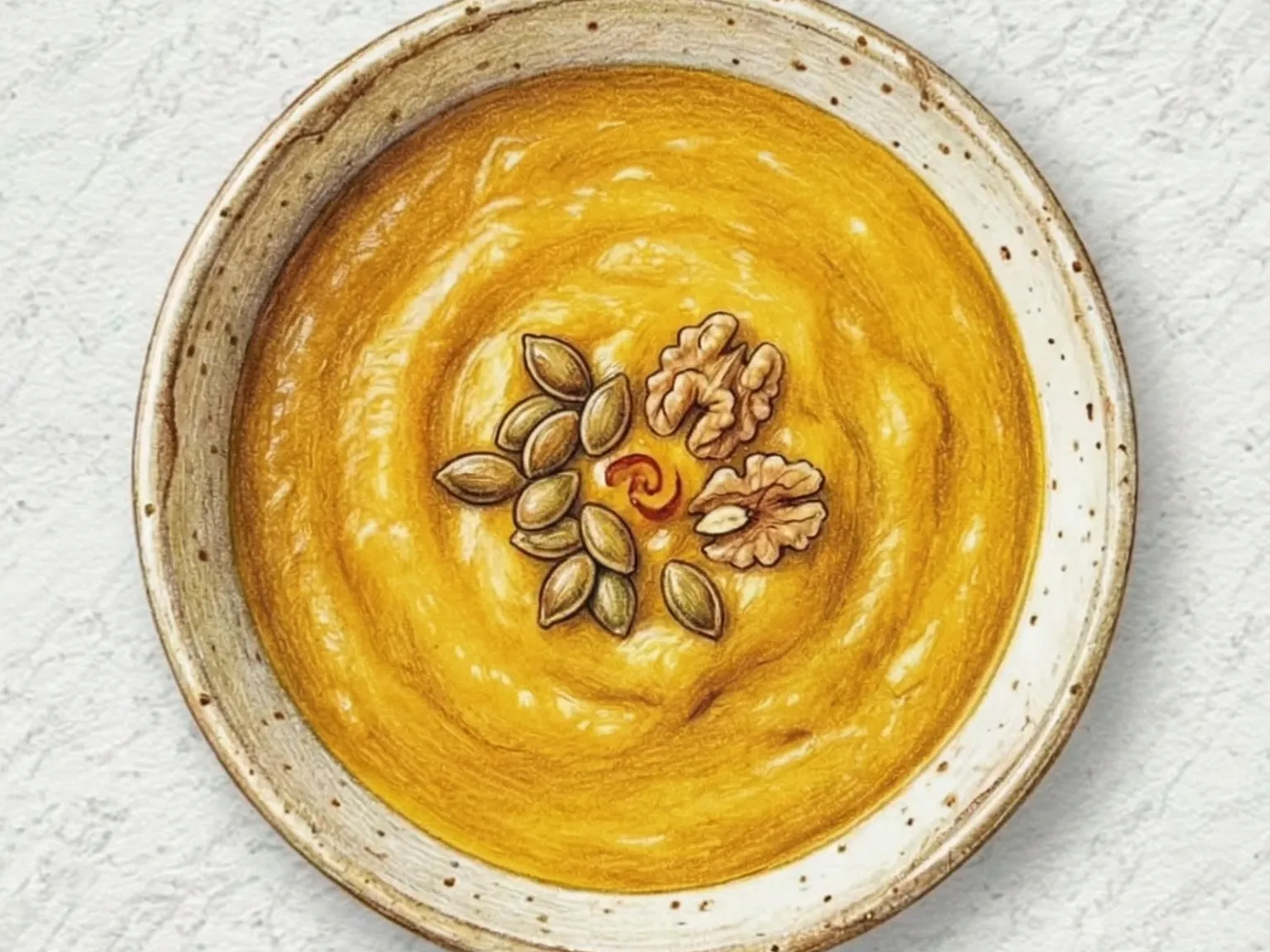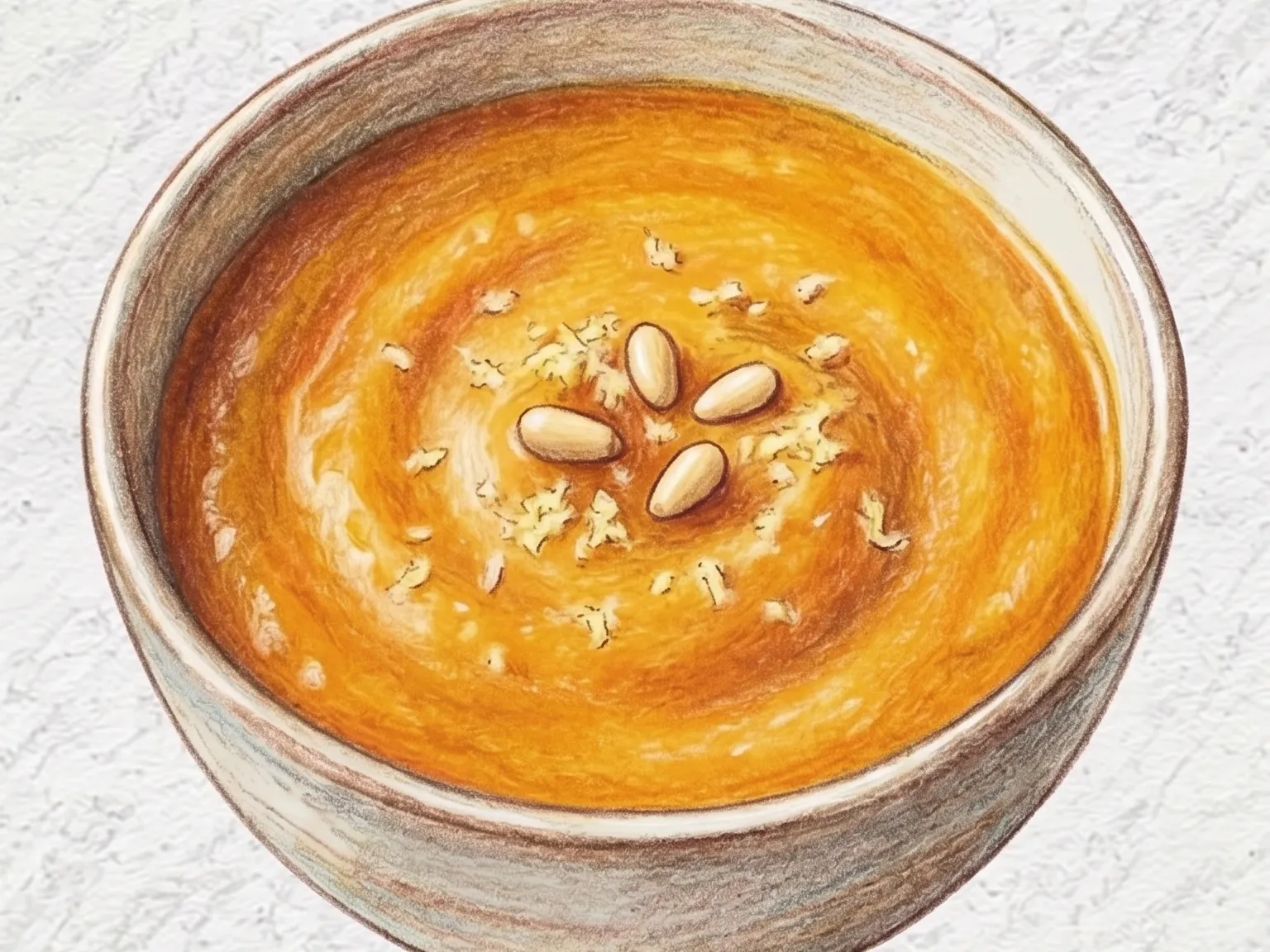
Korean Sweet Pumpkin Pancake
Quick answer
Danhobak jeon is made by steaming kabocha squash, mashing it, then mixing the puree with glutinous rice flour and a small amount of all-purpose flour before shaping the m...
What makes this special
- Steamed kabocha squash puree mixed with glutinous rice flour for a moist, tender interior.
- Steamed and mashed kabocha gives moist, puree-like interior
- Glutinous rice flour delivers chewy, mochi-like bite
Key ingredients
Core cooking flow
- 1 Halve 350 g kabocha squash and scrape out the seeds and stringy fibers with a spoon.
- 2 When a skewer slides in without resistance, remove the squash and peel it.
- 3 Add 100 g glutinous rice flour, 30 g all-purpose flour, 0.25 tsp salt, and 1...
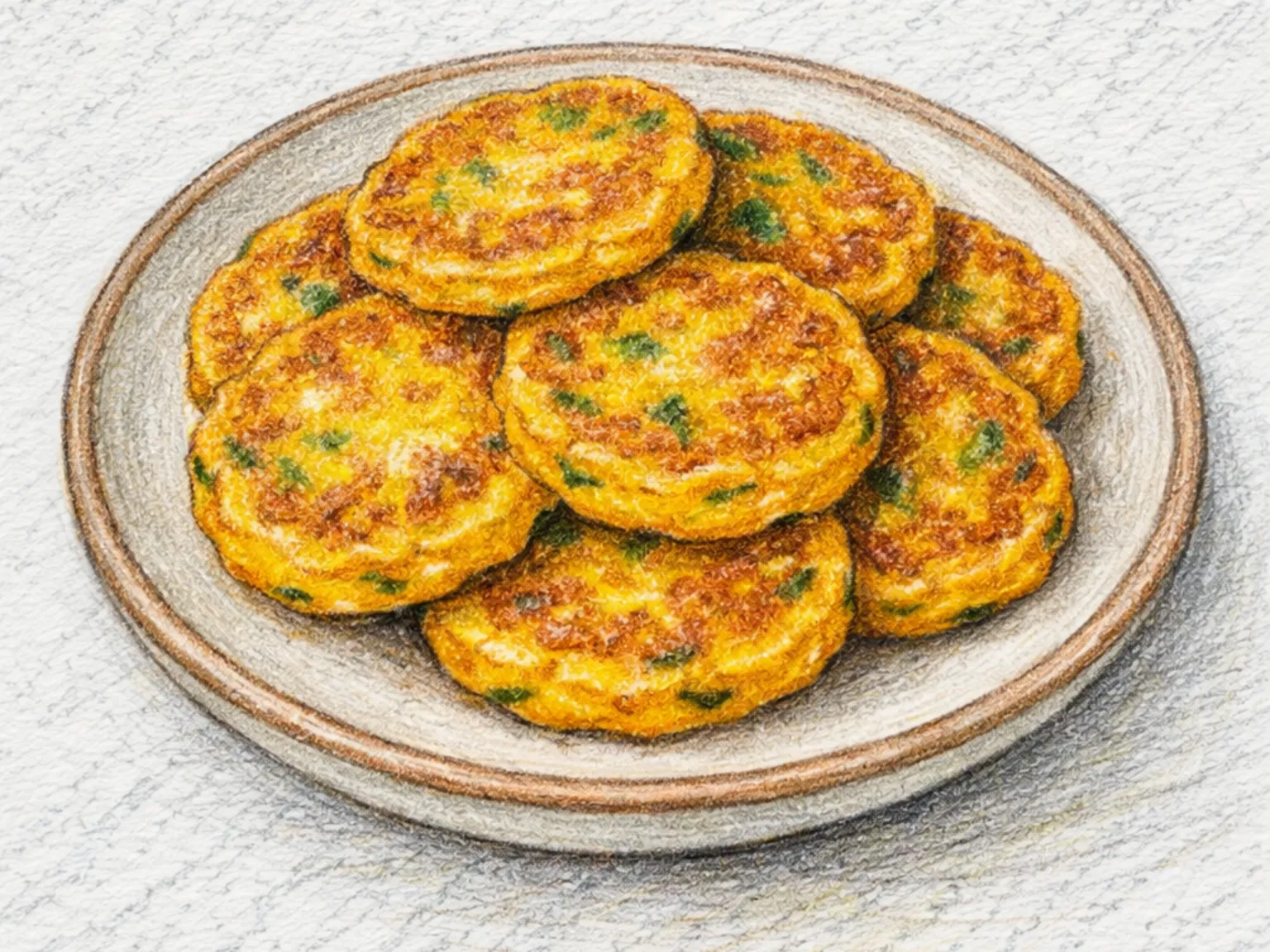
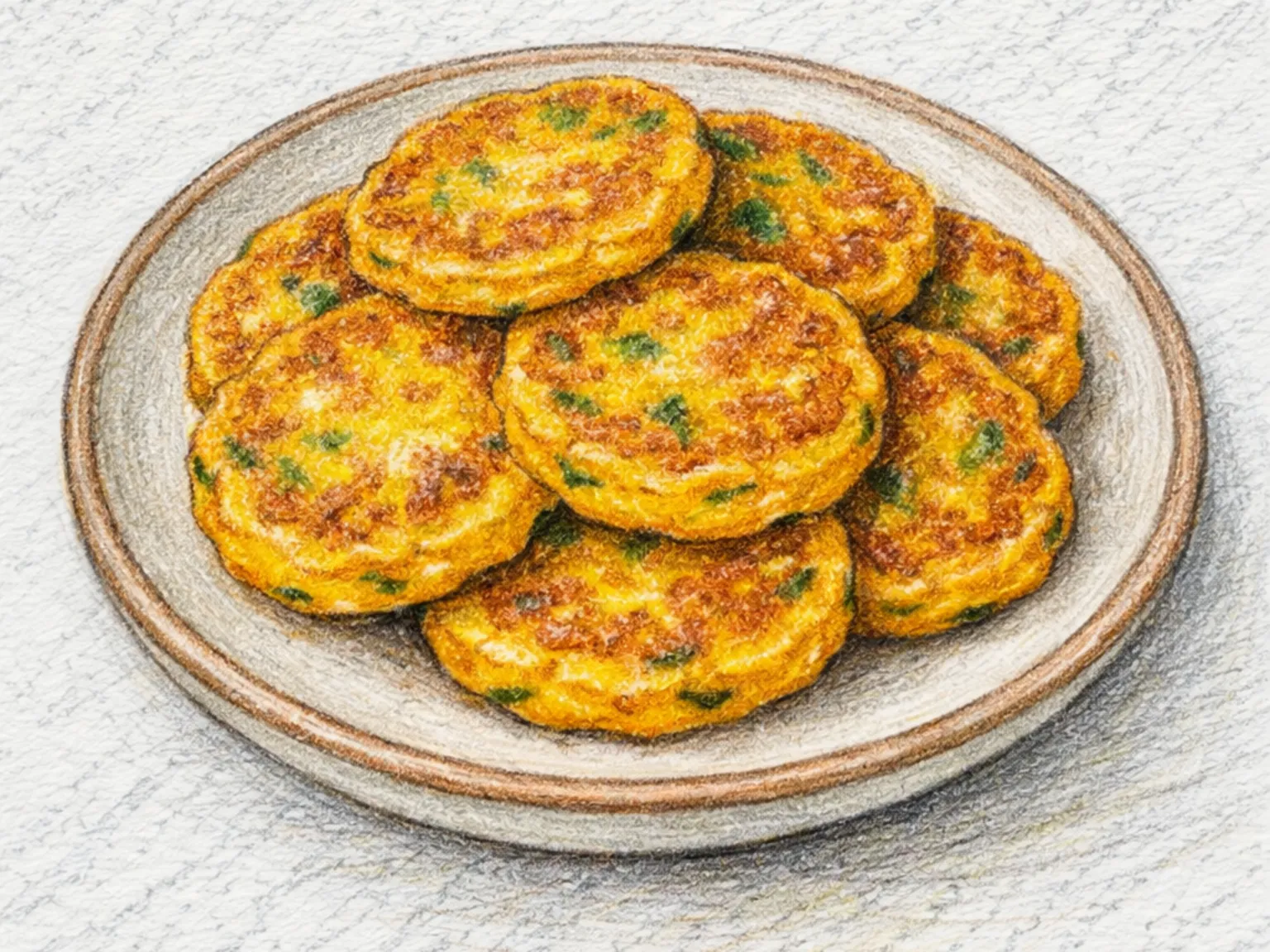
Danhobak jeon is made by steaming kabocha squash, mashing it, then mixing the puree with glutinous rice flour and a small amount of all-purpose flour before shaping the mixture into rounds and pan-frying them in oil. The glutinous rice flour gives each piece a chewy, mochi-like texture, and the squash provides enough natural sweetness to keep added sugar minimal. The exterior crisps up in oil while the center stays soft and moist, like a compressed squash puree. The squash's natural sugars caramelize lightly against the hot pan, producing a golden color on the surface. Best eaten warm, when the squash's sweet, earthy aroma is most pronounced. Well suited as a snack or dessert.
Instructions
Read the steps as a cooking flow: prep, heat, seasoning, doneness control, and finish.
- 1Heat
Halve 350 g kabocha squash and scrape out the seeds and stringy fibers with a spoon.
When the steamer water is boiling, set the pieces cut-side up and steam for about 10 minutes.
- 2Step
When a skewer slides in without resistance, remove the squash and peel it.
While it is still hot, mash it with a fork until no large lumps remain and the texture looks like a smooth puree.
- 3Season
Add 100 g glutinous rice flour, 30 g all-purpose flour, 0.25 tsp salt, and 1 tbsp sugar to the mashed squash.
Mix first until the dry flour is mostly absorbed before adding water.
- 4Step
Add the 70 ml water gradually while kneading, since squash moisture can vary.
Stop when the dough feels soft like an earlobe but does not smear heavily onto your hands.
- 5Heat
Divide the dough into 6 equal pieces, roll each one in your palm, then press it flat.
Aim for rounds about 7-8 cm wide and 8 mm thick so the centers cook through evenly.
- 6Finish
Heat a pan over medium-low heat and add 2 tbsp neutral oil.
Cook the rounds for 2-3 minutes per side, flipping when the edges crisp and the surface turns golden, then serve them warm.
After the steps
Pick a recipe that fits this dish.
Continue with shared ingredients, meal pairings, or a similar method.
Recipes That Go Well With This
More Pancakes →Based on shared ingredients and meal pairing
Korean Spicy Stir-Fried Anchovies
Spicy stir-fried anchovies (maeun myeolchi-bokkeum) toss medium-sized dried anchovies in a gochujang-gochugaru glaze, occupying the opposite end of the flavor spectrum from the sweet jiri-myeolchi version and targeting adult palates. Medium anchovies are larger and thicker than the tiny variety, requiring individual head-and-gut removal to eliminate bitterness - a tedious prep step that nonetheless determines the dish's clean finish. After dry-toasting to drive off moisture, the anchovies simmer in a sauce of gochujang, gochugaru, soy sauce, oligosaccharide, and minced garlic until each piece is coated in a rust-colored glaze. The gochujang's fermented heat combines with gochugaru's vivid red to create both flavor depth and visual appeal. The larger anchovy size delivers a satisfying crunch that lingers alongside a lasting savory umami. Heat intensity is adjustable via gochugaru quantity - adding chopped cheongyang chili ratchets it up another notch. This banchan doubles as a soju drinking snack, appearing as frequently on bar tables as on dinner tables.
Korean Omelette Rice (Ketchup Fried Rice in Egg Wrap)
Omurice wraps ketchup-fried rice in a thin, softly set egg sheet, producing a one-plate meal that balances sweet-tangy tomato notes with rich buttery egg. Diced onion, carrot, and ham are sauteed in butter until fragrant, then tossed with cooked rice and ketchup to build a lightly caramelized fried rice base. A separate egg mixture enriched with a splash of milk is spread thin in a hot pan and folded around the rice while still slightly runny, so cutting into it reveals a creamy, flowing center. Green peas mixed into the rice add pops of sweetness and color. The contrast between the glossy egg exterior and the savory-sweet filling has made omurice one of the most comforting one-plate meals in both Japanese-origin home cooking and Korean everyday cuisine. Tilting the pan and nudging the egg sheet against the curved edge is the standard technique for shaping the signature oval.
Korean Whelk Stew (Spicy Canned Whelk & Cabbage Pot)
Golbaengi-jjigae is a spicy Korean stew made with canned whelk as the centerpiece. Because the whelk is already fully cooked inside the can, it goes in near the end of cooking rather than at the start, allowing the broth and vegetables to reach their full flavor first. Extended heat makes whelk rubbery, so a brief simmer of two to three minutes is enough to warm the pieces through while preserving their distinctive chewy texture. Anchovy stock forms the savory foundation of the broth, delivering a clean seafood depth that amplifies the whelk's flavor without masking it. Gochujang and gochugaru combine to give the stew its fiery, full-bodied heat, while cabbage and onion absorb the broth over time and release a gentle sweetness that balances the spice. A single cheongyang chili added whole sharpens the heat at the finish, pulling the entire broth taut with a bright, clean burn. A handful of sliced green onion stirred in at the end brings a fresh aroma that lifts the richness of the stew. It works equally well as a rice-side dish or as an accompaniment to soju.
Korean Kimchi Pancake
Kimchi-jeon is a Korean savory pancake made by chopping well-fermented kimchi into small pieces, mixing it into a batter of pancake flour, kimchi brine, and chili flakes, then frying the batter in oil until both sides turn golden and crisp. Using kimchi brine instead of plain water is the central technique: the lactic acid from fermentation adds a tangy depth to the flour base that water simply cannot provide. The batter consistency varies with how wet the kimchi is, so the target is a texture that runs slowly rather than puddles, which usually requires less liquid than might seem necessary. Neutral cooking oil or perilla oil suits the flavor profile better than olive oil, preserving the characteristic savory aroma of Korean pan-fried foods. Four minutes on the first side over medium-high heat followed by three minutes after flipping produces a crust that is genuinely crisp at the surface while the inside stays moist from the kimchi's own liquid. Pressing lightly with a spatula before flipping helps confirm that the underside has set firmly enough to hold its shape. A pancake that is too thin burns before it develops flavor, and one that is too thick leaves the interior underdone. Kimchi-jeon is at its best immediately off the pan, but a brief return to a dry skillet restores most of the crispness when reheating leftovers.
Similar recipes
Korean Shredded Sweet Potato Fritter
Sweet potato is cut into thin strips and pan-fried with julienned carrot and onion in a tempura-style batter. The overlapping sweet potato strands crisp up at the edges during frying, while the centers stay soft and carry the vegetable's natural sweetness. Using cold water to mix the batter keeps it light and loose, preserving the crunch of each strand after cooking. Black sesame seeds scattered over the top add a nutty note and visual contrast. The jeon is best eaten immediately off the pan, when the edges are at peak crispness. A soy-vinegar dipping sauce alongside balances the natural sweetness of the vegetables with a clean, sharp note.
Korean Burdock Matchstick Pancake
Burdock root, julienned into thin matchstick strips and pan-fried with onion and cheongyang chili, is a jeon with texture as its main argument. The combination of Korean pancake mix and tempura flour in the batter produces a result that is crispier than standard jeon, particularly at the edges where the thin strips of burdock protrude from the batter and catch the heat. Burdock has an earthy, faintly bitter flavor that holds up in the pan, and the onion provides sweetness alongside it. Cheongyang chili cuts through with a slow-building, lingering heat. Cold water keeps the batter loose and inhibits gluten development, so the finished jeon stays light rather than dense. Hot from the pan, the edges shatter; cooled, they turn chewy.
Korean Scallion Pancake
Pa-jeon is a Korean scallion pancake made by cutting scallions into six-to-seven-centimeter lengths, laying them across an oiled pan, and pouring a batter of Korean pancake mix, water, egg, and salt directly over them before frying on medium heat. The method of placing the scallions first and covering them with batter means one side of each scallion presses against the hot pan surface, which caramelizes them and coaxes out a sweet, aromatic fragrance that would not develop if the scallions were simply mixed into the batter. Batter consistency is a meaningful variable: the mixture should flow off a spoon in a continuous stream rather than plopping, because anything thicker makes the pancake bready and reduces the proportion of scallion in each bite, while anything too thin prevents the distinctive crispy rim from forming around the edges. Adding an extra drizzle of oil around the perimeter before flipping fries the outer edge like a fritter, creating a sharp contrast between the crunchy border and the soft, scallion-loaded interior when dipped into a soy-based dipping sauce. Pa-jeon is also known in Korean culture as a dish that people instinctively crave on rainy days, a reputation closely tied to the sound of batter hitting a hot oiled pan.
Korean Mushroom Pancake (Crispy Shiitake and King Oyster Jeon)
Beoseot-jeon is a Korean mushroom pancake made by slicing king oyster and shiitake mushrooms thin, coating them lightly in a batter of Korean pancake mix, egg, and water, then pan-frying until golden on both sides. King oyster mushrooms deliver a firm, chewy bite from their thick cross-sections, while the natural ridges in shiitake caps catch and hold batter, forming extra-crispy edges as they fry. The coating must be kept thin so the earthy mushroom flavors read clearly through the batter, and sliced mushrooms should be blotted dry before coating since excess surface moisture steams the underside and prevents crisping. Frying on medium-low heat without a lid allows even cooking through the mushroom's density while keeping the surface from steaming. Dipping in cho-ganjang -- soy sauce and vinegar -- brings out the mushrooms' natural umami against the crisp exterior. A small amount of salted fermented shrimp (saeujeot) folded into the batter seasons it thoroughly without needing extra salt.
Korean Kimchi Ramen Pancake
Kimchi ramyeon jeon is a Korean pan-fried pancake made with slightly undercooked ramen noodles mixed into a batter of pancake mix, chopped fermented kimchi, green onion, and red chili flakes. The noodles are boiled for only two minutes, leaving them firm enough to hold their structure in the pan; fully cooked noodles turn soft and collapse into the batter, losing all chew. The residual heat from pan-frying finishes the cooking while the noodles stay springy. Kimchi brings its fermented sourness and the chili flakes add heat, both layering over the mild, savory flavor of the batter. Spreading the mixture thin before frying allows the edges to crisp all the way through. The wavy, coiled shape of ramen strands creates an uneven surface on the pancake, producing irregular pockets and ridges that fry up especially crunchy. It is a popular late-night snack or a practical way to use leftover ramen blocks.