Tuna Mayo Rice Bowl (Chamchi Mayo Cupbap) - Easy Korean Bunsik Recipe
Quick answer
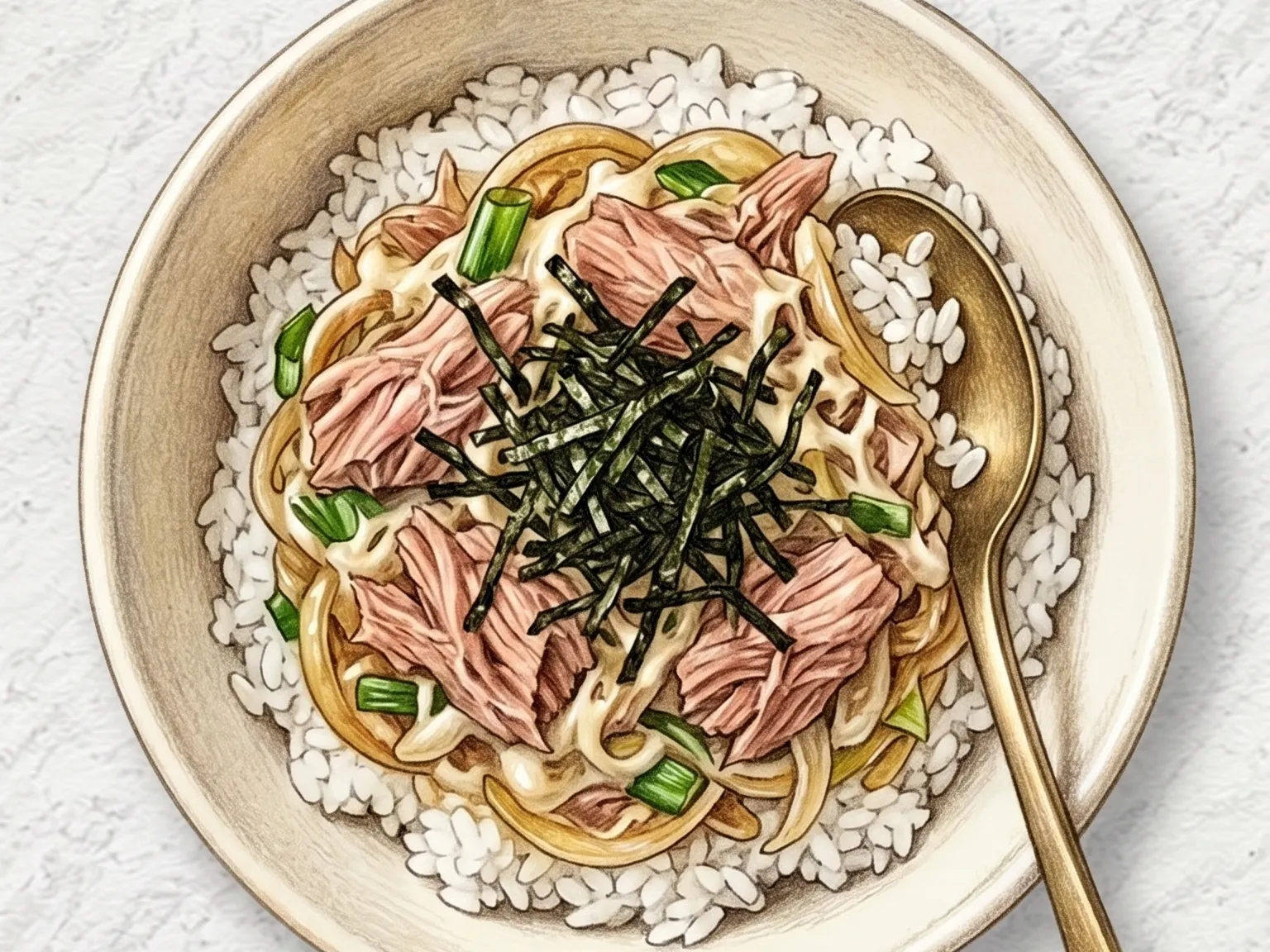
Chamchi mayo cupbap is Korea's well-loved quick meal of seasoned tuna and mayo spooned over steaming hot rice, assembled in about eighteen minutes.
What makes this special
- Drained tuna and mayonnaise are paired with sautéed onions over rice for a quick Korean meal.
- Onion and green onion sautéed first to develop sweetness before adding tuna
- Mayo added off-heat stays creamy without breaking into grease
Key ingredients
Core cooking flow
- 1 Drain 150g canned tuna through a sieve, pressing firmly with the back of a s...
- 2 Mince 60g onion and 25g green onion into pieces no larger than 0.5cm.
- 3 Add the tuna, 1.5 tbsp soy sauce, and 1 tsp sugar to the sauteed vegetables...
Chamchi mayo cupbap is Korea's well-loved quick meal of seasoned tuna and mayo spooned over steaming hot rice, assembled in about eighteen minutes. The canned tuna must be drained and pressed dry through a strainer before anything else: residual liquid from the can dilutes the soy and sugar seasoning and turns the rice soggy within minutes. Onion and scallion are stir-fried first to draw out their natural sweetness, and the tuna is folded in afterward so the fish picks up the developed flavor of the aromatics rather than sitting raw-tasting on top. Mayonnaise goes in only after the heat is turned off; adding it while the pan is still hot breaks the emulsion and produces a greasy finish. A generous scatter of crushed dried seaweed over the finished bowl adds a roasted oceanic note and textural contrast. Mixing everything together before eating is the correct approach: the tuna-mayo sauce coats every grain of rice evenly, so each spoonful carries the full range of flavors rather than alternating between plain rice and heavily sauced bites.
Instructions
Read the steps as a cooking flow: prep, heat, seasoning, doneness control, and finish.
- 1Step
Drain 150g canned tuna through a sieve, pressing firmly with the back of a spoon to squeeze out all the oil or brine.
Excess oil makes the cupbap greasy.
- 2Control
Mince 60g onion and 25g green onion into pieces no larger than 0.5cm.
Heat 1 tbsp oil in a pan over medium heat and saute for 2 minutes until the sharp raw aroma cooks off and sweetness develops.
- 3Control
Add the tuna, 1.5 tbsp soy sauce, and 1 tsp sugar to the sauteed vegetables and stir-fry over medium heat for 2 more minutes.
Pull off the heat when the soy sauce caramelizes and the tuna turns glossy.
- 4Step
Once the pan has cooled slightly off the heat, fold in 3 tbsp mayonnaise until smooth.
Mayonnaise breaks when added to a hot pan, so always add it after removing from heat.
- 5Heat
Divide 400g cooked rice among cups or bowls and spoon the tuna mayo topping evenly over the top.
Sprinkle 2 tbsp crushed seaweed flakes over the entire surface.
- 6Prep
Just before eating, mix vigorously with chopsticks to combine the rice and topping evenly.
A few drops of sesame oil added at this stage makes it richer.
After the steps
Pick a recipe that fits this dish.
Continue with shared ingredients, meal pairings, or a similar method.
Recipes That Go Well With This
More Street food →Based on shared ingredients and meal pairing
Korean Tuna Fried Rice (Quick Canned Tuna Stir-Fried Rice)
Chamchi bokkeumbap is a staple Korean home-style fried rice made by stir-frying canned tuna together with its oil alongside diced onion, carrot, and green onion, then folding in cooked rice and seasoning with soy sauce and sesame oil. The tuna oil distributes through the rice during frying, coating each grain and building a savory, nutty richness that needs little else to feel complete. It is the kind of meal that comes together from pantry and fridge staples with no advance planning: one can of tuna plus whatever vegetables are on hand covers the whole recipe. Cold leftover rice works better than freshly cooked because lower moisture content keeps the grains separate and gives the fried rice its characteristic loose texture. Maintaining high heat throughout prevents clumping and develops a slight char on the rice that adds depth.
Korean Maekom Mayo Yubu Pocket (Spicy Mayo Tofu Pockets)
Spicy mayo yubu pockets are seasoned tofu pouches stuffed with rice, canned tuna, chopped pickled radish, and cucumber, all bound together with a gochujang-mayonnaise sauce. The tuna must be thoroughly drained before mixing so the mayonnaise coats evenly, and the ratio of gochujang to mayo controls both the heat level and the creamy consistency of the filling. Diced pickled radish and cucumber introduce a satisfying crunch that keeps each bite from feeling heavy. Sesame oil and toasted sesame seeds mixed into the rice build a nutty foundation that balances the spice from the sauce. The sweet and salty braised tofu pouch wraps around everything, delivering multiple layers of flavor in a single bite. These pouches pack well for lunch boxes and hold up in the refrigerator, where the tofu slowly absorbs moisture from the filling and becomes even softer.
Black Sesame Tea Cookies (No-Bake Korean Pressed Cookies)
Heukimja dasik is a traditional Korean pressed tea cookie made by binding roasted black sesame powder and almond flour with honey and rice syrup, then pressing the mixture into a decorative wooden mold. No heat is applied at any point: the rich, toasty depth of the sesame and the fatty body of the almond combine within the sticky honey base to produce a crumbly, melt-in-the-mouth texture. A small measure of sesame oil improves binding, and dusting the mold with pine nut powder before pressing yields a sharply defined surface pattern. Resting the shaped cookies in an airtight container for thirty minutes allows them to firm up, resulting in bite-sized confections traditionally served alongside tea at a Korean tea table.
Korean Spicy Pork Rice Cup
Jeyuk cupbap is a Korean street-style rice cup topped with pork shoulder stir-fried in gochujang, soy sauce, sugar, and garlic, layered over steamed rice with onion and cabbage. The gochujang-sugar combination forms a spicy-sweet glaze on the pork that caramelizes quickly under high heat, sealing in the meat's juices and creating a lacquered surface. Cabbage goes in last to keep its snap, and the slow-cooked onion contributes a gentle sweetness that tempers the chili heat. Slightly cooled rice keeps the cup from turning soggy, and the tight, portable format makes this a defining item of Korean street-food culture, equally at home in a pojangmacha stall and a school cafeteria. A soft-boiled egg or a slice of processed cheese on top adds a rich, creamy note.
Serve with this
Korean Blanched Young Napa with Doenjang
Eolgari is young napa cabbage cut before the head has formed a tight ball, leaving it with thinner leaves and more tender ribs than fully mature baechu. A quick blanch of about one minute wilts the leaf while the pale ribs retain a gentle crunch that holds even after seasoning. After blanching, the cabbage is squeezed firmly to remove water, then dressed with doenjang, soup soy sauce, minced garlic, and sesame oil. The fermented paste penetrates the tender leaves quickly, spreading a salty, earthy coating evenly through each piece. The flavor profile is mild and round with no sharp edges, making it one of the most approachable doenjang-based namul dishes for people who are new to Korean fermented seasonings. The dish comes from the Korean countryside tradition of turning whatever young greens were growing between major kimchi-making seasons into simple dressed vegetables. Eolgari is a seasonal green, available at Korean markets from late spring through early autumn.
Korean Spicy Chewy Noodles
Jjolmyeon is a Korean cold noodle dish built around unusually thick, springy wheat noodles that were accidentally invented at an Incheon noodle factory in the 1970s. The noodles are boiled, rinsed in ice water to firm up their chewy texture, then dressed in a sweet-sour-spicy sauce made from gochujang, vinegar, sugar, soy sauce, and sesame oil. Shredded cabbage and julienned cucumber are chilled separately and piled on top, giving each bite a crisp contrast to the bold sauce. A halved boiled egg adds a creamy counterpoint to the heat. The dish is served cold and eaten after thorough mixing, making it a go-to summer meal and late-night snack across Korea.
Korean Soju Beer Mix (Soju Lager Lemon Highball)
Somaek is Korea's most popular mixed drink, made by combining soju and lager beer in a single glass so that the spirit's alcohol strength meets the beer's crisp carbonation. The standard ratio is one part soju to three parts beer, and both liquids should be thoroughly chilled beforehand for the cleanest, most refreshing result. Ice goes in the tall glass first, followed by a splash of fresh lemon juice, then the soju, and finally the beer poured slowly down the inside wall of the glass to minimize foam and preserve the carbonation. A small addition of sparkling water lightens the drink further and brings the alcohol level down slightly for those who want a longer session. A lemon slice resting on the rim releases citrus oils with each sip, adding a bright aromatic layer that keeps the drink from feeling heavy. Somaek traces its roots to the bombtail drinking culture unique to Korean social gatherings, but today it exists in countless variations with different soju brands, beer styles, and ratio preferences that regulars debate with genuine seriousness.
Similar recipes
Chamchi Mayo Deopbap (Korean Tuna Mayo Rice Bowl Recipe)
Chamchi mayo deopbap is a no-cook Korean rice bowl where drained canned tuna is tossed with mayonnaise and spooned over warm rice, then finished with soy sauce, sesame oil, and crumbled dried seaweed. The warmth of the rice softens the mayo coat so it clings to every grain rather than pooling at the base. Crumbled seaweed provides a layer of crunch alongside its salt. Nothing needs cooking - just mixing and assembling - which makes this one of the fastest meals to put together, ready in under five minutes on days when standing at the stove feels unappealing. Soy sauce deepens the salt past what the tuna alone provides, and sesame oil keeps the bowl from tasting flat. Canned tuna and mayonnaise are staples in most Korean kitchens, making this a genuinely practical fallback meal.
Korean Fish Roe Rice Bowl
Albap is a casual Korean rice bowl that likely traces its origins to sushi-bar kitchen culture, where flying fish roe - tobiko - was always stocked and cooks needed a quick staff meal. Warm rice is first tossed with sesame oil and a small knob of butter, coating each grain with a glossy, slightly nutty film. The toppings are arranged by section over the rice: bright orange tobiko that bursts between the teeth, stir-fried kimchi whose lactic tartness has deepened into a roasted sour note, diced pickled radish for crunch and sweetness, and a layer of shredded seasoned seaweed. Everything is mixed together at the table, and the warmth of the rice softens the roe just enough that its briny juice seeps into the buttered grains. Sliced scallion scattered on top adds a fresh finish. Flying fish roe freezes well and delivers noticeable texture in small quantities, making this dish well suited to solo cooking, and it has taken on a distinct identity from Japanese ikura or tobiko donburi. With minimal prep and about ten minutes of active work, this bowl packs an unusual range of textures - burst, crunch, crisp, and soft - into a single serving.
Korean Tuna Stew
Chamchi jjigae features canned tuna and fresh vegetables simmered into a spicy Korean soup. This recipe utilizes the oil from the tuna can directly in the pot, which builds a deep, savory broth without needing a separate anchovy or kelp stock. The tuna meat and oil simmer together with water before seasonings like gochugaru, soup soy sauce, and minced garlic are stirred in to create a spicy base. Slices of onion are simmered to release a subtle sweetness that tempers the initial heat of the chili flakes. Tofu slices and zucchini are cooked until tender, absorbing the salty stew broth to carry seasoning to their centers. Diagonally cut green onion and a sliced Cheongyang chili pepper are added at the end to provide a fresh, sharp finish. You can also add instant ramen noodles to create a filling one-pot meal.