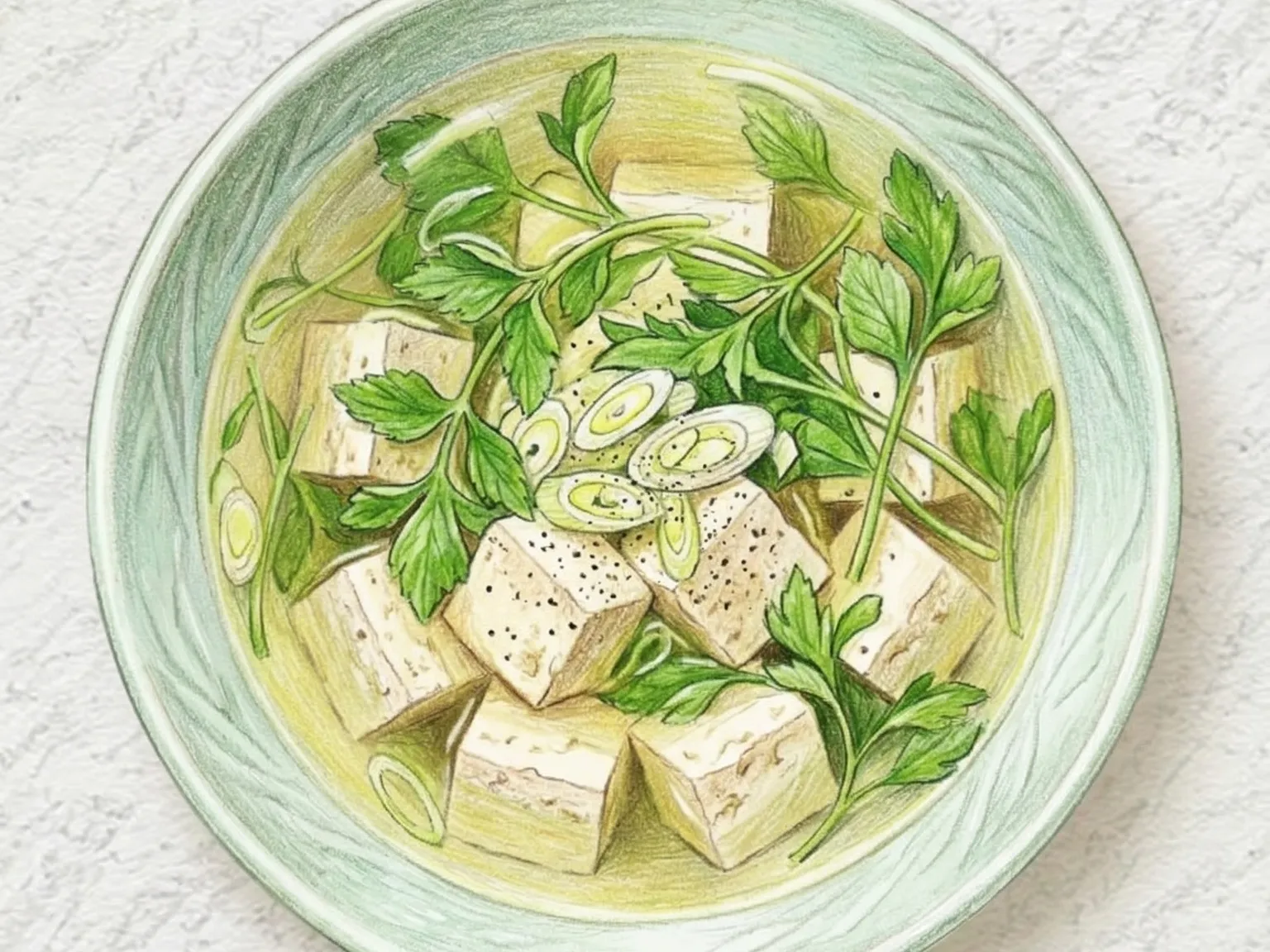
Korean Pimpinella Tofu Soup
Chamnamul (Korean pimpinella) brings a distinctive herbal fragrance to an anchovy-kelp stock base, creating a clear soup with pronounced aromatic character. Tofu is simmered first so it absorbs the savory broth, and the greens are added only at the end to preserve their bright scent. A finish of green onion and black pepper rounds out this two-serving soup that is light in body but strong in flavor definition.
Adjust Servings
Instructions
- 1
Wash chamnamul and cut into 5 cm pieces; dice tofu.
- 2
Bring stock to a boil and add minced garlic.
- 3
Add tofu and simmer over medium heat for 4 minutes.
- 4
Season with soup soy sauce and salt, then add chamnamul.
- 5
Add green onion and pepper, cook 1 more minute, and serve.
As an Amazon Associate, we may earn from qualifying purchases.
Tips
Nutrition (per serving)
More Recipes

Korean Green Seaweed Tofu Soup
Salted cheonggak seaweed is desalinated in cold water, then simmered with tofu and onion in a broth built on perilla oil, tuna extract, and soup soy sauce. The seaweed introduces an oceanic brininess and a distinctive crunchy texture that contrasts with the soft tofu cubes. Sauteing onion and garlic in perilla oil first layers in a nutty aroma, and at 140 calories per serving, the soup stays notably light.

Korean Water Dropwort Tofu Soup
Minari-dubu-guk is a mild, clear Korean soup that pairs soft cubes of tofu with water dropwort, an herb prized for its bright, celery-like fragrance. The soup is built on a simple anchovy-kelp stock, into which the tofu goes first and simmers gently. Water dropwort is added only in the final moments before the flame is turned off, so its hollow stems retain a slight crunch and its volatile aromatic compounds stay intact rather than cooking away. Seasoning is minimal - soup soy sauce, garlic, and perhaps a pinch of salt - because the point of this soup is restraint: the clean stock, the herb's green perfume, and the pillowy tofu are meant to speak quietly. Spring is the ideal season, when water dropwort is at its most tender and aromatic. Korean cooks often serve this alongside richer, heavier dishes because the light broth acts as a palate cleanser between bites. It is the kind of soup that rarely draws attention at the table yet is always missed when absent.

Korean Spinach Tofu Soup
Sigeumchi-dubu-guk is a clear, mild Korean soup in which spinach and tofu float in an anchovy-kelp broth seasoned only with soup soy sauce - no fermented paste, no chili. The result is a bowl of quiet transparency where each ingredient's natural flavor is audible: the green, slightly mineral taste of spinach, the neutral creaminess of tofu, and the clean savor of the stock. A small amount of minced garlic builds umami in the background, and a single drop of sesame oil on the surface adds a whisper of richness. This soup is intentionally gentle, which is exactly why Korean families rely on it so heavily - it suits every palate and every age group, from toddlers to grandparents. Cooks often serve it alongside bold, spicy dishes because the clear broth acts as a reset between intense bites. The technique is straightforward but timing matters: tofu should be cut into generous cubes so it holds its shape during simmering, and spinach should enter the pot only at the very end to preserve its color and a touch of texture. The entire preparation takes under fifteen minutes and requires only four or five ingredients, making it one of the most practical everyday soups in Korean cooking.

Korean Soft Tofu Soup (Mild Clear Broth with Silken Tofu)
Sundubu-guk is the gentler sibling of the more widely known sundubu-jjigae, trading the latter's fiery red broth for a clear, mild soup that puts silken tofu front and center. The base is a simple anchovy and kelp stock, seasoned with soup soy sauce and nothing more assertive, so the broth stays transparent and clean on the palate. Blocks of unpressed soft tofu are slipped into the simmering liquid and heated just until they are warmed through - overcooked sundubu loses the trembling, custard-like texture that defines the dish. Each spoonful collapses gently on the tongue, releasing a faint, sweet soybean flavor that pairs effortlessly with the umami-rich stock. A small addition of salted shrimp paste can be stirred in at the table to introduce a subtle marine depth without disrupting the soup's calm character. This is the soup Koreans turn to when appetite is low, digestion needs rest, or the body simply craves something warm and uncomplicated. It is equally suitable for young children and elderly diners, and its quiet simplicity is precisely its strength.

Korean Chamnamul Kimchi (Pimpinella Kimchi)
Chamnamul kimchi is a spring kimchi made by salting chamnamul greens for just ten minutes to wilt them slightly, then dressing them in gochugaru, anchovy fish sauce, and salted shrimp without rinsing. Skipping the rinse allows the residual salt to convert into umami during fermentation, deepening the overall flavor. Pureed Korean pear and onion blended with sweet rice paste form the seasoning base, contributing natural sweetness that softens the chili heat. After three hours of initial fermentation at room temperature followed by refrigeration, the kimchi reaches its best balance within one to two days, when the grassy herbal aroma of chamnamul meets the fermented depth of the fish sauce.

Korean Chamnamul Jangajji (Pimpinella Pickles)
A fragrant Korean spring pickle that captures chamnamul's unique herbal aroma in a gentle soy-and-apple-vinegar brine - ready to eat in just one day. The greens are loosely packed in a jar and covered with warm (not boiling) brine to preserve the volatile aromatics. Apple vinegar produces a rounder, softer acidity than standard rice vinegar, complementing the grassy sweetness of chamnamul. A squeeze of lemon juice brightens the finish. Best consumed within five days for peak fragrance.