Charim

2686 Korean & World Recipes

2686+ Korean recipes, clean and organized. Ingredients to instructions, all at a glance.

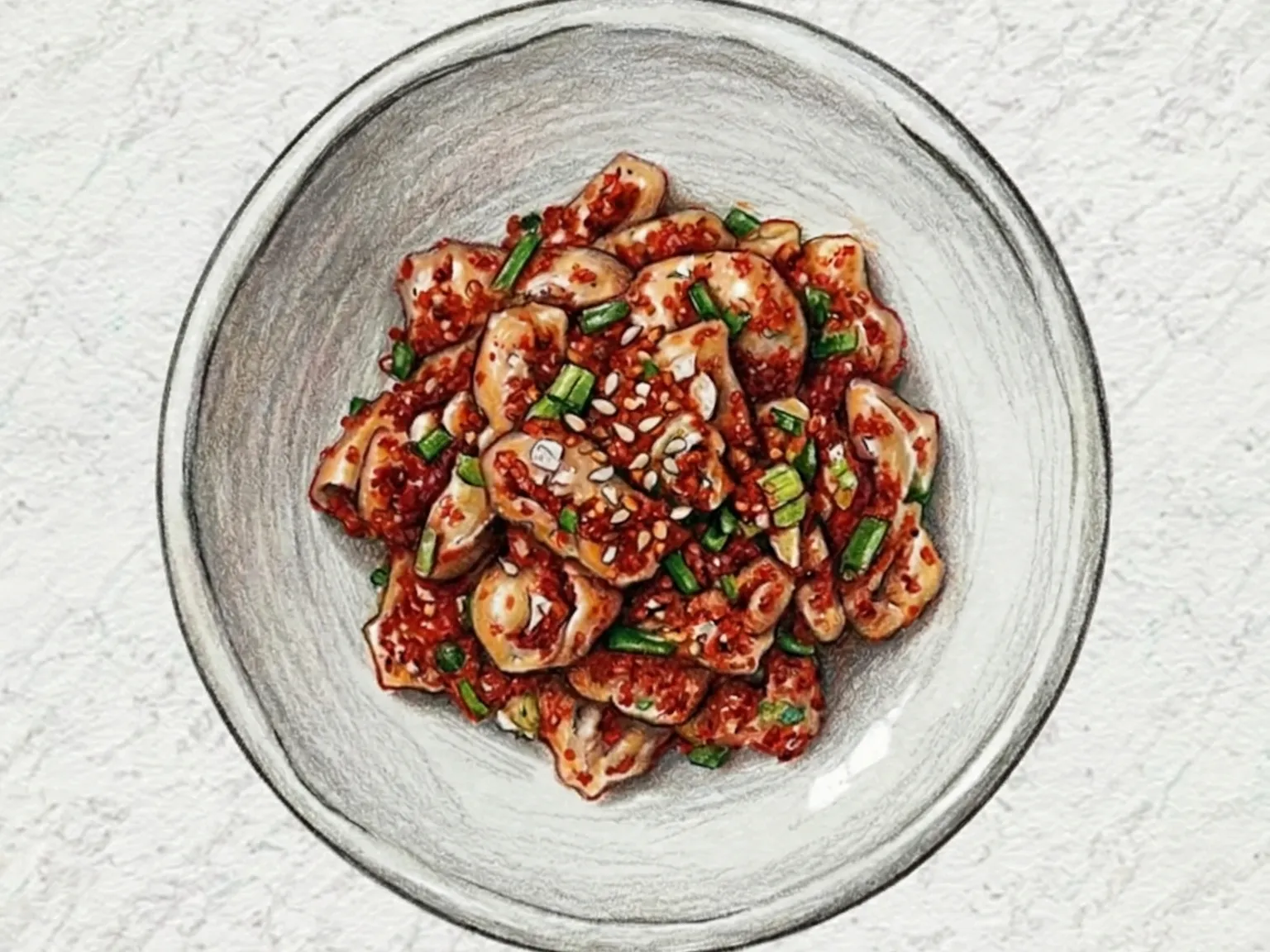
Korean Seasoned Salted Pollock Stomach

Korean Seasoned Salted Pollock Stomach

Changnanjeot - salt-fermented pollock stomach - belongs to Korea's jeotgal tradition, where seafood organs are brined for months until they develop intense umami. The stomach lining has a firm, slightly rubbery chew distinct from softer jeotgal like salted shrimp. Drained of excess brine and dressed with gochugaru, garlic, scallion, and sugar, it becomes a high-impact condiment banchan. A thumbnail-sized piece on rice delivers a concentrated burst of fermented marine salt and chili heat.

Prep 8min02 servings

Adjust Servings

2servings
servings

Instructions

  1. 1

    Drain excess brine from changnanjeot.

  2. 2

    Mix changnanjeot and chili flakes in a bowl.

  3. 3

    Add garlic, scallion, and sugar, then toss again.

  4. 4

    Add sesame oil and sesame, tossing briefly.

  5. 5

    Rest for 10 minutes and serve chilled.

🛒Shop Ingredients on Amazon

As an Amazon Associate, we may earn from qualifying purchases.

Tips

If too salty, mix in a little shredded radish.
One day of refrigeration mellows and rounds the flavor.

Nutrition (per serving)

Calories
95
kcal
Protein
10
g
Carbs
2
g
Fat
5
g

More Recipes

Korean Seasoned Pollock Roe Banchan
Side dishesEasy

Korean Seasoned Pollock Roe Banchan

Myeongranjeot-muchim dresses raw salted pollock roe with a near-minimal seasoning - a paradoxical dish where less seasoning produces more flavor, because the roe's own brininess and umami are the point. Korean myeongranjeot differs from Japanese mentaiko in being less aggressively salted and not coated in chili marinade by default. The membrane is peeled away and the loose eggs are placed in a bowl with sesame oil, a pinch of gochugaru, and finely sliced scallion, then folded together gently - vigorous stirring crushes the individual eggs and destroys the pop-on-the-tongue texture that defines the dish. The gochugaru adds a whisper of warmth and color without masking the roe's marine depth. Spooned over hot rice and mixed through, this banchan is an intense rice-thief - a small portion can carry an entire bowl of steamed rice. Substituting perilla oil for sesame oil shifts the flavor profile toward a cleaner, more neutral nuttiness.

🏠 Everyday🍱 Lunchbox
Prep 7min2 servings
Korean Spicy Salted Octopus Jeotgal
KimchiMedium

Korean Spicy Salted Octopus Jeotgal

Nakji jeotgal is a Korean fermented octopus side dish made by salting cleaned octopus for forty-five minutes to draw out moisture and firm the flesh, then dressing it in a paste of gochugaru, minced garlic, ginger, anchovy fish sauce, and plum syrup. The initial salt cure tightens the octopus's naturally chewy texture, and the chili seasoning coats every surface in a spicy, crimson layer that penetrates deeper as it sits. Plum syrup counteracts any residual marine smell while adding a subtle fruit sweetness that balances the salt and heat. After two to three days of refrigeration, fermentation begins to develop, pushing the umami forward. Each piece has a springy, resistant chew that releases concentrated ocean flavor against the warmth of steamed rice.

🍱 Lunchbox
Prep 45min4 servings
Korean Spicy Pollock Tripe Jeotgal
KimchiMedium

Korean Spicy Pollock Tripe Jeotgal

Changnan jeotgal is a traditional Korean fermented condiment made from pollock tripe that is cleaned thoroughly, salted with coarse salt for thirty minutes to firm the texture and draw out moisture, then seasoned with gochugaru, garlic, ginger, and fish sauce. Meticulous washing and complete drying of the tripe are essential for a clean-tasting result. The chili flakes and fish sauce develop a complex, salty umami during fermentation, while a small amount of sesame oil rounds out the aroma. Sealed and refrigerated for at least three days, the jeotgal deepens in flavor over time. Even a small portion placed on hot steamed rice delivers an intense savory punch.

🍱 Lunchbox
Prep 35min4 servings
Korean Seasoned Cockle Salad
Side dishesMedium

Korean Seasoned Cockle Salad

Kkomak-muchim is a seasoned cockle banchan synonymous with Beolgyo in Jeollanam-do, a town known for Korea's finest cham-kkomak (true cockles) harvested from its nutrient-rich tidal flats from November through March. Cooking technique matters enormously: once the water begins to boil, stirring in one direction only ensures the shells open evenly, and the cockles must be pulled at the four-minute mark before the meat contracts and toughens. Shells are pried open immediately, the meat collected and drained. The dressing - gochugaru, soy sauce, vinegar, sugar, and garlic - adds a tangy-spicy layer over the cockle's naturally briny, springy flesh. Chopped green onion goes in for freshness, followed by sesame oil and seeds. A ten-minute rest after dressing allows the sauce to penetrate the dense cockle meat. This is one of the most sought-after seasonal banchan in Korean cuisine.

🏠 Everyday🍱 Lunchbox
Prep 20minCook 10min2 servings
Korean Seasoned Salted Shrimp
Side dishesEasy

Korean Seasoned Salted Shrimp

Saeujeot-muchim seasons 70 grams of salted shrimp with chili flakes, minced garlic, chopped green onion, a pinch of sugar, and sesame oil to create an intensely savory condiment-style banchan. The shrimp are already heavily salted during fermentation, so no additional salt is needed - the sugar merely rounds off the sharp edges of the brininess. Larger shrimp pieces are snipped with scissors to ensure an even texture in every spoonful. A small amount placed on a bowl of steamed rice spreads a deep wave of umami across the palate, far disproportionate to the quantity used. It also pairs well with warm steamed tofu, where the bland creaminess of the tofu absorbs and softens the concentrated saltiness of the shrimp.

🏠 Everyday🍱 Lunchbox
Prep 5min2 servings
Korean Salted Pollock Roe Jeotgal
KimchiHard

Korean Salted Pollock Roe Jeotgal

Myeongran jeotgal is a Korean salted pollock roe ferment where fresh roe sacs are cleaned of blood spots and membranes, brushed with rice wine to suppress fishiness, then coated in a curing blend of sea salt, gochugaru, and minced garlic before being sealed in a container with a piece of kelp. Over three to five days of cold fermentation, the salt extracts moisture from each tiny egg, concentrating the pop-and-burst texture while enzymatic breakdown generates a deep, briny umami. The chili flakes add a gentle warmth that complements rather than overwhelms the roe's natural flavor. Sliced thin and placed on hot steamed rice, the eggs release their salty, oceanic intensity with each bite.

🎉 Special Occasion🍱 Lunchbox
Prep 30min4 servings
More Side dishes