Chao Ga (Vietnamese Chicken Rice Porridge with Ginger)
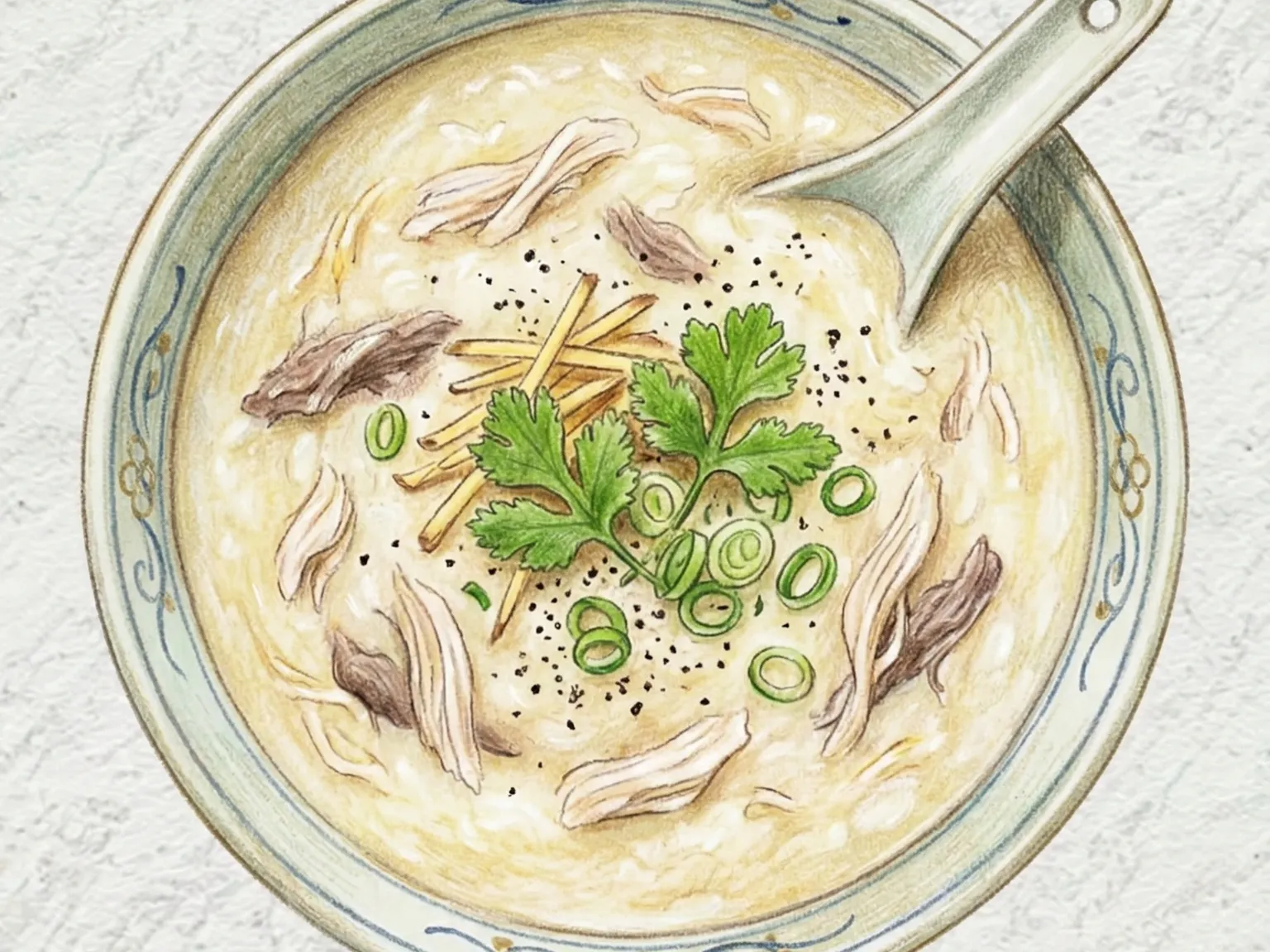
Chao ga is Vietnam's answer to chicken soup - a gentle, restorative rice porridge eaten for breakfast or when recovering from illness, occupying the same cultural space as samgyetang does in Korea. A whole chicken simmers until the broth is deeply flavored, then rice cooks in that liquid until the grains dissolve into a thick, creamy consistency. Generous slices of ginger warm the stomach and temper any gaminess, while fish sauce adds an underlying umami depth that plain salt cannot achieve. The porridge is ladled into bowls and topped with hand-shredded chicken, fresh cilantro, cracked black pepper, fried shallots, and strips of you tiao - Chinese fried dough - whose crunch against the soft porridge creates a textural contrast essential to the dish. In Hanoi's early-morning alleys, chao ga vendors work from a single pot, serving hundreds of bowls before noon.
Adjust Servings
Instructions
- 1
Rinse rice, soak for 20 minutes, and drain.
- 2
Simmer chicken with water, ginger, and onion for 25 minutes to build broth.
- 3
Remove and shred chicken; strain broth back into the pot.
- 4
Add soaked rice to broth and simmer 25 minutes, stirring occasionally.
- 5
Season with fish sauce, return shredded chicken, and serve with scallion and pepper.
As an Amazon Associate, we may earn from qualifying purchases.
Tips
Nutrition (per serving)
More Recipes

Vietnamese Chicken Salad
Goi ga - Vietnamese chicken salad - is eaten across Vietnam as a beer snack and appetizer, one of the cuisine's most effective dishes for hot weather when something cool, sharp, and light is needed. A whole chicken is poached and cooled, then shredded by hand along the grain - hand-shredding creates irregular surfaces that trap the dressing and produces a fibrous chew distinct from knife-cut meat. Shredded cabbage, onion, and carrot combine with Vietnamese coriander (rau ram), cilantro, and mint, all tossed in a dressing of fish sauce, lime juice, sugar, chili, and garlic. The dressing's acidity lifts the chicken's mildness, while the fish sauce's depth meets the vegetables' watery crunch to create a balance that is light yet not bland. Fried shallots and crushed roasted peanuts scattered on top add a crunchy dimension that elevates the salad from simple to layered. At bia hoi - Vietnam's fresh-beer street bars - goi ga is among the first dishes ordered, arriving minutes before the first cold glass.

Hanoi-Style Chicken Pho (Pho Ga)
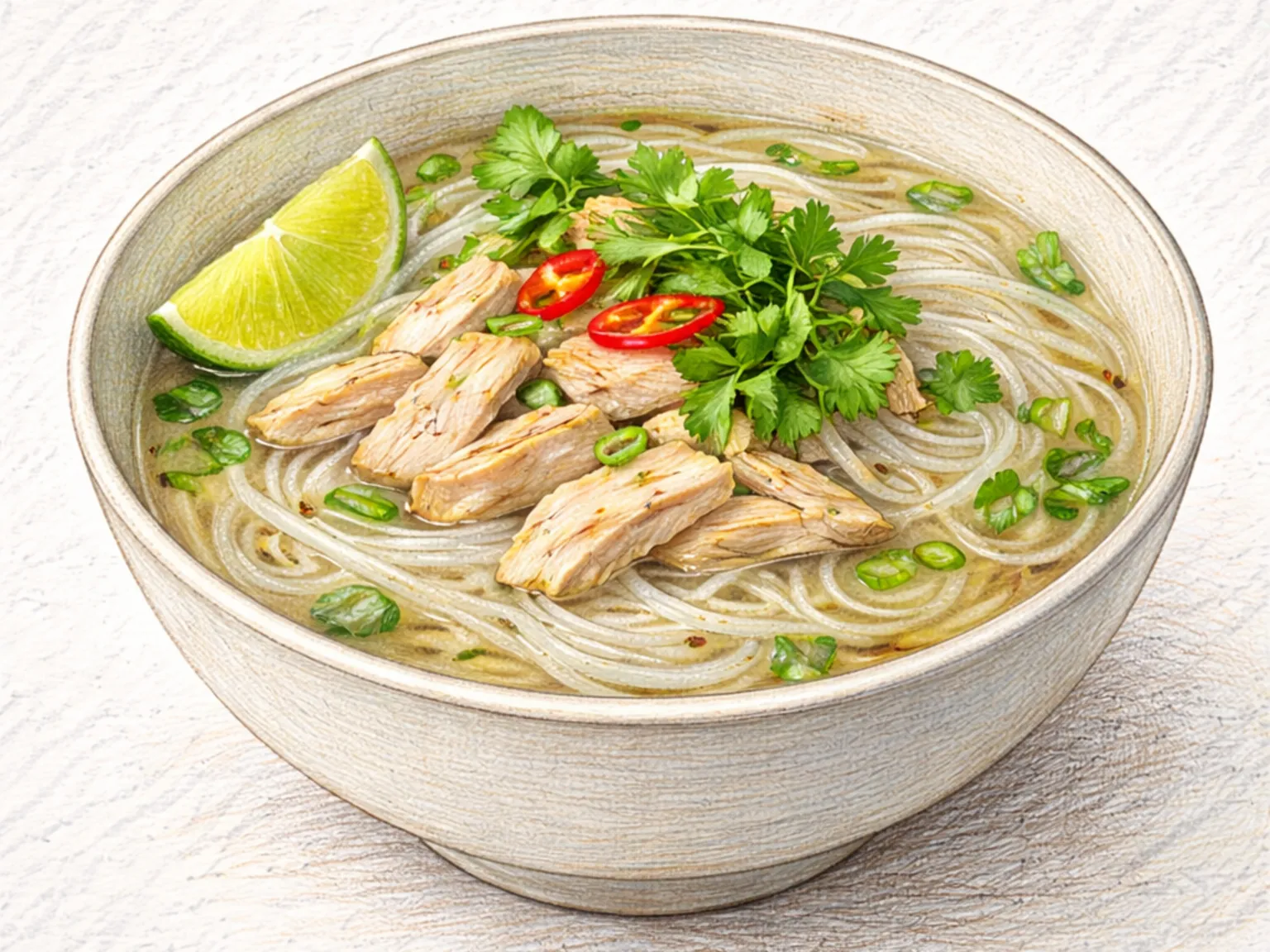
Hanoi-style pho ga is a chicken noodle soup that trades the beefy richness of pho bo for a lighter, cleaner bowl. Chicken bones and thighs simmer together until the broth turns golden and fragrant, then the meat is pulled into long shreds and piled over flat rice noodles. The spice profile is gentle - a knob of charred ginger and a single star anise - keeping the chicken flavor at the forefront. The broth has a silky quality from the natural gelatin in the bones, giving each spoonful a body that belies its clarity. Scallion, cilantro, and a squeeze of lime are the standard accompaniments. Some vendors add a torn fried dough stick for crunch. Pho ga is widely considered the everyday breakfast pho in Hanoi, less ceremonial than its beef counterpart but no less satisfying.

Bo Kho (Vietnamese Lemongrass Beef Shank Stew)
Bo kho is Vietnam's answer to beef stew, born in the southern kitchens of Saigon where French colonial influence introduced slow-braised preparations and Vietnamese cooks adapted them with local aromatics. Beef shank and tendon are cut into large chunks and braised with lemongrass, star anise, cinnamon, and annatto oil - the annatto tinting the broth a vivid orange-red that distinguishes bo kho from darker Western stews. Tomato paste and a spoonful of curry powder go in early, building a base that is simultaneously sweet, earthy, and warm. The stew simmers for two hours or more until the beef is fork-tender and the tendon has turned gelatinous, releasing its collagen into the broth and giving it a lip-coating richness. Carrots and daikon radish soften in the liquid during the final thirty minutes. Bo kho is eaten two ways - ladled over rice, or with a crusty baguette for dipping into the aromatic broth. Street vendors in Ho Chi Minh City serve it from dawn, when the morning air carries the scent of star anise from their simmering pots.

Bun Rieu (Vietnamese Crab and Pork Tomato Noodle Soup)
Bun rieu is a noodle soup from northern Vietnam built on two unlikely pillars - freshwater paddy crab and fermented shrimp paste - that together produce one of the most complex broths in Vietnamese cuisine. Small river crabs are pounded shell and all in a mortar, then strained through water to extract a murky liquid rich in crab essence. This liquid is heated gently until the crab protein coagulates into a soft, custard-like mass that floats to the surface - the oc, or crab cake, which is scooped and added to the finished bowl. Tomatoes dissolve into the broth during simmering, giving it a reddish hue and a fruity acidity that balances the crab's richness. Mam tom - fermented shrimp paste - is offered tableside and stirred in by each diner to taste, adding a pungent, funky depth that transforms the broth entirely. Rice vermicelli, fried tofu puffs, and a tangle of morning glory complete the bowl. Bun rieu vendors in Hanoi specialize in this single dish, ladling out hundreds of bowls each morning from a single pot.

Korean Chicken Rice Porridge
Dakjuk is a Korean chicken rice porridge built from a simple foundation: a whole chicken breast poached in water until tender, then shredded along the grain and returned to the broth with soaked rice. The rice is first sauteed briefly in sesame oil with minced garlic to coat each grain before the stock goes in, which adds a subtle nuttiness to the finished porridge. As the rice simmers and breaks down over twenty-five minutes of patient stirring, it releases starch that thickens the liquid into a smooth, flowing consistency. The chicken contributes lean protein without heaviness, and the garlic mellows into a gentle warmth rather than a sharp bite. Sliced green onion scattered on top provides a fresh contrast. Dakjuk has been a go-to restorative meal in Korean households for generations - eaten when the body is recovering, when the stomach needs rest, or simply when a warm, undemanding breakfast is what the morning calls for.

Vietnamese Beef Pho
Vietnamese beef pho begins with a broth made by simmering beef bones for eight hours or more to extract a clear yet deeply flavored stock. The defining step is dry-toasting whole spices - star anise, cinnamon sticks, and cloves - in a pan until fragrant, then charring halved onion and ginger over open flame to develop smoky sweetness before adding them to the pot. Skimming impurities from the surface throughout the cooking process is essential for maintaining the broth's signature clarity and golden transparency. Blanched rice noodles are placed in a bowl with paper-thin slices of raw beef on top, and the boiling broth is poured over to partially cook the meat, leaving it tender and faintly pink. Fish sauce adjusts the salinity, and a plate of fresh bean sprouts, lime wedges, Thai basil, and sliced chili allows each diner to customize their bowl.