Glutinous Rice Cake Balls

Glutinous Rice Cake Balls

Quick answer

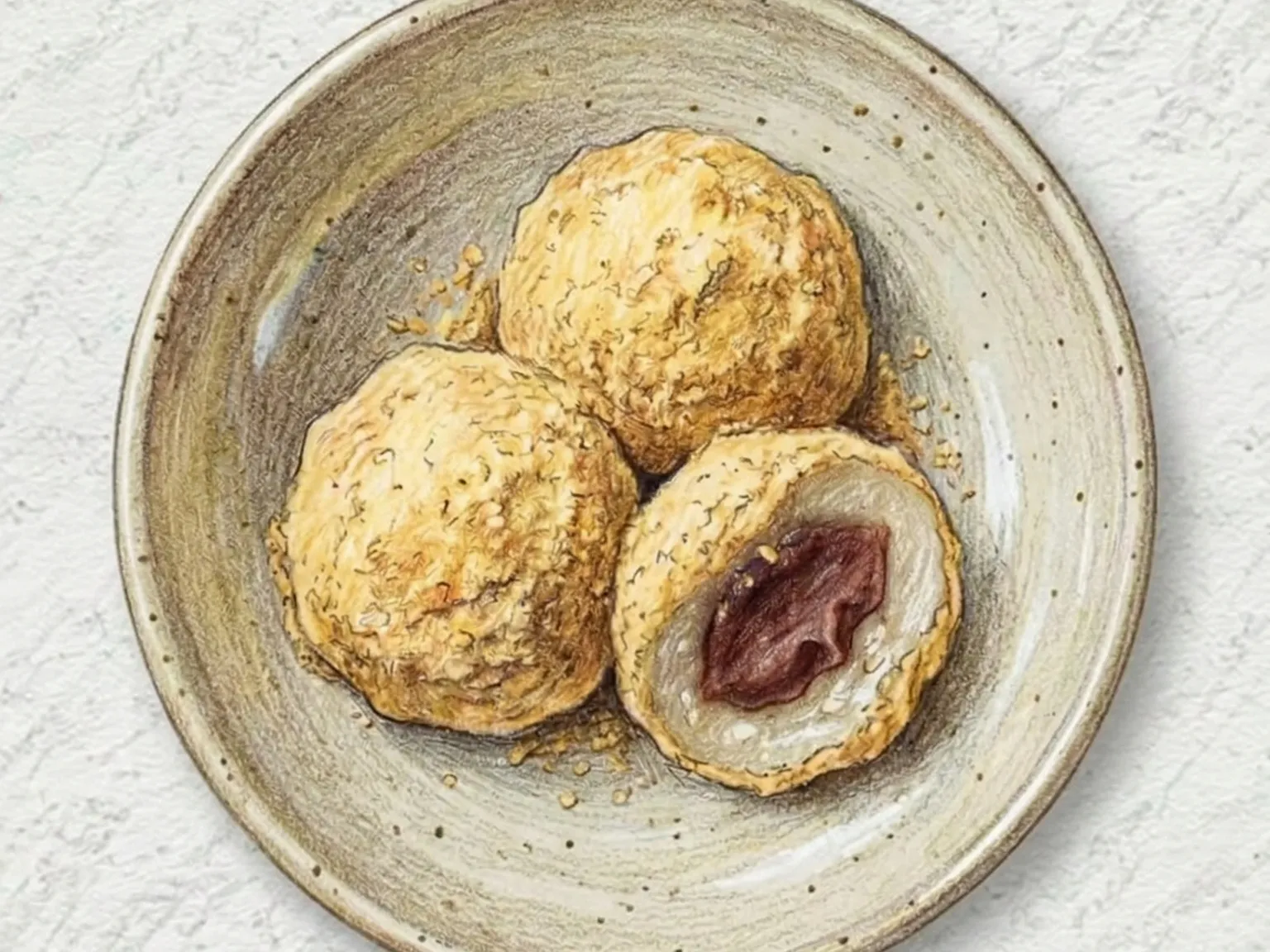
Chapssal-danja are Korean glutinous rice cake balls filled with sweet red bean paste, boiled until they float, and rolled in a mixture of roasted soybean powder and sugar.

What makes this special

  • Vigorous kneading creates the elastic, chewy texture essential for these Chapssal-danja rice cake balls.
  • Thorough kneading builds elasticity in the glutinous dough for a chewy bite
  • One extra minute after floating ensures the center is fully cooked through
Total time
35 min
Level
Easy
Servings
2 servings
Ingredients
7
Calories
320 kcal
Protein
8 g

Key ingredients

glutinous rice floursaltwatersweet red bean pasteroasted soybean powder

Core cooking flow

  1. 1 Combine 220g glutinous rice flour with 1g salt, gradually add 150ml hot wate...
  2. 2 Divide the dough into 10 equal portions and divide 140g red bean paste into...
  3. 3 Flatten one dough portion in the palm, place a bean paste ball in the center...

Chapssal-danja are Korean glutinous rice cake balls filled with sweet red bean paste, boiled until they float, and rolled in a mixture of roasted soybean powder and sugar. The dough is flattened, wrapped around the filling, and sealed tightly into a sphere so the paste stays contained during boiling, with an extra minute of cooking after the balls surface to ensure the center is fully cooked through. A very thin brush of honey applied immediately after draining acts as an adhesive for the soybean powder coating and adds a faint floral sweetness to the exterior. Sifting the soybean powder before rolling produces a fine, even layer that gives each ball a powdery, melt-on-the-tongue finish over the chewy rice cake underneath. Kneading the glutinous rice dough thoroughly before portioning builds elasticity, which translates directly into the characteristic chew once the balls are cooked.

Prep 25min Cook 10min 2 servings
Recipes by ingredient → honey

Instructions

Read the steps as a cooking flow: prep, heat, seasoning, doneness control, and finish.

6 steps
  1. 1
    Season

    Combine 220g glutinous rice flour with 1g salt, gradually add 150ml hot water above 80C and stir with a spatula until the dough is as soft and pliable as an earlobe.

  2. 2
    Step

    Divide the dough into 10 equal portions and divide 140g red bean paste into 10 equal portions as well, rolling each into a smooth ball.

  3. 3
    Step

    Flatten one dough portion in the palm, place a bean paste ball in the center, gather the edges all around and seal without gaps, then shape into a smooth sphere.

  4. 4
    Heat

    Drop the rice balls into a generous pot of boiling water and cook for 2 to 3 minutes until they float, then continue for 1 more minute to ensure the centers are fully cooked, then remove.

  5. 5
    Step

    Drain the rice balls briefly to remove surface water, then brush a very thin coat of 1 tablespoon honey over each so the coating powder adheres well.

  6. 6
    Season

    Roll each honey-coated ball in a mixture of 60g roasted soybean powder and 12g sugar until the entire surface is evenly coated in the golden soybean flour.

After the steps

Pick a recipe that fits this dish.

Continue with shared ingredients, meal pairings, or a similar method.

Recipes That Go Well With This

More Desserts →

Based on shared ingredients and meal pairing

Glutinous Rice Cake with Soybean Powder
Shared ingredient: glutinous rice flour Desserts

Glutinous Rice Cake with Soybean Powder

Injeolmi is a Korean glutinous rice cake made by kneading rice flour dough with hot water, steaming it for fifteen minutes, then pounding or beating it vigorously for at least five minutes to develop the characteristic elasticity. The pounding step determines the final texture: insufficient working produces a weak dough that cracks apart, while thorough pounding yields the signature stretchy, chewy pull that injeolmi is known for. The finished dough is stretched out, cut into bite-sized pieces, and rolled in a mixture of roasted soybean powder and sugar, which coats each piece in a fragrant, toasted-grain aroma. Applying a thin layer of sesame oil to both hands and knife before cutting prevents the dough from sticking, and the soybean powder coating is best applied immediately before serving to keep the surface dry and powdery rather than absorbing moisture. Injeolmi appears regularly at ancestral rites, first birthday celebrations, and traditional ceremonies across Korea.

Pan-Fried Sweet Rice Cake
Shared ingredient: glutinous rice flour Desserts

Pan-Fried Sweet Rice Cake

Bukkumi is a traditional Korean pan-fried rice cake made from glutinous rice flour dough filled with sweet red bean paste seasoned with cinnamon and sugar. Using hot water to form the dough partially gelatinizes the starch, creating a pliable skin that stretches without cracking - though the dough must stay covered with a damp cloth throughout assembly to prevent the surface from drying out. Folding the dough into half-moon shapes seals in a cinnamon-laced bean paste filling that lifts the dense sweetness of the red bean with a warm spice note. Pan-frying on low heat builds a golden crust on each side while keeping the filling warm and molten at the center. A light drizzle of honey or a pinch of sugar right after frying adds a final layer of sweetness.

Omija Berry Frangipane Tart
Serve together Baking

Omija Berry Frangipane Tart

A crisp, buttery tart shell cradles a filling of frangipane - the classic almond cream made from ground almonds, butter, eggs, and sugar - baked until the surface sets into a thin golden crust while the interior stays moist and dense. Omija berries and mixed berries are pressed into the frangipane before baking, and as they heat they release tart juices that seep into the almond cream, creating pockets of bright acidity that cut through the richness. Omija contributes a complex sourness with faintly astringent and floral undertones that distinguish this tart from standard berry versions. The almond flavor intensifies as the tart cools, and a light dusting of powdered sugar before serving adds a clean finishing touch. Sliced thin, each piece offers the full progression: crunchy pastry, dense nutty cream, and bursts of fruit.

Gyeongdan (Chewy Rice Balls with Sweet Coating)
Similar recipe Baking

Gyeongdan (Chewy Rice Balls with Sweet Coating)

Gyeongdan are Korean glutinous rice balls, each one shaped by hand into a small sphere, boiled until it floats, then rolled in a dry coating while still warm. The dough is made by kneading glutinous rice flour with hot water rather than cold, a technique that partially gelatinizes the starch and gives the finished rice ball its characteristic chewy spring. Rinsing the cooked balls immediately in cold water stops them from sticking together and firms the surface enough for the coating to cling evenly. Traditional coatings include roasted soybean powder, which is mild and nutty, ground black sesame, which adds deep toasted bitterness, and sweetened red bean crumbles. Some versions are filled with sweet red bean paste before shaping, so the filling bursts as you bite through. Gyeongdan appear on ceremonial tables at seasonal holidays and as everyday snacks, often presented as a trio of colors arranged side by side on a single plate.

Serve with this

Korean Deep-Fried Egg (Battered Boiled Egg with Crispy Golden Shell)
Street food Easy

Korean Deep-Fried Egg (Battered Boiled Egg with Crispy Golden Shell)

Gyeran-twigim is a Korean street snack of peeled boiled egg coated in a thin cold-water batter and fried at 170 degrees Celsius until the shell turns golden and crisp. The batter is mixed minimally, just enough to combine the frying powder and cold water without lumps, because a thinner coat lets the egg's own flavor carry through while a heavy coat buries it. When the egg is soft-boiled, the yolk stays semi-liquid inside the crunchy shell, creating a dramatic contrast the moment the outer crust breaks. Hard-boiling produces a crumbly, dry yolk with a dense, satisfying texture instead. A pinch of coarse salt is the only seasoning needed to bring out the egg's natural richness. Dipping the fried egg into the spicy-sweet broth from a bowl of tteokbokki transforms it entirely, as the porous batter absorbs the sauce and takes on the deep, savory-sweet heat of the stew.

🧒 Kid-Friendly 🌙 Late Night
Prep 10min Cook 8min 2 servings
Korean Dalgona Coffee (Whipped Instant Coffee Foam Milk)
Drinks Easy

Korean Dalgona Coffee (Whipped Instant Coffee Foam Milk)

Dalgona coffee is made by whipping equal parts instant coffee, sugar, and hot water with a hand mixer for three to five minutes until stiff, caramel-colored peaks form, then spooning the foam over iced milk. The whipped layer carries a concentrated, bittersweet coffee flavor that gradually blends into the cold, neutral milk below as you stir. A light dusting of cocoa powder on top introduces a faint chocolate note, and increasing the sugar slightly helps the whipped cream hold its stiff structure longer.

🍺 Bar Snacks 🧒 Kid-Friendly
Prep 8min 2 servings
Chicago Deep Dish Pizza
Western Medium

Chicago Deep Dish Pizza

Chicago deep dish pizza is a pie-style pizza where dough is pressed into a deep cast iron or dark metal pan to cover the bottom and climb the walls, then layered with mozzarella cheese and Italian sausage before crushed tomatoes and oregano are spread across the top. Positioning the sauce on the uppermost layer shields the cheese from direct oven heat, preventing it from scorching while the tomato reduces and concentrates over the long bake. The sausage must be pre-cooked with onion to drive off excess moisture, keeping the thick base from turning soggy under the weight of the filling. Stretching the dough wide enough to reach the rim keeps the molten contents contained during baking. After 30 to 35 minutes at 220 degrees Celsius, the pizza requires at least ten minutes of resting before slicing so the interior sets and the layers hold their shape when cut. The dish traces its origins to Pizzeria Uno in Chicago in 1943 and has since become one of the city's defining foods.

🎉 Special Occasion 🧒 Kid-Friendly
Prep 25min Cook 35min 4 servings

Similar recipes

Honey-Filled Rice Cakes (Steamed Glutinous Rice with Brown Sugar Syrup)
Desserts Easy

Honey-Filled Rice Cakes (Steamed Glutinous Rice with Brown Sugar Syrup)

Kkultteok are bite-sized Korean rice cakes made by kneading glutinous rice flour with hot water, wrapping each 20-gram round of dough around a filling of dark brown sugar, ground cinnamon, and chopped walnuts, then steaming for eight to ten minutes. After steaming, a light brush of sesame oil gives the surface a sheen and keeps the pieces from sticking together, and a final roll in roasted soybean powder adds a dry, nutty outer coating. Biting through the soft, chewy shell releases a pool of melted brown sugar syrup with cinnamon warmth, while the walnut fragments provide crunch against the sticky interior. The most critical step is pinching the dough seam shut as tightly as possible: if the seal fails during steaming, the molten brown sugar syrup leaks out and the rice cake ends up hollow and dry.

🎉 Special Occasion 🧒 Kid-Friendly
Prep 25min Cook 10min 4 servings
Gaeseong Juak (Honey Fried Rice Cake)
Desserts Medium

Gaeseong Juak (Honey Fried Rice Cake)

Gaeseong juak is a traditional Korean confection made from a dough of glutinous rice flour and wheat flour, fried slowly in oil at a deliberately controlled temperature to cook the interior evenly before the exterior develops color. The two-stage frying process begins at 150 degrees Celsius to set the inside through without burning the outside, then the temperature rises to 170 degrees to develop a light golden crust on the surface. Separating the temperature stages solves a specific frying problem: high heat from the start produces a darkened exterior while the chewy glutinous core remains underdone, while insufficient heat makes the exterior soft and oily. The result is a thin crisp shell surrounding a genuinely chewy, sticky interior. After frying, each piece is rolled through a warm syrup made from honey and rice syrup heated together over low heat, which leaves a glossy, fragrant sweetness coating the surface. A finishing dusting of ground cinnamon and chopped pine nuts adds aromatic spice and contrasting crunch. Historical records trace the confection to the Gaeseong region of the Goryeo dynasty, and it remains a standard presence on Korean ceremonial and holiday tables to this day.

🎉 Special Occasion 🧒 Kid-Friendly
Prep 25min Cook 20min 4 servings
Korean Red Bean Rice (Steamed Rice with Adzuki Beans)
Rice Easy

Korean Red Bean Rice (Steamed Rice with Adzuki Beans)

Pat-bap is Korean red bean rice, a traditional dish that has been tied to the winter solstice for centuries as a food believed to ward off misfortune and bad spirits for the coming year. Dried red beans are boiled until they are nearly at the point of splitting, then removed from the liquid so the deep-tinted cooking water can be used to soak and cook the rice, staining every grain with a soft reddish hue that sets the dish apart visually from plain white rice. The beans are folded back into the pot during cooking, and their starchy, earthy sweetness blends with the sticky bite of the short-grain rice, deepening with each chew in a way that plain rice does not. A light dusting of salt draws out the beans' natural, understated sweetness and sharpens the overall flavor without overpowering the grain's own character. The dish is deliberately plain in approach, and that simplicity is the point: a bowl of pat-bap alongside kimchi forms a complete, filling meal grounded in centuries of Korean seasonal food culture. Though historically associated with ritual occasions and seasonal festivals, pat-bap is equally suited to everyday meals.

🏠 Everyday
Prep 4min Cook 40min 4 servings

Tips

Coat immediately after boiling to keep the texture chewy.
Sift the coating once for a finer texture and better adhesion.

Nutrition (per serving)

Calories
320
kcal
Protein
8
g
Carbs
62
g
Fat
4
g