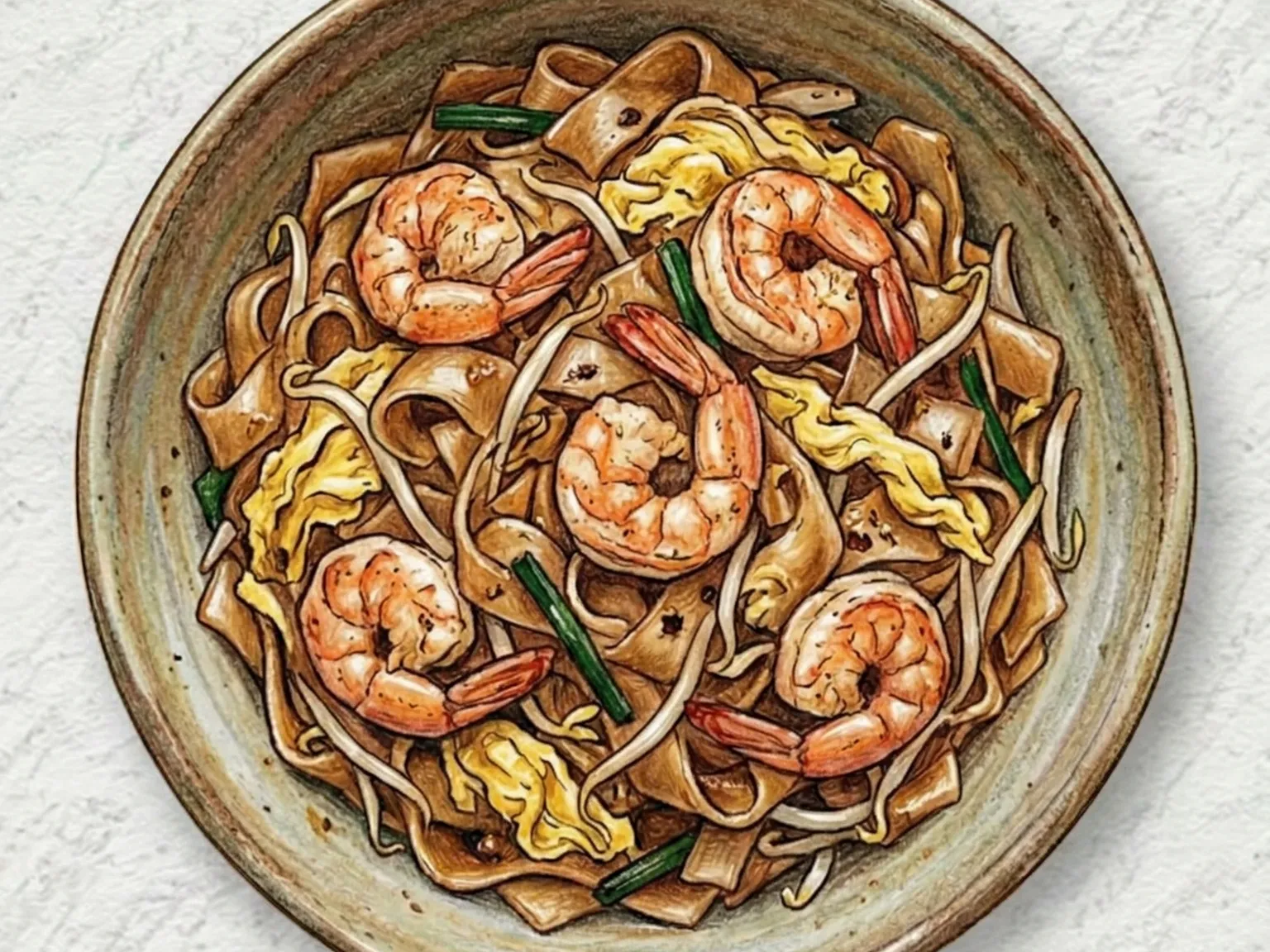
Char Kway Teow (Penang Wok-Fried Flat Rice Noodles with Prawns)
Char kway teow originated in Penang as a cheap, filling meal for Chinese laborers - flat rice noodles fried fast over high heat with whatever protein was affordable that day. Wide rice noodles hit a scorching wok with prawns, cockles, egg, bean sprouts, Chinese chives, and slices of lap cheong sausage, while dark soy sauce and oyster sauce stain the noodles a deep caramel brown. The dish lives or dies by wok hei - the elusive smoky breath of the wok that only comes from cooking at extreme temperatures, tossing the noodles through open flame. Traditionally fried in pork lard rather than vegetable oil, the rendered fat coats every strand with a richness that lighter oils cannot replicate. Penang's hawker stalls cook one plate at a time, refusing to batch, because cramming the wok would steam the noodles instead of searing them. The result, when done right, carries a charred, slightly bitter edge beneath the salty-sweet sauce that makes it one of Southeast Asia's most celebrated street dishes.
Adjust Servings
Instructions
- 1
Loosen the noodles in lukewarm water and separate clumps.
- 2
Heat a wok until very hot, add oil, and quickly sear shrimp.
- 3
Add eggs, scramble, then toss in noodles over high heat.
- 4
Add dark soy and oyster sauce, tossing until evenly coated.
- 5
Add bean sprouts and chives at the end, stir-fry 30 seconds, and serve.
As an Amazon Associate, we may earn from qualifying purchases.
Tips
Nutrition (per serving)
More Recipes

Mee Bandung (Malaysian Johor Shrimp Tomato Gravy Noodles)
Mee bandung is a noodle dish from Johor in southern Malaysia, built around a thick, rust-colored gravy made from shrimp, tomato paste, and chili paste. The sauce has a distinctive character - simultaneously sweet, spicy, and briny - that sets it apart from the brothier noodle soups common elsewhere in the country. Yellow wheat noodles sit in the gravy rather than float in it, and the topping of whole shrimp, hard-boiled egg, and sliced scallions rounds out the bowl. The gravy clings to each strand of noodle, landing somewhere between a soup and a stir-fry in consistency. It is a night market staple in Johor Bahru and across southern Malaysia, rarely found outside that region.

Tamarind Fish Noodle Soup
Asam laksa is Penang's signature noodle soup, recognized by UNESCO as one of Malaysia's cultural treasures. Unlike the coconut-rich curry laksa of Singapore, this version is built on a tamarind-soured fish broth - tart, briny, and intensely aromatic. Mackerel is poached whole, flaked, and returned to a broth infused with torch ginger flower, lemongrass, and galangal ground into a paste. The sourness from tamarind hits first, followed by a slow wave of chili heat and the ocean depth of fish sauce. Thick rice noodles sit in the bowl, their chewy resistance contrasting the thin, punchy broth. Shredded cucumber, mint, and a spoonful of sweet prawn paste stirred in at the table complete the balance.

Nasi Kerabu (Malaysian Blue Herb Rice with Coconut and Vegetables)
Nasi kerabu is a traditional rice dish from Malaysia's east coast that commands attention with its striking blue-tinted rice. The color comes from butterfly pea flowers, which stain the grains a vivid indigo without altering the taste. Rice is cooked with coconut milk and lemongrass, then served alongside grilled fish, julienned cucumber, blanched bean sprouts, and finely chopped fresh herbs. Sambal provides a spicy counterpoint that ties the plate together. The proper way to eat it is to mix everything by hand, combining herbs, rice, protein, and chili paste in each bite so no two mouthfuls taste the same. Fresh mint and cilantro give the dish a bright, herbaceous character.

Singapore Rice Noodles (Curry-Spiced Stir-Fried Vermicelli with Shrimp)
Singapore rice noodles are a Cantonese-style stir-fry of thin rice vermicelli tossed with curry powder, shrimp, and mixed vegetables over high heat. The curry powder is bloomed in hot oil at the edge of the wok to unlock its full aroma before being mixed into the noodles. Soy sauce adds seasoning depth, and bean sprouts go in during the last thirty seconds to keep their crunch. Soaking the vermicelli for only eight minutes prevents the noodles from breaking apart during stir-frying.

Nasi Lemak (Malaysian Coconut Pandan Rice with Anchovy Sambal)
Nasi lemak is Malaysia's definitive national dish, built on a foundation of rice cooked in coconut milk with pandan leaves. The rice alone carries a subtle richness and a faint vanilla-like fragrance from the pandan, making it flavorful even before any accompaniment. The essential sambal is a cooked chili paste built on shrimp paste and tamarind, delivering sweetness and slow-building heat in equal measure. Crispy fried anchovies and roasted peanuts contribute crunch, while a halved boiled egg and fresh cucumber slices balance the richness. In its simplest form, nasi lemak is wrapped in a banana leaf for a quick breakfast.

Pancit Canton (Filipino Stir-Fried Egg Noodles with Chicken and Vegetables)
Pancit canton is a Filipino stir-fried egg noodle dish cooked with chicken, carrot, and cabbage in a soy sauce and oyster sauce seasoning. The noodles are parboiled to about seventy percent doneness so they finish cooking in the wok while absorbing the sauce, staying springy rather than soft. Chicken thigh is stir-fried first to render its fat and juices, then carrot and cabbage go in over high heat to keep their crunch. Soy sauce and oyster sauce combine into a salty, umami-rich glaze that coats the noodles evenly. A squeeze of fresh lemon after the heat is turned off lifts the dish with citrus brightness, cutting through the oily richness. The lemon must be added at the very end to preserve its volatile aroma.