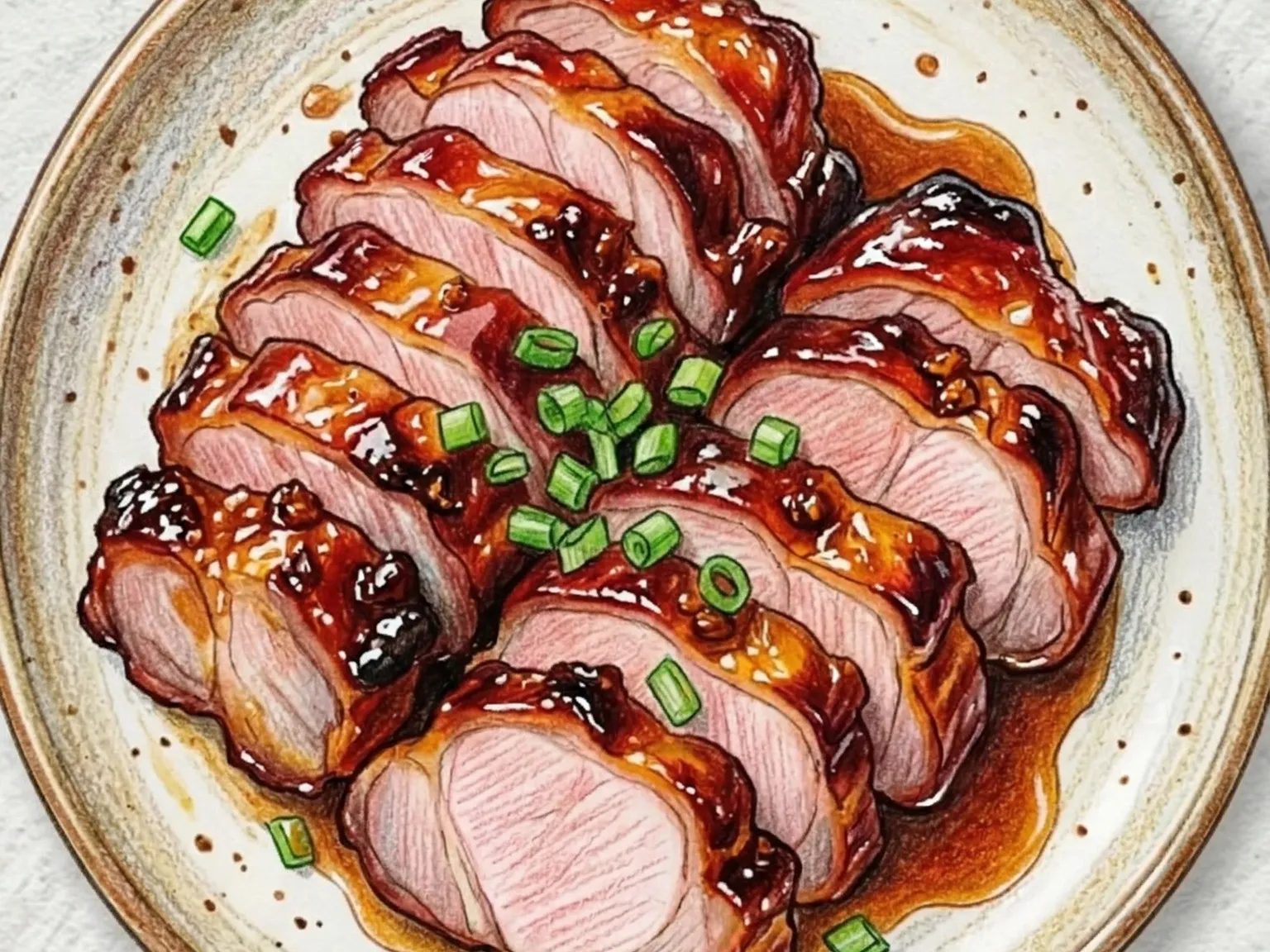
Cantonese Honey Char Siu (Glazed BBQ Pork with Five-Spice Honey)
Char siu is the quintessential Cantonese roast meat, recognizable by its glossy, lacquered appearance hanging in the windows of siu laap shops across Hong Kong and Guangzhou. Pork neck or shoulder marinates overnight in soy sauce, hoisin, five-spice powder, Shaoxing wine, and honey, then roasts at high heat while being basted repeatedly with a honey glaze that builds into a caramelized, slightly charred crust. The traditional method suspends the meat on hooks inside a charcoal oven, allowing even heat distribution and natural fat drainage. The edges, where honey carbonizes against the direct flame, develop a faintly bitter char that counterpoints the sweetness - this blackened fringe is the most prized part. Char siu is eaten sliced over rice as a one-plate meal, draped over wonton noodles, or served cold with hot mustard as an appetizer. The balance between sweet glaze, smoky exterior, and the naturally fatty pork interior defines great char siu.
Adjust Servings
Instructions
- 1
Cut pork into long strips and pierce with a fork for better marinade absorption.
- 2
Mix soy sauce, oyster sauce, 2 tbsp honey, sugar, garlic, five-spice, and sesame oil.
- 3
Marinate pork for at least 2 hours, ideally overnight.
- 4
Preheat oven to 200°C; roast pork 20 minutes, then flip.
- 5
Brush with remaining honey and roast 15-20 more minutes until caramelized.
- 6
Rest for 10 minutes, slice thin, and serve with rice or noodles.
As an Amazon Associate, we may earn from qualifying purchases.
Tips
Nutrition (per serving)
More Recipes

Cantonese Steamed Fish
Cantonese steamed fish - ching jing yu - embodies the Cantonese culinary philosophy of letting premium ingredients speak for themselves with minimal intervention. The technique demands the freshest possible whole fish - sea bass, grouper, or pomfret - because steaming hides nothing; any hint of staleness is immediately exposed. The fish is scored, placed on a plate with ginger slices tucked underneath and inside the cavity, then steamed over roiling water for exactly eight to ten minutes depending on thickness. Overcooking by even a minute turns the flesh from silky and translucent to dry and chalky. The moment the fish leaves the steamer, any accumulated liquid is drained - it carries a fishy taste that would spoil the dish. Julienned scallion and ginger are piled on top, then a ladle of smoking-hot oil is poured directly over them, sizzling the aromatics and releasing their fragrance into the fish. A final drizzle of seasoned soy sauce and a few drops of sesame oil complete the dish. In Cantonese banquet culture, the steamed fish course is often the most expensive item on the table, chosen live from a restaurant tank.

Century Egg and Pork Congee
Century egg and pork congee - pi dan shou rou zhou - is the quintessential Cantonese breakfast, served from dawn at congee shops across Hong Kong, Guangzhou, and the broader Pearl River Delta. The congee base requires a full hour of slow simmering, during which rice grains disintegrate entirely into a silky, porridge-like suspension - the Cantonese call this texture 'sang shui,' meaning the rice and water have become indistinguishable. Lean pork is sliced thin and dropped into the pot during the final minutes, cooking instantly in the hot porridge. Century egg - duck egg preserved in clay, ash, and salt for weeks until the white turns translucent amber and the yolk becomes a creamy dark-green gel - is cubed and stirred through. The egg's alkaline, sulfurous depth meets the clean blandness of the rice porridge, while the pork provides a savory anchor. White pepper, sesame oil, and sliced scallion finish the bowl. The congee must be eaten immediately - it thickens rapidly as it cools, and the textural window between perfectly flowing and pasty is narrow.

Siu Mai (Cantonese Open-Top Steamed Pork and Shrimp Dumpling)
Siu mai is a Cantonese dim sum dumpling that wraps a seasoned filling of ground pork and chopped shrimp inside a thin wheat wrapper left open at the top. The filling is mixed vigorously with soy sauce, sesame oil, minced ginger, and cornstarch until it develops a sticky, springy texture that holds together when steamed. Shaped into small cylinders with the tops exposed, each dumpling reveals its filling like a tiny cup. A ten-to-twelve-minute stint in a bamboo steamer turns the wrappers translucent and lets the pork and shrimp meld their flavors-earthy pork fat meeting clean, briny sweetness. The cornstarch traps the juices inside so each bite releases a burst of savory liquid. Siu mai is a cornerstone of the yum cha table, eaten alongside tea and other small plates in an unhurried, communal style of dining.

Douhua (Silky Tofu Pudding Dessert)
Douhua - tofu pudding - has been a beloved street dessert across China, Taiwan, and Southeast Asian Chinese communities for centuries, occupying the same foundational role in Asian sweets that custard holds in European traditions. Freshly pressed soy milk is set with a coagulant such as gypsum or glucono delta-lactone, then left undisturbed until it solidifies into a texture softer than pudding yet more substantial than liquid - a trembling, barely-set curd that quivers on the spoon. In Taiwan, it is served cold with brown sugar syrup, tapioca pearls, red beans, or peanuts; in Hong Kong, a hot ginger sugar syrup is ladled over the warm curd. The tofu itself carries only the faintest nuttiness of soybean, letting the toppings define each bowl's character. Sold at Taiwanese night markets for pocket change, douhua appears simple but demands precise temperature control during coagulation - too fast and the curd turns grainy, too slow and it never sets.

Cantonese Steamed Seabass
Qingzheng seabass is a Cantonese steamed fish dish where a scored seabass is rubbed with julienned ginger and rice wine, then steamed on high heat for ten to twelve minutes. A light sauce of soy and sugar is poured over the cooked fish, shredded scallions are piled on top, and sizzling hot oil is drizzled over everything to release an intense burst of allium fragrance. The fish flesh stays moist with its flaky grain intact, and the soy dressing is deliberately restrained so the seabass's own mild, clean taste remains the focus. The simplicity of the preparation and the dramatic finish of hot oil over scallions represent the Cantonese philosophy of letting quality ingredients speak for themselves.

Chinese Red-braised Pork Belly
Hongshao rou is a traditional Chinese red-braised pork belly dish where thick-cut pork is slowly simmered in soy sauce, sugar, cooking wine, ginger, and scallion. The meat is first seared to render excess fat, then braised on low heat until the seasoning penetrates deeply. As it cooks, the pork becomes fork-tender and the sauce reduces into a thick, glossy glaze with a deep reddish hue. It is one of the most beloved home-cooked dishes across China, served simply over steamed rice.