Cheese Fondue
Quick answer
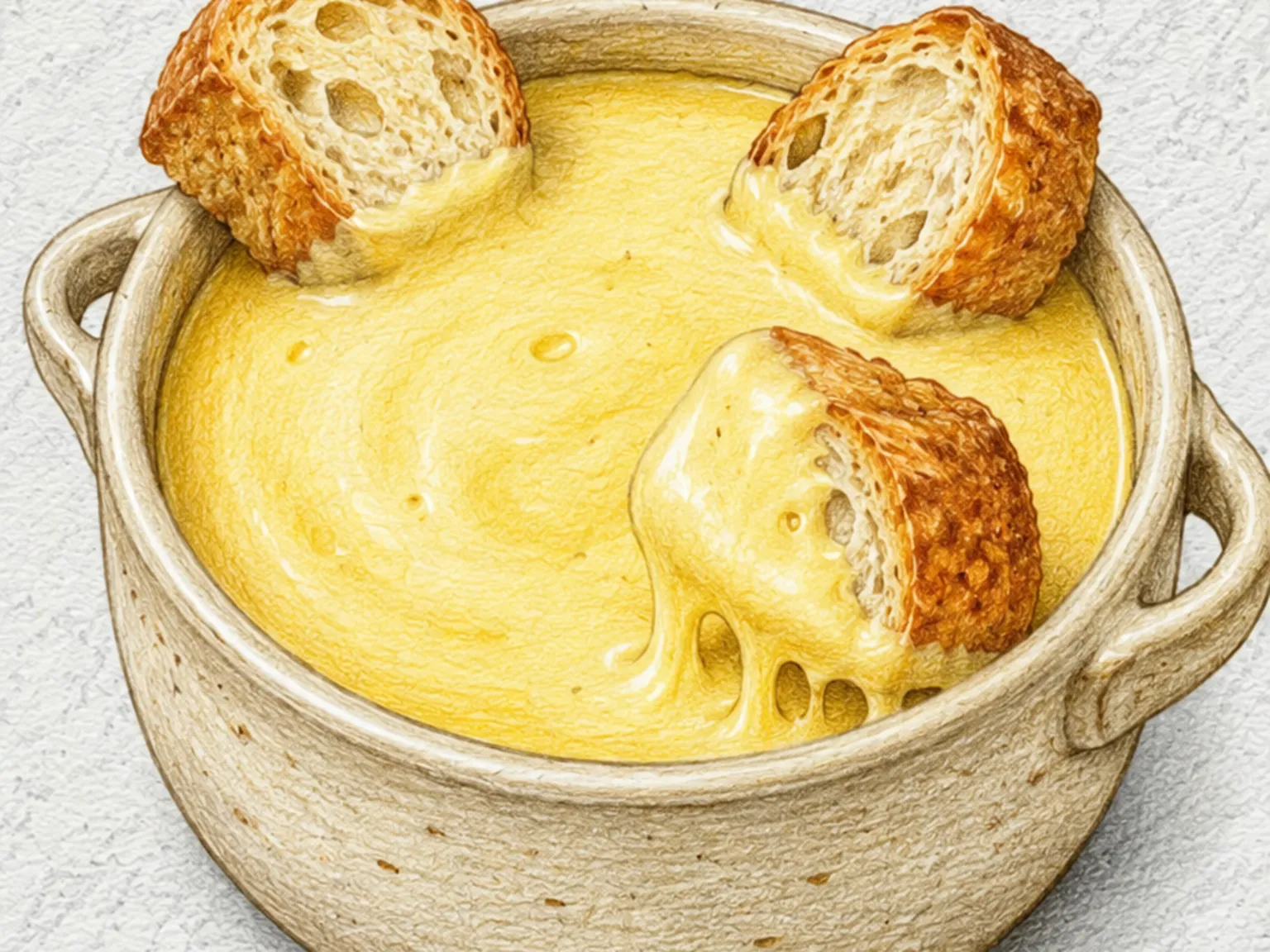
Cheese fondue melts grated Gruyere and Emmental into warmed white wine to create a thick, glossy cheese dip served with cubed baguette.
What makes this special
- Cheese Fondue melts Gruyere and Emmental into white wine for a smooth, communal dipping sauce.
- Gruyere and Emmental tossed with cornstarch then melted slowly prevents any separation
- Rubbing a cut garlic clove on the pot wall layers a subtle garlic base before anything else
Key ingredients
Core cooking flow
- 1 Finely grate 200 g Gruyere and 200 g Emmental, then toss them evenly with 1...
- 2 Rub the inside of the fondue pot thoroughly with the cut side of the halved...
- 3 Add 250 ml dry white wine and 1 teaspoon lemon juice, then warm over low heat for 3-4 minutes.
Cheese fondue melts grated Gruyere and Emmental into warmed white wine to create a thick, glossy cheese dip served with cubed baguette. Rubbing the inside of the pot with a halved garlic clove lays down a gentle garlic base before the wine goes in. Tossing the grated cheese with cornstarch before adding it gradually to the warm wine is what prevents the proteins from clumping and keeps the texture smooth and flowing. A small amount of lemon juice cuts through the richness of the cheese, and the wine's acidity balances the salt from the aged cheeses. The heat must stay low throughout - high flame causes the fat to separate from the protein almost immediately, turning the fondue grainy and unappetizing. If the sauce thickens too much, a small addition of warm wine brings it back. Originating in the Alpine regions of Switzerland and France as a winter method for using hardened cheese, fondue has become a communal dish shared around the table and is now enjoyed worldwide.
Instructions
Read the steps as a cooking flow: prep, heat, seasoning, doneness control, and finish.
- 1Prep
Finely grate 200 g Gruyere and 200 g Emmental, then toss them evenly with 1 tablespoon cornstarch so every strand is lightly coated. Cut the baguette into bite-size cubes before heating the fondue, so serving is ready when the cheese is smooth.
- 2Season
Rub the inside of the fondue pot thoroughly with the cut side of the halved garlic clove to season the surface lightly.
Discard the garlic afterward, because leaving it in the pot can make the flavor too sharp.
- 3Control
Add 250 ml dry white wine and 1 teaspoon lemon juice, then warm over low heat for 3-4 minutes.
Keep it below a boil; the wine should steam gently, which helps the cheese melt without separating.
- 4Step
Add the coated cheese one handful at a time, stirring constantly in a figure-eight motion with a wooden spoon or heatproof spatula.
Wait until each handful is almost fully melted before adding more, which prevents heavy clumps.
- 5Control
When the sauce looks glossy and flows in a continuous ribbon, reduce the heat to the lowest setting.
If it tightens or turns too thick, stir in small splashes of warm wine until it loosens again.
- 6Finish
Spear the baguette cubes, dip them into the cheese, and serve immediately while the fondue is hot and fluid.
Stir the pot occasionally during serving to keep the bottom from scorching and the cheese from separating.
After the steps
Pick a recipe that fits this dish.
Continue with shared ingredients, meal pairings, or a similar method.
Recipes That Go Well With This
More Western →Based on shared ingredients and meal pairing
Moules Marinières (French White Wine Steamed Mussels)
Moules marinieres is a French seafood dish that steams scrubbed mussels over a base of shallots and garlic softened in butter, with white wine added and the pot covered for four to five minutes on high heat. Boiling the wine for a minute before adding the mussels burns off the alcohol and leaves behind only the bright acidity that pairs naturally with the briny shellfish. Once the shells open, a splash of heavy cream, chopped parsley, and black pepper turn the cooking liquid into a light, aromatic broth. The short cooking time keeps the mussel meat firm and springy rather than rubbery. Any mussels that stay closed after steaming should be discarded. Crusty bread served alongside is essential for soaking up the butter-wine broth to the last drop.
Garlic Butter Mussels
Garlic butter mussels are steamed in a fragrant broth of sauteed garlic, melted butter, and white wine. Onion and garlic are cooked in butter and olive oil until softened, then white wine is added and boiled briefly to drive off the alcohol while keeping the acidity and fruit notes intact. Once the mussels go in and the lid is sealed, the shells open within four to five minutes, releasing briny juices that meld with the butter-wine base into a rich, savory broth. Mussels that remain closed after cooking must be discarded. Finishing with chopped parsley and black pepper adds color and a mild sharpness, and tearing crusty baguette into the bowl to soak up the broth is the traditional way to enjoy every drop.
Apple Fennel Walnut Salad
This salad pairs three ingredients whose textures and flavors run in different directions - crisp apple, anise-scented fennel, and bitter walnuts - and unifies them with a honey-lemon dressing. Thinly sliced fennel bulb contributes a licorice-like fragrance that is more aromatic than sweet, while its celery-crisp texture holds a firm contrast against the apple's softer flesh. Toasted walnuts add a crunchy, tannic bitterness that anchors the lighter elements and keeps the salad from reading as merely sweet. The dressing is deliberately minimal - fresh lemon juice, honey, a small amount of olive oil, and a pinch of salt - so the ingredients carry the flavor rather than the sauce. Assembling just before serving prevents the apple from browning. Salads of this type appear on autumn and winter tables in France and Italy when local apples and fennel come into season together, and can be served as a standalone starter or alongside roasted poultry, where the anise note in the fennel cuts through the meat's richness. Fennel has a long association with digestive support in Mediterranean cooking, which is partly why it has traditionally been served alongside fatty meats, and this salad draws on the same pairing logic.
Raclette (Alpine Melted Cheese over Potatoes and Charcuterie)
Raclette is an alpine winter dish in which thick slices of raclette cheese are melted under a broiler or in a dedicated raclette machine and poured generously over boiled potatoes, cured ham, cornichons, and pickled onions. The potatoes should be cooked until fork-tender but not mushy, so they hold their shape under the weight of the melted cheese. The raclette cheese delivers a salty, rich coating of milkfat, and tangy cornichons and pickled onions cut through the heaviness with their acidity, resetting the palate between bites. The communal format - each person melting their own portion of cheese and pouring it over arranged ingredients - makes it especially well suited for dinner parties and gatherings.
Serve with this
Korean Crispy Potato Pancake
Gamja-jeon is a Korean potato pancake made by finely grating raw potatoes, letting the starch settle out of the liquid for at least ten minutes, discarding the water, and folding the settled starch back into the pulp to improve binding. Waiting long enough for full starch separation is what gives the batter enough cohesion to hold together when the pancake hits the hot pan. Spreading the batter as thinly as possible produces glass-crisp edges while the center retains a chewy, starchy bite characteristic of potato starch. The first side must cook all the way through and the underside must firm up completely before any attempt to flip, and using two spatulas simultaneously makes the turn fast enough to keep the pancake intact. Frying both sides over medium heat until evenly golden delivers a crust that is crisp on the outside while the center stays moist. A dipping sauce of soy sauce, vinegar, and minced cheongyang green chili cuts through the oily richness with sharpness and heat.
Gotgam Cream Cheese Roll (Dried Persimmon Rolls)
Gotgam cream cheese roll is a no-cook Korean dessert that requires nothing more than a knife, a bowl, and a refrigerator. Dried persimmons are slit open and flattened into thin sheets, each one acting as the outer wrapper. The filling is cream cheese mixed with honey and fresh lemon juice to balance its natural richness with acidity, and finely chopped walnuts are folded in throughout to add a crunchy, nutty element to every bite. The filling is spread across the opened persimmon, which is then rolled tightly and wrapped in plastic wrap. Twenty minutes in the refrigerator firms the roll enough to slice cleanly. Dipping the knife in warm water and wiping it dry before each cut produces the smoothest cross-sections. The finished slices reveal clearly defined layers: the chewy, caramel-sweet dried persimmon on the outside, the tangy cream cheese in the middle, and flecks of walnut distributed throughout. The combination makes it a natural pairing with wine or a polished addition to a traditional holiday table.
Soy Butter Steak Garlic Spaghetti
Thick-cut sirloin seared at high heat, then glazed in soy sauce and butter, forms the base of this steak pasta. The fond left in the pan gets deglazed with soy sauce and butter, then emulsified with pasta water into a thin, shiny coating that clings to each strand without turning greasy. Generous garlic browned in olive oil beforehand builds a deep, roasted-garlic base that runs through the entire sauce, and tsuyu -- a Japanese seasoning concentrate made from kombu and bonito -- adds the round umami depth of dashi without any extra steps. The steak is best cooked to medium-rare and sliced against the grain before laying over the pasta; resting the meat first keeps the juices from running out when cut. Black pepper and sliced scallions cut through the richness at the end. The full cook time is about 20 minutes, and pasta water volume controls the final sauce consistency.
Similar recipes
Gougeres (Gruyère Cheese Choux Puffs)
Gougeres are savory cheese puffs from Burgundy, France, made by folding grated Gruyere cheese into choux pastry and baking until golden and hollow inside. Water, butter, and salt are brought to a boil, then flour is added all at once and stirred over low heat until the starches gelatinize and the dough pulls away from the pan in a smooth ball. Eggs are beaten in one at a time - the dough breaks apart and re-forms with each addition, building the elastic structure that allows the puffs to rise. Folding in the cheese and pepper, then piping rounds onto a tray and baking at 200 degrees Celsius turns the moisture in the dough to steam, which inflates each puff into a crisp shell with a hollow, airy center. Opening the oven door during baking releases the steam prematurely, which can cause the puffs to collapse.
Beet and Goat Cheese Salad
Beet and goat cheese salad begins with whole beets wrapped in foil and roasted at 200°C for forty-five to sixty minutes, long enough for their raw, earthy undertone to convert almost entirely into a concentrated, caramel-adjacent sweetness. Peeling the skins while the beets are still warm requires only the pressure of a paper towel - they slip off cleanly - and slicing them before they cool preserves the vivid crimson-purple cross-section that makes the dish visually striking. Crumbled goat cheese placed on the warm slices softens slightly, and its tangy acidity cuts through the dense sweetness of the roasted root rather than competing with it. Walnuts toasted briefly in a dry pan lose much of their raw bitterness, developing a nuttiness that bridges the mineral quality of the beet and the dairy sharpness of the cheese. Balsamic reduction does more than dress the plate: its concentrated sweet-tart intensity ties the separate components into a coherent whole. Arugula underneath the beet slices provides a peppery bitterness that sharpens the contrast against the sweetness, giving the salad a complexity well beyond what its short ingredient list suggests. A simple dressing of extra-virgin olive oil and lemon juice over the greens keeps the balance light and clear.
Steamed Mussels Mariniere
Moules mariniere is a classic dish from northern France in which mussels are steamed open in a base of white wine, butter, garlic, and shallot over high heat. As the mussels open, they release their briny cooking liquid into the wine-butter base, and within roughly five minutes that mixture becomes a deeply aromatic broth that is far more complex than the sum of its parts. The brevity of the cooking time is not incidental but essential. Mussels cooked just until they open remain plump and firm, while those left on the heat any longer shrink and turn chewy. The moment the last mussel opens, the heat comes off. Fresh flat-leaf parsley is scattered over the top before serving, adding a clean green note against the richness of the broth. A dry white wine is preferable to one with residual sweetness, because its acidity balances the butter and amplifies the oceanic flavor of the mussels. Finishing with a small knob of cold butter stirred in at the end gives the sauce a glossy sheen and a rounded, velvety finish. The broth that collects at the bottom of the pot is often considered the best part of the dish, traditionally mopped up with torn pieces of crusty baguette.