Korean Cheese Ramen (Cheesy Spicy Noodles)
Quick answer
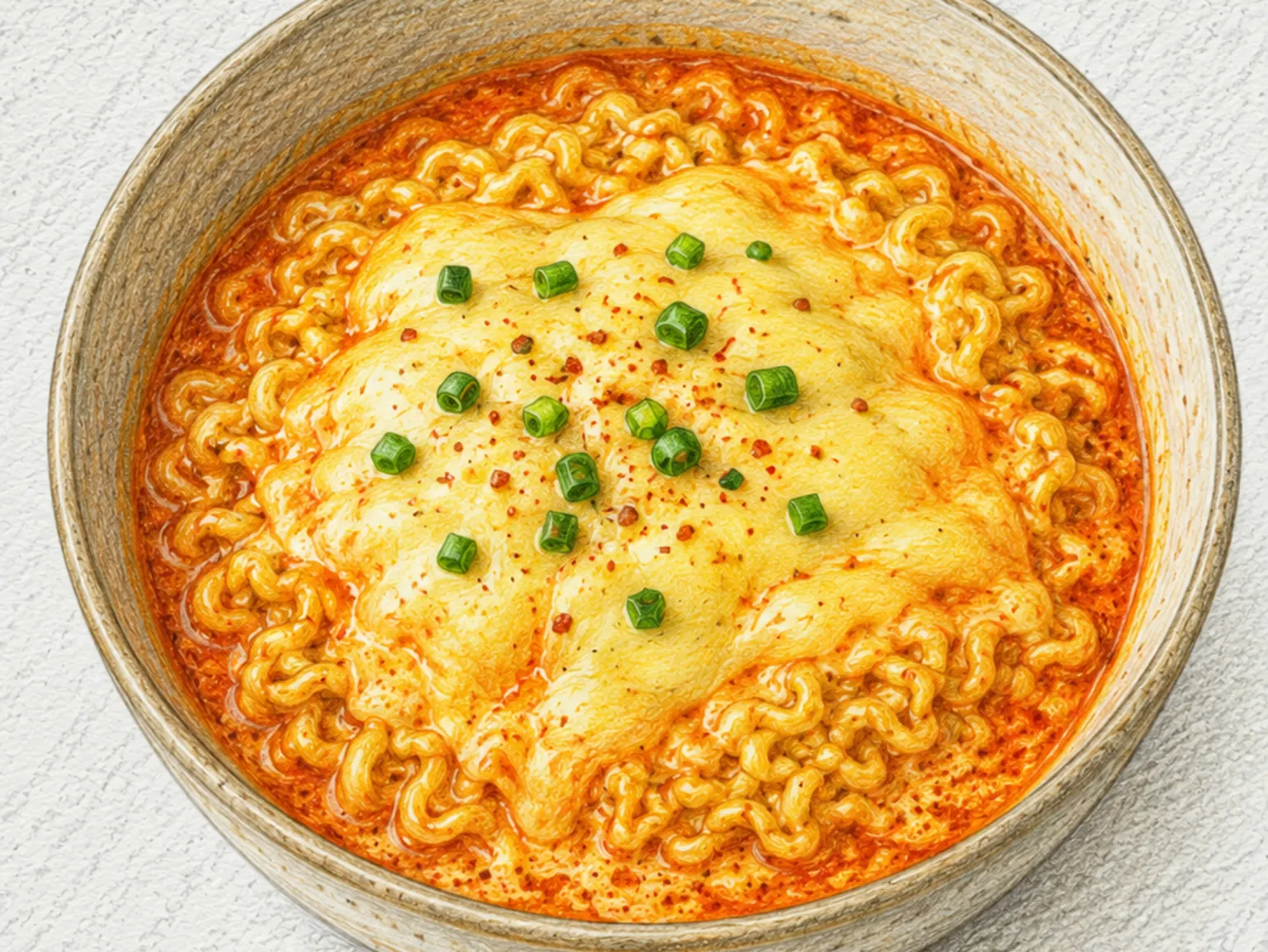
Sliced cheese melted into spicy Korean ramen produces a creamy, stretchy result in under ten minutes.
What makes this special
- A single slice of cheese melts into spicy ramen broth to form a creamy, savory cheese ramyeon film.
- Cheese placed off heat melts evenly without burning, forming a creamy film
- Milk fat wraps the chili heat, softening spice while deepening umami
Key ingredients
Core cooking flow
- 1 Slice 10g of green onion into 0.5cm rounds and keep it nearby.
- 2 Pour 480ml of water into a small pot and heat over high heat.
- 3 Add the noodle block and the full seasoning packet, then cook over medium-high heat for about 2 minutes.
Sliced cheese melted into spicy Korean ramen produces a creamy, stretchy result in under ten minutes. Added at the final simmer, the cheese melts slowly across the boiling broth and forms a pale, savory film. The dairy fat wraps around the gochugaru heat, softening the spice without eliminating it, while the salt in the cheese draws out more depth from the seasoning packet. Lifting noodles through the molten layer coats each strand in a sticky, rich film. Drinking the broth straight reveals alternating waves of chili heat and mild creaminess. A raw egg cracked into the pot or a handful of sliced rice cakes makes the bowl more substantial and filling. Among home-style ramen variations in Korea, this is one of the most consistently popular.
Instructions
Read the steps as a cooking flow: prep, heat, seasoning, doneness control, and finish.
- 1Prep
Slice 10g of green onion into 0.5cm rounds and keep it nearby.
Set the egg and 2 processed cheese slices beside the stove so they can be added quickly while the noodles are still hot.
- 2Control
Pour 480ml of water into a small pot and heat over high heat.
Wait until large bubbles rise continuously, since adding the noodles too early can make the broth taste flat and the texture uneven.
- 3Control
Add the noodle block and the full seasoning packet, then cook over medium-high heat for about 2 minutes.
Loosen the strands with chopsticks so the center softens evenly without breaking the noodles into pieces.
- 4Control
Lower the heat to low and crack 1 egg near the edge of the broth.
Simmer for about 1 minute, spooning a little hot broth over the white until it turns opaque while the yolk stays protected.
- 5Heat
When the noodles are about 80 percent cooked and the broth returns to a gentle boil, turn off the heat.
Place the 2 cheese slices over the center of the noodles so they melt from residual heat.
- 6Finish
Wait about 30 seconds, until the cheese softens into a glossy layer instead of sinking completely.
Scatter the green onion on top, lift a few noodles through the cheese, and serve immediately while the broth is hot.
After the steps
Pick a recipe that fits this dish.
Continue with shared ingredients, meal pairings, or a similar method.
Recipes That Go Well With This
More Noodles →Based on shared ingredients and meal pairing
Korean Tteok and Ramyeon (Instant Ramen with Chewy Rice Cakes)
Tteok-ramyeon is a Korean shortcut dish that adds chewy rice cakes to a pot of instant ramen. The rice cakes absorb the spicy broth as they cook, intensifying the seasoning while providing a bouncy texture that instant noodles alone lack. An egg or a slice of cheese is often cracked in near the end for added richness. The entire dish is ready in about 13 minutes with no knife skills required - just boiling water and timing. It is one of the most common late-night snacks in Korea. Adding seasoning in stages makes it easier to adjust saltiness, sweetness, and heat without covering the base ingredients.
Korean Instant Ramen (Spicy Chewy Noodles in Five Minutes)
Ramyeon is Korea's iconic instant noodle dish, ready in under five minutes by boiling chewy wheat noodles with seasoning packets in water. Common additions include egg, scallion, kimchi, sliced rice cakes, and cheese, each customizing the bowl to personal taste. Cooking the noodles one minute less than the package suggests lets residual heat finish them at the right chewiness. Using slightly less water than directed concentrates the broth into a more intense flavor. It can be served as a noodle dish, with simple accompaniments chosen to match the sauce, broth, or topping.
Korean Steamed Eggplant Vinegar Salad
Gaji-chorim-muchim takes eggplant in the opposite direction from bokkeum preparations, which rely on high heat and oil. Here, the eggplant is gently steamed and chilled before being dressed cold with a vinegar-forward sauce. The eggplant is halved lengthwise, scored on the flesh side, and steamed for eight minutes until the interior turns translucent and completely soft. After cooling fully, it is torn by hand along the grain into long strips, exposing a rough, irregular surface that grips the dressing. Soy sauce, rice vinegar, sugar, minced garlic, and gochugaru combine into a bright, tangy-spicy dressing that lifts the eggplant's subtle natural sweetness rather than masking it. Steamed eggplant torn into strips has a silky, almost slippery quality that is entirely distinct from stir-fried or grilled eggplant. The dressing can be made more generous to serve the dish as a refreshing cold salad style. A few drops of sesame oil and a scatter of sesame seeds finish it off with a nutty note. This banchan is especially well suited to Korea's hot and humid summer months.
Japaguri (Two-Pack Instant Noodle Mashup)
Japaguri - also known internationally as ram-don - is a Korean instant noodle mashup that cooks two different packets together in one pot: a black bean sauce variety and a spicy variety. The roasted-bean sweetness of the jjajang seasoning collides directly with the sharp chili heat of the spicy packet, producing a layered flavor that neither product can achieve on its own. Onion and green onion are sauteed in oil first so their natural sugars caramelize slightly and establish a savory-sweet base before the water and noodles go in. Using noticeably less water than either packet recommends is important because both seasoning powders need to be fully absorbed and the finished sauce should cling thickly to every strand. After a film introduced it to international audiences, the dish became shorthand for Korean instant noodle culture and has remained a genuinely popular preparation. Adding premium thinly sliced beef, such as Korean hanwoo, elevates it from a pantry meal to a full dinner.
Serve with this
Korean Radish & Shrimp Pancake
Julienned Korean radish and small peeled shrimp are combined in a pancake batter fortified with a measured amount of potato starch for added crispiness. Egg is mixed into the batter to improve binding and keep the pancake intact when flipped. Scallions are distributed throughout for a mild, grassy fragrance. Radish releases notable moisture as it cooks, so frying over high heat is essential to drive off that liquid quickly and achieve a crisp outer surface. The sharp, slightly bitter edge of raw radish disappears with heat and gives way to a gentle natural sweetness that pairs cleanly with the mild, delicate flavor of the shrimp. Pressing the center of the pancake down with a spatula while frying encourages even browning all the way through.
Korean Bok Choy Kimchi (Gochugaru Fermented Quick)
Cheonggyeongchae kimchi is a bok choy kimchi prepared by halving the heads lengthwise, salting them for twenty minutes, and coating each leaf layer with a paste of gochugaru, salted shrimp, anchovy fish sauce, and sweet rice paste. Keeping the salting time short preserves the crisp snap of the stems, while the leaves soften just enough to hold the seasoning. Julienned scallions and carrot add color and textural variety, and adjusting the fish sauce quantity based on the salted shrimp salinity keeps the overall salt level balanced. After four hours of room-temperature fermentation followed by refrigeration, this kimchi is ready within a day and offers a lighter, crunchier character than traditional napa cabbage kimchi.
Squid and Cucumber Chojang Salad
Squid is blanched briefly for a chewy yet tender texture without any fishy taste. Diagonally sliced cucumber adds juicy crunch, while shredded red cabbage brings vivid purple color. Chojang - gochujang, vinegar, and plum extract - delivers a sweet, spicy, and sour punch that accents the mild seafood. Sesame oil, minced garlic, and a sprinkle of sesame seeds complete the classic Korean seafood salad profile, best served chilled in summer as a refreshing standalone meal.
Similar recipes
Korean Spicy Beef Soup Noodles
Yukgaejang guksu starts with a deep broth made by simmering beef brisket until the liquid turns rich and full-bodied. The meat is shredded along the grain and returned to the pot alongside fernbrake, bean sprouts, and green onion that have been seasoned with gochugaru, sesame oil, and garlic before a brief stir-fry. This pre-seasoning step lets the chili heat dissolve into the oil, producing a rounded spiciness rather than raw powder burn. Korean soup soy sauce adjusts the salt level without clouding the broth's color. Thin wheat somyeon noodles are boiled separately and added at the end so they absorb the broth without turning mushy. Swapping in glass noodles changes the texture to a chewier, more slippery bite that holds onto the soup longer.
Korean Sweet Spicy Crispy Ramen Snack
Ramyeon-ttang is a Korean snack made by crushing a bag of instant ramen noodles into bite-size shards, deep-frying them at 170 degrees Celsius for one to two minutes, then tossing them quickly in a sweet-spicy glaze of gochujang, ketchup, sugar, and corn syrup, and finishing with sesame seeds. The snack traces back to the 1980s and 1990s, when it was a staple at the small stationery shops and snack kiosks clustered around elementary schools across Korea. Its appeal comes from the combination of deep crunch, sticky glaze, and the familiar flavor of the ramen seasoning packet, all for almost no cost. The coated pieces must be spread out on a tray or silicone mat immediately after glazing, since leaving them in a pile traps steam and softens the crunch within minutes. Air-frying at 180 degrees for five minutes is a lighter alternative that produces a similar result with less oil. Pulling out the seasoning packet before crushing and adding a small amount of it to the glaze when the sauce seems flat is a useful trick for boosting the savory depth.
Korean Ramen Tteokbokki (Spicy Rice Cake and Ramen Noodle Stir-Fry)
Rabokki is a popular Korean street food that combines chewy rice cakes and ramen noodles in a sweet and spicy sauce. The base sauce is made by dissolving gochujang, gochugaru, soy sauce, and sugar in water, then bringing the mixture to a boil. Rice cakes are added first and cooked for five minutes to absorb the flavors, followed by fish cakes and the ramen noodle block, which simmer for another three minutes. This sequential cooking prevents the noodles from becoming mushy while allowing them to absorb the concentrated, starchy sauce. Adding half a packet of the ramen seasoning powder is an option to increase the umami flavor. Once the broth reduces to a thick glaze, the dish is finished with chopped green onions and boiled eggs, and served hot before the noodles lose their springy texture.