Korean Green Seaweed Tofu Soup
Quick answer
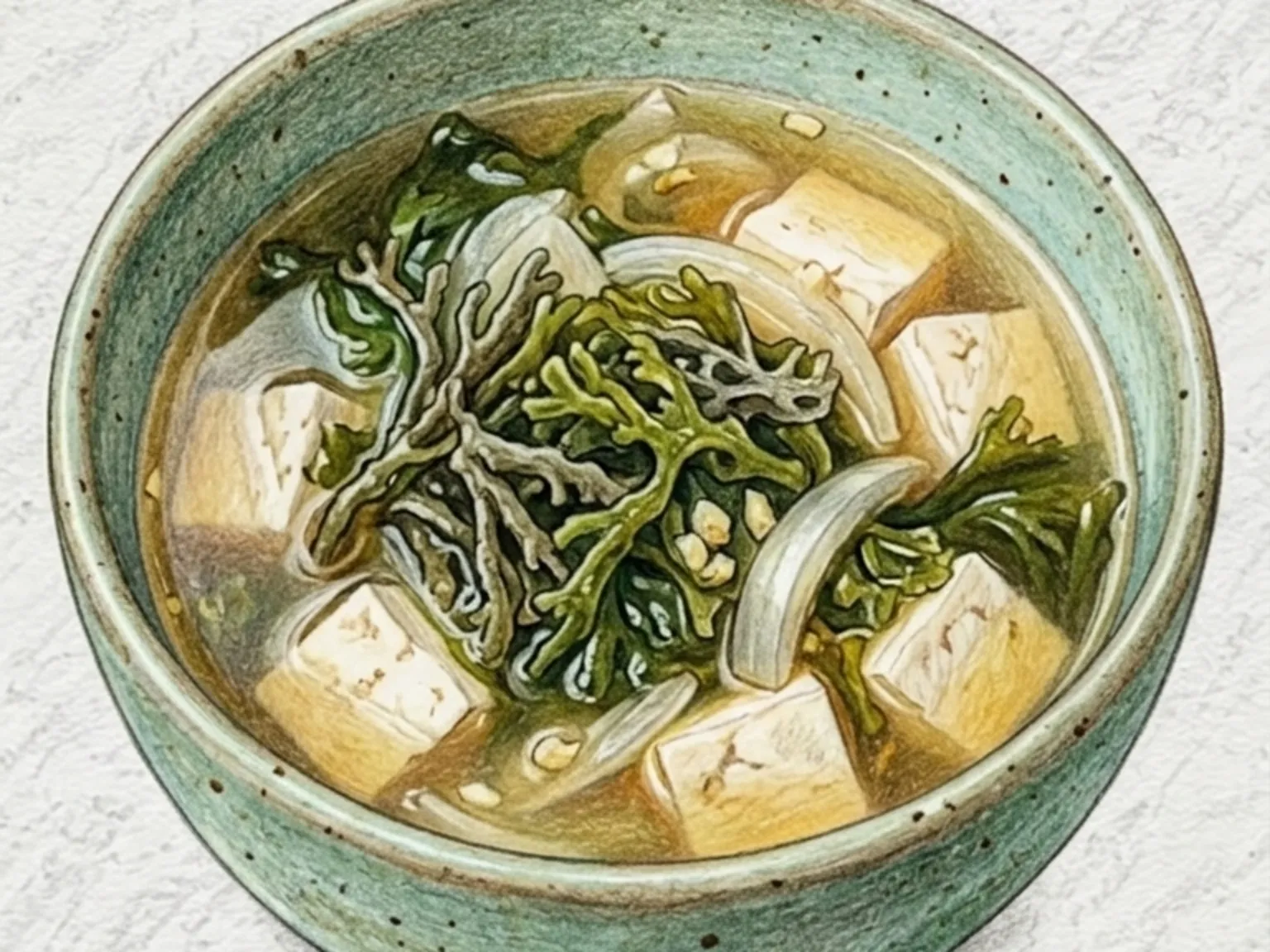
Cheonggak-dubu-guk is a light Korean seaweed soup made by soaking salted cheonggak sea staghorn in cold water to draw out excess salt, then simmering it with tofu and oni...
What makes this special
- Cheonggak dubu guk features the distinct briny aroma of sea staghorn seaweed and soft tofu in a clean broth.
- Salted sea staghorn soaked 5 minutes to keep only its briny aroma
- Perilla oil base, stir-fried onion and garlic, adds nutty depth
Key ingredients
Core cooking flow
- 1 Soak 40g of salted cheonggak seaweed in cold water for at least 5 minutes to extract the salt.
- 2 Cut 200g of firm tofu into neat 2cm cubes and slice 60g of onion into thin 0...
- 3 Heat 1 tsp of perilla oil in a pot. Add the sliced onion and 0.7 tbsp of min...
Cheonggak-dubu-guk is a light Korean seaweed soup made by soaking salted cheonggak sea staghorn in cold water to draw out excess salt, then simmering it with tofu and onion in a clean broth. Onion and garlic are sauteed in perilla oil first to build a nutty base, and the broth is seasoned with tuna extract and soup soy sauce, which together bring a deep oceanic savoriness to every spoonful. The cheonggak seaweed contributes a firm, satisfying crunch that contrasts directly with the soft, mild tofu cubes. At 140 calories per bowl, the soup sits at the lighter end of Korean everyday cooking while still delivering genuine depth. The combination of sea vegetable, perilla oil, and fermented soy seasoning makes a broth that tastes cleaner and more mineral than standard vegetable soups.
Instructions
Read the steps as a cooking flow: prep, heat, seasoning, doneness control, and finish.
- 1Season
Soak 40g of salted cheonggak seaweed in cold water for at least 5 minutes to extract the salt.
Rinse it thoroughly under running water and cut into 3cm pieces to maintain its distinctive crunchy texture.
- 2Prep
Cut 200g of firm tofu into neat 2cm cubes and slice 60g of onion into thin 0.5cm strips so they blend well and release their sweetness into the clear broth.
- 3Control
Heat 1 tsp of perilla oil in a pot.
Add the sliced onion and 0.7 tbsp of minced garlic, then stir-fry over medium heat for 1 minute until fragrant and transparent.
- 4Control
Pour 850ml of water into the pot and bring it to a rolling boil over high heat.
Add the prepared seaweed, then reduce to medium heat and simmer for 4 minutes.
- 5Control
Add the tofu cubes, 1 tbsp of tuna extract sauce, and 1 tbsp of soup soy sauce.
Simmer for 3 more minutes until the tofu is heated through and absorbs the seasoning.
- 6Season
Taste the broth and adjust with a little more water or soup soy sauce if needed.
Once the seasoning is balanced and the soup is clear, turn off the heat.
After the steps
Pick a recipe that fits this dish.
Continue with shared ingredients, meal pairings, or a similar method.
Recipes That Go Well With This
More Soups →Based on shared ingredients and meal pairing
Korean Water Dropwort Tofu Soup
Minari-dubu-guk is a mild, clear Korean soup pairing soft tofu with water dropwort, an herb prized for its bright, celery-like fragrance. The broth is built on a simple anchovy-kelp stock, into which the tofu goes first and simmers gently until warmed through. Water dropwort is added only in the final moments before the heat is turned off, a deliberate timing choice that preserves the herb's volatile aromatic compounds and keeps the hollow stems slightly crisp rather than wilted. Adding it too early strips away the fragrance that makes this soup worth making. Seasoning stays minimal, soup soy sauce, garlic, and perhaps a pinch of salt, because restraint is the entire point: the clean stock, the herb's green perfume, and the pillowy tofu are meant to carry the bowl quietly. Firm tofu holds its shape through simmering and absorbs the broth more evenly than silken varieties, making it the better choice here. Spring is the ideal season, when water dropwort grows most tender and aromatic. Korean cooks often place this soup alongside richer, heavier dishes because the light broth cuts through fat and resets the palate between bites. It rarely draws attention at the table yet is reliably missed when absent.
Dubu Kkaennip-guk (Tofu Perilla Leaf Soup)
Dubu-kkaennip-guk is a Korean tofu and perilla leaf soup in anchovy broth, finished with chiffonaded perilla leaves that release a bright, minty-herbal fragrance into the clear liquid. Zucchini and onion simmer first to build a vegetable-sweetened base, releasing their natural sugars into the anchovy stock. Large scoops of soft tofu - spooned rather than knife-cut, so the rough surfaces trap more broth - warm through over medium heat for five minutes. The perilla leaves must go in during the last thirty seconds before serving: any longer and they turn dark and lose the sharp aromatic freshness that defines the dish. Soup soy sauce and a light dusting of black pepper complete the seasoning, letting the clean anchovy umami and the herbal lift of the kkaennip share the stage without one overpowering the other. Cooking the zucchini fully soft is important - its gentle sweetness needs time to dissolve into the broth, and when the tofu and vegetables together hold the liquid, each spoonful carries varied texture.
Korean Soft Tofu Stew Rice Bowl
Fiery soft-tofu stew is cooked until bubbling and poured directly over a bowl of rice so the spicy broth seeps into every grain. The silky tofu breaks apart gently, creating pockets of creamy texture within the chili-laced soup. Cracking a raw egg into the simmering pot softens the heat and adds body to the broth. Variations with shrimp, clams, or pork each shift the base flavor in a different direction, making this a versatile single-bowl meal. Serving it soon after cooking keeps the intended texture clearer, while brief resting lets the sauce or broth settle into the dish.
Korean Green Laver Soup (Seaweed Tofu Anchovy Broth)
Parae-guk is a Korean seaweed soup made with green laver and tofu simmered in a clear anchovy broth. The broth is brought to a gentle boil and seasoned with garlic and soup soy sauce before diced tofu is added and warmed through for three minutes. The green laver goes in at the very end, cooking for no more than 30 to 60 seconds, because extended heat strips away its vivid color and fresh ocean fragrance entirely. Since the recipe relies on so few ingredients, the quality of the anchovy stock determines the overall depth of flavor, so using dried anchovies with heads and innards removed, simmered for at least ten minutes, produces a noticeably cleaner and more savory base. The mineral-rich, briny character of the green laver contrasts well with the mild tofu, and the whole soup comes together in about fifteen minutes. Because green laver carries its own saltiness, it is best to add the soup soy sauce gradually and taste as the seasoning develops.
Serve with this
Chicken Cabbage Wraps
Chicken Cabbage Wraps represent a simple side dish combining tender chicken tenderloin with steamed cabbage leaves. The cabbage leaves are steamed for seven to eight minutes until slightly translucent, then cooled in cold water to preserve their color and flexibility. The chicken tenderloins are prepared by removing the tough tendons and marinating with mirin, salt, and pepper to reduce dryness and enhance tenderness. Once grilled on a medium-heated pan until cooked through, the chicken is rolled tightly inside the prepared cabbage leaves. Brushing the rolls with sesame oil before slicing them into bite-sized pieces adds a nutty finish. Serving these wraps with ssamjang creates a balanced dish with minimal ingredients, offering a clean taste and a pleasant contrast of textures.
Korean Bangwool Yangbaechu Kimchi (Brussels Sprout Kimchi)
Bangwool yangbaechu kimchi is a creative Korean kimchi made from halved Brussels sprouts, brined in salt and dressed with gochugaru, fish sauce, garlic, and apple. Brussels sprouts are denser than napa cabbage and hold their structure after salting, giving each bite a firm crunch that releases a natural sweetness as you chew. The combination of fish sauce and gochugaru builds a spicy-salty depth, while grated apple introduces a fruit sweetness that softens the chili heat without masking it. Scallions contribute a fresh note throughout. Because the sprouts are compact and less watery than cabbage, the kimchi ferments more slowly and stays crisp longer. It can be eaten right away as a fresh kimchi, or left to ferment for several days as the flavors deepen. In season from autumn through early spring, this kimchi suits both traditional Korean meals and modern brunch spreads.
Korean Stuffed Perilla Leaf Pancakes
Kkae-ip-jeon are pan-fried perilla leaf parcels stuffed with a filling of ground pork and firm tofu, coated in flour and egg. The tofu must be squeezed dry in a cloth before mixing; excess moisture causes the filling to spread and stick to the pan. Garlic chives and onion add crunch and fragrance to the mix, and the filling seasoned with soy sauce and black pepper pairs cleanly with the perilla's strong herbal character. Dusting with flour first, then dipping in egg, produces an even coating, and frying covered over medium-low heat for two minutes per side ensures the filling is cooked through to the center. The bite-sized pieces work well as a packed lunch side or as bar food.
Similar recipes
Korean Spinach Tofu Soup
Sigeumchi-dubu-guk is a clear, mild Korean soup in which spinach and tofu float in an anchovy-kelp broth seasoned only with soup soy sauce - no fermented paste, no chili. The result is a bowl of quiet transparency where each ingredient's natural flavor is audible: the green, slightly mineral taste of spinach, the neutral creaminess of tofu, and the clean savor of the stock. A small amount of minced garlic builds umami in the background, and a single drop of sesame oil on the surface adds a whisper of richness. This soup is intentionally gentle, which is exactly why Korean families rely on it so heavily - it suits every palate and every age group, from toddlers to grandparents. Cooks often serve it alongside bold, spicy dishes because the clear broth acts as a reset between intense bites. The technique is straightforward but timing matters: tofu should be cut into generous cubes so it holds its shape during simmering, and spinach should enter the pot only at the very end to preserve its color and a touch of texture. The entire preparation takes under fifteen minutes and requires only four or five ingredients, making it one of the most practical everyday soups in Korean cooking.
Korean Seasoned Green Seaweed
Cheonggak is a branching green seaweed harvested from the tidal flats of Korea's southern coast, recognizable by its dense, tree-like fronds and a sharp, concentrated oceanic smell. Blanching it in boiling water for exactly ten seconds brightens the color to a vivid green and preserves the cartilage-like crunch that defines the texture. Even a few seconds beyond that and the seaweed begins to collapse, so a timer is worth setting. After blanching, it is rinsed in cold water, squeezed firmly to remove moisture, and cut to finger lengths. The dressing uses vinegar as its leading ingredient alongside soy sauce, gochugaru, minced garlic, and sugar - the acidity of the vinegar dispels the sharp brininess of the seaweed and gives the finished dish a clean, refreshing quality. The seasoned cheonggak must be served immediately; within a few hours the seaweed releases liquid and the texture deteriorates beyond recovery. It appears in coastal markets across Jeollanam-do from midwinter through early spring and is absent from shelves the rest of the year.
Korean Sigeumchi Dubu Jjigae (Spinach Tofu Stew)
Sigeumchi-dubu-jjigae is a Korean stew built from fresh spinach and soft tofu simmered in anchovy-kelp stock, seasoned with soup soy sauce and perilla oil. The process starts by warming perilla oil in the pot and softening minced garlic until its sharpness mellows into a rounded fragrance that transfers into the oil, giving the broth a subtle depth that would be absent if the garlic were added raw. Zucchini and onion release their natural sweetness as they cook, rounding out the broth and preventing it from tasting flat or austere. Soft tofu, added mid-way, absorbs the seasoned liquid gradually as it heats through, holding its shape while taking on the flavor of the broth around it. Spinach goes in last, only long enough to wilt, because extended cooking destroys the color and reduces the leaves to a limp, dull mass that works against the dish. The iron-forward earthiness of spinach pairs naturally with the mild creaminess of tofu and the nutty undercurrent of perilla oil, producing a stew that reads as simple but carries enough layered flavor to satisfy. This is a standard of Korean home cooking that earns its place at the table for being genuinely easy on the stomach, particularly welcome when appetite is low or the body calls for something clean.