Charim

2686 Korean & World Recipes

2686+ Korean recipes, clean and organized. Ingredients to instructions, all at a glance.

Korean Bok Choy Soybean Paste Soup
SoupsEasy

Korean Bok Choy Soybean Paste Soup

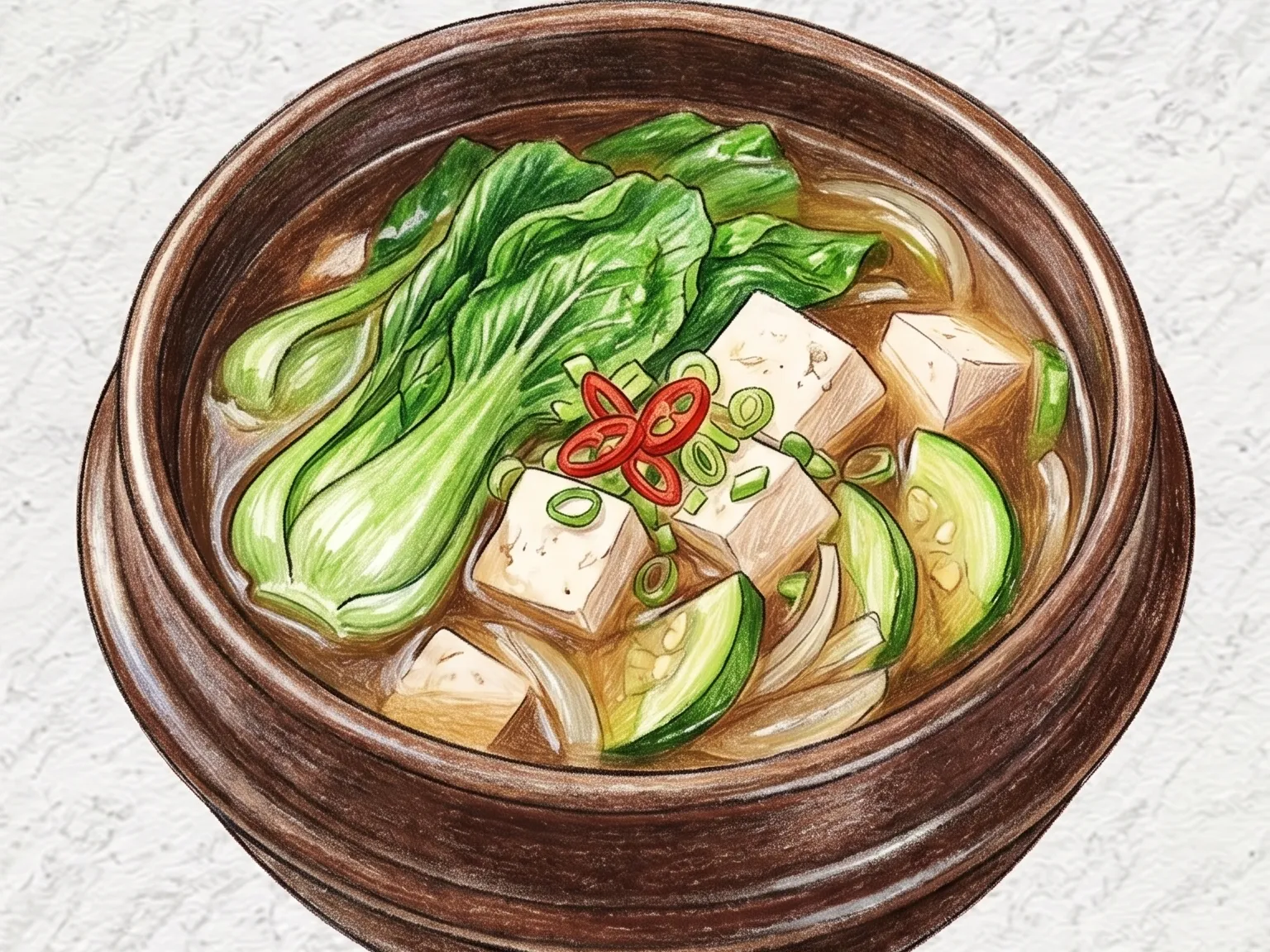
Cheonggyeongchae doenjang-guk is a Korean soybean paste soup built on anchovy-kelp stock, featuring bok choy, zucchini, and tofu. Unlike napa cabbage or spinach, bok choy brings a crisp, juicy stem and a mild sweetness that balances the fermented depth of doenjang. The broth simmers first with onion and garlic to establish an aromatic base, and the doenjang is strained through a sieve to dissolve cleanly without lumps. Bok choy and cubed tofu go in during the final three minutes, just long enough to soften the leaves while preserving the stems' crunch and bright green color.

Prep 15minCook 18min4 servings

Adjust Servings

2servings
servings

Instructions

  1. 1

    Split bok choy at the base, wash thoroughly, and cut into 4 cm pieces.

  2. 2

    Half-moon slice zucchini, slice onion, and cube tofu.

  3. 3

    Pour stock into a pot and dissolve doenjang through a strainer over medium heat.

  4. 4

    Add onion, zucchini, and garlic; simmer 6 minutes for depth.

  5. 5

    Add tofu and bok choy, cook 3 minutes, then finish with green onion.

🛒Shop Ingredients on Amazon

As an Amazon Associate, we may earn from qualifying purchases.

Tips

Straining doenjang gives a smoother broth.
Do not overcook bok choy to keep sweetness and crunch.

Nutrition (per serving)

Calories
175
kcal
Protein
11
g
Carbs
13
g
Fat
9
g

More Recipes

Korean Spinach Soybean Paste Soup
SoupsEasy

Korean Spinach Soybean Paste Soup

Sigeumchi-doenjang-guk is a foundational Korean soup that combines spinach with soybean paste in anchovy-kelp stock, producing a broth that is earthy, warm, and deeply familiar to anyone who grew up eating Korean home cooking. Doenjang is dissolved into the simmering stock first, establishing a savory, slightly funky baseline. Spinach is added near the end and wilts within seconds, contributing a soft green color and a faint bitterness that, rather than clashing with the fermented paste, amplifies its complexity. Tofu is a common addition that gives the soup more substance and a creamy counterpoint to the leafy greens. Garlic and green onion handle the aromatics, and no chili is used, keeping the soup on the gentle end of the Korean flavor spectrum. The key technical point is timing: spinach left in boiling liquid too long turns dull and mushy, so experienced cooks drop it in and turn off the heat almost immediately. This soup is one of the most frequently prepared versions of doenjang-guk in Korean kitchens precisely because spinach is available year-round, affordable, and cooks in moments. It pairs seamlessly with any banchan spread and never competes for attention on the table.

🏠 Everyday
Prep 10minCook 15min2 servings
Korean Seasoned Bok Choy Namul
Side dishesEasy

Korean Seasoned Bok Choy Namul

Unlike the high-heat stir-fried version, this bok choy namul uses a gentler blanch-and-dress method from Korea's traditional namul vocabulary. One minute in boiling water wilts the leaves while keeping pale stalks firm. Squeezed dry and cut short, the greens are rubbed with doenjang, soup soy sauce, and garlic. The fermented paste's funky, earthy depth transforms the mild vegetable into something more layered. Sesame seeds scattered on top add a final crunch against the soft leaves.

🏠 Everyday🍱 Lunchbox
Prep 8minCook 4min2 servings
Korean Dried Radish Greens Soup
SoupsMedium

Korean Dried Radish Greens Soup

Siraegi-guk is a Korean dried radish greens soup that transforms a humble preserved vegetable into something deeply flavorful through the medium of doenjang. The greens are dried in autumn, then reconstituted by boiling until soft - a process that concentrates their earthy, slightly bitter character. When simmered in stock with dissolved soybean paste, that concentrated flavor meets fermented umami and the result is a broth richer than the ingredient list would suggest. Adding ground perilla seeds pushes the soup further, turning the liquid creamy and nutty. Garlic and green onion form the aromatic backbone. The soup works well without meat, but many cooks stir-fry a small amount of beef in perilla oil before adding the liquid, which introduces a beefy depth that rounds out the overall profile. The critical step is managing the initial boiling of the dried greens: not enough, and the bitterness overwhelms; too much, and the greens become bland. Experienced Korean cooks leave just enough edge to give the soup its distinctive character - a pleasant astringency that makes doenjang taste more interesting rather than less. Siraegi-guk is pantry cooking at its finest, relying on dried goods and fermented paste to produce a bowl that tastes like slow, patient effort.

🏠 Everyday
Prep 20minCook 35min4 servings
Korean Fish Soup (White Fish and Radish Clear Broth)
SoupsEasy

Korean Fish Soup (White Fish and Radish Clear Broth)

Saengseon-guk is a traditional Korean fish soup made with white-fleshed fish and radish in a clear broth. The radish simmers first, building a base of natural sweetness, before garlic and soup soy sauce are added for depth. The fish goes in once the radish is halfway cooked, and timing matters - it should cook only until the flesh turns opaque and begins to flake, as prolonged boiling would break it apart and cloud the broth. Tofu and sliced Korean chili peppers join near the end, adding soft texture and a mild kick. Green onion finishes the bowl with a fresh note. The result is a light, transparent soup where the fish's own clean, marine flavor does most of the work. It is the kind of straightforward home cooking that appears on Korean dinner tables throughout the year, requiring little more than fresh fish and basic pantry staples.

🏠 Everyday
Prep 15minCook 20min4 servings
Siraegi Guk (Korean Perilla Radish Greens Soup)
SoupsEasy

Siraegi Guk (Korean Perilla Radish Greens Soup)

Creamy, nutty, and deeply warming - this siraegi guk (dried radish greens soup) gets its velvety texture from perilla powder stirred into an anchovy-doenjang broth. The greens, which are dried and then rehydrated before use, carry a concentrated, earthy flavor and a fibrous chew that fresh vegetables cannot replicate. Massaging the greens with doenjang, garlic, and soup soy sauce before simmering allows the fermented seasoning to penetrate deep into the fibers over twenty minutes of cooking. Perilla powder added in two separate batches dissolves evenly without clumping, turning the broth an opaque, milky white with a thick, creamy consistency that clings to each spoonful.

🏠 Everyday
Prep 18minCook 35min4 servings
Korean Stir-Fried Bok Choy with Oyster Sauce
Side dishesEasy

Korean Stir-Fried Bok Choy with Oyster Sauce

A Chinese-Korean crossover banchan that became a weeknight staple in the 1990s. The technique demands a scorching-hot pan: oil and garlic sizzle first, then halved bok choy hits the wok for barely a minute. Oyster sauce and a splash of water create a quick glaze clinging to the stems. Leaf edges char slightly while white stalks stay juicy and snapping-crisp. A finishing drizzle of sesame oil adds a toasted note. The entire cook takes under five minutes.

🏠 Everyday🍱 Lunchbox
Prep 8minCook 5min2 servings
More Soups