Korean Stir-Fried Bok Choy and Tofu with Doubanjiang
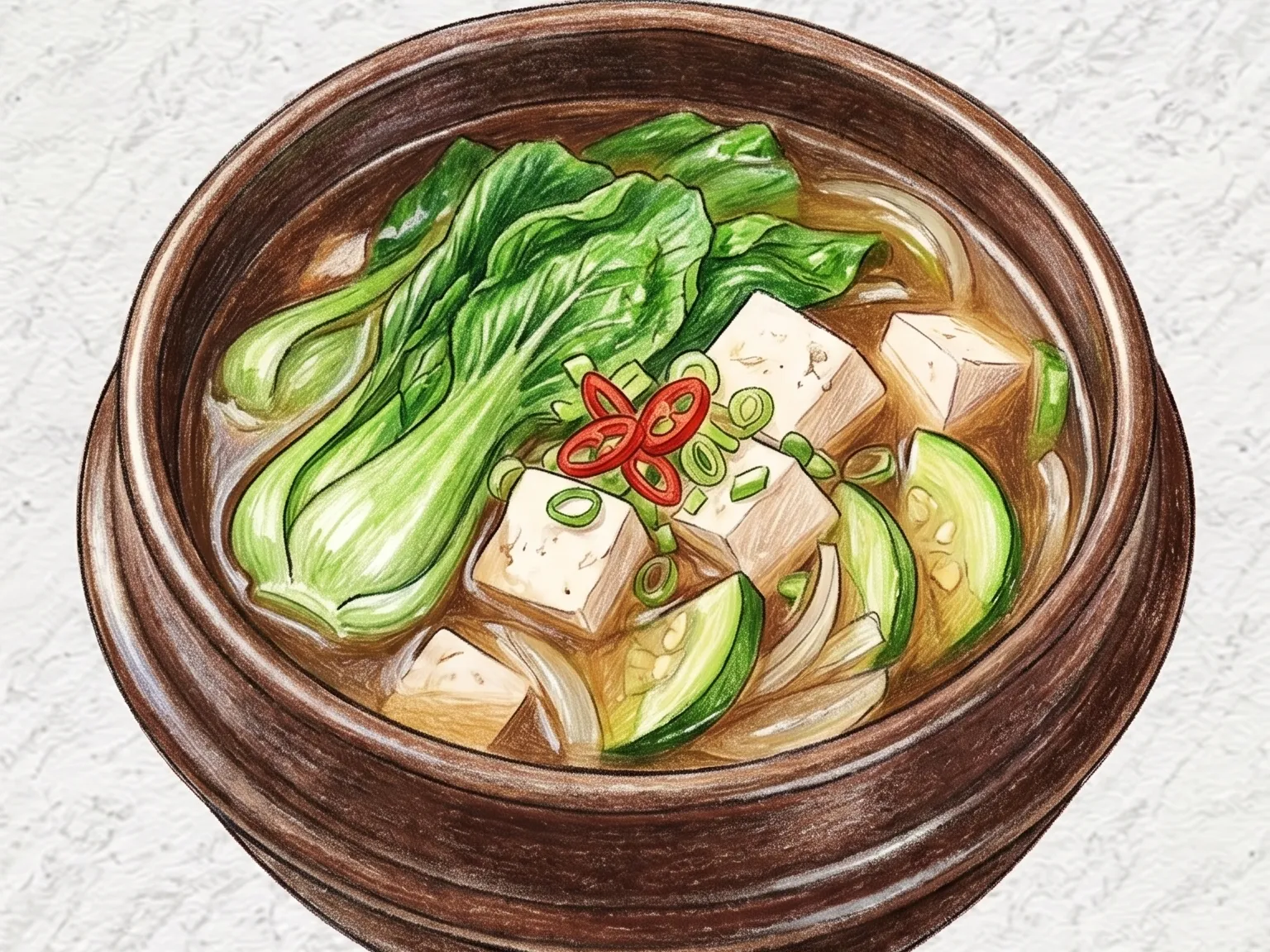
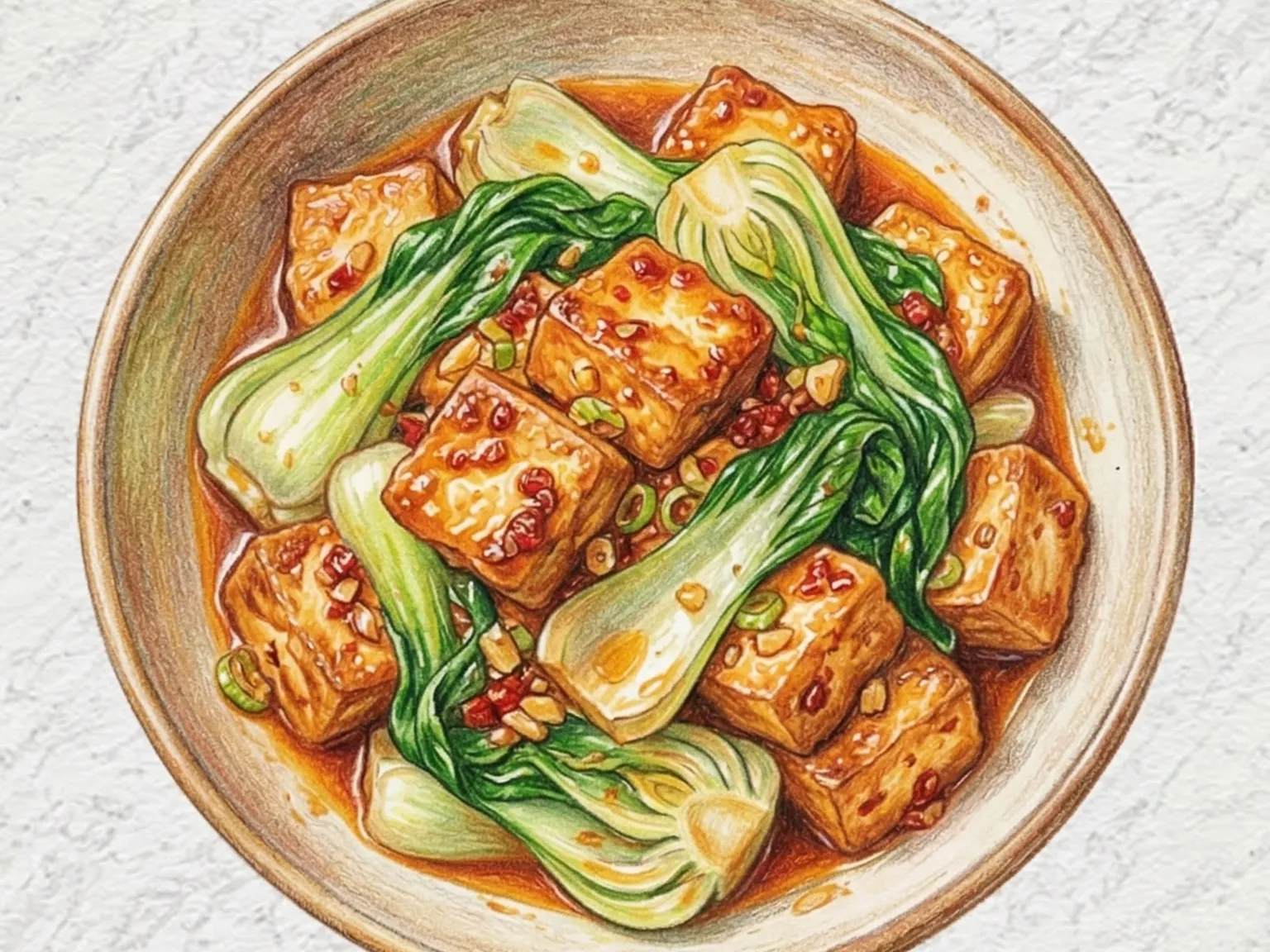
Firm tofu is patted completely dry and pan-seared in oil for three minutes until golden on each side, then set aside while green onion and garlic are stir-fried in the same pan to build an aromatic base. Doubanjiang, soy sauce, sugar, and water are combined into a sauce directly in the pan; the fermented chili bean paste brings both salt and heat in high concentration, so the soy sauce should be added sparingly and adjusted only after a final taste. Bok choy stems and leaves are separated and added at different stages: stems first for two minutes of direct heat, leaves last for just one minute, so the stalks remain firm while the greens wilt to a silky texture. One teaspoon of sugar softens the sharp salinity of the doubanjiang, rounding the finish into something warm rather than aggressive. When the seared tofu cubes return to the pan, their crisp exterior absorbs the sauce like a sponge, releasing a burst of spicy, fermented flavor with each bite. At 290 calories and 17 grams of protein, the dish proves that a satisfying protein intake does not require meat.
Adjust Servings
Instructions
- 1
Pat tofu dry with paper towels and cut into medium cubes.
- 2
Quarter the bok choy and separate stems from leaves.
- 3
Heat 1 tbsp oil and pan-sear tofu for 3 minutes until lightly golden; set aside.
- 4
In the same pan, add remaining oil, green onion, and garlic; stir-fry for 30 seconds.
- 5
Add doubanjiang, soy sauce, sugar, and water; simmer 20 seconds to form the sauce.
- 6
Add bok choy stems and tofu for 2 minutes, then add leaves and cook 1 more minute.
As an Amazon Associate, we may earn from qualifying purchases.
Tips
Nutrition (per serving)
More Recipes

Korean Stir-fried Aged Kimchi and Tofu
Mukeunji-dubu-bokkeum brings together aged kimchi's deep sourness and firm tofu's neutral mildness in a single pan. The tofu is pan-fried to golden first, building a crust that prevents breakage and absorbs sauce more effectively. Meanwhile, onion and aged kimchi are stir-fried with gochugaru until the kimchi's moisture evaporates and its flavor concentrates, then soy sauce and sugar balance the acidity. The tofu returns to the pan to soak up the seasoning, and a final addition of perilla oil softens the kimchi's sharpness while green onion lifts the aroma.

Korean Stir-Fried Bok Choy with Oyster Sauce
A Chinese-Korean crossover banchan that became a weeknight staple in the 1990s. The technique demands a scorching-hot pan: oil and garlic sizzle first, then halved bok choy hits the wok for barely a minute. Oyster sauce and a splash of water create a quick glaze clinging to the stems. Leaf edges char slightly while white stalks stay juicy and snapping-crisp. A finishing drizzle of sesame oil adds a toasted note. The entire cook takes under five minutes.

Korean Stir-fried Crown Daisy and Mushrooms
Ssukgat-beoseot-bokkeum is a quick stir-fry of oyster mushrooms and crown daisy (ssukgat) cooked in a garlic-infused pan. The mushrooms are seared over high heat to drive off moisture and develop a chewy bite, while the crown daisy stems and leaves go in at staggered intervals to preserve their crunch and aroma. Soy sauce and cooking wine provide the seasoning base, finished with sesame oil and toasted sesame seeds. The slightly bitter, herbal character of the crown daisy plays off the mild earthiness of the mushrooms for a clean, well-defined flavor.

Korean Stir-Fried Kale and Pork with Gochugaru
Keil-dwaeji-gochugaru-bokkeum stir-fries marinated pork shoulder with kale in a chili-forward gochugaru and gochujang sauce. The pork marinates to develop deep, spicy savoriness, then sears quickly at high heat for a lightly charred edge. Kale holds up to the heat better than most leafy greens, retaining a pleasant chew that contrasts with the tender pork and cuts through its richness. The dish works well wrapped in lettuce without any extra dipping sauce, or simply piled over a bowl of steamed rice.

Korean Stir-fried Anchovies with Shishito Peppers
Kkwarigochu myeolchi bokkeum is a Korean pantry side dish of small dried anchovies dry-toasted to remove fishiness, then combined with oil-blistered shishito peppers and glazed in soy sauce and oligosaccharide syrup. The anchovies stay crunchy and salty while the syrup adds a gentle sweetness, and the peppers' mild heat keeps the flavor from becoming one-note. Adding the syrup on reduced heat prevents burning and produces a glossy coat. Sesame oil and sesame seeds finish the dish, which stores well refrigerated for several days of banchan service.

Korean Tofu with Stir-fried Kimchi
Dubu-kimchi pairs thick slices of blanched tofu with aged kimchi stir-fried alongside pork shoulder and onion. The deep fermentation sourness of the aged kimchi concentrates as it cooks in oil with gochugaru, and a small amount of sugar bridges the gap between the sour and spicy notes. The tofu is blanched just briefly in salted water so it stays firm without crumbling, and placing it under the hot kimchi stir-fry lets the surface absorb the seasoning. A finish of sesame oil adds a nutty aroma, and sliced green onion on top provides a fresh contrast.