Korean Stir-Fried Bok Choy with Oyster Sauce
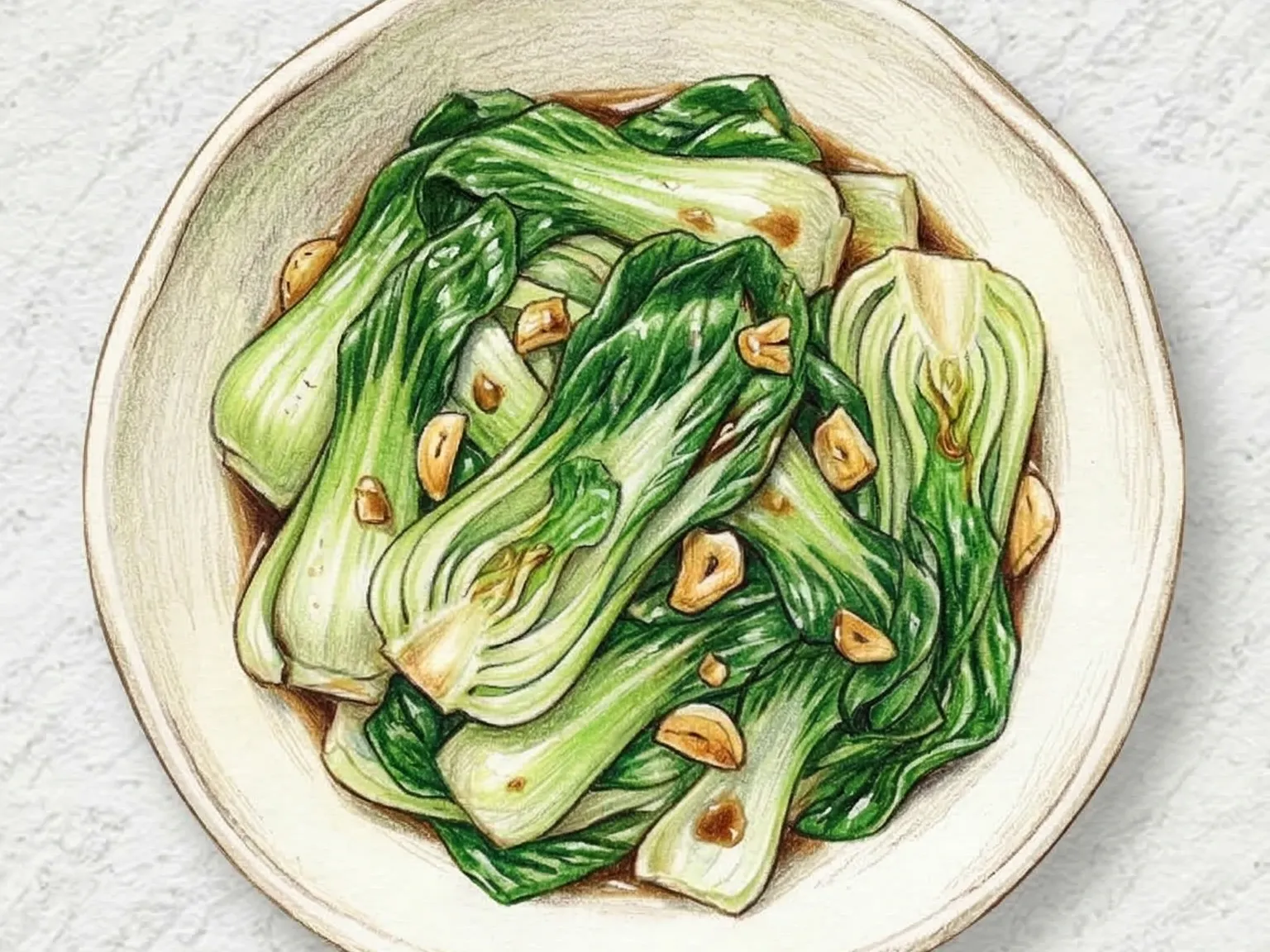
A Chinese-Korean crossover banchan that became a weeknight staple in the 1990s. The technique demands a scorching-hot pan: oil and garlic sizzle first, then halved bok choy hits the wok for barely a minute. Oyster sauce and a splash of water create a quick glaze clinging to the stems. Leaf edges char slightly while white stalks stay juicy and snapping-crisp. A finishing drizzle of sesame oil adds a toasted note. The entire cook takes under five minutes.
Adjust Servings
Instructions
- 1
Trim bok choy and slice lengthwise in half.
- 2
Heat pan on high; add oil and garlic briefly.
- 3
Add bok choy and stir-fry quickly for 1 minute.
- 4
Add oyster sauce, soy sauce, and water; cook 1-2 more minutes.
- 5
Turn off heat and finish with a touch of sesame oil.
As an Amazon Associate, we may earn from qualifying purchases.
Tips
Nutrition (per serving)
More Recipes

Korean Stir-Fried Bok Choy and Tofu with Doubanjiang
Firm tofu is patted completely dry and pan-seared in oil for three minutes until golden on each side, then set aside while green onion and garlic are stir-fried in the same pan to build an aromatic base. Doubanjiang, soy sauce, sugar, and water are combined into a sauce directly in the pan; the fermented chili bean paste brings both salt and heat in high concentration, so the soy sauce should be added sparingly and adjusted only after a final taste. Bok choy stems and leaves are separated and added at different stages: stems first for two minutes of direct heat, leaves last for just one minute, so the stalks remain firm while the greens wilt to a silky texture. One teaspoon of sugar softens the sharp salinity of the doubanjiang, rounding the finish into something warm rather than aggressive. When the seared tofu cubes return to the pan, their crisp exterior absorbs the sauce like a sponge, releasing a burst of spicy, fermented flavor with each bite. At 290 calories and 17 grams of protein, the dish proves that a satisfying protein intake does not require meat.

Korean Stir-Fried Eggplant Banchan
Gaji bokkeum transforms eggplant - a vegetable Koreans have cultivated since the Goryeo period - into a quick, oil-glazed banchan where the cooking speed matters as much as the seasoning. The eggplant is sliced into half-moons, and the pan must be scorching hot before the pieces enter; any hesitation and the eggplant will steam rather than sear, turning it into a soggy mass. High heat with minimal oil produces lightly charred edges while the interior turns silky and almost custardy. Soy sauce, garlic, and sesame oil go in during the final thirty seconds, sizzling against the hot surface and coating each piece in a thin, caramelized layer. The dish has a concentrated, clean umami taste without the heaviness of a braised preparation. Korean home cooks make this as a weeknight banchan precisely because it takes under ten minutes from cutting board to table.

Korean Stir-Fried Leafy Greens
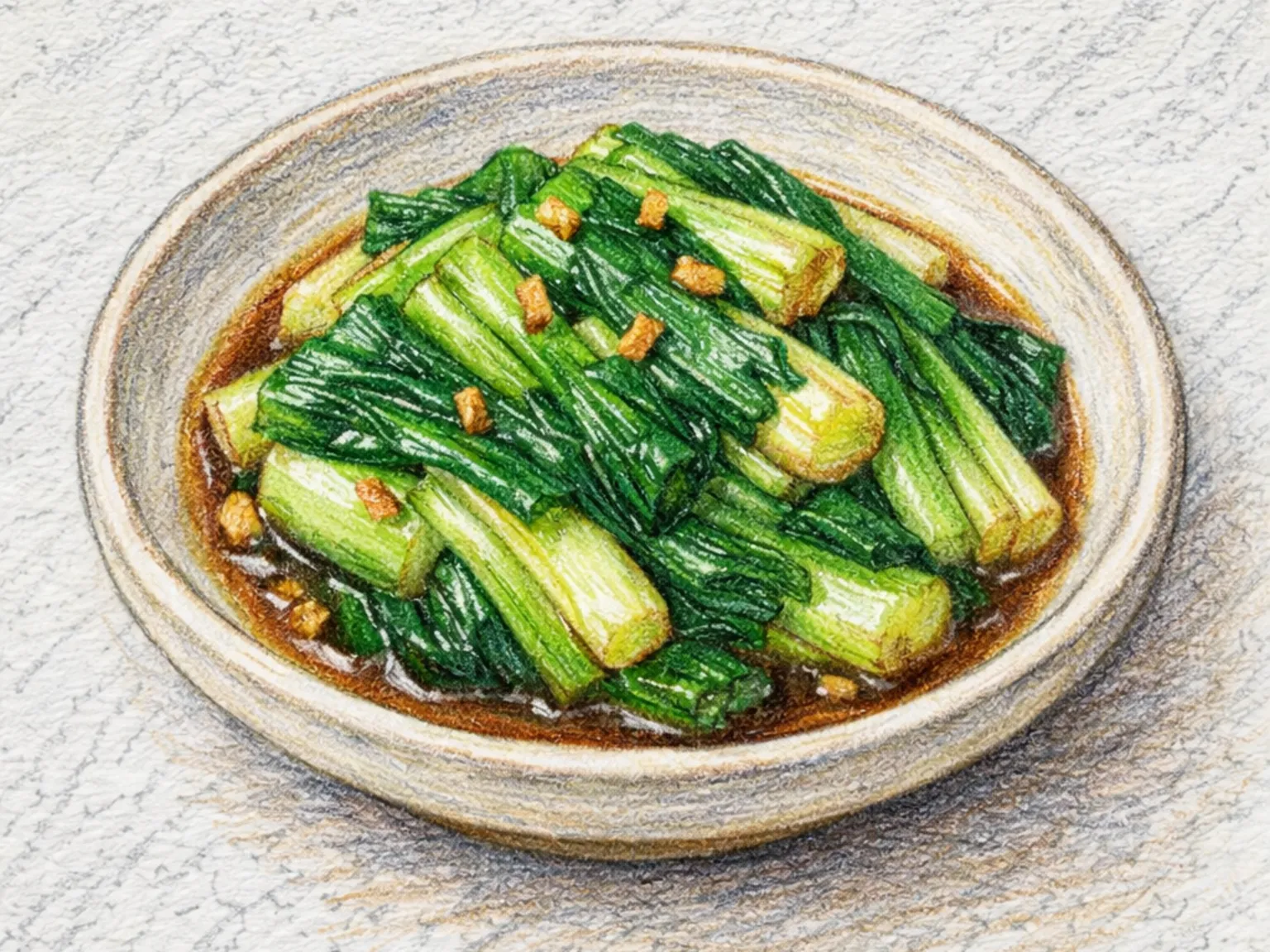
Baby bok choy stir-fried with garlic - five minutes from board to table. Removing all surface water before the greens hit the pan is essential; residual moisture turns stir-frying into steaming. Garlic sautés low for twenty seconds, then greens go in over high heat. Soup soy sauce and salt season without adding liquid, and sesame oil off-heat gives a glossy finish. This mild, clean-tasting side works alongside virtually any Korean main course.

Stir-fried Bok Choy (Bok Choy with Garlic and Oyster Sauce Glaze)
Halved bok choy is stir-fried with sliced garlic over high heat for two minutes, then finished with oyster sauce and soy sauce in a one-minute reduction that glazes every leaf and stem. The thick white stalks need more heat than the tender green leaves, so placing them cut-side down first or adding the leaves halfway through prevents the greens from turning to mush while the stems stay undercooked. Oyster sauce lends a concentrated umami depth to the otherwise mild vegetable, and a splash of 40 milliliters of water helps the sauce flow between the tightly packed stems so seasoning reaches every layer. Black pepper and sesame oil are added only after the pan leaves the flame so their volatile aromas stay intact on the plate. Bok choy continues to release moisture after plating, so serving immediately is critical to preserving the contrast between crisp stalks and just-wilted leaves. At 105 calories per serving, this is a light side dish that still delivers meaningful amounts of vitamin A and calcium.

Korean Stir-fried Cabbage with Doenjang
Yangbaechu-doenjang-bokkeum stir-fries bite-size cabbage pieces with doenjang, gochugaru, and garlic over high heat. The doenjang is dissolved in a small amount of water to create an even sauce that coats the cabbage, and the heat is turned off before the cabbage fully wilts to preserve some crunch. The cabbage's natural sweetness intensifies with cooking and contrasts against the salty, fermented depth of the doenjang, while gochugaru adds a faint background heat. The entire dish comes together in under fifteen minutes, relying on doenjang alone to deliver concentrated flavor.

Korean Stir-Fried Kimchi (Caramelized Aged Kimchi Banchan)
Kimchi-bokkeum is the default way Korean households use up kimchi that has fermented past its fresh prime. Stir-frying tempers the sharp lactic acidity that over-ripe kimchi develops - the heat transforms the sourness into something mellower, sweeter, and more rounded. Onion goes in first and cooks until translucent, laying a sweet foundation before the kimchi and garlic join. Medium heat is essential: it drives off moisture gradually, yielding a thick, concentrated sauce rather than a watery stew. A small addition of gochugaru brightens the color, and a pinch of sugar balances the fermented tang. One tablespoon of kimchi brine amplifies the umami from the lactobacillus culture itself. The finished banchan is versatile enough to eat straight over rice, fold into fried rice, or pile on top of ramyeon.