Korean Seasoned Bok Choy Namul
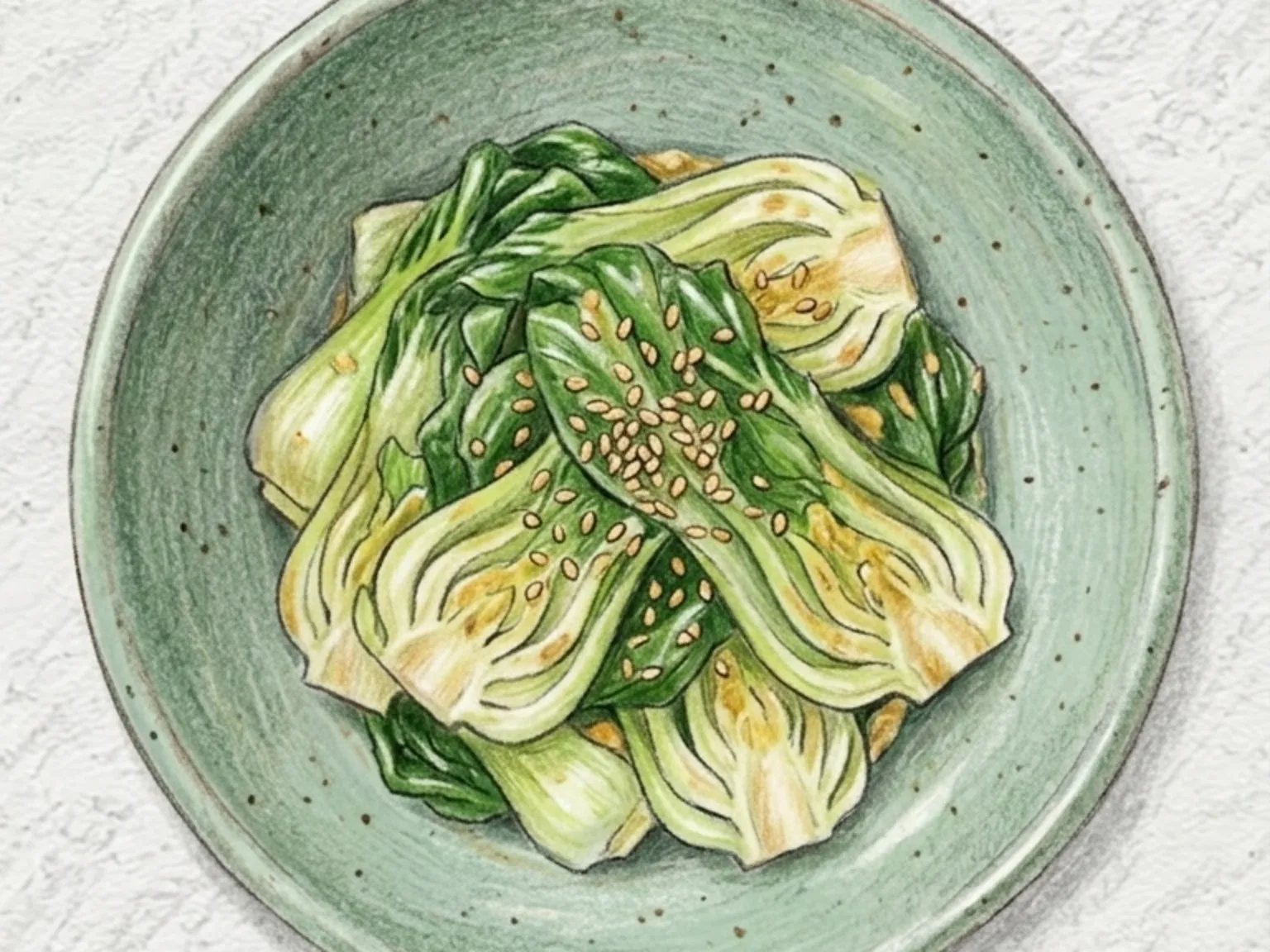
Unlike the high-heat stir-fried version, this bok choy namul uses a gentler blanch-and-dress method from Korea's traditional namul vocabulary. One minute in boiling water wilts the leaves while keeping pale stalks firm. Squeezed dry and cut short, the greens are rubbed with doenjang, soup soy sauce, and garlic. The fermented paste's funky, earthy depth transforms the mild vegetable into something more layered. Sesame seeds scattered on top add a final crunch against the soft leaves.
Adjust Servings
Instructions
- 1
Halve and wash bok choy thoroughly.
- 2
Blanch for 1 minute and cool in cold water.
- 3
Squeeze dry and cut into 4 cm pieces.
- 4
Mix doenjang, soup soy sauce, garlic, and sesame oil.
- 5
Add bok choy and chopped green onion, then toss.
- 6
Sprinkle sesame seeds and serve.
As an Amazon Associate, we may earn from qualifying purchases.
Tips
Nutrition (per serving)
More Recipes

Korean Seasoned Rapeseed Greens
Young rapeseed greens are blanched for just 40 seconds in salted water, then squeezed dry and tossed with doenjang, minced garlic, green onion, sesame oil, and ground sesame. The brief blanching preserves the stems' gentle snap, and the fermented soybean paste brings an earthy depth that pairs naturally with the greens' mild grassy flavor. Squeezing out excess water before seasoning keeps the dressing concentrated on each piece rather than pooling at the bottom. From prep to plate, this banchan takes under fifteen minutes.

Korean Seasoned Swiss Chard Namul
Geundae - Swiss chard in Korean kitchens - has been used in doenjang soup and namul for generations. Because the stems are substantially thicker than the leaves, they are blanched separately: stems go in first for thirty seconds, then leaves join for another thirty. After squeezing dry, the greens are hand-dressed with doenjang, soup soy sauce, garlic, and perilla oil, allowing the fermented paste's earthy depth to merge with chard's faintly bitter, mineral flavor. Perilla powder stirred in last thickens the dressing into a clinging coating without adding liquid. Chard leaves hold up better than spinach after dressing, making this namul a sturdy banchan that does not wilt quickly.

Korean Seasoned Mallow Greens
Mallow greens have appeared in Korean cooking since the Joseon era, typically in doenjang-guk. For this namul, they are blanched just 40 seconds - supple but not collapsed. After squeezing dry, they are rubbed gently with doenjang, soup soy sauce, and garlic so the fermented paste penetrates the porous leaves. A finish of sesame oil adds a glossy coating. The distinctive mucilaginous quality - slightly slippery on the tongue - sets this apart from other Korean greens.

Korean Seasoned Crown Daisy Namul
Crown daisy greens are blanched for no more than ten seconds, just long enough to wilt the stems while preserving the leaves' intense herbal fragrance. This chrysanthemum-family herb carries a distinctive aroma that can overwhelm if overcooked but captivates when handled briefly. The dressing is straightforward: soy sauce provides the salty base, sesame oil contributes richness, and toasted sesame seeds burst with a nutty flavor when bitten. Through this simple seasoning, the crown daisy's slightly bitter, almost medicinal character cuts clearly, making the dish taste more vivid than its ingredient list suggests. Minced garlic and chopped green onion layer additional aromatics without competing with the main ingredient. Shocking the greens in ice water immediately after blanching locks in their bright green color, and squeezing out excess moisture before dressing prevents the sauce from diluting. The result is a namul with a clean, sharp personality that pairs well with milder dishes on a Korean table.

Korean Bok Choy Soybean Paste Soup
Cheonggyeongchae doenjang-guk is a Korean soybean paste soup built on anchovy-kelp stock, featuring bok choy, zucchini, and tofu. Unlike napa cabbage or spinach, bok choy brings a crisp, juicy stem and a mild sweetness that balances the fermented depth of doenjang. The broth simmers first with onion and garlic to establish an aromatic base, and the doenjang is strained through a sieve to dissolve cleanly without lumps. Bok choy and cubed tofu go in during the final three minutes, just long enough to soften the leaves while preserving the stems' crunch and bright green color.

Korean Pickled Bok Choy (Soy Vinegar Chili Brine)
Cheonggyeongchae jangajji is a Korean pickled bok choy dish made by halving the heads and submerging them in a boiled brine of soy sauce, vinegar, and sugar with Cheongyang chili, garlic, and ginger. The thick white stems retain their crunch after pickling while the tender green leaves absorb the brine softly, creating two contrasting textures in a single piece. Cheongyang chili leaves a clean, lingering heat at the finish, and ginger contributes a warm undertone to the pickling liquid. Draining the bok choy thoroughly before pickling keeps the brine clear, and after two days of refrigeration the seasoning penetrates evenly for a balanced banchan.