Korean Mung Bean Jelly Soup
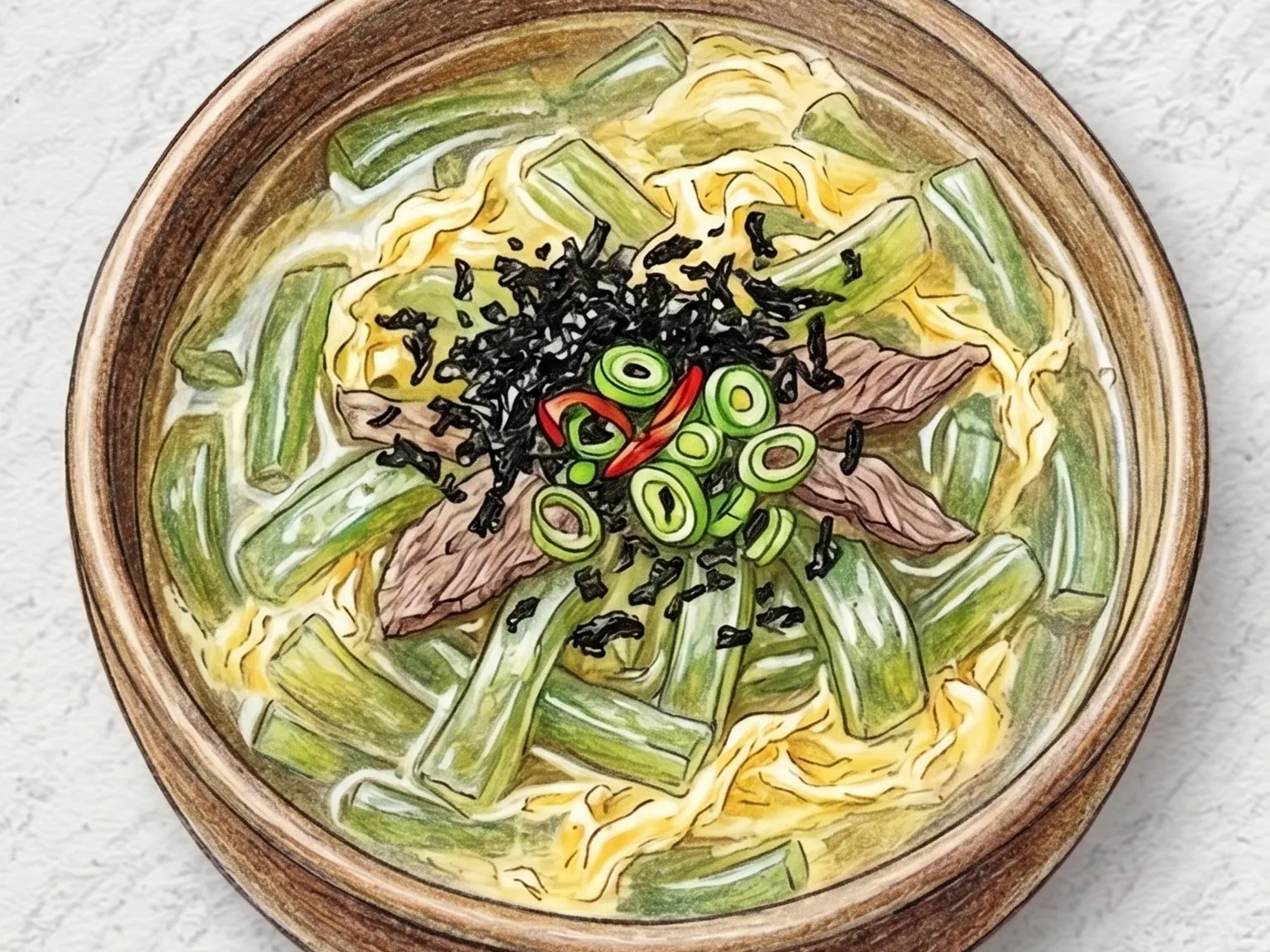
Cheongpo-muk-guk is a traditional Korean soup that floats strips of mung bean jelly in a clear beef brisket broth seasoned with soup soy sauce and garlic. The jelly, made from mung bean starch, has a slippery yet springy texture unlike any noodle or dumpling - it glides across the tongue while offering gentle resistance. Cutting the jelly into thick strips and rinsing briefly in cold water removes excess starch, and simmering for only three minutes keeps the pieces intact. Beaten egg is drizzled in thin streams to form delicate ribbons in the broth, and roasted seaweed flakes scattered on top contribute a toasty, oceanic fragrance.
Adjust Servings
Instructions
- 1
Cut mung bean jelly into thick strips and rinse briefly in cold water.
- 2
Thinly slice beef, boil in water, and skim off foam.
- 3
Season broth with soup soy sauce and garlic.
- 4
Add jelly and simmer only 3 minutes to keep texture.
- 5
Drizzle in beaten egg and add green onion.
- 6
Serve in bowls and top with seaweed flakes.
As an Amazon Associate, we may earn from qualifying purchases.
Tips
Nutrition (per serving)
More Recipes

Korean Burdock Root Soup (Earthy Burdock and Beef Clear Broth)
Ueong-guk is a clear Korean soup that highlights the earthy, almost nutty character of burdock root. Julienned burdock is first stir-fried in sesame oil with thinly sliced beef until the root's raw edge mellows and a toasted aroma rises from the pan. Water is then added and the pot brought to a simmer, during which the burdock's tough fibers gradually soften while maintaining enough structure to provide a pleasant chew. The broth takes on a light brown tint from the initial stir-fry, carrying the sesame and caramelized burdock flavors through to the last spoonful. Soup soy sauce seasons the liquid with umami rather than straight salt, and minced garlic stirred in near the end adds a quiet warmth. Burdock is naturally high in dietary fiber, giving this soup a reputation as a digestive-friendly choice. The root is at its best from autumn through winter, when its sugars concentrate underground, and the soup's understated flavor makes it an easy complement to a multi-dish Korean meal.

Korean Beef Bean Sprout Soup
Sogogi sukju-guk is a quick Korean soup where seared beef and crisp mung bean sprouts come together in a clear, invigorating broth. The beef brisket is first stir-fried in sesame oil to render its fat and deepen its flavor, then water is added and brought to a rolling boil. Bean sprouts enter the pot only in the final minutes so they retain their signature crunch - the plump heads snap between the teeth while the slender tails wilt just enough to release moisture that lightens and clarifies the broth. The contrast between the beefy richness and the sprouts' clean, almost grassy freshness keeps the soup feeling bright rather than heavy. Soup soy sauce and a spoonful of minced garlic round out the seasoning without masking the main ingredients. Because bean sprouts lose their texture quickly once overcooked, the soup is best ladled into bowls the moment it is done. Koreans often spoon it over steamed rice for a fast, satisfying meal that feels both nourishing and easy on the stomach.

Korean Bean Sprout Dried Pollock Soup
Kongnamul-hwangtae-guk pairs stir-fried dried pollock strips with bean sprouts in a clear, restorative broth. The pollock is toasted briefly in sesame oil alongside radish slices, building a nutty, savory foundation before water is added. After ten minutes of simmering, bean sprouts and garlic go in uncovered for five more minutes, keeping the sprouts crisp and letting any residual fishiness escape with the steam. Soup soy sauce and a touch of salt finish the seasoning, and sliced green onion adds brightness. The result is a light but deeply flavored soup commonly served as a morning-after remedy.

Korean Scallion Egg Soup (Quick Two-Ingredient Clear Broth)
Daepa gyeran-guk is a Korean scallion and egg soup that comes together in under ten minutes with just two main ingredients. The technique of adding green onion in two stages is what gives it complexity: the first batch simmers for three minutes, sweetening the broth, while the second goes in raw at the end for a sharp, fresh bite. Egg must be drizzled in a thin stream over reduced heat and left undisturbed for thirty seconds - this creates silky ribbons rather than scrambled clumps. A splash of soup soy sauce and a drop of sesame oil round out the seasoning, turning the simplest of pantry ingredients into a bowl with surprising depth.

Korean Seasoned Mung Bean Jelly Salad
Cheongpo muk - mung bean jelly - is made by boiling starch with water until it sets into a translucent, quivering block. It appears in Joseon-era palace banquet records. The jelly is blanched briefly, cut into matchstick strips, and tossed with julienned cucumber and carrot. A soy-vinegar dressing sharpened with sugar gives a clean, tart edge. The jelly itself is nearly flavorless, acting as a cool, slippery vehicle for the dressing. Served chilled, it is a classic summer banchan.

Korean Andong Guksi (Clear Beef Broth Celebration Noodles)
Andong guksi is a noodle tradition from the city of Andong in North Gyeongsang Province, where it has been served at weddings, ancestral rites, and important family events for centuries - in Korean culture, long noodles symbolize longevity. The broth is made by simmering beef brisket and bones for hours until the liquid is clear yet deeply flavored, with a clean gelatin richness that coats the lips. Wheat noodles - historically hand-pulled but now usually dried - are boiled separately, rinsed, and placed in the strained broth. The toppings are deliberately understated: thin strips of egg jidan, julienned zucchini, and perhaps a few slices of the boiled brisket. Seasoning with soup soy sauce and a touch of garlic keeps the broth transparent and lets the beef flavor speak. Unlike the bold, chili-heavy soups of Andong's other famous dish (jjimdak), guksi is an exercise in restraint and clarity.