Korean Seasoned Mung Bean Jelly Salad
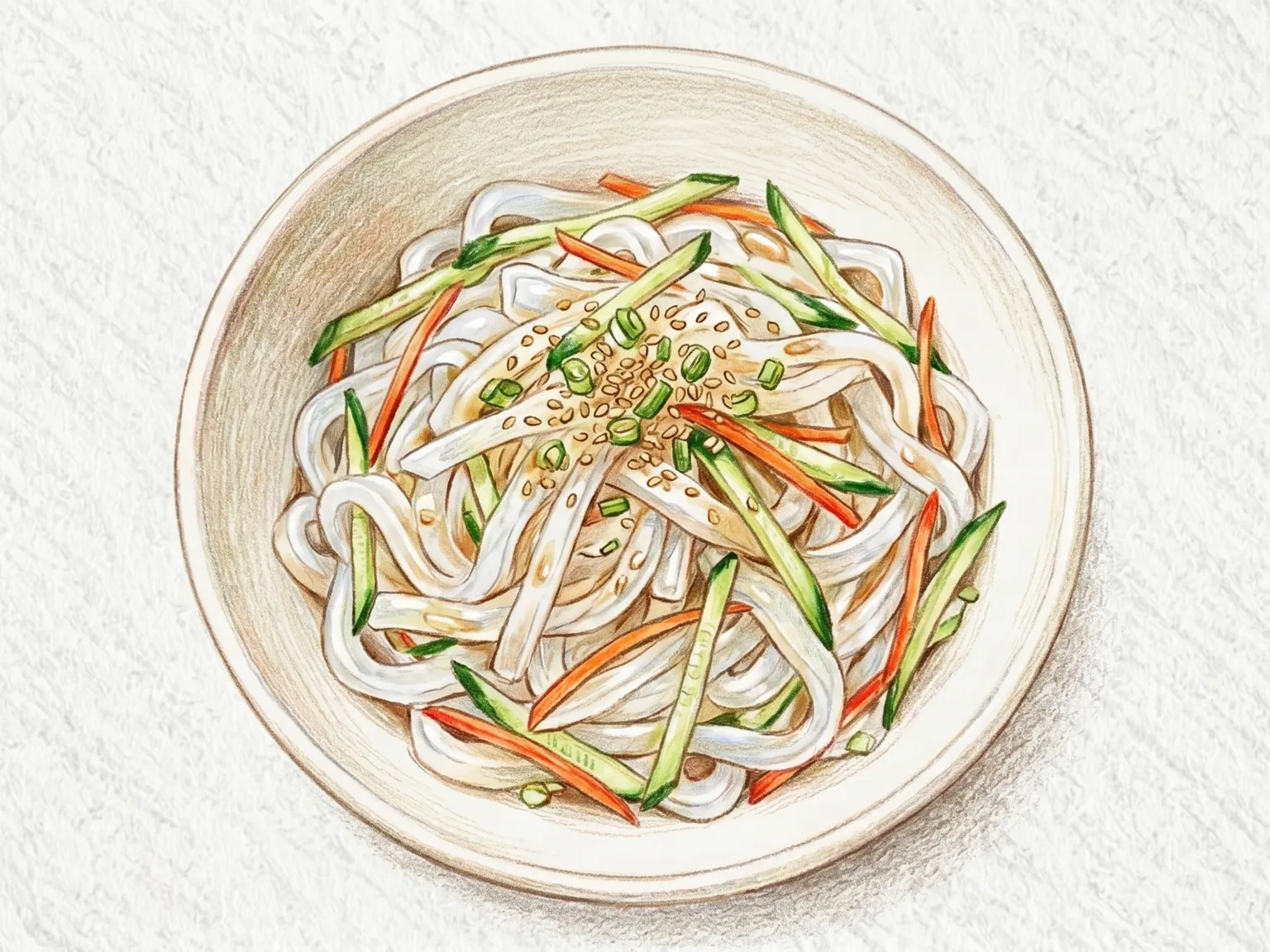
Cheongpo muk - mung bean jelly - is made by boiling starch with water until it sets into a translucent, quivering block. It appears in Joseon-era palace banquet records. The jelly is blanched briefly, cut into matchstick strips, and tossed with julienned cucumber and carrot. A soy-vinegar dressing sharpened with sugar gives a clean, tart edge. The jelly itself is nearly flavorless, acting as a cool, slippery vehicle for the dressing. Served chilled, it is a classic summer banchan.
Adjust Servings
Instructions
- 1
Blanch mung bean jelly for 30 seconds, cool, and cut into strips.
- 2
Julienne cucumber and carrot.
- 3
Mix soy sauce, vinegar, sugar, and sesame oil for dressing.
- 4
Gently toss jelly and vegetables with dressing.
- 5
Sprinkle sesame seeds and serve.
As an Amazon Associate, we may earn from qualifying purchases.
Tips
Nutrition (per serving)
More Recipes

Korean Seasoned Green Seaweed
Cheonggak is a branching green seaweed from Korea's southern coast, prized for its oceanic perfume and cartilage-like crunch. A 10-second blanch brightens the color without destroying its snap. Squeezed and cut to finger lengths, it is dressed in a vinegar-forward sauce with soy, gochugaru, garlic, and sugar that cuts through the brininess. The seaweed must be served immediately - its texture collapses within hours. A specialty of Jeollanam-do coastal markets in winter and early spring.

Korean Stir-fried Mung Bean Jelly
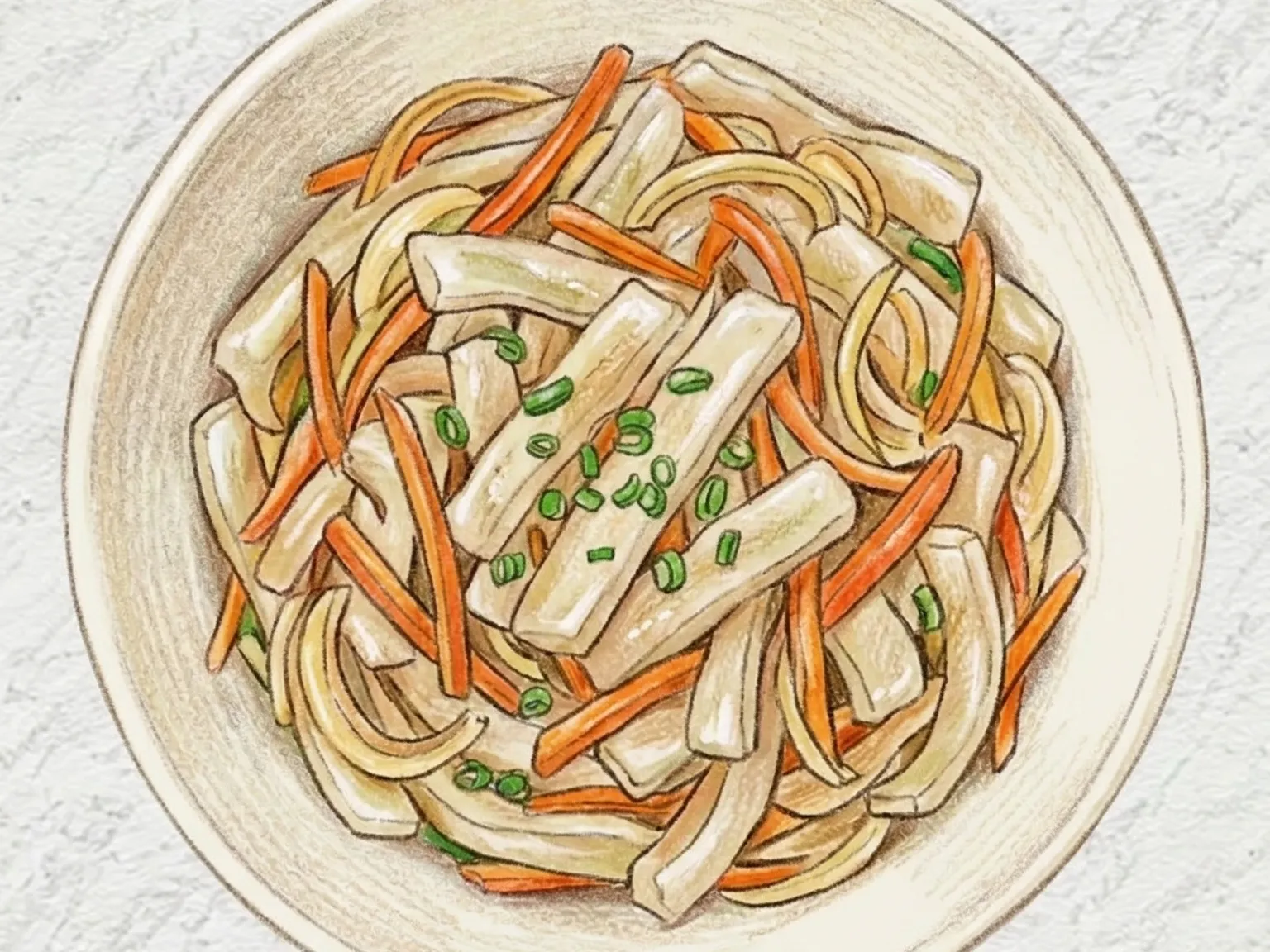
Mung bean jelly is cut into thick strips, blanched for thirty seconds to remove surface starch, then stir-fried gently with julienned carrot and onion in a soy sauce seasoning. The brief blanch firms up the jelly's exterior just enough to survive the tossing in the pan without crumbling, and washing away the starch allows the jelly to absorb the flavors of its companion vegetables more readily. Low heat and a careful hand are non-negotiable; aggressive stirring breaks the strips into shapeless lumps. The carrot contributes a faint natural sweetness, and the onion releases a light caramel note as it softens, both of which fill in the jelly's inherently neutral taste with understated warmth. Chopped green onion added at the very end lifts the dish with a sharp, fresh bite. One tablespoon of sesame oil swirled in after the flame is off coats everything in a glossy sheen and a final wave of nuttiness. At 180 calories and 9 grams of fat, this is a low-calorie side with enough fiber to sit gently in the stomach.

Korean Acorn Jelly Salad with Sesame Soy Sauce
Sesame-dotorimuk-muchim is an acorn jelly salad that begins by slicing 400 grams of dotorimuk into 1-centimeter-thick pieces and blanching them for 20 seconds to firm up the surface and make the jelly more resilient to tossing. Julienned cucumber and thinly sliced onion - soaked briefly in cold water to remove sharpness - join the jelly in a bowl. The dressing of soy sauce, vinegar, red pepper flakes, and sesame oil brings a sharp, tangy bite that contrasts with the neutral mildness of the acorn jelly. Generous sesame seeds are scattered on top, and the dish rests for five minutes before serving so the dressing can seep into the jelly's porous surface. The result is a light, refreshing banchan with a range of textures from springy to crisp.

Korean Broccoli Doenjang Salad
Blanched broccoli in doenjang dressing - a modern Korean banchan bridging Western ingredients with traditional seasoning logic. Florets and thinly sliced stems blanch ninety seconds, then are shocked in cold water for vivid green and a firm bite. The dressing combines doenjang with vinegar and oligosaccharide syrup - fermented salt, acidity, and gentle sweetness that lifts mild bitterness. Ready in under ten minutes and keeps refrigerated for days.

Korean Seasoned Gamtae Seaweed
Gamtae is a green seaweed harvested from Korea's southern coast - primarily around Wando and Jangheung - during winter months. Thinner and more delicate than gim (roasted seaweed), it carries a deeper oceanic perfume. Dried gamtae sheets are torn into large pieces and tossed for no more than twenty seconds with soy sauce, vinegar, sesame oil, gochugaru, sugar, and garlic - over-handling causes the fragile fronds to disintegrate into mush. The vinegar's acidity lifts the seaweed's natural brininess into something bright and clean. Fresh gamtae appears only in winter markets, but the dried form works year-round as a quick banchan.

Korean Mung Bean Jelly Soup
Cheongpo-muk-guk is a traditional Korean soup that floats strips of mung bean jelly in a clear beef brisket broth seasoned with soup soy sauce and garlic. The jelly, made from mung bean starch, has a slippery yet springy texture unlike any noodle or dumpling - it glides across the tongue while offering gentle resistance. Cutting the jelly into thick strips and rinsing briefly in cold water removes excess starch, and simmering for only three minutes keeps the pieces intact. Beaten egg is drizzled in thin streams to form delicate ribbons in the broth, and roasted seaweed flakes scattered on top contribute a toasty, oceanic fragrance.