Charim

2686 Korean & World Recipes

2686+ Korean recipes, clean and organized. Ingredients to instructions, all at a glance.

Korean Stir-fried Mung Bean Jelly

Korean Stir-fried Mung Bean Jelly

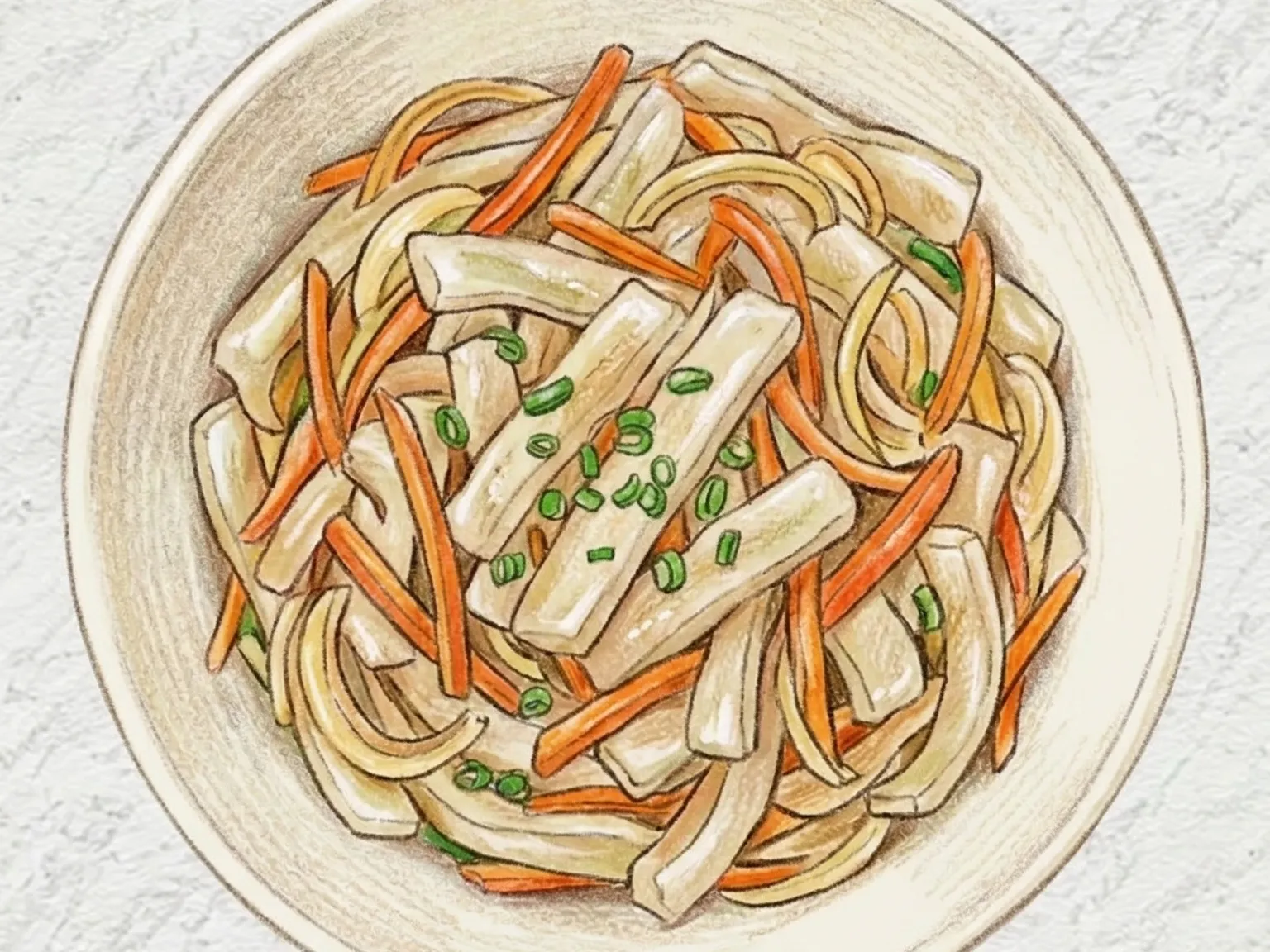
Mung bean jelly is cut into thick strips, blanched for thirty seconds to remove surface starch, then stir-fried gently with julienned carrot and onion in a soy sauce seasoning. The brief blanch firms up the jelly's exterior just enough to survive the tossing in the pan without crumbling, and washing away the starch allows the jelly to absorb the flavors of its companion vegetables more readily. Low heat and a careful hand are non-negotiable; aggressive stirring breaks the strips into shapeless lumps. The carrot contributes a faint natural sweetness, and the onion releases a light caramel note as it softens, both of which fill in the jelly's inherently neutral taste with understated warmth. Chopped green onion added at the very end lifts the dish with a sharp, fresh bite. One tablespoon of sesame oil swirled in after the flame is off coats everything in a glossy sheen and a final wave of nuttiness. At 180 calories and 9 grams of fat, this is a low-calorie side with enough fiber to sit gently in the stomach.

Prep 15min Cook 8min 2 servings

Adjust Servings

2servings
servings

Instructions

  1. 1

    Cut jelly into strips, blanch for 30 seconds, and drain.

  2. 2

    Julienne carrot and onion, then chop green onion.

  3. 3

    Stir-fry vegetables in oil for 2 minutes.

  4. 4

    Add jelly and soy sauce, gently toss over low heat.

  5. 5

    Add sesame oil and green onion, then stir 30 seconds more.

🛒Shop Ingredients on Amazon

As an Amazon Associate, we may earn from qualifying purchases.

Tips

Use low heat and gentle tossing so the jelly doesn't break.

Nutrition (per serving)

Calories
180
kcal
Protein
3
g
Carbs
22
g
Fat
9
g

More Recipes

Korean Seasoned Mung Bean Jelly Salad
Side dishesEasy

Korean Seasoned Mung Bean Jelly Salad

Cheongpo muk - mung bean jelly - is made by boiling starch with water until it sets into a translucent, quivering block. It appears in Joseon-era palace banquet records. The jelly is blanched briefly, cut into matchstick strips, and tossed with julienned cucumber and carrot. A soy-vinegar dressing sharpened with sugar gives a clean, tart edge. The jelly itself is nearly flavorless, acting as a cool, slippery vehicle for the dressing. Served chilled, it is a classic summer banchan.

🥗 Light & Healthy🏠 Everyday
Prep 15minCook 2min4 servings
Korean Stir-fried Garlic Scapes
Stir-fryEasy

Korean Stir-fried Garlic Scapes

Maneul jong bokkeum is a Korean side dish of garlic scapes cut into 4 cm lengths and stir-fried with onion, then coated in a sauce of gochujang, soy sauce, and oligosaccharide syrup. The garlic scapes' sharp, pungent bite meets gochujang's spicy warmth and the syrup's glossy sweetness, producing a three-way balance of salty, sweet, and hot. Overcooking makes the scapes tough, so pulling them from the heat while they are still bright green is essential. Sesame seeds add a finishing nuttiness, and the dish keeps well refrigerated for several days of banchan rotation.

🏠 Everyday🍱 Lunchbox
Prep 10minCook 8min2 servings
Korean Stir-fried Potato Strips
Stir-fryEasy

Korean Stir-fried Potato Strips

Gamja-bokkeum is a staple Korean side dish made by stir-frying julienned potatoes until they reach a satisfying tender-crisp texture. Soaking the potatoes beforehand removes excess starch, preventing them from clumping in the pan. A light seasoning of garlic and salt draws out the potato's natural mild flavor, while a finishing touch of sesame oil and seeds adds a warm nuttiness. It is a humble yet addictive banchan that pairs effortlessly with steamed rice.

🏠 Everyday🍱 Lunchbox
Prep 12minCook 10min2 servings
Korean Garlic Scape Bacon Stir-fry
Stir-fryEasy

Korean Garlic Scape Bacon Stir-fry

Maneuljjong bacon bokkeum is a side dish built on rendered bacon fat, in which garlic scapes and onion are stir-fried and finished with soy sauce and oligosaccharide syrup for a glossy coat. The bacon's smoky saltiness provides a deep flavor base that requires no additional complex seasoning, and the garlic scapes counter it with a sharp, crisp bite. The syrup creates a thin lacquer on the surface that balances the salt with gentle sweetness. Sesame seeds top the finished dish, and reducing the soy sauce compensates if the bacon runs particularly salty.

🏠 Everyday🍱 Lunchbox
Prep 8minCook 9min2 servings
Korean Stir-fried Dried Pollock Strips
Stir-fryMedium

Korean Stir-fried Dried Pollock Strips

Hwangtae-chae-bokkeum is a Korean side dish of shredded dried pollock strips soaked until soft, then stir-fried in a gochujang, oligosaccharide syrup, and soy sauce glaze. The pollock absorbs the seasoning as it cooks, turning chewy and moist with a balanced spicy-sweet coating. Once prepared, it keeps well in the refrigerator for several days, making it a practical banchan to have on hand. It works equally well in lunchboxes and as a casual snack with drinks.

🏠 Everyday🍱 Lunchbox
Prep 12minCook 9min2 servings
Korean Stir-Fried Kimchi (Caramelized Aged Kimchi Banchan)
Side dishesEasy

Korean Stir-Fried Kimchi (Caramelized Aged Kimchi Banchan)

Kimchi-bokkeum is the default way Korean households use up kimchi that has fermented past its fresh prime. Stir-frying tempers the sharp lactic acidity that over-ripe kimchi develops - the heat transforms the sourness into something mellower, sweeter, and more rounded. Onion goes in first and cooks until translucent, laying a sweet foundation before the kimchi and garlic join. Medium heat is essential: it drives off moisture gradually, yielding a thick, concentrated sauce rather than a watery stew. A small addition of gochugaru brightens the color, and a pinch of sugar balances the fermented tang. One tablespoon of kimchi brine amplifies the umami from the lactobacillus culture itself. The finished banchan is versatile enough to eat straight over rice, fold into fried rice, or pile on top of ramyeon.

🏠 Everyday🍱 Lunchbox
Prep 8minCook 10min4 servings
More Stir-fry →