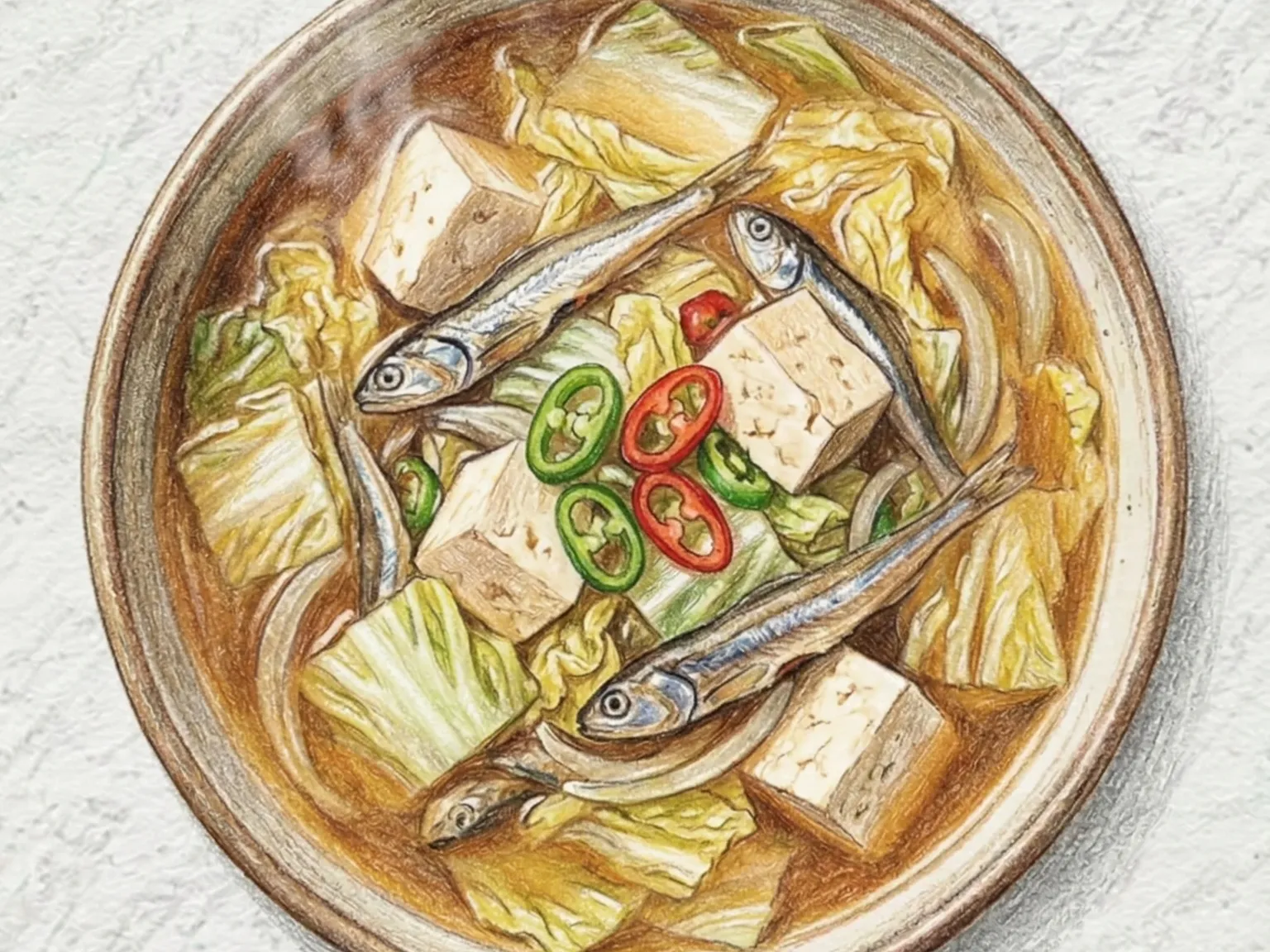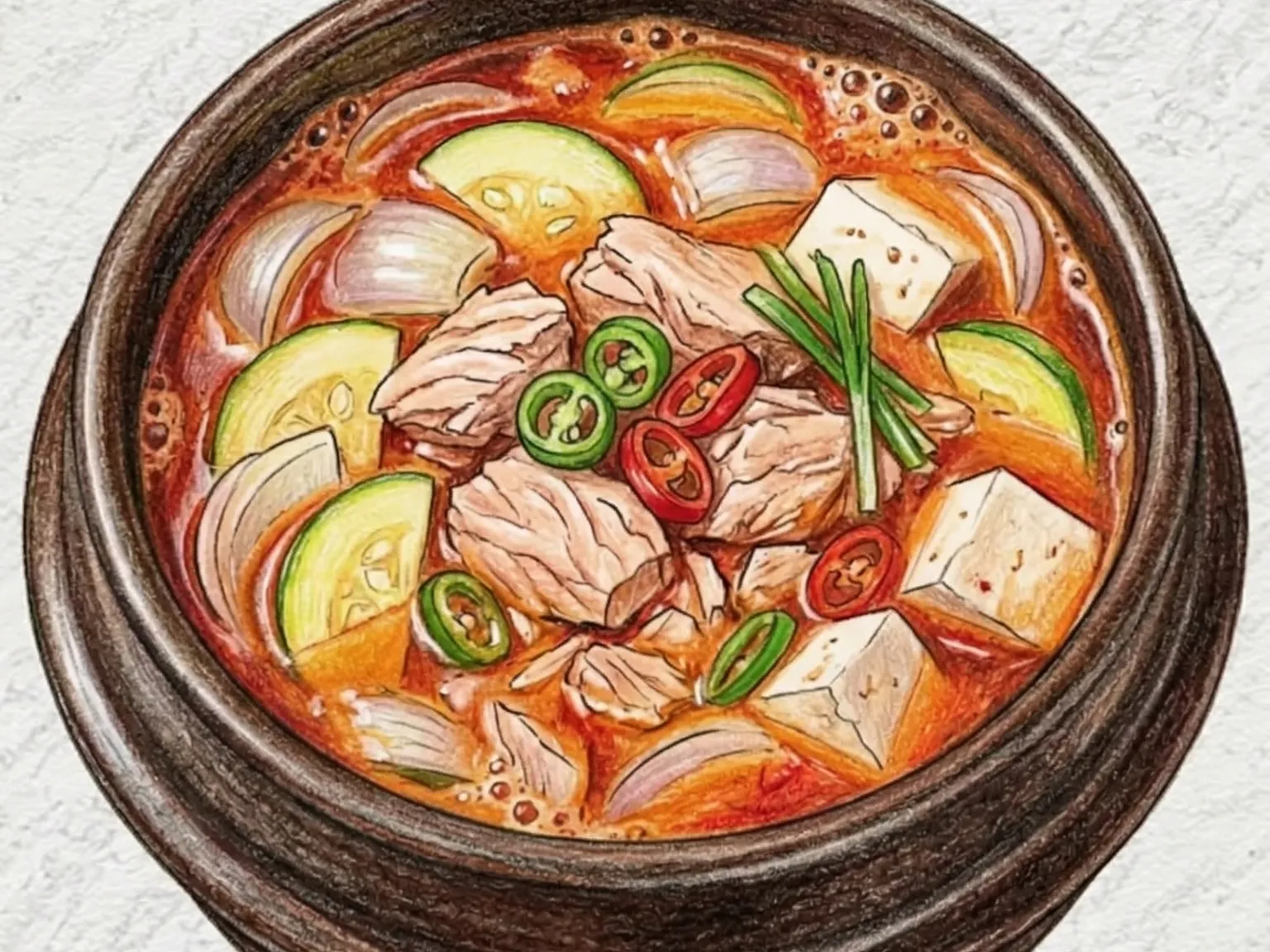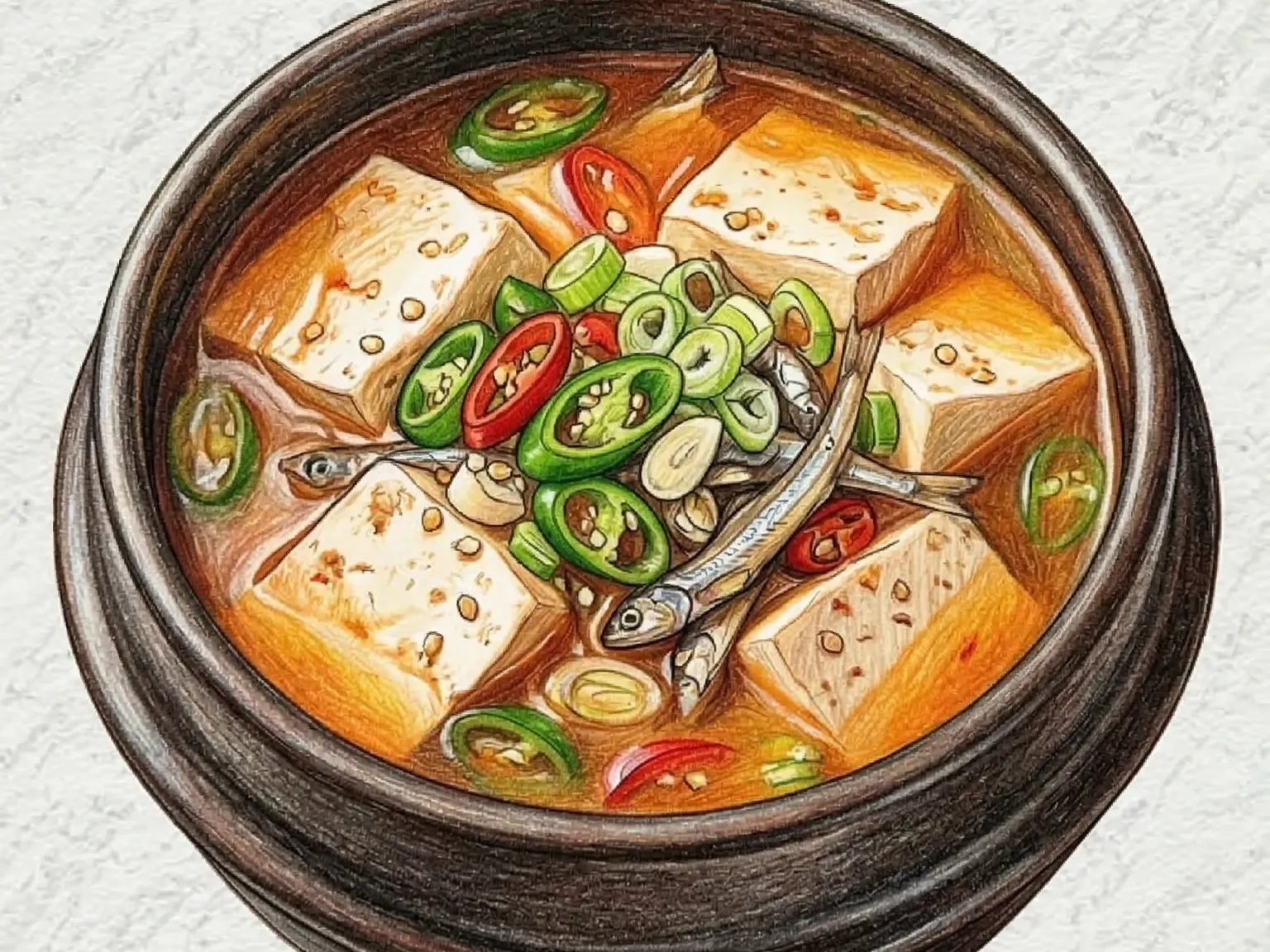
Korean Hot Chili Anchovy Tofu Stew
Dried anchovies, cheongyang chilies, and tofu form the core of this spicy stew. The anchovies are simmered directly in the pot, releasing a concentrated umami that becomes the broth's backbone, while two cheongyang chilies deliver a sharp, lingering heat. Soup soy sauce and chili flakes round out the seasoning, and the soft tofu cubes offer a mild, cooling contrast to the fiery broth.
Adjust Servings
Instructions
- 1
Remove anchovy guts and dry-toast for 1 minute to reduce fishy aroma.
- 2
Simmer toasted anchovies in water for 8 minutes, then strain them out.
- 3
Add onion, chili flakes, soup soy sauce, and garlic; simmer 4 minutes.
- 4
Add tofu and simmer 4 minutes so it absorbs the broth.
- 5
Add cheongyang chili and green onion, cook 1 more minute, and finish.
As an Amazon Associate, we may earn from qualifying purchases.
Tips
Nutrition (per serving)
More Recipes

Korean Pork Gochujang Jjigae
This pork-focused gochujang stew blends chili paste with a half-tablespoon of doenjang, balancing the heat with fermented soybean depth. A full tablespoon of gochugaru intensifies the color and spice level. The 180 grams of pork shoulder render their juices into 700ml of broth, while potato, zucchini, onion, and tofu ensure variety in every bite. The combination of two fermented pastes gives this version a more complex flavor than a pure gochujang stew.

Korean Tuna Stew
A quick weeknight stew built around a single can of tuna. The tuna's oil and flaked meat dissolve into the broth along with gochugaru and soup soy sauce, creating a brothy base that is both spicy and full of umami. Zucchini and onion contribute natural sweetness, tofu softens into the stock, and a cheongyang chili brings an extra kick of heat.

Korean Pork Kimchi Stew (Fermented Kimchi & Pork Shoulder)
Pork kimchi jjigae is one of the most beloved home-cooked Korean stews, built on aged kimchi and pork shoulder. The marbled fat from the pork shoulder melts into the broth, balancing the kimchi's sharp acidity with richness. Tofu and onion bulk up the pot, while soup soy sauce and chili flakes season the liquid. The riper and more sour the kimchi, the better this stew tastes - it is the ideal use for old kimchi.

Korean Beef Brisket & Bean Sprout Chili Stew
Thin-sliced beef brisket and mung bean sprouts are simmered with Cheongyang chilies in this spicy stew. The marbled brisket releases its fat into the anchovy-based broth, creating a rich, beefy foundation. Crunchy bean sprouts provide textural contrast, while two Cheongyang chilies deliver a sharp, direct heat. Tofu, onion, and green onion round out the stew, seasoned with Korean chili flakes and soup soy sauce for a layered, fiery bowl.

Korean Kimchi Tofu Nabe Udon
Kimchi tofu nabe udon is a Japanese-Korean hybrid hot pot noodle built on anchovy-kelp stock. Aged kimchi is sauteed in sesame oil for two minutes to tame its sharp acidity, then the stock goes in along with Korean chili flakes and soup soy sauce to form the broth base. Firm tofu cut into thick slabs and sliced shiitake mushrooms simmer for four minutes, absorbing the spicy-savory broth before thick udon noodles are added for a final two to three minutes. The udon's heft soaks up the surrounding liquid, making each bite intensely flavored. Since kimchi saltiness varies widely, the soy sauce is best added in small increments at the end. Patting the tofu dry before it goes in helps keep the broth from turning cloudy.

Korean Spicy Seafood Noodle Soup
Jjamppong is a fiery Korean-Chinese noodle soup where squid, mussels, and vegetables are stir-fried in chili-infused oil before being flooded with chicken stock and brought to a rolling boil. The high-heat frying step blooms the gochugaru in oil, embedding a smoky, roasted spice into the broth that raw chili powder alone cannot achieve. Cabbage, onion, and green onion soften into the liquid and release their natural sugars, while soy sauce ties the seasoning together. Springy fresh wheat noodles absorb the vivid red broth, delivering intense heat and deep seafood flavor in every mouthful.