Chestnut Mont Blanc Cupcakes
Quick answer
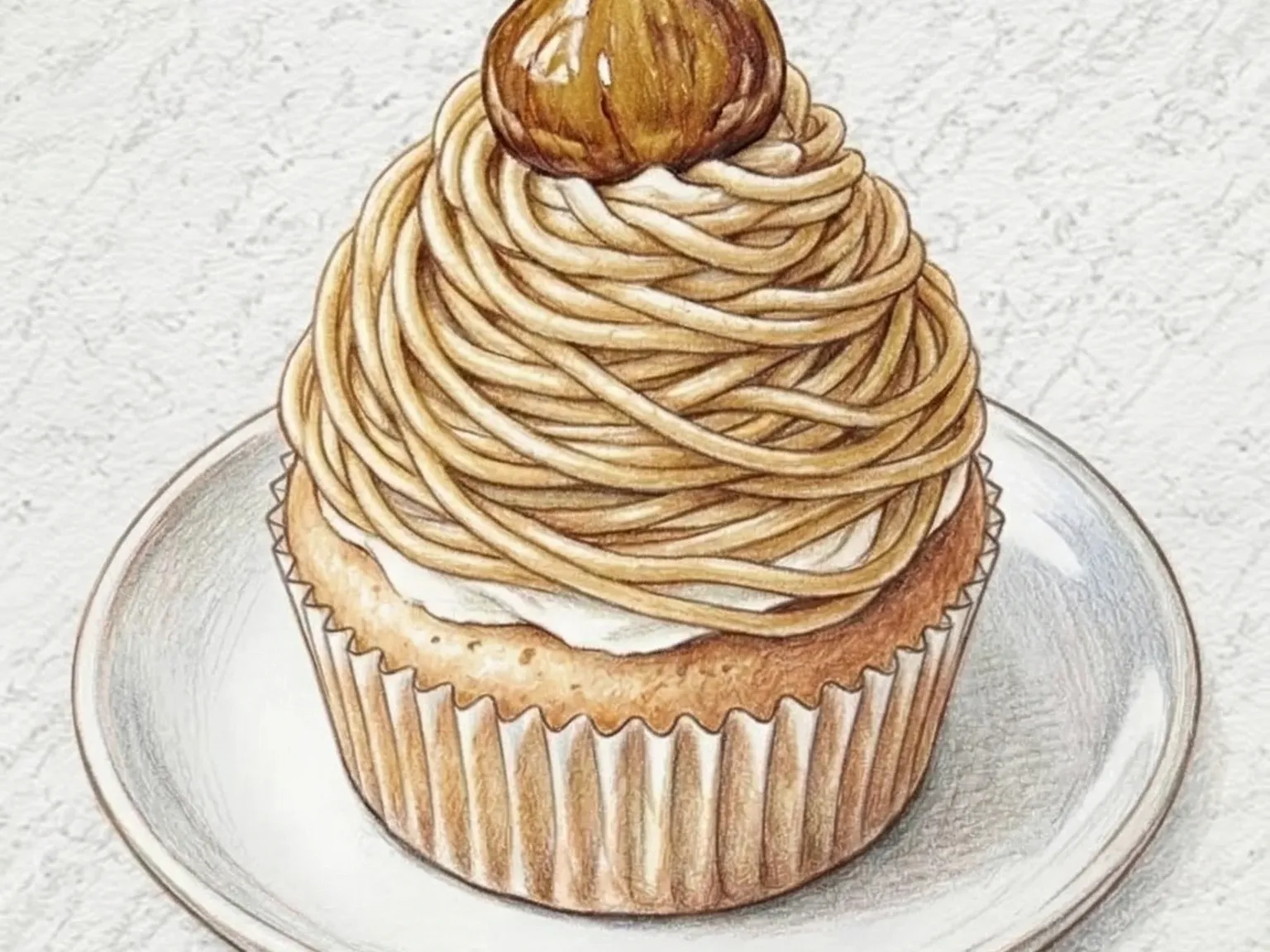
Chestnut Mont Blanc cupcakes stack three distinct layers into a single handheld dessert: a moist sponge base, a dome of whipped cream, and a tangle of piped chestnut cream on top.
What makes this special
- Fine threads of piped chestnut cream form a mountain atop these layered cupcakes.
- Mont Blanc nozzle pipes chestnut cream into layered mountain-shape threads
- Texture unfolds: powdery chestnut, then cream, then sponge moisture
Key ingredients
Core cooking flow
- 1 Preheat the oven to 175°C and line a muffin tin with paper cups.
- 2 Cream 70g butter with 90g sugar until pale and fluffy.
- 3 Sift 120g cake flour with 4g baking powder into the butter mixture.
Chestnut Mont Blanc cupcakes stack three distinct layers into a single handheld dessert: a moist sponge base, a dome of whipped cream, and a tangle of piped chestnut cream on top. The sponge is whisked to a fine, airy crumb that stays soft without being fragile. Whipped cream is mounded over each cupcake, then chestnut paste made from boiled chestnuts blended with butter and sugar is piped through a Mont Blanc nozzle into thin vermicelli-like strands that pile up into a peak. The chestnut cream has a powdery, almost sandy texture on the tongue that dissolves into the cream underneath, creating a flavor shift from dense, nutty richness to light dairy. Each bite moves through all three layers in sequence. A single marron glace placed at the summit serves as both garnish and concentrated flavor accent. These cupcakes are a bakery staple in Japan, where the Mont Blanc has been embraced as a seasonal autumn specialty. The individual cupcake format makes them practical for home bakers and cafes alike, since each portion is self-contained and does not require slicing or plating beyond the initial decoration.
Instructions
Read the steps as a cooking flow: prep, heat, seasoning, doneness control, and finish.
- 1Season
Preheat the oven to 175°C and line a muffin tin with paper cups.
Leave 70g unsalted butter at room temperature until soft.
- 2Season
Cream 70g butter with 90g sugar until pale and fluffy.
Add 2 eggs one at a time, mixing thoroughly to prevent curdling.
- 3Prep
Sift 120g cake flour with 4g baking powder into the butter mixture.
Add 40ml milk and mix until smooth with no lumps.
- 4Heat
Fill the cups to 70% capacity and bake at 175°C for 18-22 minutes until a skewer comes out clean.
Cool completely before proceeding.
- 5Finish
Whip 160ml heavy cream with 20g powdered sugar to stiff peaks.
Mix 180g chestnut paste with 5ml rum until smooth, fold in one third of the cream to lighten, then fold in the rest to finish the mont blanc cream.
- 6Step
Fill a piping bag fitted with a thin star or vermicelli nozzle with the mont blanc cream and pipe it over the cooled cupcakes in thin strands. Work from the center outward in a spiral to create the classic mont blanc shape.
After the steps
Pick a recipe that fits this dish.
Continue with shared ingredients, meal pairings, or a similar method.
Recipes That Go Well With This
More Baking →Based on shared ingredients and meal pairing
Chestnut Madeleine (French Shell Cake with Chestnut Butter Batter)
Chestnut madeleine is a small French cake baked in shell-shaped molds with chestnut paste folded directly into the batter. The chestnut brings a warm, starchy sweetness that layers with butter and honey, producing a flavor that is understated but noticeably complex. The signature dome, known as the hump, rises properly only when the batter is rested in the refrigerator for at least an hour before baking, then transferred directly into a hot oven. This temperature shock is what drives the rapid rise in the center. The crumb is light and moist, and the chestnut flavor comes through clearly rather than being absorbed by the butter. Warm milk or a latte amplifies the roasted chestnut notes, and the compact size makes these ideal for packaging as gifts.
Hallabong Marmalade Madeleines
Hallabong marmalade madeleines are shell-shaped baked treats that combine melted butter with sweet citrus marmalade. The batter is prepared by whisking eggs and sugar, folding in sifted cake flour and baking powder, and incorporating milk, honey, and hallabong marmalade. Melted unsalted butter is added in portions until the batter is glossy. Resting the batter in the refrigerator for thirty minutes before baking is essential, as the cold batter helps form the characteristic hump on top. The cakes are baked at 200°C for four minutes, then at 180°C for eight minutes. This temperature shift ensures a proper rise. The finished madeleines feature a soft texture with chewiness from the bits of candied citrus rind. The contrast between the bitter rind and sweet pulp complements the rich butter aroma. These pastries pair well with black tea or Earl Grey.
Clafoutis (French Baked Cherry Custard Dessert)
Clafoutis is a traditional French dessert from the Limousin region made by arranging fresh cherries in a buttered baking dish, then pouring over a thin batter of eggs, sugar, milk, and flour and baking at 180 degrees Celsius for thirty to thirty-five minutes. The batter is considerably thinner than pancake batter, and the result when baked is a texture that sits between a creamy custard and a light sponge -- the edges puff and turn golden while the center around the cherries stays moist and yielding. Using unpitted cherries is the traditional method: the pits release a faint almond scent during baking that perfumes the surrounding batter in a way that pitted fruit cannot replicate. The cherries also hold their shape better with the pits in. Vanilla extract deepens the egg-and-milk base, and the cherries' own tart juice seeps into the batter during baking, creating concentrated pockets of fruit flavor that balance the overall sweetness. Clafoutis is served directly from the baking dish, typically dusted with powdered sugar and brought to the table while still warm, because the custard texture softens and loosens slightly as it cools, making the warm version noticeably more appealing. Made with blueberries, plums, or apricots instead of cherries, the dessert takes a different name -- flaugnarde -- though the technique remains identical.
Yuja Cream Cheese Tart (Korean Citron Cream Cheese No-Bake Tart)
Yuja Cream Cheese Tart features a crunchy biscuit crust filled with a smooth, oven-baked cream cheese filling sweetened with yuja marmalade. The crust is made from crushed digestive biscuits and melted butter, pressed into a pan and baked until fragrant. For the filling, softened cream cheese is whipped with sugar, eggs, heavy cream, and Korean citron marmalade. A splash of lemon juice is added to elevate the acidity and brighten the citrus notes. This filling is poured over the pre-baked base and baked until the edges set while the center remains slightly soft. After cooling, the tart is chilled in the refrigerator for at least two hours to achieve a dense, mousse-like consistency. Resting the tart overnight allows the citrus peel to infuse the creamy filling, creating a balance of sweet and tangy flavors.
Serve with this
Beet and Goat Cheese Salad
Beet and goat cheese salad begins with whole beets wrapped in foil and roasted at 200°C for forty-five to sixty minutes, long enough for their raw, earthy undertone to convert almost entirely into a concentrated, caramel-adjacent sweetness. Peeling the skins while the beets are still warm requires only the pressure of a paper towel - they slip off cleanly - and slicing them before they cool preserves the vivid crimson-purple cross-section that makes the dish visually striking. Crumbled goat cheese placed on the warm slices softens slightly, and its tangy acidity cuts through the dense sweetness of the roasted root rather than competing with it. Walnuts toasted briefly in a dry pan lose much of their raw bitterness, developing a nuttiness that bridges the mineral quality of the beet and the dairy sharpness of the cheese. Balsamic reduction does more than dress the plate: its concentrated sweet-tart intensity ties the separate components into a coherent whole. Arugula underneath the beet slices provides a peppery bitterness that sharpens the contrast against the sweetness, giving the salad a complexity well beyond what its short ingredient list suggests. A simple dressing of extra-virgin olive oil and lemon juice over the greens keeps the balance light and clear.
Honey-Filled Rice Cakes (Steamed Glutinous Rice with Brown Sugar Syrup)
Kkultteok are bite-sized Korean rice cakes made by kneading glutinous rice flour with hot water, wrapping each 20-gram round of dough around a filling of dark brown sugar, ground cinnamon, and chopped walnuts, then steaming for eight to ten minutes. After steaming, a light brush of sesame oil gives the surface a sheen and keeps the pieces from sticking together, and a final roll in roasted soybean powder adds a dry, nutty outer coating. Biting through the soft, chewy shell releases a pool of melted brown sugar syrup with cinnamon warmth, while the walnut fragments provide crunch against the sticky interior. The most critical step is pinching the dough seam shut as tightly as possible: if the seal fails during steaming, the molten brown sugar syrup leaks out and the rice cake ends up hollow and dry.
Einspanner (Espresso with Vanilla Whipped Cream)
The Einspanner is a coffee beverage originating from Austria that features a distinct layered structure consisting of espresso at the bottom and a dense portion of whipped cream on top. This cream is typically seasoned with a small amount of sugar and vanilla extract to provide a subtle sweetness that complements the coffee. A primary characteristic of this drink is the sharp visual and textural contrast between the dark espresso base and the thick, pale cream that rests on the surface. Proper preparation of the cream is essential for the beverage to function as intended. It must be whipped until it reaches a specific consistency of approximately seventy percent stiffness, which allows it to remain fluid enough to float and spread evenly across the entire surface of the espresso. If the cream is over-whipped and becomes too firm, it will form clumps and fail to integrate naturally with the coffee as the person drinks it. The assembly process involves cooling the espresso for a short period before pouring it into a glass containing ice. The whipped cream is then added slowly by using the back of a spoon to guide it onto the surface of the coffee. This specific technique is used to ensure that the two layers remain separate and do not mix prematurely. To finish the preparation, a fine layer of cocoa powder is dusted over the top of the cream. This addition provides a light chocolate flavor that serves as a bridge between the bitter notes of the espresso and the sweet taste of the whipped cream. Customarily, an Einspanner is consumed without the use of a straw. The standard method is to sip the coffee directly through the layer of cream so that both components reach the palate at the same time. This allows for the simultaneous experience of the concentrated coffee and the flavored cream in every mouthful.
Similar recipes
Sweet Potato Cream Cheese Galette
The success of a rustic galette depends on maintaining cold temperatures during the pastry preparation. By rubbing cold butter into flour to create coarse crumbs, the dough bakes into a crisp, laminated shell with distinct layers. This flat pastry base holds a filling of mashed sweet potato combined with cream cheese, honey, and ground cinnamon. The sweet potato offers a mellow sweetness, while the cream cheese introduces a sharp acidity that balances the overall profile. Honey serves as the binding agent that pulls these components into a unified mixture. Cinnamon provides a warm aromatic element that enhances the autumnal quality of the bake. It is essential to handle the dough quickly; if the butter begins to soften, returning the pastry to the refrigerator immediately preserves the flaky texture. When assembling, leaving a clear four-centimeter border around the filling ensures a clean folding process and prevents leakage in the oven. Using a drier variety of sweet potato, such as the chestnut-type, is effective in preventing a soggy bottom as it contains less moisture. For the best experience, the galette should be served while still warm to enjoy the contrast between the brittle crust and the soft, creamy center. Small amounts of ginger or cardamom can be substituted for cinnamon to create different aromatic profiles.
Chocolate Lava Cake
Chocolate lava cake bakes a batter of melted dark chocolate, butter, whole eggs, egg yolks, sugar, and a small measure of flour in buttered ramekins at 220 degrees Celsius for ten to twelve minutes, producing a set crust and molten center from a single brief baking window. The high oven temperature firms the outside and top of the batter into cake while the core stays liquid, so breaking the surface with a spoon releases a slow pour of concentrated warm chocolate. High-cacao dark chocolate provides a complex, bittersweet depth that pairs with the richness of butter fat, and vanilla extract softens and rounds the overall aroma. Timing controls everything in this recipe: overbaking by even two minutes sets the center solid and destroys the signature flow. The edges of each ramekin should feel just firm when pressed lightly through a towel at the ten-minute mark. Ramekins can be filled ahead and refrigerated, but the baking time then needs an extra one to two minutes to account for the colder starting temperature. Serving with a scoop of vanilla ice cream or a spoonful of cold heavy cream creates a striking contrast between the hot, dense chocolate interior and the chilled, lighter dairy.