Chicago Deep Dish Pizza
Quick answer
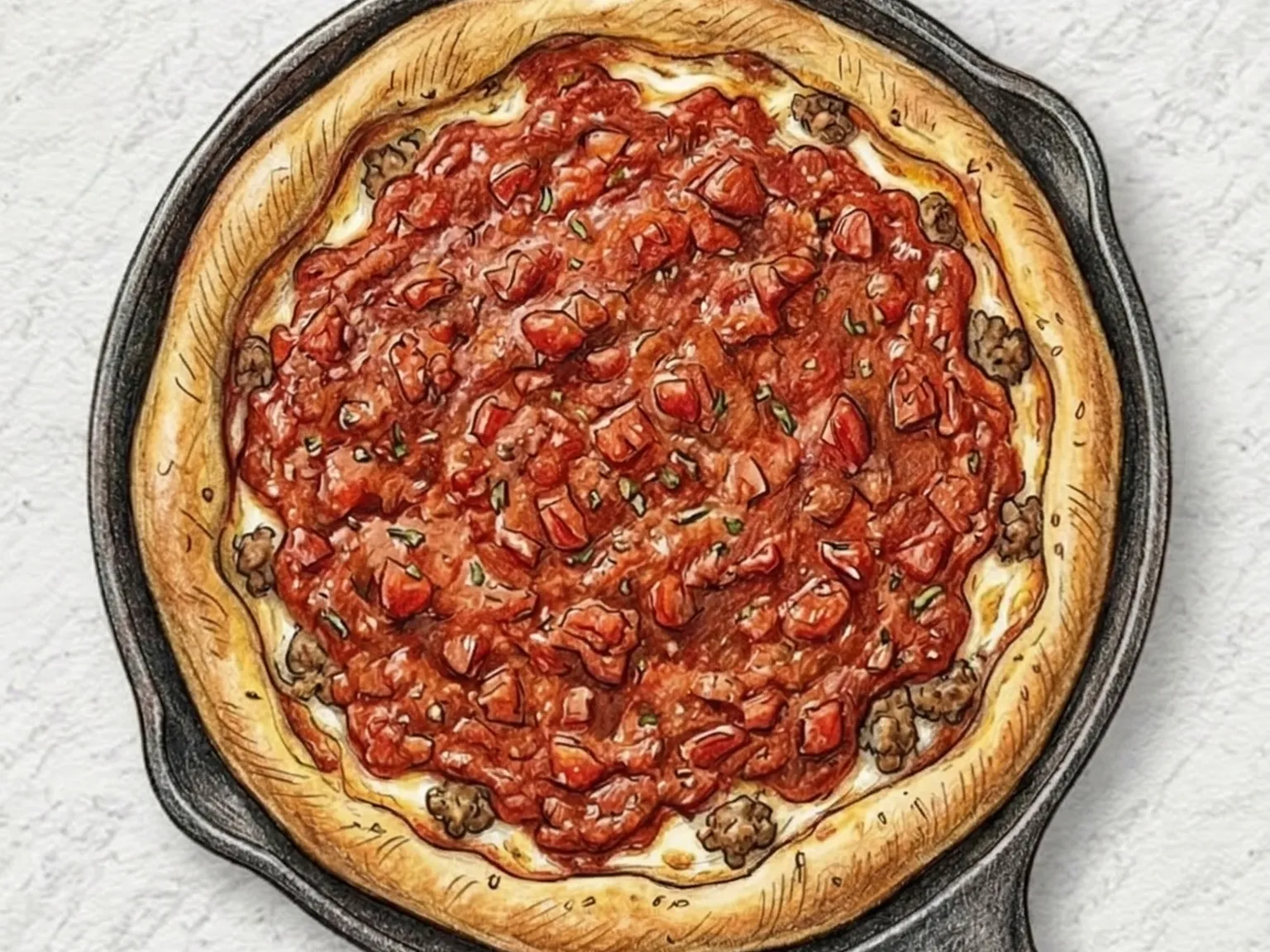
Chicago deep dish pizza is a pie-style pizza where dough is pressed into a deep cast iron or dark metal pan to cover the bottom and climb the walls, then layered with moz...
What makes this special
- Chicago Deep Dish Pizza layers thick tomato sauce over mozzarella in a deep, buttery bread crust.
- Sauce on top shields the cheese from direct heat and concentrates as it bakes
- Dough pressed up the pan sides keeps the deep filling contained in distinct layers
Key ingredients
Core cooking flow
- 1 Preheat the oven fully to 220°C. Coat the bottom and walls of a 25 cm deep c...
- 2 Set a skillet over medium-high heat and cook 80 g onion with 180 g Italian sausage for 6-8 minutes.
- 3 Roll 500 g pizza dough about 5 cm wider than the pan base.
Chicago deep dish pizza is a pie-style pizza where dough is pressed into a deep cast iron or dark metal pan to cover the bottom and climb the walls, then layered with mozzarella cheese and Italian sausage before crushed tomatoes and oregano are spread across the top. Positioning the sauce on the uppermost layer shields the cheese from direct oven heat, preventing it from scorching while the tomato reduces and concentrates over the long bake. The sausage must be pre-cooked with onion to drive off excess moisture, keeping the thick base from turning soggy under the weight of the filling. Stretching the dough wide enough to reach the rim keeps the molten contents contained during baking. After 30 to 35 minutes at 220 degrees Celsius, the pizza requires at least ten minutes of resting before slicing so the interior sets and the layers hold their shape when cut. The dish traces its origins to Pizzeria Uno in Chicago in 1943 and has since become one of the city's defining foods.
Instructions
Read the steps as a cooking flow: prep, heat, seasoning, doneness control, and finish.
- 1Step
Preheat the oven fully to 220°C.
Coat the bottom and walls of a 25 cm deep cast-iron pan with 1 tablespoon olive oil in a thin, even layer so the crust browns and releases cleanly.
- 2Control
Set a skillet over medium-high heat and cook 80 g onion with 180 g Italian sausage for 6-8 minutes.
Stir until the meat browns, the liquid bubbles disappear, and only fat remains, then cool the mixture slightly.
- 3Step
Roll 500 g pizza dough about 5 cm wider than the pan base.
Press it firmly across the bottom and 4 cm up the sides, sealing thin spots or tears so the filling cannot leak during baking.
- 4Control
Spread 250 g mozzarella directly over the dough first.
Add the cooled sausage mixture, then cover the top with 300 g crushed tomatoes and 1 teaspoon oregano, keeping the sauce layer even to protect the cheese.
- 5Heat
Sprinkle 30 g parmesan over the tomato layer and bake on the middle rack for 30-35 minutes.
Remove the pizza when the crust edges are deep golden and the tomato topping is bubbling thickly.
- 6Season
Do not cut the pizza straight from the oven.
Rest it in the pan for at least 10 minutes, then slice slowly with a vertical knife motion once the cheese and sauce settle enough to hold layers.
After the steps
Pick a recipe that fits this dish.
Continue with shared ingredients, meal pairings, or a similar method.
Recipes That Go Well With This
More Western →Based on shared ingredients and meal pairing
Chicken Noodle Soup
Chicken noodle soup simmers chicken breast with onion, carrot, and celery in chicken stock, then finishes with egg noodles for a classic American home-cooked meal. Sauteing the vegetables in olive oil before adding the stock draws out their natural sweetness and infuses the broth with their flavor from the start. Poaching the chicken breast whole and shredding it along the grain produces long strands that mix naturally with the noodles on the spoon. Adding the noodles at the very end and cooking them only for the time listed on the package keeps them from turning soft and mushy. For leftovers, storing noodles separately and combining them when reheating preserves their texture.
Green Bean Casserole
Green bean casserole bakes blanched green beans in a mushroom cream sauce, then tops them with crispy fried onions for a contrast of textures that defines this American holiday side dish. Blanching the beans for just three minutes and shocking them in ice water preserves their bright green color and a slight crunch that survives the oven. Sauteing onion and mushrooms in butter, stirring in flour to build a roux, and gradually adding milk produces a smooth cream sauce infused with earthy mushroom flavor. After twenty minutes in the oven, the casserole is pulled out and topped with fried onions, then returned for five more minutes so the onions crisp without burning. The finished dish layers the crunch of the topping against the creamy sauce and tender-crisp beans.
Real Pineapple Sherbet
This refreshing fruit dessert is prepared by scooping out the flesh of a mini pineapple and using its hollowed shell as a serving vessel. The fruit pulp is blended until smooth to prevent icy lumps, then mixed with sugar, lemon juice, and oligosaccharide syrup to achieve a sweet and tangy flavor. After pouring the mixture back into the shell and covering it with the top lid, it is frozen for at least four hours. Stirring the mixture occasionally during freezing breaks up ice crystals, resulting in a smoother texture. The active bromelain enzyme present in the fresh fruit provides a subtle tingly sensation on the tongue. Serving the sherbet directly inside the pineapple skin minimizes juice loss and keeps the dessert cold. Letting it stand for five minutes before scraping and topping with fresh apple mint leaves makes it ready to serve.
Loaded Baked Potato
Loaded baked potato starts with a russet potato baked whole at 200 degrees Celsius for about 50 minutes until the inside is fluffy and the skin is crisp. Rubbing the skin with salt and butter before baking and poking holes with a fork ensures even heat penetration and a thin, crunchy shell. The hot potato is split open, the flesh is fluffed with a fork, then piled with shredded cheddar cheese - which melts on contact - crumbled crispy bacon, cold sour cream, and chopped chives. The sour cream's cool tang balances the salty bacon and rich cheese, while the chives add a mild onion freshness. No additional cooking is needed beyond the bake itself, making it equally suited as a side dish or a full meal.
Serve with this
Kimchi Bacon Mac and Cheese
Kimchi bacon mac and cheese layers aged kimchi's lactic tang and smoky bacon into a classic American cheddar cheese sauce over elbow macaroni. A butter-flour roux forms the base, with milk whisked in to build a béchamel before cheddar is melted into a thick, clinging sauce. Crisp bacon pieces add salt and crunch throughout, while chopped ripe kimchi introduces fermented acidity that counteracts the richness of the cheese. A pinch of gochugaru runs underneath with mild, warming heat. The tubular macaroni shape traps sauce inside and out, ensuring each forkful carries the full spectrum of creamy, tangy, and smoky flavors.
Fruit Cottage Cheese Bowl
This high-protein bowl requires no cooking and comes together in under five minutes. A generous scoop of cottage cheese forms the base, and fresh strawberries, blueberries, and banana are arranged on top in whatever combination looks appealing. The cheese's mild, lactic saltiness pairs naturally with the fruit's sweetness without needing any added dressing or seasoning. Sliced almonds contribute crunch and a layer of healthy fats, while chia seeds provide omega-3s and a subtly gel-like texture once they have had a moment to absorb the moisture around them. A light drizzle of honey brings all the components together with a unifying sweetness. The simplicity of the bowl makes it a practical choice for a quick breakfast or a post-workout meal when protein matters but time is short.
Fresh Lemon Ade
Fresh lemonade is a citrus drink assembled by pouring hand-squeezed lemon juice and simple syrup over ice, then topping slowly with sparkling water. The sharp acidity of fresh lemon is tempered by the syrup's rounded sweetness, creating a balance that bottled juice cannot replicate. A tiny pinch of salt amplifies both the sweet and sour notes simultaneously, a small addition with a noticeable effect. Lemon slices and mint leaves added to the glass release fragrance continuously as the drink sits. Pouring the sparkling water last and gently preserves the carbonation through every sip, so the order of assembly matters as much as the ingredients themselves.
Similar recipes
BBQ Ribs
BBQ ribs begin with a rack of pork spare ribs rubbed thoroughly with paprika, brown sugar, garlic powder, and black pepper, then left overnight so the seasoning penetrates deep into the meat. Low-and-slow cooking at around 130 degrees Celsius for two or more hours breaks down connective tissue until the meat separates cleanly from the bone without pulling. The dry rub caramelizes against the rendered fat into a sticky, darkened crust that carries the most concentrated flavor. A final glaze of barbecue sauce layers smoky sweetness and a faint vinegar tang over that crust, so each bite alternates between savory depth and bright acidity. Served alongside coleslaw or grilled corn, the side dishes offset the heavy richness of the ribs. Skipping the overnight rest or rushing the oven time produces noticeably tougher, less flavorful results.
Lemon Meringue Pie
A blind-baked pie crust holds a tart lemon curd filling crowned by a billowy meringue that is briefly baked until its peaks turn golden. The curd is built by cooking lemon juice, water, sugar, and cornstarch until thick, then rapidly whisking in egg yolks and finishing with butter for a glossy, velvety consistency. The filling's sharp citrus bite meets the meringue's airy sweetness in the same forkful, creating a dramatic contrast that is the hallmark of this pie. Spreading the meringue directly over the hot curd helps the two layers bond and reduces the weeping that can form between them. A short burst at 200 degrees Celsius tips each meringue peak with a gradient of caramel brown while the interior remains soft and marshmallow-like. The pie crust contributes a third texture, short and crisp, that grounds the two softer layers above it. Chilling the assembled pie before cutting produces the cleanest slices, with each layer visible in cross-section. Adding lemon zest to the curd intensifies the citrus aroma beyond what juice alone provides.
Pecan Pie
A buttery pie crust holds a filling of pecans suspended in a dark, syrupy custard made from brown sugar, corn syrup, eggs, and melted butter. The filling bakes into a glossy, caramel-like layer that is sticky and dense beneath a top crust of whole pecans. The brown sugar gives a molasses depth that white sugar cannot match, while the corn syrup provides the characteristic gooey texture. When the pie comes out of the oven, the center should still wobble slightly; it firms as it cools to room temperature. If the top browns too quickly, a loose tent of foil placed halfway through baking protects the nuts from burning. Slicing is cleanest after the pie has cooled completely, and a scoop of vanilla ice cream alongside each piece rounds out the richness.