Chicken and Dumplings
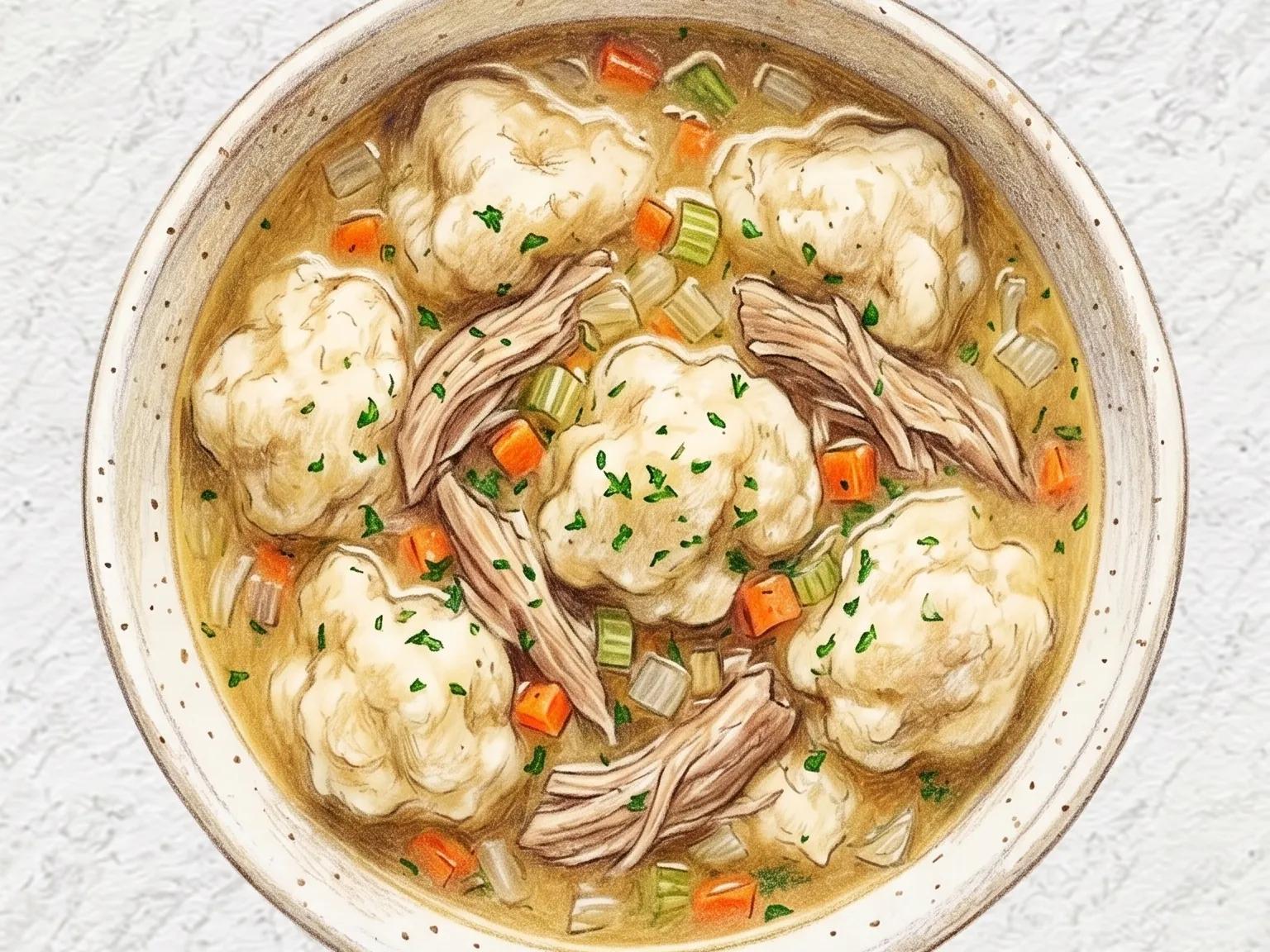
Chicken and dumplings is a Southern American home-style dish where chicken thighs, carrot, onion, and celery simmer in chicken stock, then spoonfuls of a simple flour-and-baking-powder batter are dropped on top and steamed under a covered lid. The chicken is simmered for fifteen minutes, shredded along the grain, and returned to the pot - shredding allows the broth to penetrate the meat more deeply than cubing would. The vegetables release natural sugars into the stock, building a layered savory base. Once the dumpling batter goes in, the lid must stay closed for a full twelve minutes so trapped steam puffs the dough into light, pillowy rounds; opening early lets steam escape and leaves the dumplings flat and dense. The finished dumplings are soft on the outside and bread-like inside, absorbing the rich broth with each bite.
Adjust Servings
Instructions
- 1
Melt butter in a pot and sauté onion, carrot, and celery for 5 minutes.
- 2
Add chicken thighs, sear lightly, then add stock and simmer for 15 minutes.
- 3
Mix flour, baking powder, and milk to form a thick dumpling batter.
- 4
Shred chicken into bite-sized pieces and return to the pot.
- 5
Drop spoonfuls of batter into the stew, cover, and cook for 12 minutes.
- 6
Once dumplings are puffed and cooked through, adjust seasoning and serve.
As an Amazon Associate, we may earn from qualifying purchases.
Tips
Nutrition (per serving)
More Recipes

Chicken Pot Pie
Chicken pot pie fills a butter pie crust with chicken, carrots, potatoes, and peas bound in a creamy roux-based sauce, then bakes until the top turns golden and the filling bubbles. The roux - butter cooked with flour - thickens into a rich sauce when chicken broth and heavy cream are whisked in, coating every piece of filling. Pre-boiling the carrots and potatoes ensures they cook through evenly within the oven time, while peas go in last to keep their color and slight crunch. Brushing the top crust with egg wash produces a glossy, deeply golden surface during baking. After 35 minutes at 200 degrees Celsius, the filling should be visibly bubbling at the edges, and breaking through the flaky crust reveals the thick cream sauce underneath.

Pot Roast
Pot Roast is a cornerstone of American home cooking, where a tough cut of beef is braised low and slow with vegetables and stock until it can be pulled apart with a fork. Chuck roast is the ideal choice - its abundant connective tissue and intramuscular fat break down over hours of gentle heat, converting collagen into gelatin that makes the meat moist and rich. Searing the beef on all sides builds a brown crust that contributes deep flavor, and adding tomato paste to the pan before deglazing creates an umami-rich foundation. Beef stock is poured to about two-thirds up the side of the meat, and the covered pot goes into a 160-degree oven for at least three hours, during which the liquid reduces and concentrates into a natural gravy. Carrots and potatoes are added in the final hour so they hold their shape while absorbing the braising liquid's flavor.

Shrimp and Grits
Shrimp and grits layers creamy, cheese-enriched grits beneath sauteed shrimp cooked in rendered bacon fat. The grits are whisked gradually into a mixture of boiling water and milk, then stirred frequently over low heat for about fifteen minutes until they reach a smooth, porridge-like consistency. Cheddar cheese and butter folded in at the end add richness and a slight tang. Bacon is rendered until crisp first, and its fat becomes the cooking medium for the shrimp, transferring smoky, salty depth into each piece. Paprika dusted over the shrimp before cooking contributes warm color and a mild earthy note. The shrimp should be pulled from the heat the moment they turn opaque - even a minute too long makes them rubbery.

Chicken and Rice Casserole
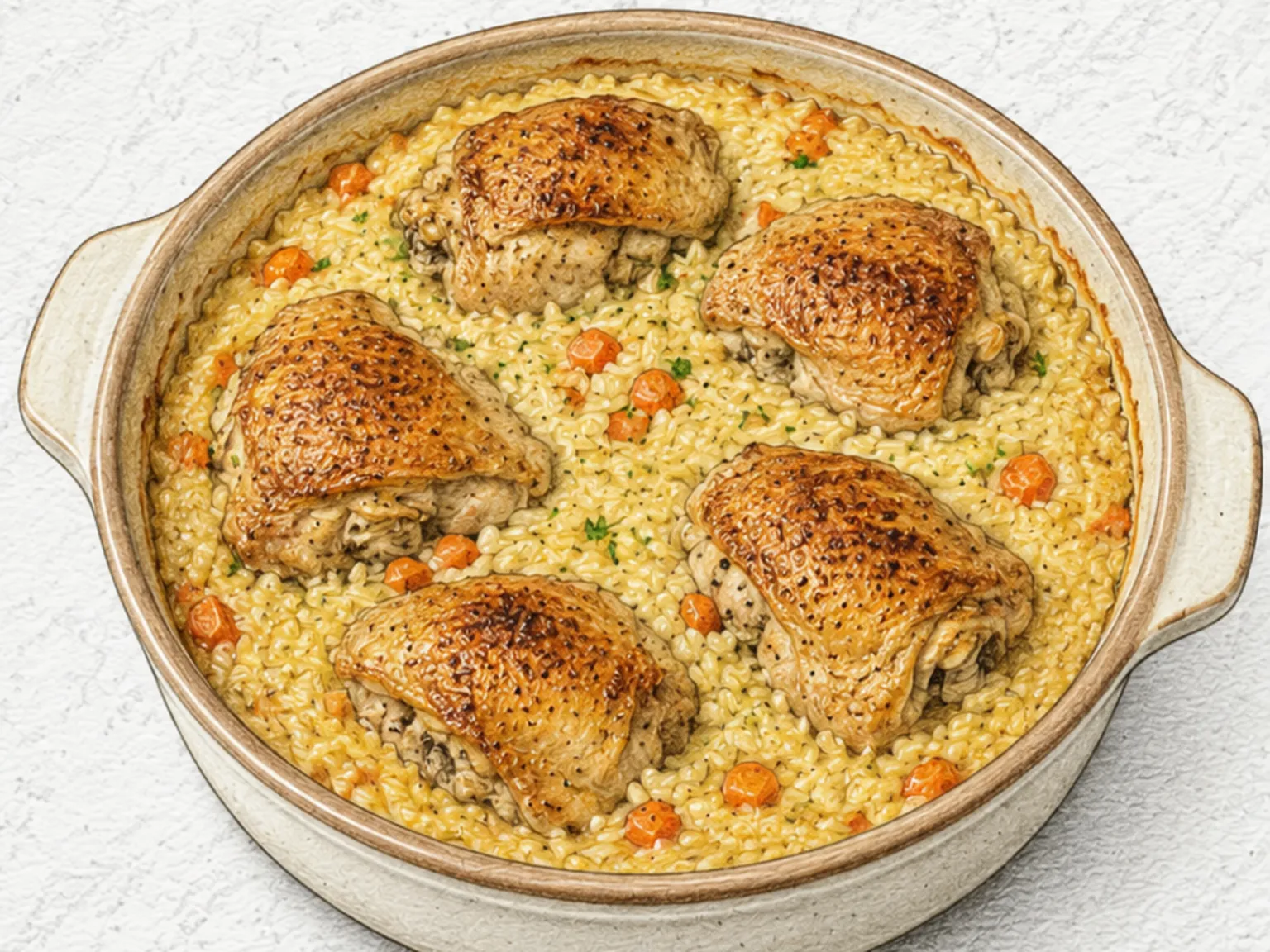
Chicken and rice casserole is an American one-dish bake where seasoned chicken thighs sit on top of rice, sauteed onion and carrot, chicken stock, and heavy cream, all placed in a single baking dish and cooked together in the oven. Rinsing and briefly soaking the rice beforehand ensures even moisture absorption during the bake. The cream blends with the stock to create a rich liquid that coats each grain as it cooks. Covering the dish for the first thirty-five minutes traps steam so the rice and chicken cook through simultaneously, and removing the cover for the final ten minutes browns the chicken skin. Fat from the thighs renders in the oven heat and drips down into the rice, distributing a savory richness throughout without needing additional seasoning.

Peach Cobbler
Sliced peaches are tossed with sugar and lemon juice, spread in a baking dish, and covered with spoonfuls of biscuit batter that bakes into a golden, slightly craggy topping. In the oven, the fruit juices bubble up around the edges and seep into the base of the dough, creating a zone where crisp crust meets soft, fruit-soaked interior. The lemon sharpens the peach flavor and prevents it from tasting flat under all the sugar. If the peaches lack sweetness on their own, an extra tablespoon of sugar in the fruit layer compensates without making the topping heavier. Served warm with a scoop of vanilla ice cream, the contrast between hot cobbler and cold cream is as much a part of the experience as the flavor itself.

Chicken Curry
Chicken curry is one of the world's most universal dishes, adapted as it traveled from the Indian subcontinent through Japan and into Korea, each culture reshaping it to local taste. The Japanese-style version uses a flour-and-butter roux for a thick, mild sauce, while Indian preparations build complexity by browning onions deeply and layering whole and ground spices with tomato. Chicken, potato, carrot, and onion simmer together until the vegetables release their starch and sweetness into the sauce, creating a velvety body. The essential pleasure is spooning the curry over steamed rice and watching it seep between the grains. Leftover curry reheated the next day tastes notably deeper - the Japanese call this nikkame no curry (second-day curry) and many prefer it to the fresh pot, as the spice compounds have had time to meld and the starches further thicken the sauce.