Chicken Chasseur
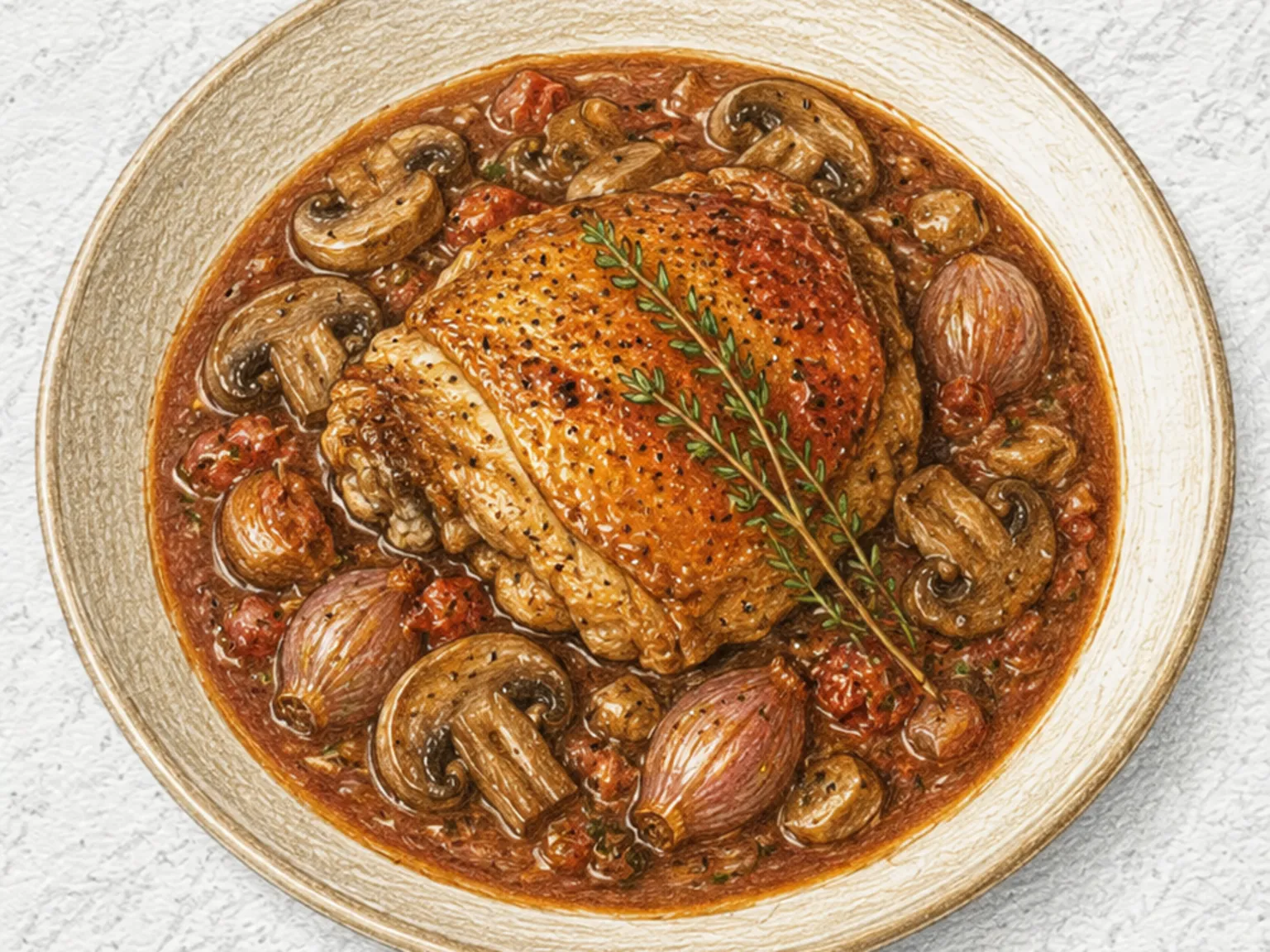
Chicken chasseur is a French home-style braise where chicken thighs are seared skin-side down until golden, removed, and then button mushrooms, shallots, and garlic are sauteed in the same pan with butter. White wine deglazes the browned fond from the bottom, and after reducing by half, tomato puree, chicken stock, and thyme go in before the chicken returns for a covered twenty-five-minute simmer. The initial sear is essential - it creates the caramelized residue on the pan that becomes the backbone of the sauce's roasted depth. Mushrooms need a wide pan so their moisture evaporates before they start browning, which concentrates their earthy flavor rather than diluting it. The white wine's acidity intensifies as it reduces, and the tomato puree adds a gentle sweetness that balances it. Uncovering for the final five minutes thickens the sauce to the right consistency. Mashed potatoes or crusty bread are the traditional accompaniment for absorbing the sauce.
Adjust Servings
Instructions
- 1
Season chicken thighs with salt and pepper, sear skin-side down in olive oil until golden, then remove.
- 2
Add butter to the same pan and saute shallots, garlic, and mushrooms until moisture evaporates.
- 3
Pour in white wine, scrape up browned bits, and reduce by half.
- 4
Add tomato puree, chicken stock, and thyme, return chicken, cover, and simmer for 25 minutes.
- 5
Uncover and reduce for 5 more minutes to thicken, then adjust seasoning.
- 6
Finish with chopped parsley and serve with mashed potatoes or baguette.
As an Amazon Associate, we may earn from qualifying purchases.
Tips
Nutrition (per serving)
More Recipes

Chicken Fricassee (French White Wine Cream Braised Chicken)
Chicken fricassee is a French white braise where chicken thighs are lightly seared - just enough to firm the surface without deep browning - then set aside while mushrooms, onion, and garlic are sauteed in butter and dusted with flour to form a roux. Chicken stock is whisked in to dissolve the roux into a smooth base, the chicken returns for a twenty-five-minute covered simmer, and heavy cream is added for a final ten minutes of gentle reduction. The deliberately light sear is what distinguishes fricassee from darker braises; heavy browning would muddy the pale, delicate sauce. The roux provides body without heaviness, and the cream transforms the broth into a silky coating that clings to the meat. Mushroom earthiness and onion sweetness emerge quietly within the cream. Bread or boiled potatoes are the traditional side, used to soak up the sauce completely.

Chicken Provençal (South French Tomato Olive Herb Chicken)
Chicken Provencal sears chicken thighs until the skin is deeply golden, then simmers them with cherry tomatoes, black olives, capers, garlic, and thyme in white wine for a southern French home-style dish. A hard sear on the chicken skin builds both crispness and a layer of fond on the pan bottom, which the wine dissolves into the sauce during deglazing. As the cherry tomatoes burst during cooking, their juice combines with the salty olives and tangy capers to form a bright, layered Mediterranean sauce. Twenty minutes of covered simmering followed by eight to ten minutes uncovered concentrates the sauce and lets it cling to the chicken. A small amount of lemon zest added at the end sharpens the aromatics of the finished dish.

Coq au Vin (French Red Wine Braised Chicken with Mushrooms)
Coq au vin is a classic French braise in which chicken pieces are browned until golden, then simmered in red wine with bacon lardons, shallots, button mushrooms, garlic, chicken stock, and tomato paste. Browning the chicken first seals the surface and adds caramelized depth to the braising liquid. Cooking the lardons, shallots, and mushrooms in the same pan layers their flavors into the fond before the wine deglazes it. Forty-five minutes of covered braising allows the wine's tannins and fruit character to permeate the meat, producing a sauce that is deeply complex and savory. Reducing the sauce at the end concentrates it to a glossy consistency that clings to each piece of chicken.

Blanquette de Veau (French Veal Stew in Creamy Egg-Lemon Sauce)
Blanquette de veau is a classic French white stew where veal shoulder is first blanched in cold water to remove impurities, then gently simmered with carrot and onion in fresh water for over an hour until the meat yields easily to a fork. The cooking broth is transformed into a sauce by building a butter-flour roux and whisking in the liquid, then finishing with tempered heavy cream and egg yolks to create a velvety coating that clings to every piece of meat. The sauce must never boil after the yolks go in - even brief overheating will cause it to break. A squeeze of lemon at the end lifts the cream's richness, and button mushrooms sauteed separately in butter add an earthy counterpoint when folded back in.

French Celeriac Remoulade
Celeriac remoulade shreds thickly peeled celeriac into fine matchsticks and dresses them in a mixture of Dijon mustard, mayonnaise, lemon juice, and white wine vinegar. Tossing the shreds with half the lemon juice immediately after cutting prevents enzymatic browning, while the remaining juice goes into the dressing for acidity. The Dijon's sharp heat balances the mayonnaise's richness, and a short 15-minute chill in the refrigerator lets the flavors meld evenly into the celeriac. Cutting the matchsticks as thin as possible increases surface area for faster dressing absorption, and overnight refrigeration deepens the flavor further.

Classic Croissant
A classic croissant is built through lamination - a process of folding cold butter into yeast-leavened dough in successive turns to create dozens of alternating layers. Three sets of folds produce a structure so layered that when baked, the butter melts and releases steam, forcing each layer apart from within. The exterior caramelizes into a shell so thin and crisp it shatters at the slightest pressure, scattering golden flakes. The interior, by contrast, is a honeycomb of soft, airy strands held together by the ghost of dissolved butter. Tearing a warm croissant apart releases a rush of butter fragrance that fills the room. The dough itself carries a faint sweetness from sugar and milk, but the dominant flavor is pure butter, amplified and transformed by heat.