Chicken Inasal (Bacolod Citrus Lemongrass Grilled Chicken)
Asian Medium

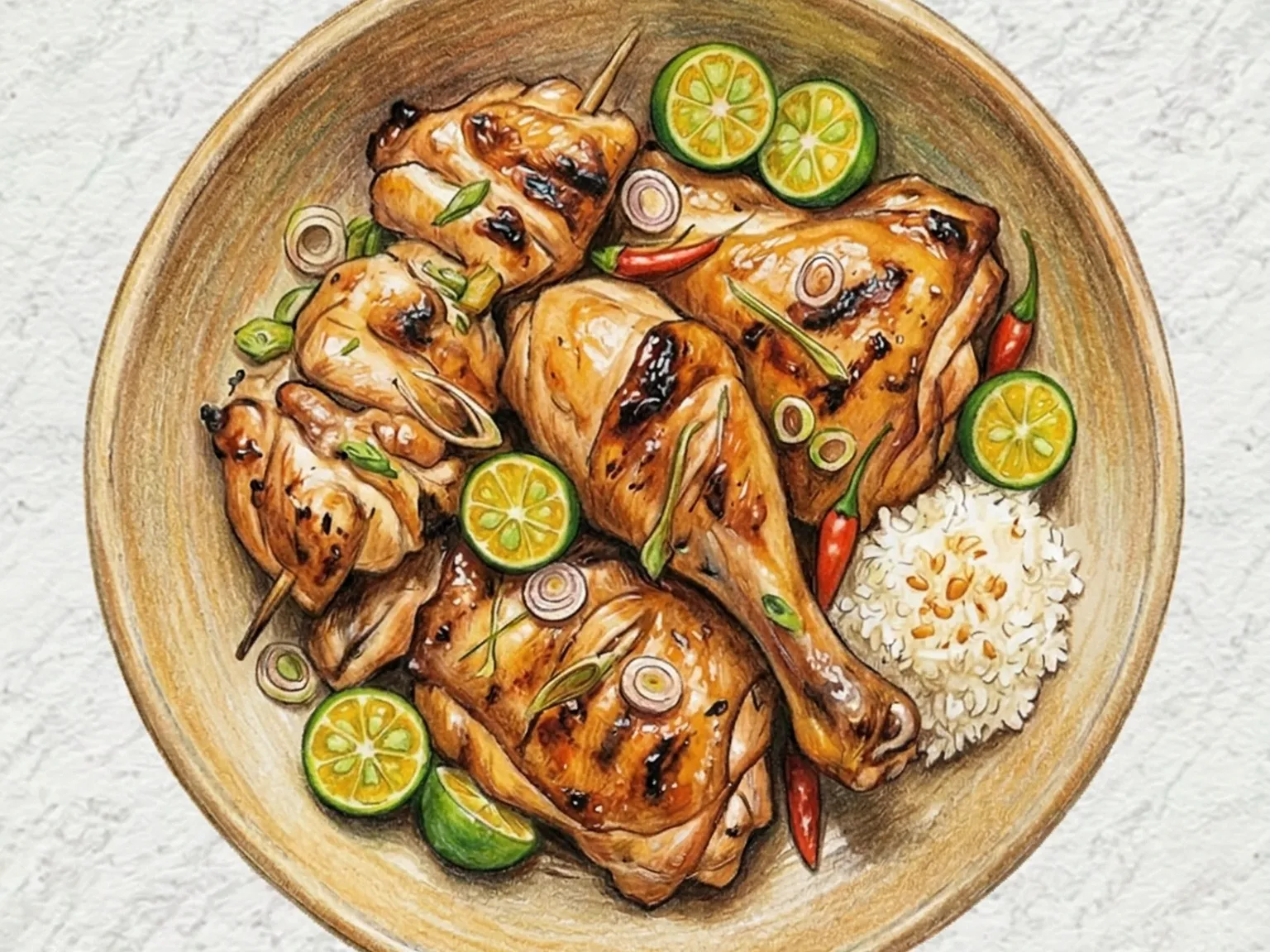
Chicken Inasal (Bacolod Citrus Lemongrass Grilled Chicken)

Quick answer

Chicken inasal is the defining grilled chicken of Bacolod City in the Western Visayas region of the Philippines, so inseparable from its origin that it is commonly called...

What makes this special

  • Chicken Inasal is a Bacolod grilled chicken basted in annatto oil and marinated in calamansi juice.
  • Repeated annatto oil basting during grilling builds the orange color and prevents drying
  • Calamansi, vinegar, and lemongrass marinade over two hours drives citrus flavor into the meat
Total time
50 min
Level
Medium
Servings
4 servings
Ingredients
8
Calories
430 kcal
Protein
35 g

Key ingredients

chicken thighvinegarlime juiceminced garliclemongrass

Core cooking flow

  1. 1 Score each chicken thigh every 2 cm, cutting 3-4 slits into the thickest par...
  2. 2 Combine 4 tbsp vinegar, 3 tbsp lime juice, 1 tbsp minced garlic, 2 tbsp soy...
  3. 3 Submerge the chicken fully in the marinade, seal the container, and refriger...

Chicken inasal is the defining grilled chicken of Bacolod City in the Western Visayas region of the Philippines, so inseparable from its origin that it is commonly called Bacolod chicken. An overnight marinade of calamansi juice, cane vinegar, lemongrass, and garlic allows the acid to work deep into the muscle fibers, tenderizing the meat while coating it in layered citrus and herb fragrance. During grilling over coconut-shell charcoal, the chicken is basted repeatedly with annatto oil, which stains the skin a vivid orange and keeps the exterior perpetually moist so it never dries over the coals. The charcoal smoke combines with the calamansi and lemongrass aromatics to build a smoky-citrus flavor profile that distinguishes inasal from other grilled chicken preparations. The chicken is served alongside garlic rice with a small dish of chicken oil mixed with calamansi juice for dipping. In Bacolod, an entire street called Manokan Country is lined with dozens of inasal stalls that operate simultaneously every evening, filling the neighborhood with charcoal haze.

Prep 20min Cook 30min 4 servings

Instructions

Read the steps as a cooking flow: prep, heat, seasoning, doneness control, and finish.

6 steps
  1. 1
    Prep

    Score each chicken thigh every 2 cm, cutting 3-4 slits into the thickest parts so the marinade reaches the center.

  2. 2
    Season

    Combine 4 tbsp vinegar, 3 tbsp lime juice, 1 tbsp minced garlic, 2 tbsp soy sauce, 1 tbsp brown sugar, and finely minced lemongrass stalk in a bowl and stir until the sugar dissolves.

  3. 3
    Step

    Submerge the chicken fully in the marinade, seal the container, and refrigerate for at least 2 hours or overnight for deeper flavor.

  4. 4
    Control

    Preheat the grill to medium heat (180-200C) for 10 minutes.

    Pat the chicken dry with paper towels, place on the grill, and cook 6-7 minutes per side until grill marks form.

  5. 5
    Finish

    Stir 1 tbsp annatto oil into the reserved marinade and brush generously over the chicken each time you flip it, building a glossy orange color.

  6. 6
    Finish

    Remove the chicken from heat when the internal temperature reaches 74C, rest for 3 minutes, then slice against the grain and serve immediately.

After the steps

Pick a recipe that fits this dish.

Continue with shared ingredients, meal pairings, or a similar method.

Recipes That Go Well With This

More Asian →

Based on shared ingredients and meal pairing

Ayam Bakar (Indonesian Grilled Chicken in Sweet Soy Marinade)
Shared ingredient: boneless chicken thigh Asian

Ayam Bakar (Indonesian Grilled Chicken in Sweet Soy Marinade)

Ayam bakar means 'roasted chicken' in Malay-Indonesian and is a staple street food across Java, Sumatra, and Bali, where roadside warungs grill it over coconut-shell charcoal. The preparation follows a two-stage method: the chicken first simmers in a marinade of kecap manis (sweet soy sauce), garlic, ground coriander, turmeric, and lime juice until partially cooked and deeply colored throughout. The pre-cooked pieces then move to a very hot grill where the sugar-heavy glaze caramelizes rapidly, forming dark, lacquered patches with a faint char at the edges. This two-step approach ensures the meat stays moist under the intense grill heat while the exterior achieves maximum caramelization. The surface is sticky-sweet, with turmeric's earthiness and coriander's citrusy warmth detectable beneath. Served alongside steamed white rice, raw cucumber slices, and sambal, the dish relies on the sharp chili heat of the sauce and the cool cucumber to balance the sweetness of the glaze. The smoke from coconut-shell charcoal is considered part of the flavor, though a gas or charcoal grill at home produces an acceptable result.

Chicken Adobo (Filipino Vinegar Soy Braised Chicken)
Shared ingredient: boneless chicken thigh Asian

Chicken Adobo (Filipino Vinegar Soy Braised Chicken)

Chicken adobo is the unofficial national dish of the Philippines, rooted in a pre-colonial preservation technique of braising meat in vinegar to extend its shelf life in tropical heat long before refrigeration. Chicken simmers uncovered in soy sauce, cane vinegar, crushed whole garlic cloves, bay leaves, and whole black peppercorns until the sharp acidity of the vinegar mellows into a layered, salty-sour sauce with a caramelized depth that no amount of shortcutting can replicate. Once braised, the chicken pieces are removed from the sauce and pan-fried until the skin turns deep golden and audibly crisp, then returned to the reduced liquid for a final coat. The moment the crackling skin absorbs the thick, glossy sauce is the defining pleasure of a well-made adobo. Every Filipino household holds its own ratio of soy sauce to vinegar as a point of pride, and the unresolvable debate over whose mother makes the best version is practically a national institution. This tolerance for variation is part of why the dish has endured for centuries across a country of more than seven thousand islands. It is always served over steamed white rice with extra sauce ladled over generously, and adobo famously tastes better the next day, after the proteins have had time to reabsorb the deepened, overnight flavors from the refrigerator.

Pancit Palabok (Filipino Rice Noodles with Annatto Shrimp Sauce)
Serve together Noodles

Pancit Palabok (Filipino Rice Noodles with Annatto Shrimp Sauce)

Pancit palabok is a Filipino celebratory noodle dish built on thin rice noodles blanketed in an orange-hued shrimp sauce. The sauce draws its color from annatto powder, which also contributes a faint earthy sweetness, and its savory backbone from shrimp-shell stock simmered with fish sauce. Boiled egg halves and a squeeze of lime are the traditional garnish, cutting through the richness with acidity. Fried garlic, sliced scallions, and crushed chicharron scattered on top add texture contrast and bring multiple layers of flavor to a single serving. At Filipino birthday parties and holiday gatherings, palabok is presented on a large platter and shared family-style, making it one of the most recognizable celebration dishes in the cuisine.

Tinola (Filipino Ginger Chicken Soup with Green Papaya)
Similar recipe Asian

Tinola (Filipino Ginger Chicken Soup with Green Papaya)

Tinola is a Filipino home-style chicken soup defined by its prominent ginger character and its clear, light broth. The aromatic base is built by sauteing julienned ginger, sliced garlic, and onion in a little oil until fragrant, then adding chicken pieces and cooking them until the surfaces turn opaque. Fish sauce goes in next, providing a salty depth that anchors the broth, followed by a generous pour of water. The chicken simmers until fully tender, at which point wedges of green papaya are added-their mild sweetness and yielding texture complementing the peppery warmth of the ginger. Spinach or other leafy greens are stirred in at the very end, wilting in the residual heat and adding a fresh, verdant note to the bowl. The finished soup is remarkably clean in flavor despite its depth, with the ginger threading through every spoonful as a persistent, warming presence. In Filipino households, tinola occupies the same comforting role that chicken noodle soup holds elsewhere-it is the first dish prepared when someone is unwell or in need of nourishment.

Serve with this

Korean Ssanghwa Herbal Tea
Drinks Hard

Korean Ssanghwa Herbal Tea

Ssanghwa-cha is a traditional Korean tonic tea made by slow-simmering astragalus root, angelica root, cinnamon bark, licorice, and jujube in approximately 1800 ml of water over low heat for more than fifty minutes. The prolonged extraction coaxes layered complexity from each herb, producing a brew that is simultaneously bitter, sweet, and warmly aromatic with cinnamon woven through every sip. Jujubes added during the simmer soften the sharpest herbal edges while contributing a mild natural sweetness that rounds the overall profile. Honey is stirred in after straining to let each person adjust the sweetness to taste. The tea is poured hot into a ceramic cup and finished with a small cluster of pine nuts whose oil blooms on contact with the steaming surface, releasing a gentle, nutty fragrance. The deep medicinal warmth lingers in the throat long after each sip, making the drink a reliable remedy for fatigue and cold weather.

🍺 Bar Snacks 🎉 Special Occasion
Prep 10min Cook 60min 4 servings
Korean Sea Squirt Mixed Rice
Rice Medium

Korean Sea Squirt Mixed Rice

Fresh sea squirt is tossed with vinegared gochujang and sesame oil over warm rice for a bold seafood bibimbap. The sea squirt carries an intense, distinctive ocean flavor that fills the palate, tempered by the tangy sweetness of the sauce. Julienned cucumber and torn lettuce provide crisp contrast, while roasted seaweed flakes and sesame seeds add a nutty undertone. Mixing should happen right before eating to preserve the sea squirt's volatile aroma. Serving it soon after cooking keeps the intended texture clearer, while brief resting lets the sauce or broth settle into the dish.

🎉 Special Occasion 🏠 Everyday
Prep 20min Cook 8min 2 servings
Bellflower Root, Chestnut & Perilla Salad
Salads Medium

Bellflower Root, Chestnut & Perilla Salad

Doraji chestnut perilla salad brings together blanched bellflower root, boiled chestnuts, and Korean pear in a combination that captures the flavors of Korean autumn. Blanching doraji tempers its raw bitterness to a clean, gentle edge and softens its crunch just enough to make it pleasant to eat without cooking out its character entirely. Boiled chestnut contributes a starchy warmth and sweetness that is entirely different from fruit sugars - it is dense and slightly powdery, more comforting than bright. Korean pear introduces cool juice and a delicate crunch that refreshes the palate between bites of root and nut. Ground perilla seeds tie the ingredients together with a nutty, faintly grassy aroma rooted in their omega-3 fatty acid content, a flavor profile that cannot be replicated by sesame alone. The dressing is built from apple cider vinegar for fruit acidity, honey for sweetness, and olive oil to emulsify and smooth the transitions between components. Both bellflower root and chestnuts peak in autumn, so the salad is at its most rewarding when made with freshly harvested seasonal ingredients. The color combination of ivory doraji, cream-colored chestnut, and pale pear gives the bowl a quiet, autumnal visual quality.

🥗 Light & Healthy 🎉 Special Occasion
Prep 25min Cook 5min 4 servings

Similar recipes

Sisig (Filipino Crispy Chopped Pork with Chili and Calamansi)
Asian Medium

Sisig (Filipino Crispy Chopped Pork with Chili and Calamansi)

Sisig is a Filipino bar food built around chopped pork that is boiled first for tenderness, then pan-fried in butter until the edges turn deeply crisp. Diced onion and fresh chilies are tossed in briefly, adding crunch and a sharp bite that cuts through the richness. Calamansi juice-a small citrus native to the Philippines-brings a tart brightness that lifts the entire dish, while a finishing fold of mayonnaise binds everything together in a creamy coating without dulling the flavor. The mixture is traditionally served on a sizzling cast-iron plate so it arrives at the table still popping and hissing. Each forkful delivers a layered experience: the crunch of the fried pork, the cool tang of citrus, and the lingering heat of the chili. Sisig is inseparable from Filipino drinking culture and remains one of the country's most iconic street-to-table dishes.

🍺 Bar Snacks
Prep 20min Cook 25min 2 servings
Pandesal Milk Rolls (Soft Filipino Bread with Crumb Coating)
Baking Medium

Pandesal Milk Rolls (Soft Filipino Bread with Crumb Coating)

These small Filipino bread rolls are leavened with yeast and enriched with milk, producing an interior so soft it tears apart in cotton-like wisps. A coating of fine breadcrumbs on the outside adds a faintly sandy texture and a pale, matte appearance that distinguishes pandesal from other dinner rolls. The sweetness is deliberately understated, making the rolls versatile enough for jam at breakfast or sliced meat at lunch. Butter kneaded into the dough contributes richness without heaviness, and the crumb stays moist through the next day when stored in a sealed bag. Covering the rolls with a clean towel five minutes after baking traps steam and keeps them especially tender.

🧒 Kid-Friendly
Prep 35min Cook 18min 4 servings
Ensaymada Cheese Bread (Filipino Sweet Cheese Brioche)
Baking Hard

Ensaymada Cheese Bread (Filipino Sweet Cheese Brioche)

Ensaymada is a Filipino sweet brioche descended from the Spanish ensaimada of Mallorca, transformed over centuries into something entirely its own. The dough is enriched with a generous amount of eggs and butter, kneaded until it pulls away from the bowl in smooth, elastic sheets, then given a long rise that results in a pillowy interior with a cotton-like, pull-apart crumb. After baking, the buns are brushed with softened butter while still warm, rolled in granulated sugar, and blanketed in a thick layer of grated cheddar or Edam cheese. The contrast between the sweet, buttery bread and the salty aged cheese is not incidental but central to the character of ensaymada, reflecting a Filipino fondness for pairing sweet and savory within a single bite. Bakeries across the Philippines produce them in enormous quantities during the Christmas season, when they are given as gifts and served at holiday gatherings, though they appear on breakfast tables year-round alongside thick hot chocolate or coffee.

🎉 Special Occasion 🧒 Kid-Friendly
Prep 45min Cook 20min 4 servings

Tips

If using an oven, roast at 220C for about 25 minutes.
Finish with high heat for 2 minutes for better char and flavor.

Nutrition (per serving)

Calories
430
kcal
Protein
35
g
Carbs
6
g
Fat
28
g