Chicken Kyiv
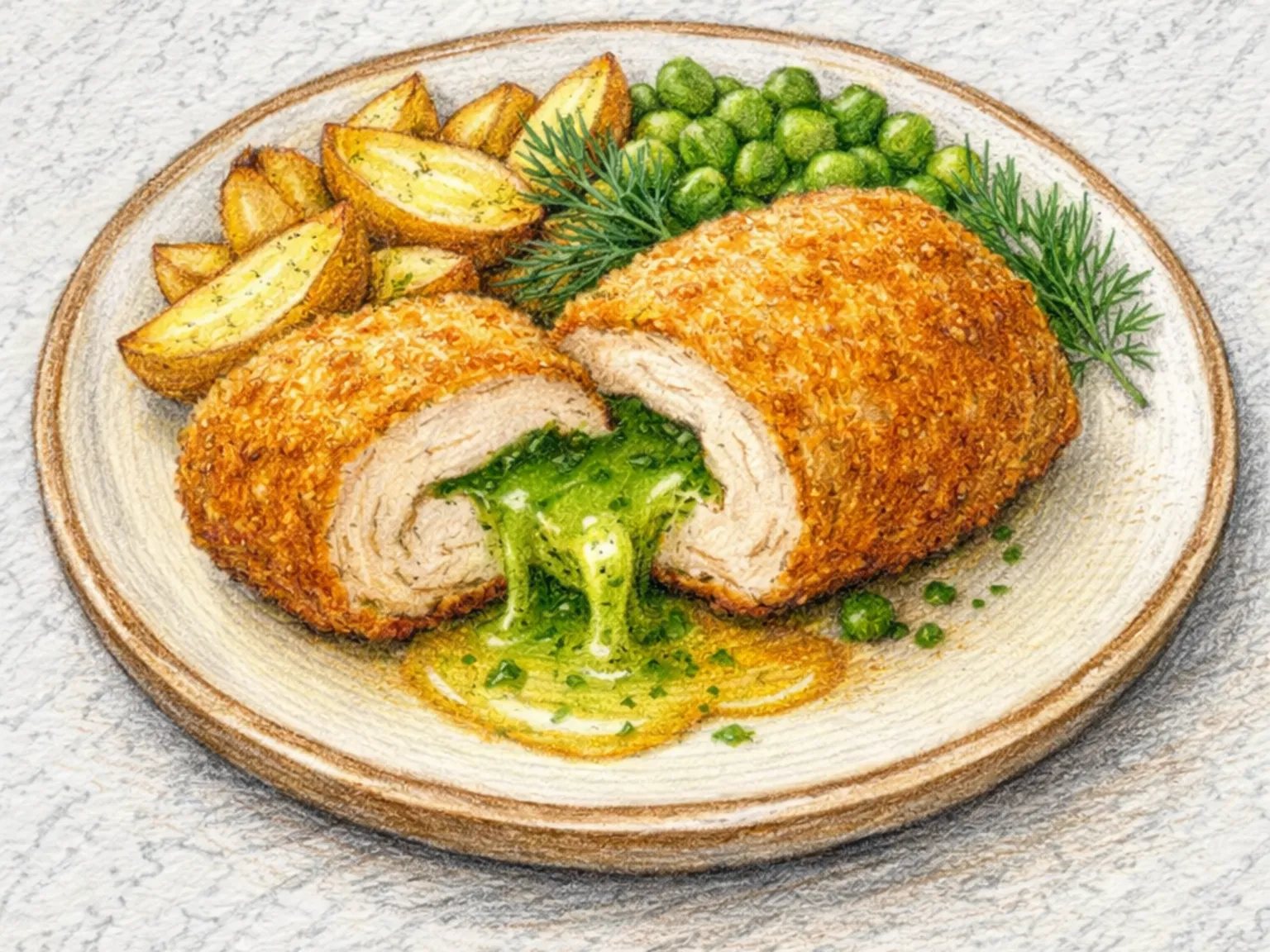
Chicken Kyiv is an Eastern European preparation of pounded chicken breast wrapped tightly around a log of compound butter mixed with parsley and garlic, triple-breaded in flour, egg wash, and breadcrumbs, pan-seared to set the crust, then finished in the oven. The butter must be frozen firm before assembly so it holds its shape during pan-searing and the early stage of oven cooking, melting only gradually inside the chicken where it functions as an internal basting sauce. The triple breading creates a crisp outer shell that also seals the butter inside, and repeating the breadcrumb coating a second time improves both the seal and the crunch of the finished piece. The defining moment of the dish is cutting in and releasing a flow of melted herb butter; a three-minute rest after removing from the oven stabilizes the interior temperature so the butter flows cleanly rather than all at once. Chilling the breaded rolls in the refrigerator for at least thirty minutes before cooking keeps the breadcrumbs firmly attached through the high-heat sear, and the two-stage cooking method of pan-searing followed by oven finishing achieves a crisp exterior and fully cooked, juicy interior at the same time.
Adjust Servings
Instructions
- 1
Mix butter, minced parsley, garlic, and salt; shape into logs and chill in freezer for 10 minutes.
- 2
Butterfly chicken breasts and pound them thin.
- 3
Place herb butter in the center and roll tightly with seam side down.
- 4
Coat with flour, beaten egg, and breadcrumbs.
- 5
Sear in a pan until golden, then bake at 190C for 12 minutes.
- 6
Rest for 3 minutes, slice, and serve while the butter is flowing.
As an Amazon Associate, we may earn from qualifying purchases.
Tips
Nutrition (per serving)
Goes Well With

Apple Fennel Walnut Salad
This salad pairs three ingredients whose textures and flavors run in different directions - crisp apple, anise-scented fennel, and bitter walnuts - and unifies them with a honey-lemon dressing. Thinly sliced fennel bulb contributes a licorice-like fragrance that is more aromatic than sweet, while its celery-crisp texture holds a firm contrast against the apple's softer flesh. Toasted walnuts add a crunchy, tannic bitterness that anchors the lighter elements and keeps the salad from reading as merely sweet. The dressing is deliberately minimal - fresh lemon juice, honey, a small amount of olive oil, and a pinch of salt - so the ingredients carry the flavor rather than the sauce. Assembling just before serving prevents the apple from browning. Salads of this type appear on autumn and winter tables in France and Italy when local apples and fennel come into season together, and can be served as a standalone starter or alongside roasted poultry, where the anise note in the fennel cuts through the meat's richness. Fennel has a long association with digestive support in Mediterranean cooking, which is partly why it has traditionally been served alongside fatty meats, and this salad draws on the same pairing logic.

Korean Bokbunja Wine (Black Raspberry Soju-Infused Fruit Wine)
Bokbunja-ju is a deep ruby Korean fruit wine made by layering fresh black raspberries and sugar in a sterilized jar, then covering them with soju along with a strip of lemon peel and a cinnamon stick. At 1.2 kg of fresh fruit per batch, the berry flavor comes through with real concentration. The jar rests in a cool place for at least thirty days and is shaken gently once a week to dissolve the sugar evenly throughout the liquid. After straining through fine cloth, additional bottle aging softens the acidity and rounds out the berry aroma, producing a wine where the warm spice undertones from the cinnamon balance the tartness of the raspberries.

Honey Ginger Pastry (Korean Deep-Fried Layered Wheat Honey Cookie)
Yakgwa is a traditional Korean honey pastry made from wheat flour rubbed with sesame oil, then mixed with rice wine, ginger juice, and rice syrup, folded and rolled repeatedly to build up laminated layers before frying. A two-stage frying method is essential to the texture: first at 140 degrees Celsius to cook the dough through slowly without coloring, then briefly at 170 degrees to develop a golden, crisp exterior over a layered, flaking interior. Soaking the fried pastries in a warm syrup of honey, water, and ground cinnamon for at least two hours allows the sweetness to penetrate deep between the laminated layers, saturating each piece with moist, fragrant honey flavor from edge to center. Ginger juice surfaces gently in the finish, providing just enough warmth to temper the concentrated sweetness and keep the flavor from feeling cloying. The sesame oil rubbed into the dough from the start adds a persistent nutty backbone that ties together the honey, spice, and wheat flavors into the complex, layered profile that defines well-made yakgwa. Pine nuts or jujubes placed as garnish add visual elegance, and the pastry pairs particularly well with Korean teas, where its sweetness finds proper balance.

Myeongran Lemon Cream Fettuccine
Myeongran lemon cream fettuccine wraps wide pasta ribbons in a sauce made from salted pollock roe, heavy cream, butter, and lemon zest. The small eggs of the roe are left intact and stirred into the sauce off the heat so they stay soft and burst with briny flavor when bitten rather than turning granular or hard. Garlic bloomed in butter forms the aromatic base, and a mixture of heavy cream with milk tempers the roe's saltiness into a smooth, balanced coating. Using lemon zest rather than juice adds a bright citrus fragrance without diluting the sauce or introducing acidity that would curdle the cream. Parmigiano-Reggiano deepens the savory foundation, and fettuccine's broad, flat surface holds the thick cream more effectively than thinner pasta shapes. The entire dish takes about twenty minutes from start to plate, making it a practical weeknight option that does not sacrifice depth of flavor for speed. The critical technique -- incorporating the roe off the heat -- keeps the texture creamy throughout and prevents the eggs from cooking into tough, unpleasant morsels.
More Recipes

Chicken Cordon Bleu
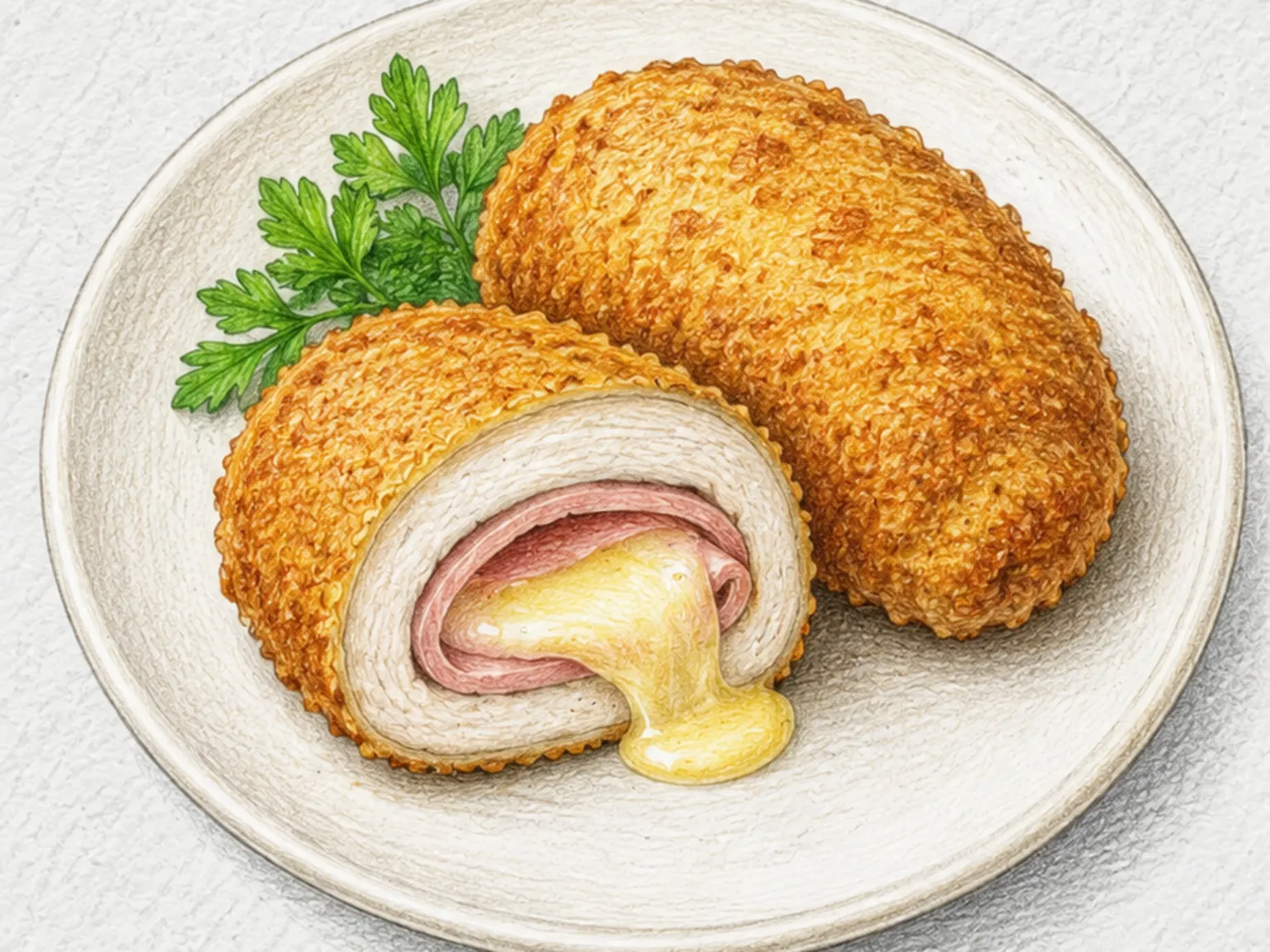
Chicken cordon bleu is a Swiss-French dish where chicken breast is pounded flat to five-millimeter thickness, layered with ham and Emmental cheese, rolled tightly, and secured with toothpicks before being coated in flour, beaten egg, and breadcrumbs. The thin, even pounding is critical: uneven thickness causes the outer sections to overcook while the thicker center remains undercooked. Pan-frying in a mixture of butter and oil over medium heat for four to five minutes per side allows the breadcrumb crust to turn golden and crisp while conducting enough heat inward to melt the cheese completely. Cutting into the finished roll reveals a cross-section of molten cheese oozing between layers of ham and chicken. The ham provides a salty counterpoint to the mild breast meat, and the melted Emmental adds a nutty, stretchy richness that holds the interior layers together. Resting the roll for two minutes after removing from the pan prevents the cheese from spilling out all at once when cut.

Chicken Provençal (South French Tomato Olive Herb Chicken)
Chicken Provencal sears chicken thighs skin-side down on high heat until deeply golden, then braises them with cherry tomatoes, black olives, capers, garlic, and thyme in white wine for a southern French home-style dish. A prolonged sear of the chicken skin develops both crispness and a rich layer of fond on the pan bottom, which the wine dissolves into the sauce during deglazing. As the cherry tomatoes burst during cooking, their juice combines with the salty olives and sharp capers to form a bright, layered Mediterranean sauce. Twenty minutes of covered simmering followed by eight to ten minutes uncovered concentrates the sauce and allows it to penetrate the chicken deeply. A small amount of lemon zest stirred in at the end clarifies and lifts the aromatics of the finished dish. Using whole unpitted olives rather than pitted ones during cooking lets a slight bitterness leach from the pits into the sauce, adding an extra dimension that rounds out the sweetness of the tomatoes.

Rack of Lamb
Rack of lamb is a French-style roast where the rack is seared hard in a hot pan for a deep crust, brushed with Dijon mustard, coated with a mixture of rosemary, thyme, parsley, garlic, and breadcrumbs, and then roasted at 200 degrees Celsius. The mustard acts as both adhesive for the herb crust and a flavor layer that tempers the lamb's gaminess. The breadcrumbs crisp up in the oven heat, locking in the herbal aroma. Resting the meat for ten minutes after roasting redistributes the juices within the muscle fibers so they stay inside when sliced. Cutting between the bones reveals a cross section of crispy golden crust encasing a pink, juicy interior - a visually striking main course.

Chicken Milanese
Chicken Milanese is an Italian-style cutlet that butterflies and pounds chicken breast until thin, coats it in flour, beaten egg, and breadcrumbs mixed with grated Parmesan, then pan-fries it in olive oil until the crust turns a deep, even gold. The step of pounding the meat uniformly thin is not optional: it ensures that the interior cooks through at exactly the same rate as the crust browns, eliminating the frustrating situation of overcooked breading on raw chicken. The Parmesan folded into the breadcrumbs contributes a savory, slightly granular texture that plain breadcrumbs alone cannot achieve; the cheese's proteins also brown more readily under heat, deepening the crust's color and flavor. Allowing the breaded chicken to rest for five minutes before it goes into the pan is another critical step, giving the egg time to fully adhere the crumbs to the surface so the coating does not slide off when the cutlet is flipped. The fat used for frying matters as well: good-quality olive oil adds a subtle fruitiness that butter cannot replicate, and a combination of the two achieves the best of both. A squeeze of fresh lemon juice immediately after plating is not a garnish but a necessary finish, its acidity cutting through the oil and amplifying the aroma of the Parmesan. A mound of lightly dressed arugula on top provides a peppery, bitter counterpoint to the rich, crisp crust, and halved cherry tomatoes sharpen the plate with bright color and additional acidity.

Brioche Loaf
Brioche loaf is a French enriched bread defined by a high ratio of eggs and butter to flour. Softened butter is added in stages during kneading, small amounts at a time, until the fat is fully absorbed and the gluten has developed enough for the dough to stretch into a thin, nearly translucent sheet without tearing. The extended mixing time and the cold retard during overnight proofing give the final crumb its extraordinarily fine structure. Baked in a loaf pan, brioche comes out with a deep golden crust that is thin and slightly brittle, enclosing an interior that tears into long, cotton-soft strands. The butter flavor runs through every layer, so the bread is rich enough to eat on its own without any spread. Once sliced and lightly toasted, the contrast between the crisp outer face and the soft, moist center becomes more pronounced. Brioche absorbs custard quickly and holds its shape under heat, which makes it a preferred base for French toast and bread pudding.

Classic Croissant
A classic croissant is built through lamination: a process of folding cold butter into yeast-leavened dough in successive turns to create dozens of alternating layers. Three sets of folds produce a structure so layered that when baked, the butter melts and releases steam, forcing each layer apart from within. Keeping the butter at a similar temperature to the dough throughout is critical because if the block grows too hard it shatters through the layers and if it grows too soft it merges with the dough and the lamination collapses. The exterior caramelizes into a shell so thin and crisp it shatters at the slightest pressure, scattering golden flakes. The interior, by contrast, is a honeycomb of soft, airy strands held together by the ghost of dissolved butter. Tearing a warm croissant apart releases a rush of butter fragrance, and the dough itself carries a faint sweetness from sugar and milk.