Chicken Milanese
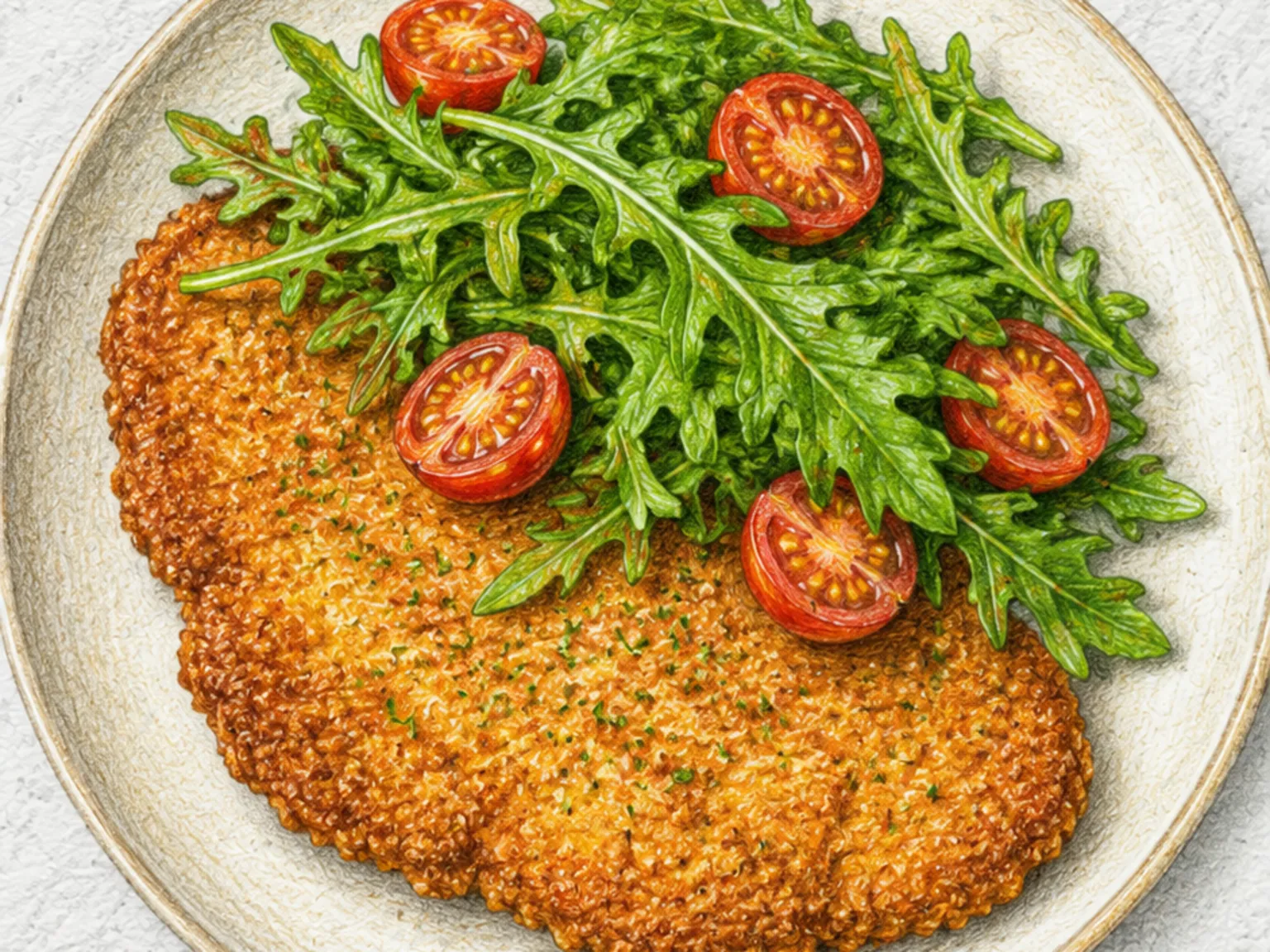
Chicken Milanese butterflies and pounds chicken breast thin, then coats it in flour, beaten egg, and breadcrumbs mixed with grated Parmesan before pan-frying in olive oil until golden and crisp. Pounding the meat uniformly thin ensures it cooks through quickly at the same rate as the crust browns. The Parmesan folded into the breadcrumbs adds a savory, nutty depth to the coating that plain breadcrumbs alone cannot achieve. Letting the coated chicken rest for five minutes before frying helps the breading adhere firmly and resist flaking off in the pan. A squeeze of fresh lemon juice right after plating cuts through the oil and lifts the cheese flavor, while an arugula salad on top provides a peppery, bitter contrast.
Adjust Servings
Instructions
- 1
Butterfly and pound chicken breasts thin, then season with salt.
- 2
Mix breadcrumbs with Parmesan.
- 3
Coat chicken in flour, egg, then breadcrumb mix.
- 4
Pan-fry in olive oil over medium heat, 3-4 minutes per side.
- 5
Serve golden cutlets with fresh lemon juice.
As an Amazon Associate, we may earn from qualifying purchases.
Tips
Nutrition (per serving)
More Recipes

Chicken Francese (Egg-Battered Chicken in Lemon Butter Sauce)
Chicken francese is an Italian-American dish where butterflied chicken breast cutlets are dredged in flour, dipped in beaten egg, and pan-fried until golden, then finished in a lemon-butter sauce made with chicken stock. The egg coating seals the surface of the chicken, trapping moisture inside during cooking, while the flour layer between the egg and the pan creates a thin, crisp texture. After removing the chicken, butter is melted in the same pan and chicken stock and lemon juice are added, simmering for three minutes to dissolve the browned fond on the pan bottom into the sauce. Returning the chicken and spooning the sauce over it for two more minutes allows the egg coating to absorb the lemon-butter liquid, so each bite delivers both the bright citrus acidity and the rich butter fat simultaneously. Chopped parsley adds a fresh herbal note to the finished plate.

Chicken Cacciatore
Chicken cacciatore is an Italian countryside dish where chicken pieces are seared in olive oil until deeply browned, then braised for forty minutes over low heat with onion, garlic, canned tomatoes, black olives, capers, red wine, and thyme. The initial hard sear triggers a Maillard reaction on the chicken skin, and those browned flavors dissolve into the sauce as it simmers. Red wine is added and reduced for two minutes to cook off the alcohol, leaving behind its acidity and fruit notes, which add a layer of complexity to the tomato base. The olives contribute a briny saltiness and the capers a tart, floral sharpness that balance the natural sweetness of the tomatoes. Thyme ties the components together with a quiet herbal note. This dish improves when reheated the next day, as the flavors penetrate deeper into the meat overnight.

Chicken Marsala
Chicken Marsala pounds chicken breast thin, dredges it in flour, and pan-sears it until golden, then builds a sauce from Marsala wine, sliced mushrooms, chicken stock, and a finish of heavy cream. Deglazing the pan with Marsala lifts the browned fond from the surface, concentrating the wine's sweetness and acidity into a deeply flavored base. The mushrooms are sauteed until their moisture evaporates, which intensifies their earthy taste rather than diluting the sauce. Adding cream at the end gives the sauce a velvety body without making it heavy. Dry Marsala is essential - sweet Marsala produces an overly sugary sauce and masks the wine's characteristic walnut and caramel nuances.

Osso Buco (Milanese Braised Veal Shank with Gremolata)
Osso buco dredges thick-cut veal shanks in flour and sears them in olive oil on all sides, then braises them with sauteed onion, carrot, and celery in a mixture of white wine, whole tomatoes, and chicken stock at 160 degrees Celsius for one and a half to two hours. The long, slow cooking converts the tough connective tissue around the bone into gelatin, making the meat fork-tender, while the marrow inside the bone melts into the sauce and enriches it with a deep, silky body. A gremolata of finely chopped parsley, lemon zest, and garlic is scattered over the finished dish - the lemon's bright acidity and the raw garlic's sharpness cut through the heavy braising liquid and lift the entire plate. Careful handling of the shanks throughout cooking is important to keep the prized marrow intact inside the bone.

Cannoli
Cannoli are Sicilian pastries consisting of crisp, tube-shaped shells filled with sweetened ricotta cream. The shell is made from dough enriched with lard, rolled thin, wrapped around metal tubes, and deep-fried until it develops multiple flaky layers that shatter audibly with each bite. The ricotta filling has a slight graininess that distinguishes it from smooth pastry cream, giving it a lighter, more textured quality. Chopped pistachios, candied citrus peel, or chocolate chips pressed into the exposed ends add color and contrasting flavor. The cardinal rule is that shells must be filled just before serving, because any contact with the wet filling turns the crisp pastry limp. In Sicily, cannoli are traditionally tied to Carnival season, though bakeries serve them year-round.

Pasta al Limone (Italian Lemon Butter Cream Pasta)
Pasta al limone is a southern Italian pasta that relies on just lemon zest, lemon juice, butter, cream, and Parmesan for its sauce. The citrus oils from the zest bloom in warm butter, and a splash of pasta water helps emulsify everything into a glossy coating. Linguine is the traditional shape, cooked al dente so it holds the light sauce without becoming heavy. Total preparation takes roughly twenty minutes from start to plate.