Chicken Parmesan
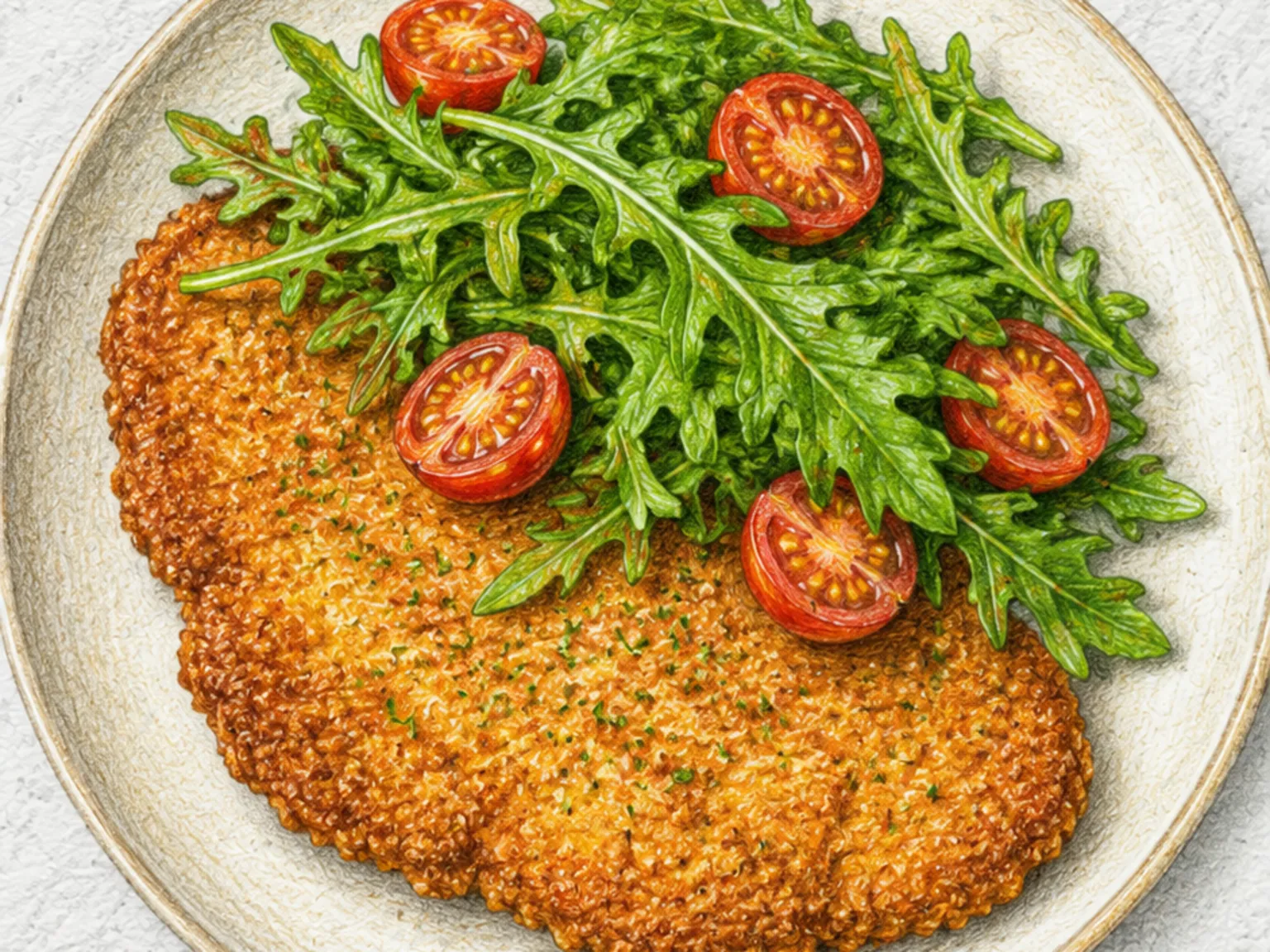
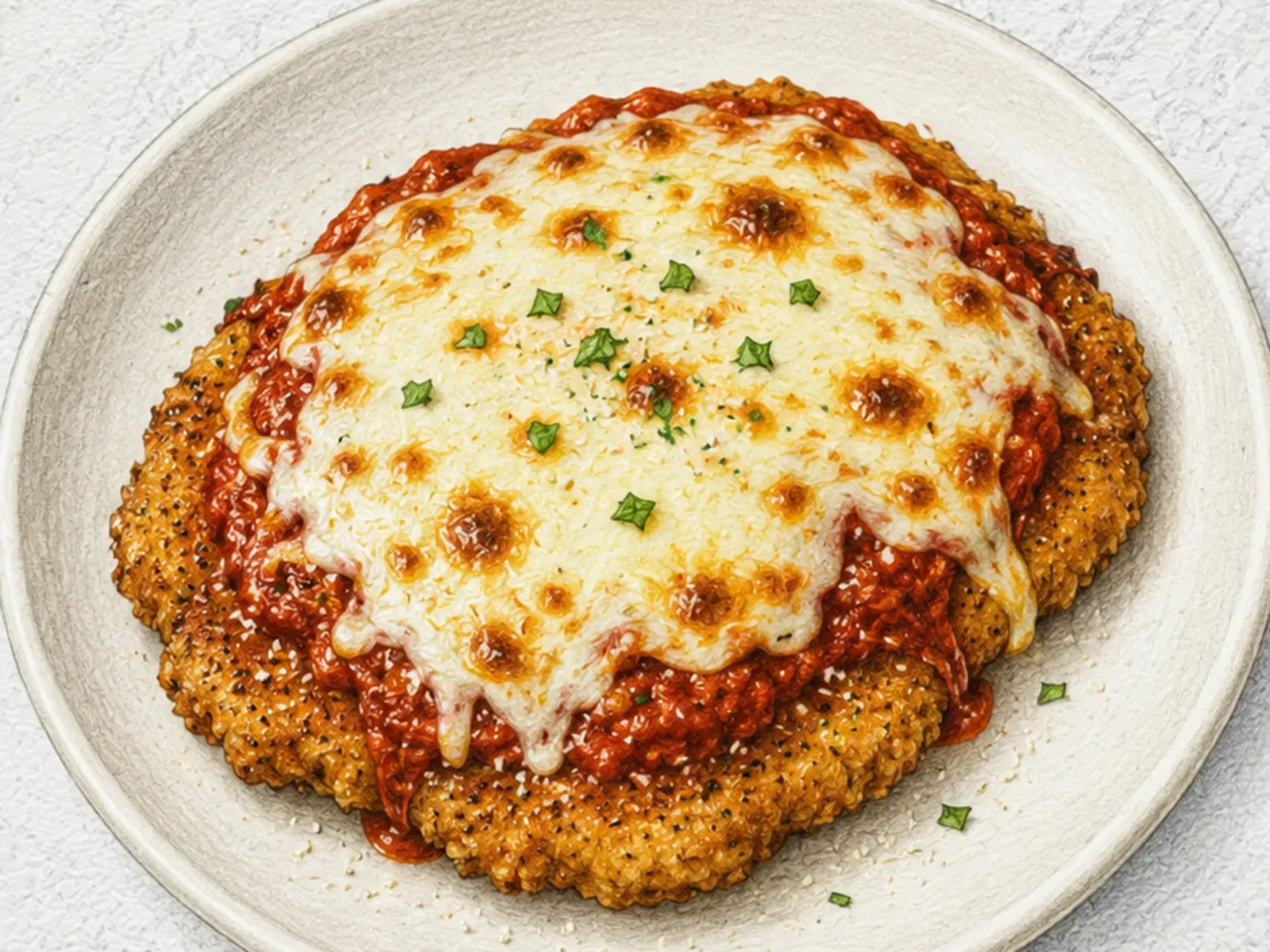
Chicken Parmesan coats pounded chicken breast in a mixture of breadcrumbs and grated Parmesan, pan-fries it until golden, then tops it with tomato sauce and mozzarella before baking until the cheese melts and browns at the edges. The cross-section reveals layers of crunch, lean meat, bright tomato acidity, and stretchy melted cheese in a single bite. Evening out the chicken thickness before breading ensures both sides brown at the same rate in the pan. Resting the breaded cutlet for five minutes before frying helps the coating bond to the surface, so it stays intact even after sauce and cheese are added. Ten to twelve minutes at 200 degrees Celsius is enough to melt the mozzarella and lightly caramelize its edges without drying out the chicken beneath.
Adjust Servings
Instructions
- 1
Butterfly the chicken breasts to even thickness and season with salt and pepper.
- 2
Beat the egg and mix breadcrumbs with grated parmesan in a separate bowl.
- 3
Dip chicken in egg, then coat evenly with the breadcrumb-parmesan mixture.
- 4
Pan-fry in olive oil over medium heat until both sides are golden.
- 5
Place tomato sauce in a baking dish, add chicken, and top with mozzarella.
- 6
Bake at 200°C for 10-12 minutes until cheese melts and lightly browns.
As an Amazon Associate, we may earn from qualifying purchases.
Tips
Nutrition (per serving)
More Recipes

Gnocchi alla Sorrentina (Tomato Mozzarella Baked Gnocchi)
Gnocchi alla Sorrentina is a southern Italian dish from the Sorrento coast where boiled potato gnocchi are tossed in tomato sauce, topped with mozzarella and Parmesan, and baked until bubbling. Garlic is gently cooked in olive oil before the tomato sauce is added and simmered, allowing the garlic flavor to permeate the base. The gnocchi are boiled just until they float, then drained immediately to keep their chewy texture, and folded into the sauce with half the basil. Transferring to an oven dish and covering with torn mozzarella and grated Parmesan creates a molten cheese layer after eight minutes at 220 degrees Celsius. The finished dish balances the bright acidity of the tomato with the salty richness of the melted cheeses, and fresh basil scattered on top provides an aromatic finish.

Eggplant Parmesan
Eggplant Parmesan slices eggplant into one-centimeter rounds, salts them lightly, and rests them for ten minutes to draw out bitterness and moisture. Each slice is patted dry, then dredged in flour, dipped in beaten egg, and coated in breadcrumbs before pan-frying in olive oil until golden on both sides. Layers of tomato sauce, fried eggplant, torn mozzarella, and grated Parmesan are stacked twice in a baking dish, then baked at 200 degrees Celsius for twenty minutes until the cheese melts and bubbles. The tender eggplant, tangy tomato sauce, and two cheeses create a savory depth in every layer. Over-saucing can make the dish soggy, so a measured hand with the tomato sauce keeps the texture intact.

Creamy Tuscan Chicken
Creamy Tuscan chicken begins by searing seasoned chicken breasts in olive oil until a deep golden crust forms on both sides, locking in juices. Minced garlic is sautéed briefly in the same pan drippings, then chicken stock deglazes the fond for extra savory depth. Heavy cream and grated Parmesan simmer on low heat for three minutes, thickening into a velvety sauce. Sun-dried tomatoes bring concentrated sweetness while fresh spinach wilts into the sauce, adding color and a mild vegetal note. Returning the chicken for a final four-minute simmer ensures the breast cooks through to a safe 74 degrees Celsius while absorbing the sauce's rich flavor.

Chicken Cacciatore
Chicken cacciatore is an Italian countryside dish where chicken pieces are seared in olive oil until deeply browned, then braised for forty minutes over low heat with onion, garlic, canned tomatoes, black olives, capers, red wine, and thyme. The initial hard sear triggers a Maillard reaction on the chicken skin, and those browned flavors dissolve into the sauce as it simmers. Red wine is added and reduced for two minutes to cook off the alcohol, leaving behind its acidity and fruit notes, which add a layer of complexity to the tomato base. The olives contribute a briny saltiness and the capers a tart, floral sharpness that balance the natural sweetness of the tomatoes. Thyme ties the components together with a quiet herbal note. This dish improves when reheated the next day, as the flavors penetrate deeper into the meat overnight.

Caprese Salad
Caprese salad arranges ripe tomato, fresh mozzarella, and basil leaves in alternating slices, relying on just three main ingredients dressed with extra virgin olive oil and salt. Because the recipe involves no cooking, the tomato's ripeness and the mozzarella's milky freshness determine the entire flavor profile. A thin drizzle of balsamic glaze adds concentrated grape-vinegar sweetness that contrasts with the cheese's fat, while basil's volatile aromatics release directly on the plate. Dressing the salad right before serving minimizes the moisture that tomatoes release when salted in advance.

Antipasto Salad
Antipasto - literally 'before the meal' in Italian - is a course of cured meats, cheeses, olives, and preserved vegetables served at the start of an Italian dinner, and this salad reformats that tradition into a single composed bowl. Crisp romaine or iceberg lettuce forms the base, topped with sliced salami, capicola, provolone, marinated artichoke hearts, roasted red peppers, and briny Kalamata olives. A red wine vinegar dressing with dried oregano and garlic ties the components together with a sharp, herbal acidity. The salad works because every ingredient brings a different intensity - salty cured meat, tangy cheese, sweet peppers, and bitter greens - so no two bites taste the same. Italian-American delis in New York and New Jersey popularized this format in the mid-20th century, and it has since become a fixture of catered lunches and family gatherings.