Chicken Piccata
Western Medium

Chicken Piccata

Quick answer

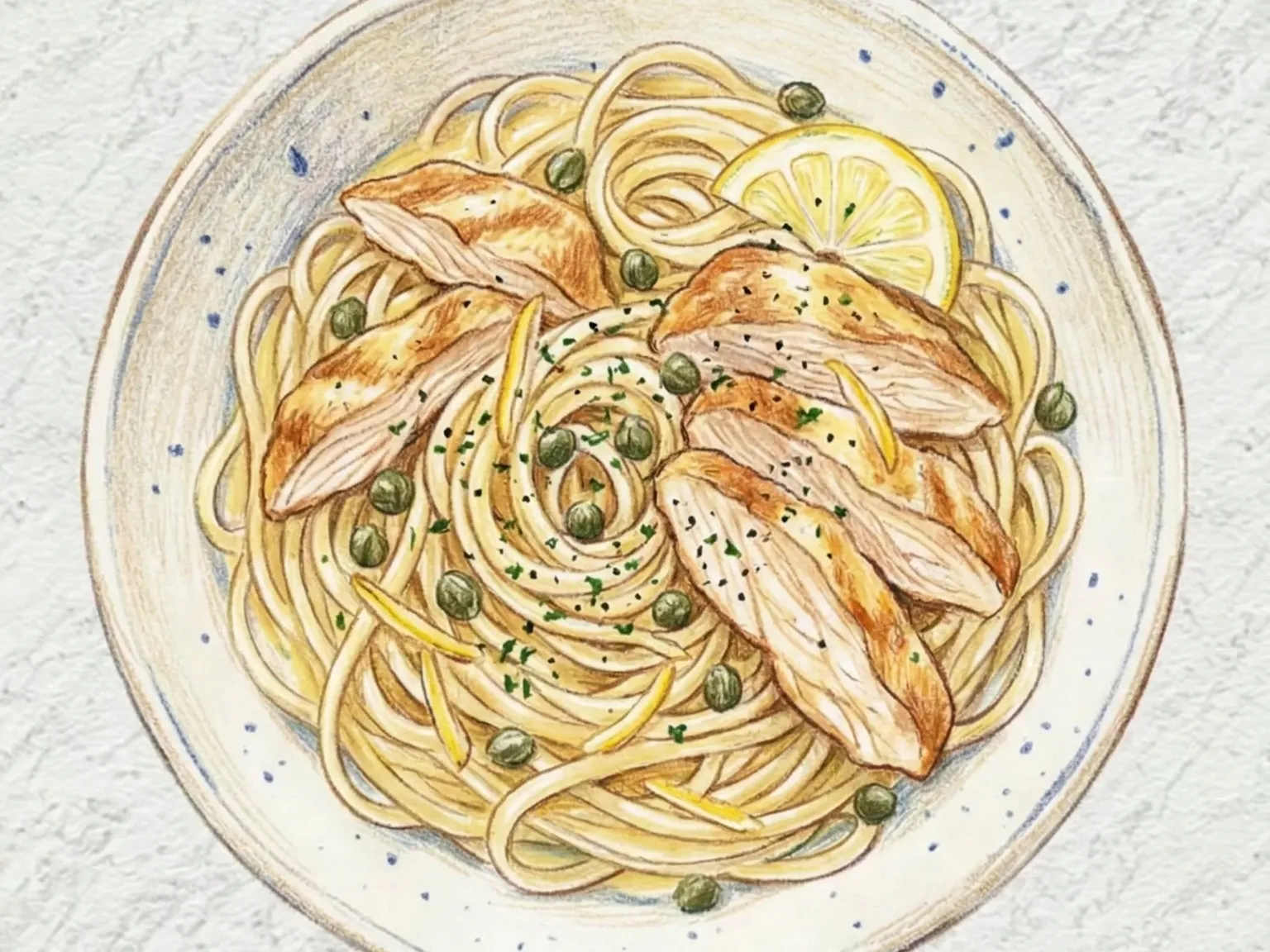
Chicken piccata pounds chicken breast thin, dredges each piece in flour, and sears it in butter until the exterior is golden, then builds a pan sauce from white wine, lem...

What makes this special

  • White wine and lemon juice deglaze the pan after searing, and cold butter finishes the caper sauce off heat.
  • Capers add briny vinegar sharpness that contrasts the lemon acidity
  • Butter mounted into the wine-lemon reduction gives the sauce gloss and body
Total time
30 min
Level
Medium
Servings
2 servings
Ingredients
6
Calories
350 kcal
Protein
36 g

Key ingredients

Chicken breastLemonCapersButterWhite wine

Core cooking flow

  1. 1 Slice the 2 chicken breasts horizontally or pound them to an even thin thickness.
  2. 2 Spread the 3 tablespoons flour in a shallow layer and coat both sides of each chicken piece lightly.
  3. 3 Heat a skillet over medium heat, melt part of the butter, and lay in the chi...

Chicken piccata pounds chicken breast thin, dredges each piece in flour, and sears it in butter until the exterior is golden, then builds a pan sauce from white wine, lemon juice, and capers in the same skillet. Once the chicken is set aside, white wine poured into the hot pan dissolves the browned fond from the surface, and that fond becomes the concentrated flavor foundation of the sauce. Lemon juice adds a sharp, clean acidity that cuts against the richness of butter, while capers bring a briny, vinegar-like saltiness that gives the sauce its distinctive depth and prevents it from reading as merely buttery. Cold butter added in small pieces at the end, swirled rather than stirred, emulsifies the sauce into a glossy, cohesive consistency that clings evenly to the meat. Crucially, the lemon juice must go in off the heat so its volatile aromatic compounds do not cook off, preserving the bright, fresh acidity that defines the dish. Finished with chopped parsley and served over pasta or mashed potatoes with the sauce poured generously over everything, chicken piccata is a dish built entirely around the contrast between a mild, flour-coated protein and a bold, citrus-forward pan sauce.

Prep 15min Cook 15min 2 servings
Recipes by ingredient → butter flour

Instructions

Read the steps as a cooking flow: prep, heat, seasoning, doneness control, and finish.

6 steps
  1. 1
    Season

    Slice the 2 chicken breasts horizontally or pound them to an even thin thickness.

    Juice the lemon, measure 2 tablespoons of capers, and keep the 40 g butter ready so the sauce can come together quickly.

  2. 2
    Season

    Spread the 3 tablespoons flour in a shallow layer and coat both sides of each chicken piece lightly.

    Shake off thick excess flour, because loose flour can burn in the pan and make the sauce cloudy.

  3. 3
    Control

    Heat a skillet over medium heat, melt part of the butter, and lay in the chicken without overlapping the pieces.

    Cook 2 to 3 minutes per side, until the flour coating turns golden and the meat firms up.

  4. 4
    Finish

    Transfer the chicken to a plate, then pour 80 ml white wine into the same hot skillet.

    Scrape up the browned bits from the bottom and simmer for 1 to 2 minutes, until the wine smells less sharp.

  5. 5
    Control

    Lower the heat and add the capers so their briny flavor spreads through the reduced wine.

    Turn off the heat before adding the lemon juice, which keeps its fresh aroma and clean acidity intact.

  6. 6
    Finish

    Add the remaining cold butter in small pieces and swirl the pan until the sauce turns glossy and lightly thickened.

    Spoon it over the chicken right away and serve warm, with extra sauce for pasta or mashed potatoes.

After the steps

Pick a recipe that fits this dish.

Continue with shared ingredients, meal pairings, or a similar method.

Recipes That Go Well With This

More Western →

Based on shared ingredients and meal pairing

Salmon Piccata
Shared ingredient: capers Western

Salmon Piccata

Salmon piccata is an Italian fish dish where salmon fillets are seasoned, dusted in a thin layer of flour, and pan-seared in olive oil until golden on both sides. The flour coating promotes a Maillard crust on the surface while sealing moisture inside the flesh. Melting butter in the same pan and deglazing with lemon juice and chicken stock dissolves the caramelized fond into a bright sauce. Capers add bursts of briny saltiness that meet the lemon's acidity to create the piccata sauce's signature sharp, savory character, cutting cleanly through the salmon's rich fat. Because salmon dries out quickly when overcooked, the final step of returning it to the sauce should last no more than two minutes.

Yuja Chicken Piccata Linguine
Shared ingredient: capers Pasta

Yuja Chicken Piccata Linguine

Yuja chicken piccata linguine pounds chicken breast thin, dusts it with flour, and pan-sears each side for 3 minutes until a golden crust forms on the outside while the interior stays moist. The same pan is deglazed with chicken stock, lemon juice, yuja marmalade, and capers, then simmered for 3 minutes to concentrate the sauce and lift every bit of fond from the pan bottom. Whisking in cold butter at the end emulsifies the liquid into a glossy, coating consistency that clings to each strand. The capers contribute a briny, bursting texture that plays off yuja's bittersweet citrus notes, building a layered acidity that neither ingredient produces on its own. The flat, wide surface of linguine picks up the sauce broadly so each forkful carries both the herb fragrance of scattered parsley and the bright citrus glaze. Because yuja marmalade varies in sweetness, the lemon juice quantity should be adjusted at the end to balance the final acidity.

Dongdongju (Korean Unfiltered Fermented Rice Wine)
Serve together Drinks

Dongdongju (Korean Unfiltered Fermented Rice Wine)

Dongdongju is a traditional Korean unfiltered rice wine made by steaming short-grain and sweet rice together, then fermenting the cooked grain with nuruk starter and a small amount of dry yeast for seven days. Unlike makgeolli, it passes through a coarse sieve only once, leaving rice grains floating on the surface -- a trait that gives the drink its name and provides a distinctly chewy grain texture with each sip. Stirring the mash twice daily ensures the nuruk breaks down the starches evenly throughout fermentation, and keeping the temperature low after day three prevents the batch from over-fermenting. A pinch of salt added at the finish tempers residual sweetness without flattening the fermented grain character. Home-brewed dongdongju tends to carry a more pronounced rice fragrance and a heavier body than commercial makgeolli, and its flavor shifts noticeably day by day as fermentation continues.

Chicken Milanese
Similar recipe Western

Chicken Milanese

Chicken Milanese is an Italian-style cutlet that butterflies and pounds chicken breast until thin, coats it in flour, beaten egg, and breadcrumbs mixed with grated Parmesan, then pan-fries it in olive oil until the crust turns a deep, even gold. The step of pounding the meat uniformly thin is not optional: it ensures that the interior cooks through at exactly the same rate as the crust browns, eliminating the frustrating situation of overcooked breading on raw chicken. The Parmesan folded into the breadcrumbs contributes a savory, slightly granular texture that plain breadcrumbs alone cannot achieve; the cheese's proteins also brown more readily under heat, deepening the crust's color and flavor. Allowing the breaded chicken to rest for five minutes before it goes into the pan is another critical step, giving the egg time to fully adhere the crumbs to the surface so the coating does not slide off when the cutlet is flipped. The fat used for frying matters as well: good-quality olive oil adds a subtle fruitiness that butter cannot replicate, and a combination of the two achieves the best of both. A squeeze of fresh lemon juice immediately after plating is not a garnish but a necessary finish, its acidity cutting through the oil and amplifying the aroma of the Parmesan. A mound of lightly dressed arugula on top provides a peppery, bitter counterpoint to the rich, crisp crust, and halved cherry tomatoes sharpen the plate with bright color and additional acidity.

Serve with this

Lotus Root Persimmon Salad
Salads Easy

Lotus Root Persimmon Salad

This salad combines blanched lotus root and sliced sweet persimmon to reflect seasonal autumn produce. The lotus root provides a clean and crisp texture that contrasts with the natural sweetness found in the fruit slices. A dressing composed of olive oil, honey, and fresh lemon juice is used to coat the ingredients without masking their individual flavors. Crumbled feta cheese provides a salty and tangy dairy element that balances the sugar content of the persimmon. Toasted walnuts, which are prepared by heating them briefly in a dry pan, contribute earthy fats and a crunchy texture that differs from the softer fruit. The salad is assembled on a base of baby greens to provide a layer of color. Dividing the dressing into two separate additions during the mixing process ensures that the seasoning is distributed evenly across all components. While the recipe typically uses firm persimmons, ripe soft persimmons known as hongsi can be used as an alternative. This variation produces a salad with a sweeter profile and a much softer, more yielding consistency.

🥗 Light & Healthy 🎉 Special Occasion
Prep 20min Cook 8min 2 servings
Gotgam Cream Cheese Roll (Dried Persimmon Rolls)
Desserts Easy

Gotgam Cream Cheese Roll (Dried Persimmon Rolls)

Gotgam cream cheese roll is a no-cook Korean dessert that requires nothing more than a knife, a bowl, and a refrigerator. Dried persimmons are slit open and flattened into thin sheets, each one acting as the outer wrapper. The filling is cream cheese mixed with honey and fresh lemon juice to balance its natural richness with acidity, and finely chopped walnuts are folded in throughout to add a crunchy, nutty element to every bite. The filling is spread across the opened persimmon, which is then rolled tightly and wrapped in plastic wrap. Twenty minutes in the refrigerator firms the roll enough to slice cleanly. Dipping the knife in warm water and wiping it dry before each cut produces the smoothest cross-sections. The finished slices reveal clearly defined layers: the chewy, caramel-sweet dried persimmon on the outside, the tangy cream cheese in the middle, and flecks of walnut distributed throughout. The combination makes it a natural pairing with wine or a polished addition to a traditional holiday table.

🍺 Bar Snacks 🎉 Special Occasion
Prep 20min 2 servings
Gamtae Butter Scallop Spaghetti
Pasta Medium

Gamtae Butter Scallop Spaghetti

Preparing gamtae butter scallop spaghetti requires high heat to develop a properly caramelized exterior on the scallops. This process involves searing the scallops for ninety seconds on each side to create a deep brown crust. Before the scallops ever touch the pan, it is essential to ensure they are completely dry by patting them down thoroughly with paper towels. Removing all surface moisture prevents the scallops from steaming in the pan. If the scallops remain damp, they will turn out soft and pale instead of achieving the intended texture and color. After the scallops have been removed from the heat, the remaining browned bits, known as the fond, serve as the primary flavor foundation for the sauce. Garlic and butter are added to the same pan, followed by white wine which is used to deglaze the surface. As the liquid simmers, the alcohol evaporates, leaving behind a clean acidity that balances the richness of the other ingredients. The sauce is finished by swirling in cold butter at the final stage, which creates a smooth and stable emulsion that coats each spaghetti strand evenly. The final component is gamtae seaweed, which has a flavor profile that is notably more delicate and milder than standard nori. By crumbling this seaweed over the pasta immediately before it is served, you introduce a subtle oceanic quality that bridges the gap between the richness of the butter and the natural sweetness of the scallop meat. To complete the preparation, a measured amount of fresh lemon juice is squeezed over the dish. This acidity sharpens the various flavor components and reduces the perceived heaviness of the fats, ensuring that the pasta remains balanced throughout the meal.

🍺 Bar Snacks 🎉 Special Occasion
Prep 15min Cook 18min 2 servings

Similar recipes

Chicken Cacciatore
Western Medium

Chicken Cacciatore

Chicken cacciatore is an Italian countryside dish where chicken pieces are seared hard in olive oil until deeply browned, then braised over low heat for forty minutes with onion, garlic, canned tomatoes, black olives, capers, red wine, and thyme. The initial sear in a very hot pan triggers a Maillard reaction on the skin and surface of the meat; those browned flavors dissolve into the braising liquid and dramatically deepen the sauce as it simmers. Red wine is added and simmered for two minutes to cook off the alcohol before the remaining ingredients go in, leaving only the acidity and fruit character of the wine to layer with the tomato. The briny, savory taste of the olives and the tart, floral sharpness of the capers keep the sweetness of the canned tomatoes in check, while thyme runs as a steady, quiet herbal thread throughout. This dish improves substantially when reheated the next day, as the flavors penetrate further into the meat overnight. Leftover braising sauce is excellent tossed with pasta or spooned over soft polenta.

🎉 Special Occasion 🍺 Bar Snacks
Prep 15min Cook 55min 4 servings
Tiramisu
Baking Medium

Tiramisu

Tiramisu is assembled by alternating layers of savoiardi biscuits that have been soaked in espresso with a prepared mascarpone cream, after which the dish is placed in the refrigerator to allow the individual elements to integrate into a unified dessert. The cream layer is produced by whisking egg yolks with sugar until the base reaches a pale color and a thick volume, followed by the folding in of mascarpone cheese. This method ensures the mixture remains airy while retaining enough density to support its own weight and the layers of biscuits. Each savoiardi biscuit is dipped into strong espresso for approximately one to two seconds on each side. If the biscuits are held in the liquid for any additional time, they will dissolve into a soft mush that lacks the strength to hold the cream. A minimum of six hours in the refrigerator is necessary to complete the transformation of the dessert. During this resting phase, the biscuits absorb moisture from the surrounding cream and soften until they reach a consistency similar to cake, while the cream itself firms up and the flavors of the different components begin to merge. The final step involves applying a generous coating of unsweetened cocoa powder through a fine mesh sieve. This layer provides a bitter profile that frames the sweetness of the mascarpone and the roasted intensity of the espresso. In more traditional preparations, a splash of Marsala wine or a coffee-flavored liqueur is often mixed into the espresso soaking liquid to add a sense of warmth and a more complex flavor profile to the finished product.

🎉 Special Occasion 🧒 Kid-Friendly
Prep 30min 8 servings
Chicken Alfredo
Western Easy

Chicken Alfredo

Chicken alfredo is an Italian-American pasta dish of seared chicken breast and fettuccine brought together in a sauce of butter, heavy cream, and Parmesan cheese. The sauce begins with garlic sauteed in butter until fragrant, after which heavy cream is poured in and reduced slightly before grated Parmesan is stirred through. The cheese protein emulsifies with the fat in the cream, thickening the sauce into a coating that grips each strand of pasta rather than pooling at the bottom of the bowl. The chicken breast is seasoned with salt and pepper and seared in a hot pan until the exterior reaches a deep golden brown -- this Maillard-reaction crust develops a savory, roasted quality that the cream sauce alone cannot provide, and the browned bits left in the pan can be deglazed back into the sauce to carry that flavor through the whole dish. Transferring the pasta directly from the boiling water into the sauce, before the surface starch dries, helps the sauce adhere more completely. A small amount of pasta cooking water, added gradually, keeps the sauce from seizing into a thick mass and maintains a smooth, silky consistency. A generous amount of freshly cracked black pepper is essential: without it, the richness of the cream can read as cloying, but with it, the dish achieves a balance between indulgence and subtle heat.

🏠 Everyday 🎉 Special Occasion
Prep 15min Cook 20min 2 servings

Tips

Add lemon juice off the heat to preserve its bright, fresh flavor.

Nutrition (per serving)

Calories
350
kcal
Protein
36
g
Carbs
12
g
Fat
16
g