Chicken Vesuvio (Chicago White Wine Braised Chicken with Potatoes)
Quick answer
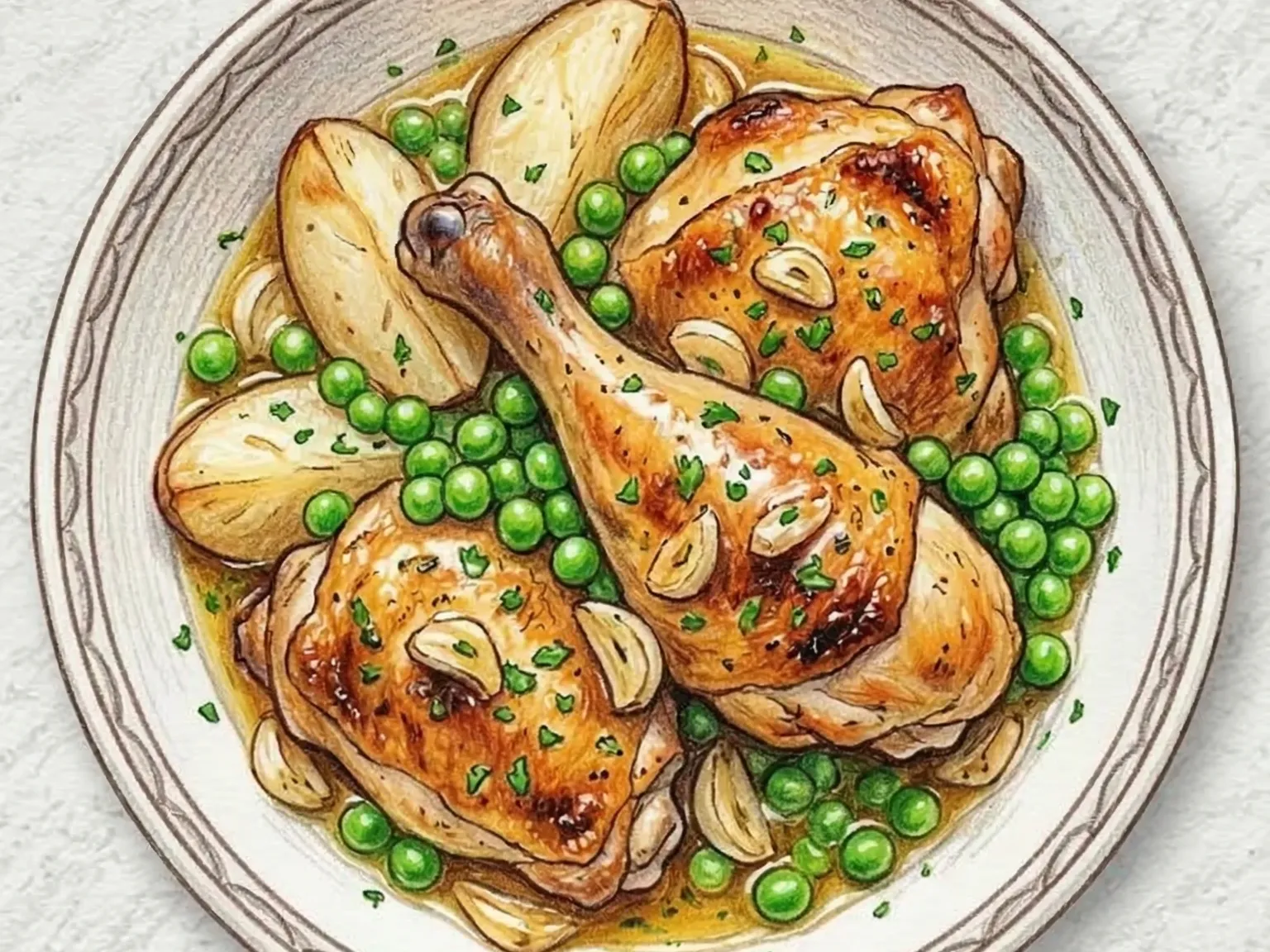
Chicken Vesuvio is a Chicago Italian-American dish that sears chicken thighs and potato chunks until golden, then simmers them with garlic, dry white wine, chicken stock...
What makes this special
- Searing the chicken skin for at least five minutes renders the fat before white wine and stock braise the dish.
- Searing skin 5+ minutes builds a deep flavor base on the pan
- Potatoes absorb the wine-stock sauce and turn fluffy during the 20-minute braise
Key ingredients
Core cooking flow
- 1 Season 450 g chicken thighs and 300 g chunky potatoes evenly with 3/4 teaspo...
- 2 Heat the pan over medium heat, add 2 tablespoons olive oil, and place the chicken skin-side down.
- 3 Turn the chicken and sear the second side for 3 minutes, then remove it briefly.
Chicken Vesuvio is a Chicago Italian-American dish that sears chicken thighs and potato chunks until golden, then simmers them with garlic, dry white wine, chicken stock, and oregano in a covered pan. Searing the chicken skin for at least five minutes builds a crisp texture and deposits a deep fond on the pan bottom that becomes the backbone of the sauce. After deglazing with wine and adding stock, twenty minutes of covered simmering lets the potatoes absorb the sauce and turn creamy inside while the chicken stays moist under its crisp skin. Peas and lemon juice added in the final two minutes introduce a bright green color and fresh acidity that lighten the otherwise heavy sauce. Dry white wine keeps the sauce clean and balanced rather than sweet.
Instructions
Read the steps as a cooking flow: prep, heat, seasoning, doneness control, and finish.
- 1Season
Season 450 g chicken thighs and 300 g chunky potatoes evenly with 3/4 teaspoon salt and 1/2 teaspoon black pepper.
Let them sit briefly so the seasoning clings before the pan gets hot.
- 2Control
Heat the pan over medium heat, add 2 tablespoons olive oil, and place the chicken skin-side down.
Do not move it for at least 5 minutes, until the skin is deeply golden and the pan bottom has browned bits.
- 3Heat
Turn the chicken and sear the second side for 3 minutes, then remove it briefly.
Add the potatoes to the same pan and cook about 4 minutes, browning the cut sides, then add the 5 garlic cloves.
- 4Step
When the garlic smells fragrant, pour in 120 ml dry white wine.
Scrape the browned fond from the pan bottom with a spatula so it dissolves into the liquid instead of staying stuck.
- 5Control
Add 120 ml chicken stock and 1 teaspoon dried oregano, then return the chicken with the skin facing up.
Cover and simmer on low heat for 20 minutes, keeping the liquid at a gentle bubble.
- 6Control
When the potatoes are tender and the sauce has thickened slightly, add 80 g green peas and 1 tablespoon lemon juice.
Simmer 2 more minutes, then taste and adjust with the remaining seasoning if needed.
After the steps
Pick a recipe that fits this dish.
Continue with shared ingredients, meal pairings, or a similar method.
Recipes That Go Well With This
More Western →Based on shared ingredients and meal pairing
Chicken and Waffles
Chicken and waffles is a Southern American soul food dish that places crispy fried chicken thighs on freshly made waffles and finishes everything with a pour of maple syrup. Soaking the chicken in buttermilk for at least an hour before dredging tenderizes the meat and gives the finished crust a more pronounced crunch; without this step the coating is drier and less flavorful. The double-dredge technique -- flour first, then beaten egg, then flour again -- builds a thick, irregular crust that shatters at the bite after eight to ten minutes in 170-degree oil, while the interior stays moist and fully cooked. The waffle batter includes melted butter, which is what creates waffles that are genuinely crisp on the patterned exterior while staying soft and airy on the inside; waffles made without fat in the batter tend to turn limp quickly. Waffles are cooked first and kept warm in a low oven so they are ready the moment the chicken is lifted from the oil. The appeal of the dish lies entirely in contrast: the hot, salty, fatty crunch of the fried chicken meets the sweet yielding softness of the waffle and the maple syrup, and the interplay of those opposing sensations is what turns a straightforward combination of ingredients into something that stays in memory.
Chicken Noodle Soup
Chicken noodle soup simmers chicken breast with onion, carrot, and celery in chicken stock, then finishes with egg noodles for a classic American home-cooked meal. Sauteing the vegetables in olive oil before adding the stock draws out their natural sweetness and infuses the broth with their flavor from the start. Poaching the chicken breast whole and shredding it along the grain produces long strands that mix naturally with the noodles on the spoon. Adding the noodles at the very end and cooking them only for the time listed on the package keeps them from turning soft and mushy. For leftovers, storing noodles separately and combining them when reheating preserves their texture.
Chicken Quinoa Power Salad
Chicken quinoa power salad brings together pan-seared chicken breast, quinoa simmered for 12 minutes then cooled, romaine lettuce, cucumber, and bell pepper in a single bowl built for a complete, balanced meal. Resting the chicken for three minutes after searing gives the juices time to redistribute inward so every slice stays moist rather than losing liquid at the cut surface. Rinsing the quinoa before cooking removes saponins that leave a bitter residue even after boiling. A dressing of Greek yogurt, lemon juice, and olive oil provides creamy tartness at a low calorie count, and the fermented tang of the yogurt complements the raw vegetables without overpowering them. Bell pepper's natural sweetness adds color and brightness alongside the lean chicken, and the combination of textures - crisp lettuce, tender grain, firm seared meat - makes each forkful more satisfying than its ingredients suggest individually.
Club Sandwich
A club sandwich is built across three slices of buttered, golden-toasted bread with sliced chicken breast, crisp bacon, fresh lettuce, and tomato arranged in two distinct layers. The salty crunch of bacon meets the lean, mild protein of chicken breast, and juicy tomato slices and crisp lettuce introduce freshness and textural contrast throughout. Mayonnaise spread on each bread layer functions as a binder that smooths each bite and brings the savory components into balance. Drying the lettuce completely before assembly is essential - any residual moisture will soften the toast within minutes. Securing all layers with cocktail picks and cutting diagonally produces clean cross-sections and keeps the layers from sliding during eating. The order of fillings and the degree of toasting both affect the final texture noticeably.
Serve with this
Fresh Lemon Ade
Fresh lemonade is a citrus drink assembled by pouring hand-squeezed lemon juice and simple syrup over ice, then topping slowly with sparkling water. The sharp acidity of fresh lemon is tempered by the syrup's rounded sweetness, creating a balance that bottled juice cannot replicate. A tiny pinch of salt amplifies both the sweet and sour notes simultaneously, a small addition with a noticeable effect. Lemon slices and mint leaves added to the glass release fragrance continuously as the drink sits. Pouring the sparkling water last and gently preserves the carbonation through every sip, so the order of assembly matters as much as the ingredients themselves.
Real Pineapple Sherbet
This refreshing fruit dessert is prepared by scooping out the flesh of a mini pineapple and using its hollowed shell as a serving vessel. The fruit pulp is blended until smooth to prevent icy lumps, then mixed with sugar, lemon juice, and oligosaccharide syrup to achieve a sweet and tangy flavor. After pouring the mixture back into the shell and covering it with the top lid, it is frozen for at least four hours. Stirring the mixture occasionally during freezing breaks up ice crystals, resulting in a smoother texture. The active bromelain enzyme present in the fresh fruit provides a subtle tingly sensation on the tongue. Serving the sherbet directly inside the pineapple skin minimizes juice loss and keeps the dessert cold. Letting it stand for five minutes before scraping and topping with fresh apple mint leaves makes it ready to serve.
Kimchi Bacon Mac and Cheese
Kimchi bacon mac and cheese layers aged kimchi's lactic tang and smoky bacon into a classic American cheddar cheese sauce over elbow macaroni. A butter-flour roux forms the base, with milk whisked in to build a béchamel before cheddar is melted into a thick, clinging sauce. Crisp bacon pieces add salt and crunch throughout, while chopped ripe kimchi introduces fermented acidity that counteracts the richness of the cheese. A pinch of gochugaru runs underneath with mild, warming heat. The tubular macaroni shape traps sauce inside and out, ensuring each forkful carries the full spectrum of creamy, tangy, and smoky flavors.
Similar recipes
Biscuits and Gravy
Biscuits and gravy is a Southern American breakfast where flaky, butter-layered biscuits are split open and smothered in a thick white gravy made from pan-fried pork sausage. The sausage is crumbled and browned in a skillet to render its fat, flour is stirred into that fat to form a roux, and milk is whisked in until the mixture thickens into a creamy, pepper-forward sauce. Keeping pea-sized pieces of cold butter in the biscuit dough is the key to achieving the signature flaky layers -- the butter steams during baking and forces the dough apart into distinct, pull-apart sheets. The just-baked biscuits absorb the warm gravy like a sponge while their crusted tops stay crisp, creating a clear contrast in a single bite. Black pepper, used generously, defines the character of the gravy as much as the sausage itself does. A simple plate by any measure, yet the combination of richness, warmth, and starchy satisfaction has kept it central to Southern home cooking for generations.
Classic Waffle
Classic waffles are made from a batter of flour, eggs, milk, melted butter, and baking powder cooked in a hot waffle iron. The baking powder aerates the batter, producing a crumb that is open and light while the outer surface crisps against the heated metal plates. Each square grid pocket in the iron serves a structural purpose: it forms a channel that holds maple syrup, melted butter, or fruit compote so every forkful carries an even measure of topping. Eggs distinguish American-style waffles from Belgian ones, contributing fat and protein that give the interior a slightly chewy, springy quality rather than a purely airy crumb. The sizzling sound from the iron as the batter hits the plates signals that the surface temperature is high enough for browning; the waffle is done when the steam output drops off and the exterior color deepens to a uniform amber. Fresh from the iron, pressing a fork into the surface produces an audible crack, and the inside is steaming, soft, and moist.
Classic Apple Pie
Apple pie has been baked in America since the colonial era, though its origins lie in 14th-century English and Dutch recipes where apples were enclosed in pastry as a way to cook fruit without a proper oven. The filling is built from tart baking apples - Granny Smith or Braeburn - tossed with sugar, cinnamon, nutmeg, a squeeze of lemon, and a spoonful of flour or cornstarch to thicken the juices as they cook. The double crust is made from cold butter cut into flour until the dough resembles wet sand, producing flaky, shattering layers when baked. As the pie bakes, the apples soften and release their juice, which the starch captures into a syrupy glaze that holds the filling together when sliced. The top crust turns deep golden and pulls away slightly from the filling, creating a hollow where steam escapes. Served warm with a scoop of vanilla ice cream - a la mode - or a slice of sharp cheddar in the New England tradition, apple pie is as much a cultural symbol as it is a dessert.