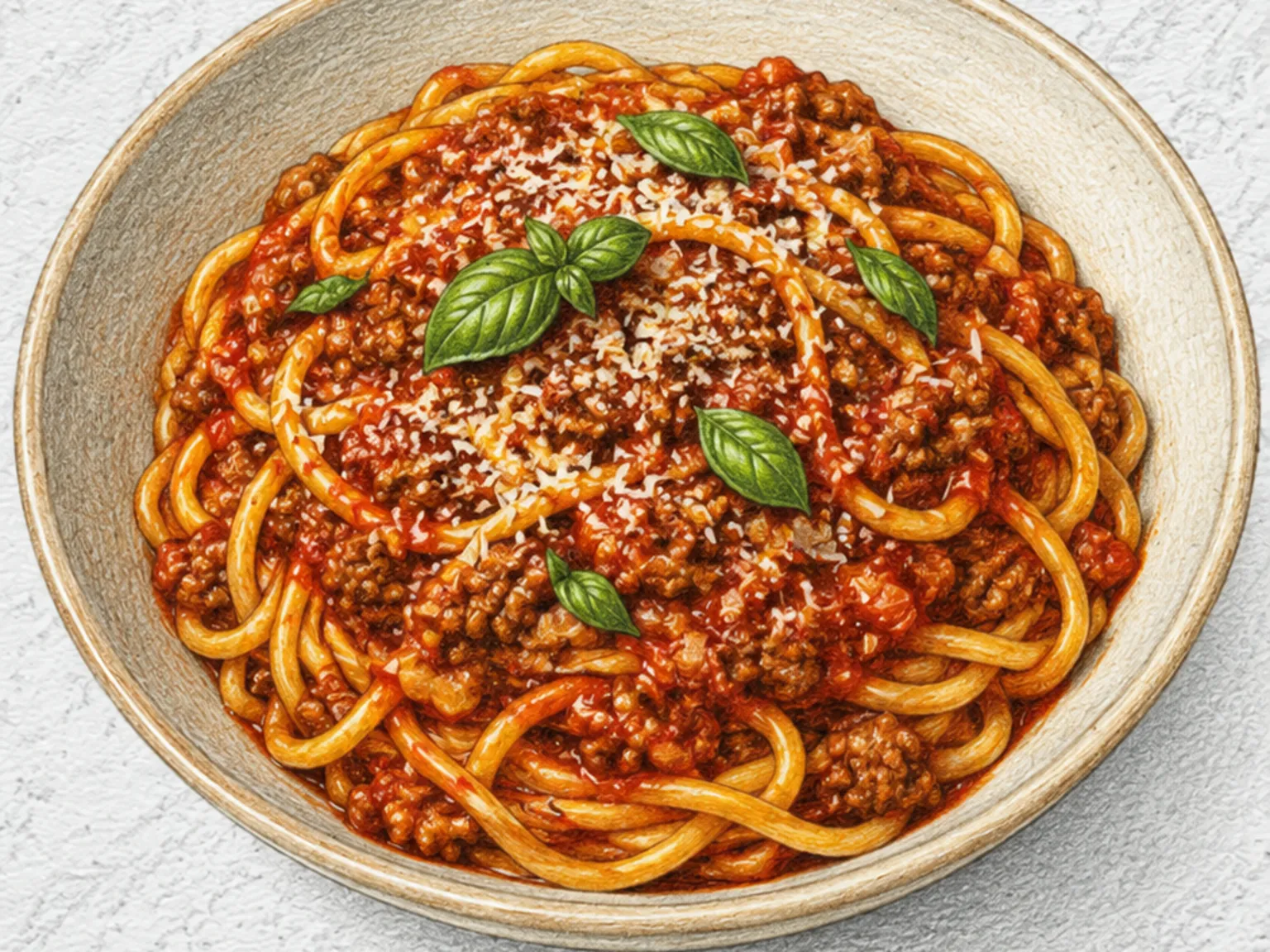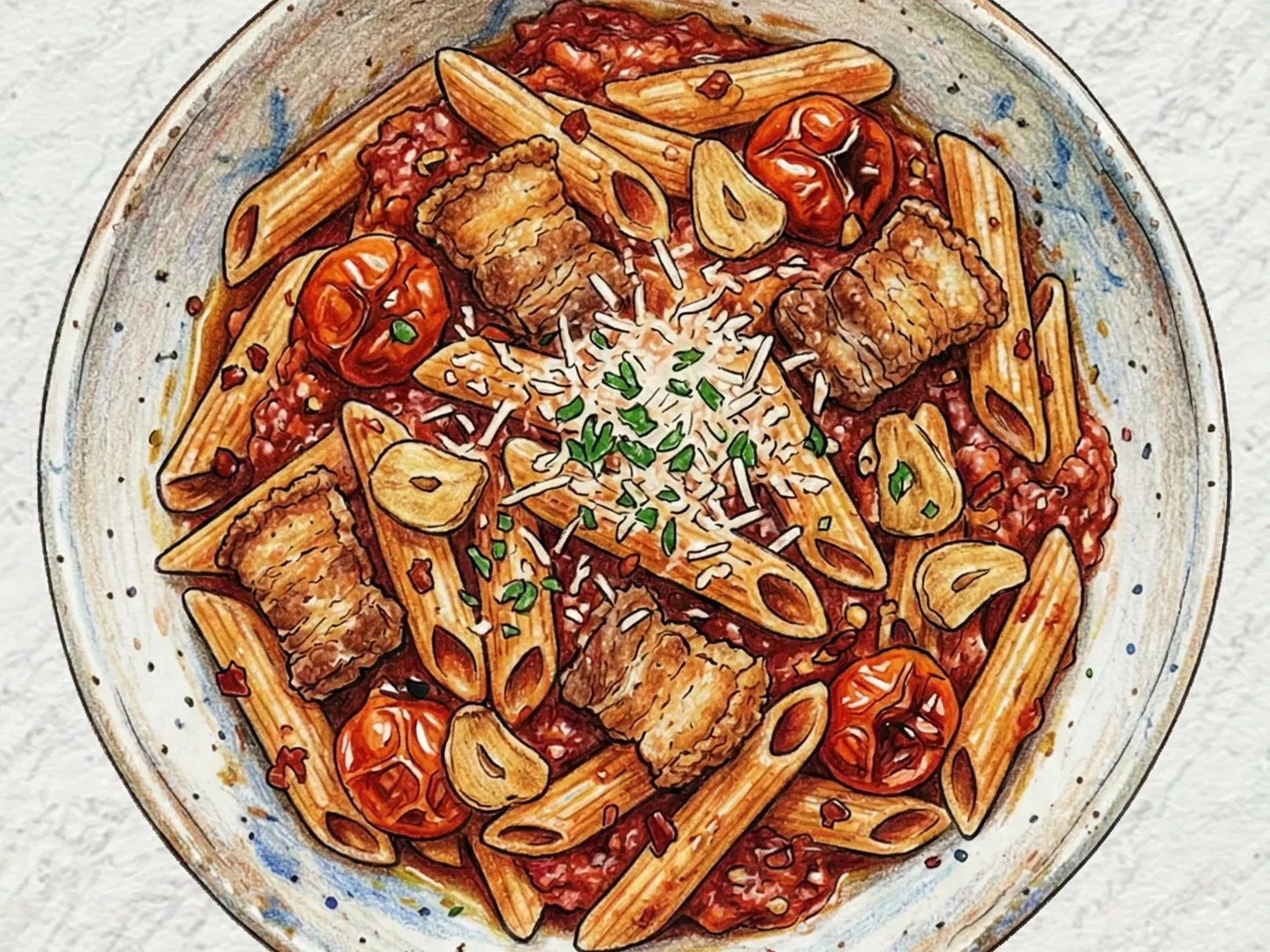
Chili Garlic Pork Belly Arrabbiata Penne
Chili garlic pork belly arrabbiata penne crisps thick-cut pork belly slowly over medium-low heat to render the fat, creating a rich, savory oil that becomes the sauce base. Minced garlic goes into the rendered fat just until fragrant, followed by crushed tomatoes that simmer down into a concentrated, spicy sauce. The tomato acidity cuts through the pork fat richness, keeping the overall flavor balanced rather than heavy. Penne's hollow tubes capture the sauce inside, delivering the smoky pork fat, tangy tomato, and chili burn in every bite. A splash of starchy pasta water emulsifies the sauce into a glossy coating that clings to the ridged pasta surface.
Adjust Servings
Instructions
- 1
Slice pork belly into 1 cm strips and finely dice the onion.
- 2
Cook penne in salted water 1 minute short of done and reserve 1 cup pasta water.
- 3
Heat olive oil, crisp the pork belly, and keep some rendered fat in the pan.
- 4
Saute onion and garlic, then cook tomato paste for 1 minute.
- 5
Add crushed whole tomatoes and chili flakes, then simmer 10 minutes for arrabbiata sauce.
- 6
Add penne, pork belly, and pasta water to adjust consistency; finish with basil and parmesan.
As an Amazon Associate, we may earn from qualifying purchases.
Tips
Nutrition (per serving)
More Recipes

Penne all'Arrabbiata (Spicy Tomato and Garlic Pasta)
Arrabbiata - meaning 'angry' in Italian - is a Roman pasta sauce whose fiery reputation comes from the liberal use of dried peperoncino chili flakes. The sauce descends from the cucina povera tradition of Lazio, where tomatoes, garlic, olive oil, and chili were the only ingredients a working kitchen could afford. Garlic is sliced thin and toasted in olive oil until fragrant, then chili flakes bloom in the hot fat for just seconds before crushed tomatoes go in. The sauce simmers uncovered for fifteen to twenty minutes, reducing until it thickens enough to coat each tube of penne. The heat builds gradually - not aggressive on the first bite but persistent, lingering at the back of the throat after several forkfuls. A shower of fresh parsley at the end adds a green, herbal brightness that cuts the chili's warmth. No cream, no cheese in the purist version - just the clean triad of tomato acidity, garlic depth, and chili fire.

Gochugaru Anchovy Broccolini Orecchiette
Gochugaru anchovy broccolini orecchiette melts anchovy fillets into olive oil with garlic over low heat, creating a salty umami base free of fishiness. Korean chili flakes are briefly toasted in the anchovy oil, releasing a warm, aromatic heat rather than sharp spiciness. Broccolini is blanched in the pasta cooking water during the last two minutes, which saves a separate pot and keeps the florets crisp with a pleasantly bitter edge. Breadcrumbs toasted separately until golden are scattered over the finished dish, adding a crunchy contrast to the soft, cupped orecchiette shapes. A final squeeze of lemon juice cuts through the oil-rich sauce and brightens the overall flavor. Parmesan shaved on top adds a sharp, salty finish.

Spicy Seafood Tomato Pasta
Spicy seafood tomato pasta starts by building a chili-infused oil base - garlic, onion, and red pepper flakes sauteed in olive oil until fragrant. Shrimp and squid are seared briefly until just opaque on the outside, then hand-crushed whole tomatoes are added and the sauce simmers for six to seven minutes, during which the tomato reduces and absorbs the juices released by the seafood. Cooking the seafood only until the surface turns white is critical, as the residual heat from the simmering sauce finishes them gently without making them rubbery. The spaghetti is boiled one minute short of al dente and tossed in the sauce pan with a splash of pasta water over high heat, which emulsifies the sauce and binds it to each strand. The chili heat cuts cleanly through the tomato's acidity and the seafood's brininess, and chopped parsley adds a final fresh herbal note.

Gochugaru Sausage Rose Fusilli
Gochugaru sausage rose fusilli browns crumbled Italian sausage until deeply colored, then builds a rose sauce by combining tomato sauce with heavy cream and Korean chili flakes. Removing the sausage casing and breaking the meat into irregular pieces allows more surface area to brown, which intensifies the meaty flavor. Onion and garlic cook in the rendered sausage fat for three minutes to build a sweet aromatic base. The gochugaru is fried in the fat for just twenty seconds to bloom its flavor without burning, then the tomato sauce simmers for three minutes to concentrate and tame its acidity. Adding cream and a splash of pasta water creates the pink rose sauce, and tossing fusilli in the pan lets the thick sauce lodge in every spiral groove.

Bulgogi Meatball Tomato Spaghetti
Bulgogi meatball tomato spaghetti seasons ground beef with soy sauce, sugar, and garlic in the style of Korean bulgogi, shapes the mixture into meatballs with breadcrumbs and egg for binding, sears them in a hot pan, then simmers them in tomato passata for twenty minutes. The breadcrumbs and egg trap moisture inside the meatball so it stays tender through the simmer, and the soy-sugar seasoning meets the tomato's acidity to create a layered sweet-salty depth that neither Korean nor Italian cooking produces alone. Searing the meatballs before they enter the sauce builds a Maillard crust that dissolves into the liquid, enriching it further. Fresh basil or parsley scattered on top provides an herbal brightness that lifts the dense, meaty sauce.

Gochu Oil Tuna Puttanesca Spaghetti
Gochu oil tuna puttanesca spaghetti builds its sauce base by combining the olive oil from canned tuna with chili oil, then gently sauteing garlic and anchovy fillets on low heat. The anchovies dissolve into the oil as they cook, leaving behind a concentrated salty umami without any fishiness. Crushed tomatoes simmer for six minutes over medium heat until their moisture reduces and the acidity concentrates, then capers and black olives add layers of brininess and mild bitterness. The tuna flesh goes in last, cooking for just two minutes so it holds its chunky texture rather than falling apart. Tossing the drained spaghetti and a splash of pasta water over high heat emulsifies the sauce into a glossy, clinging coat. Chopped parsley finishes the dish with a fresh herbal note.