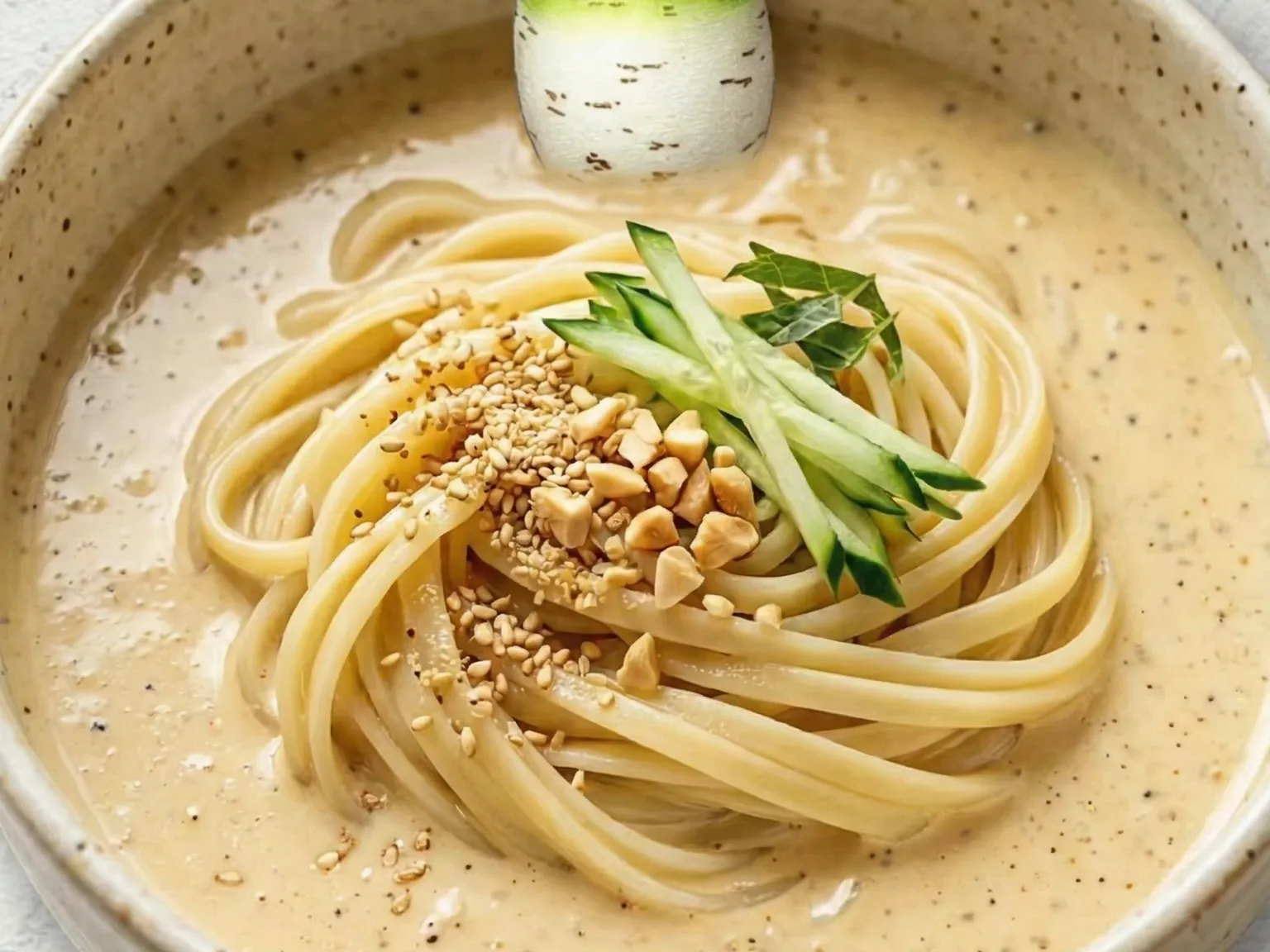
Kongguksu-Style Cold Linguine
Blend 400 ml unsweetened soy milk with 2 tbsp toasted sesame seeds, 1 tbsp peanut butter, 3/4 tsp salt and 1/2 tsp sugar for about 1 minute, until no sesame specks remain and the broth lightly coats a spoon, then chill it. Cook 180 g linguine 30 seconds longer than the package time so it is pleasantly firm, not hard, once chilled. Rinse it in ice water until fully cold and drain very well so extra water does not thin the soy broth.
Quick answer
- Total time
- 30 min
- Level
- Easy
- Servings
- 2 servings
- Ingredients
- 9
About this dish
Modeled on Korea's summer bowl of noodles in cold soybean broth, this version skips soaking and grinding soybeans: unsweetened soy milk is blended with toasted sesame and peanut butter into a thick, nutty broth.
Read more
The only heat used goes into boiling the linguine, which is then rinsed in ice water so it stays firm and chewy in the cold broth. Cucumber and cherry tomatoes go on top.
Ingredients
Instructions
- 1
Add 400ml unsweetened soy milk, 2 tablespoons toasted sesame seeds, 1 tablespoon peanut butter, 0.75 teaspoon salt, and 0.5 teaspoon sugar to a blender. Blend about 1 minute, until no sesame specks remain and the broth looks thick and smooth.
- 2
Check the broth before chilling it.
It should lightly coat a spoon, not pour like water; if it is too thick, loosen it with a little more soy milk, and if it tastes flat, adjust only with small pinches of salt. Chill the broth before serving.
- 3
Bring a large pot of water to a full boil and salt it lightly.
Add 180g linguine and cook 30 seconds longer than the package time, so the pasta stays pleasantly firm but not hard after it is chilled.
- 4
Move the cooked linguine directly into ice water.
Rub it gently with your hands to wash off surface starch, rinse several times until fully cold, then drain very well so extra water does not cloud or thin the soy broth.
- 5
Cut 80g cucumber into fine 0.2cm julienne strips and halve 6 cherry tomatoes lengthwise.
Keep the vegetables cold while the noodles drain, so the cucumber stays crisp and the tomato halves look fresh when placed on top.
- 6
Place the drained linguine in bowls and arrange 8 ice cubes around it.
Pour over enough chilled soy broth to partly submerge the noodles, top with cucumber and tomato, then serve immediately while the broth is still cold and clean-tasting.
Use-up ingredient planner
Turn these ingredients into two more meals
The overlap excludes basic seasonings. Open the next recipe and your selected dishes will stay with you.
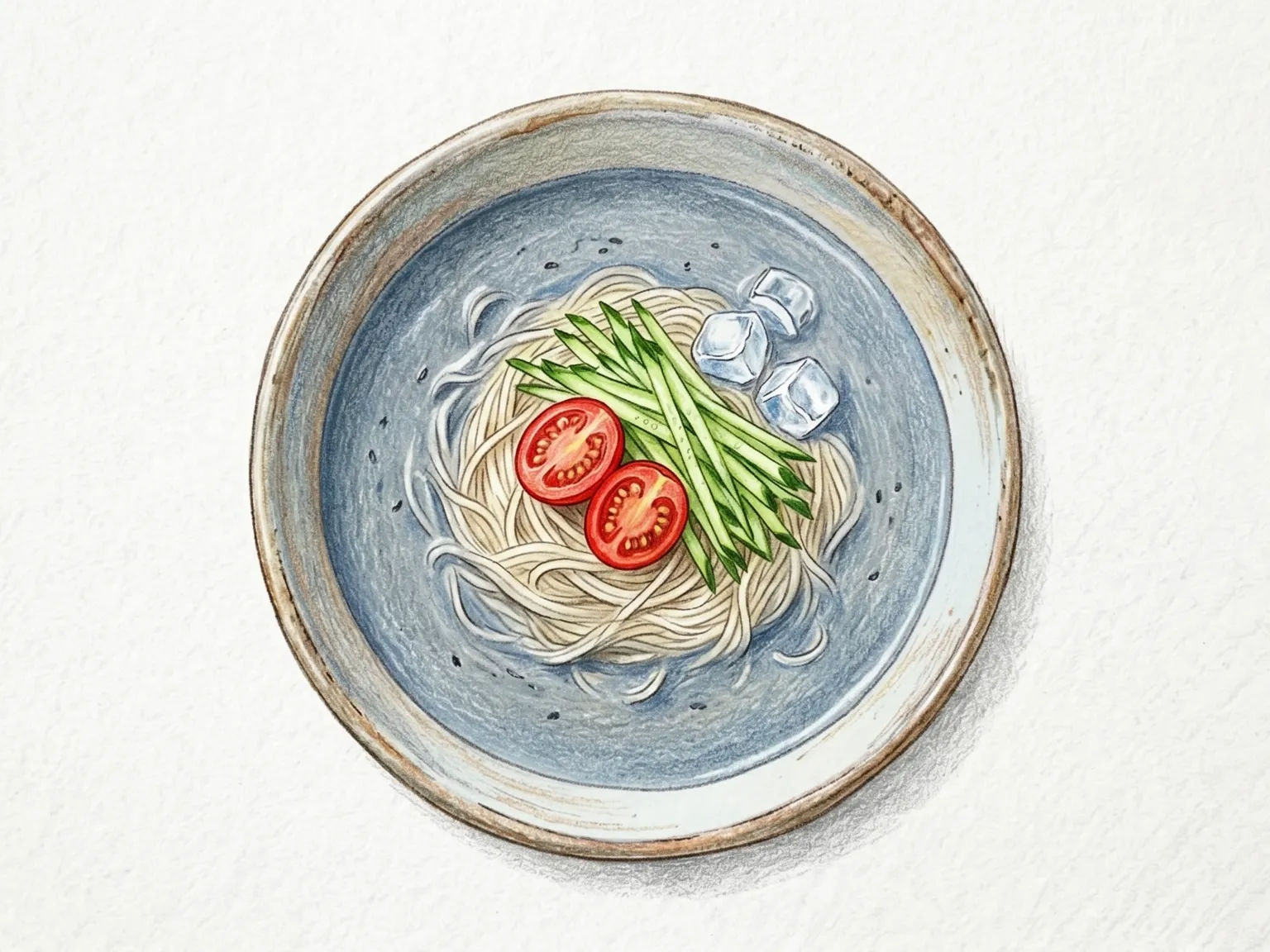
Korean Black Soybean Noodle Cup
cucumber, cherry tomatoes
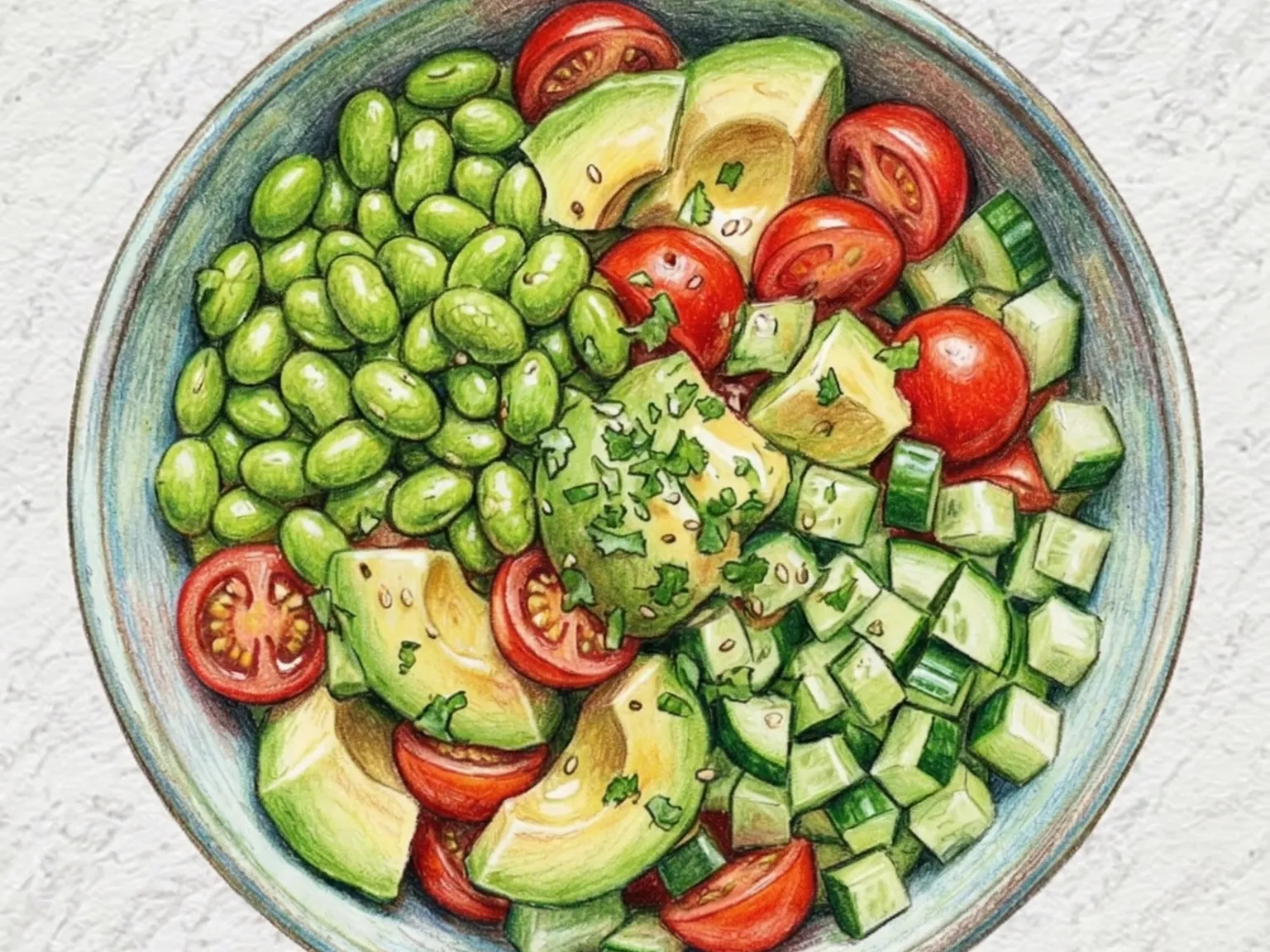
Edamame Avocado Salad
cucumber, cherry tomatoes
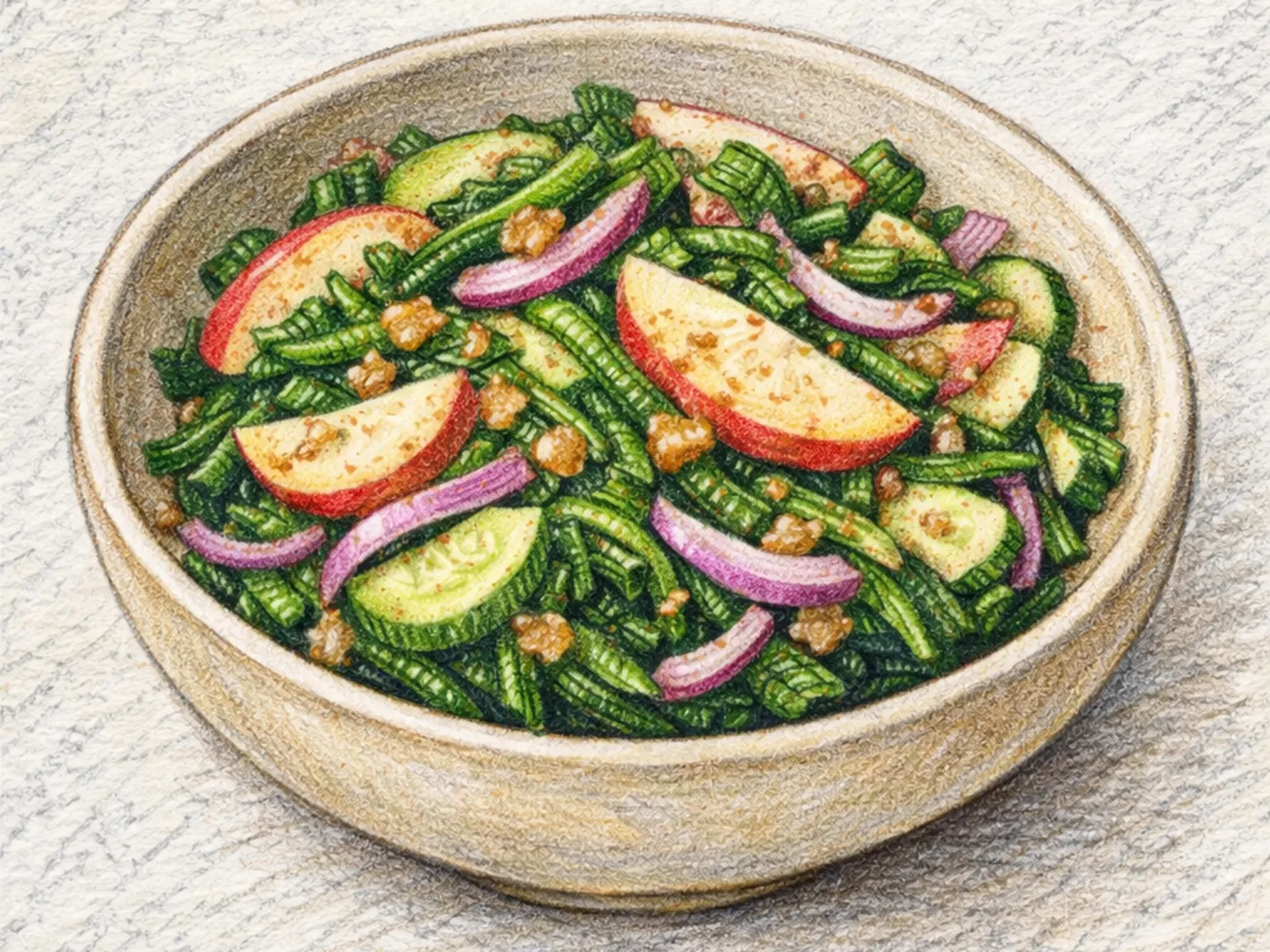
Chwinamul Apple Doenjang Salad
toasted sesame seeds, cucumber